I’ve spent countless hours hiking around Buntzen Lake over the years, and while the physical exercise is obviously good for me, there’s another benefit that’s just as important: what it does for my mind.
There’s something about walking through the forest, surrounded by towering trees, the sounds of nature, and the peaceful scenery, that makes everyday worries seem a little less important.
I particularly enjoy hiking alone. It gives me time to think without the usual distractions of everyday life. Sometimes I’m sorting through ideas or working out a problem. Other times, I’m simply enjoying the surroundings without thinking about much at all.
Either way, I find it incredibly relaxing.
I started wondering whether there was any actual science behind this feeling. After doing some research, I discovered that quite a few studies have examined the effects of spending time in nature, and some of the findings are surprisingly interesting.
Getting Away From Everyday Distractions
One of the things I enjoy most about Buntzen Lake is how quickly you can feel removed from the busyness of everyday life.
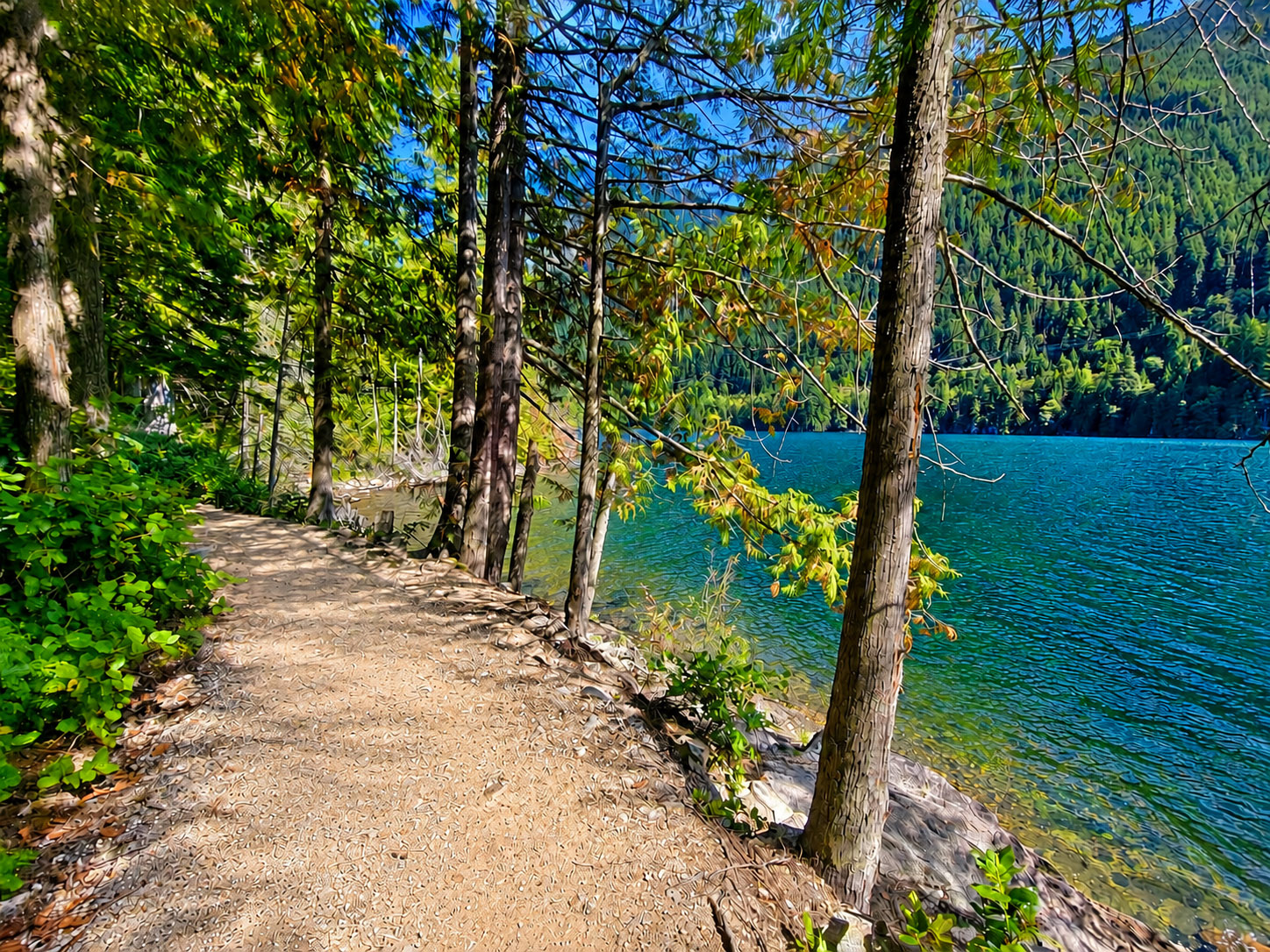
Once you’re walking along the forest trails, you’re surrounded by trees, ferns, moss-covered logs, and the occasional creek. There are stretches where you can hear little more than the wind through the trees, birds, or the sound of your own footsteps.
Of course, Buntzen Lake can get busy, particularly on summer weekends. But even then, there are quieter sections of trail where it’s possible to find some peace.
It’s a welcome change from traffic, computers, phones, and the constant stream of information we’re exposed to every day.
And perhaps that’s part of the appeal. For a while, there’s nothing demanding your attention. You can just walk and enjoy being outside.
The Sounds of Nature
One of the things I especially enjoy about hiking around Buntzen Lake is listening to the sounds of the forest.
There are birds calling from the trees, the occasional rustling in the undergrowth, and sometimes a squirrel that seems almost curious enough to stop and say hello.
And then there are the ravens!
They’re certainly not the quietest birds. Their calls can be incredibly loud, and even the sound of one flying past can catch you by surprise.
I remember walking along a trail when a raven suddenly flew by. I wasn’t expecting it, and the noise actually startled me!
It wasn’t exactly a relaxing moment, but it was a reminder that I was out in nature, far removed from traffic and the usual hustle and bustle of everyday life.
Along the lakeshore, you might hear a sudden splash in the water. Maybe it’s a fish rising to catch an insect, or perhaps something else. Often you don’t actually see what caused it.
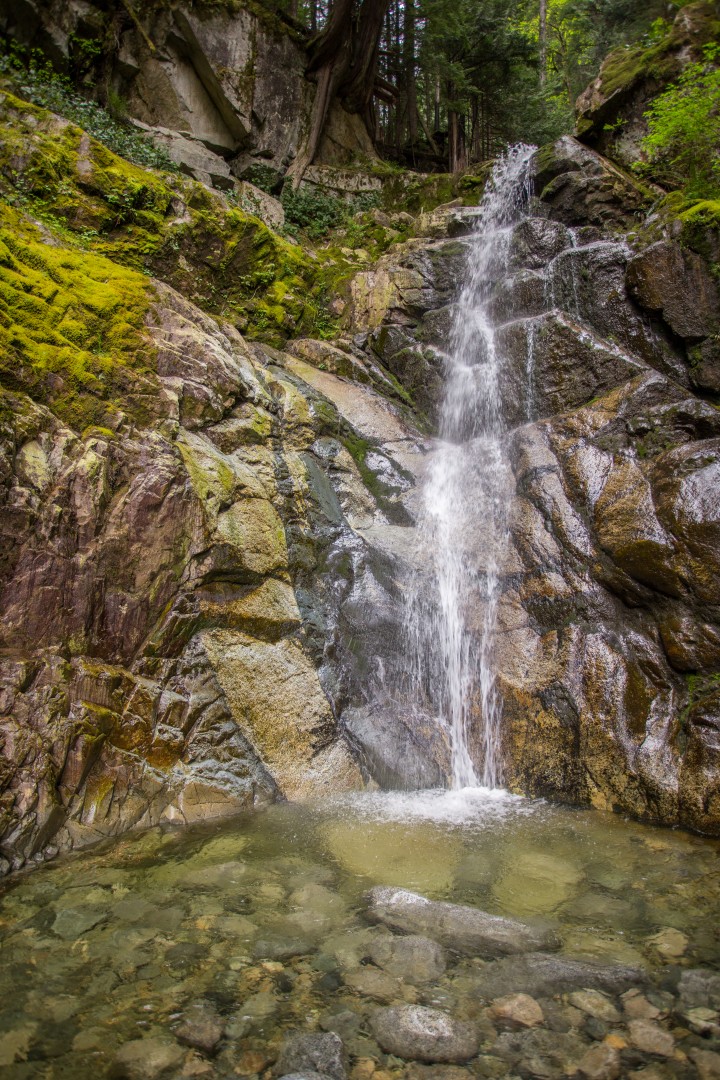
And then there are the sounds of flowing creeks and waterfalls, particularly after periods of heavy rainfall.
It’s interesting how a forest can be full of sounds, some gentle and others surprisingly loud, yet still provide such a peaceful escape.
These little moments are part of what makes being outside so enjoyable. They’re also a reminder to slow down occasionally and pay attention to what’s happening around you.
A Chance to Think Clearly
For me, one of the biggest mental benefits of hiking is having uninterrupted time to think.
When I’m walking alone, I often find myself working through things that have been on my mind. It might be a problem I’m trying to solve, something I need to decide, or simply an idea that deserves a little more thought.
Without the usual interruptions, I can follow a train of thought for quite a while.
It’s interesting how often an idea or solution comes to mind when you’re not sitting at a desk actively trying to figure something out.
In fact, I sometimes feel that I accomplish more mental work during a hike than I would have sitting in front of a computer for the same amount of time.
Not every hike has to be productive. Sometimes it’s just nice to let your mind wander and enjoy being outside.
I was interested to discover that researchers at Stanford University studied the relationship between walking and creative thinking. In a 2014 study, they found that walking helped people generate creative ideas.
Interestingly, the effect wasn’t limited to walking outdoors. Walking indoors also helped, suggesting that walking itself plays an important role.
Still, combining a walk with the peaceful surroundings of Buntzen Lake seems like a particularly enjoyable way to give your mind some breathing room.
What I Found in the Research
When I started looking into the mental benefits of spending time in nature, I was surprised to learn that scientists have measured changes in brain activity and stress hormones.
I’m certainly no expert in neuroscience or psychology, but I found some of the results fascinating.
A 2022 study published in Molecular Psychiatry found reduced activity in the amygdala, a part of the brain involved in processing stress, after participants took a one-hour forest walk. The same reduction wasn’t observed after an urban walk.
A Stanford-led study published in 2015 found that people who walked for 90 minutes in a natural environment reported less rumination, the tendency to repeatedly dwell on negative thoughts, compared with people who walked in an urban setting. Researchers also observed differences in activity in a brain region associated with rumination.
A 2019 study found reductions in cortisol, a hormone associated with stress, during time spent in nature. The researchers found particularly efficient reductions during nature experiences lasting approximately 20 to 30 minutes.
These findings don’t mean that spending an hour in the forest permanently changes your brain or that everyone will experience the same results. The studies involved relatively small groups, and scientists are still learning about the effects of nature on mental health.
But it’s encouraging to discover that researchers are finding measurable effects that may help explain why spending time outdoors can feel so good.
I can certainly relate to the idea that a walk helps clear your head. There’s a big difference between thinking through a problem constructively and going around in circles worrying about it.
The Calming Effect of Water
It’s not just hiking that I find relaxing at Buntzen Lake.
Being out on the water in a kayak can be every bit as peaceful, and sometimes even more so.
Once you’re away from shore, there’s a different kind of quietness. You’re surrounded by the lake and mountains, with the gentle movement of the water and the sound of your paddle.
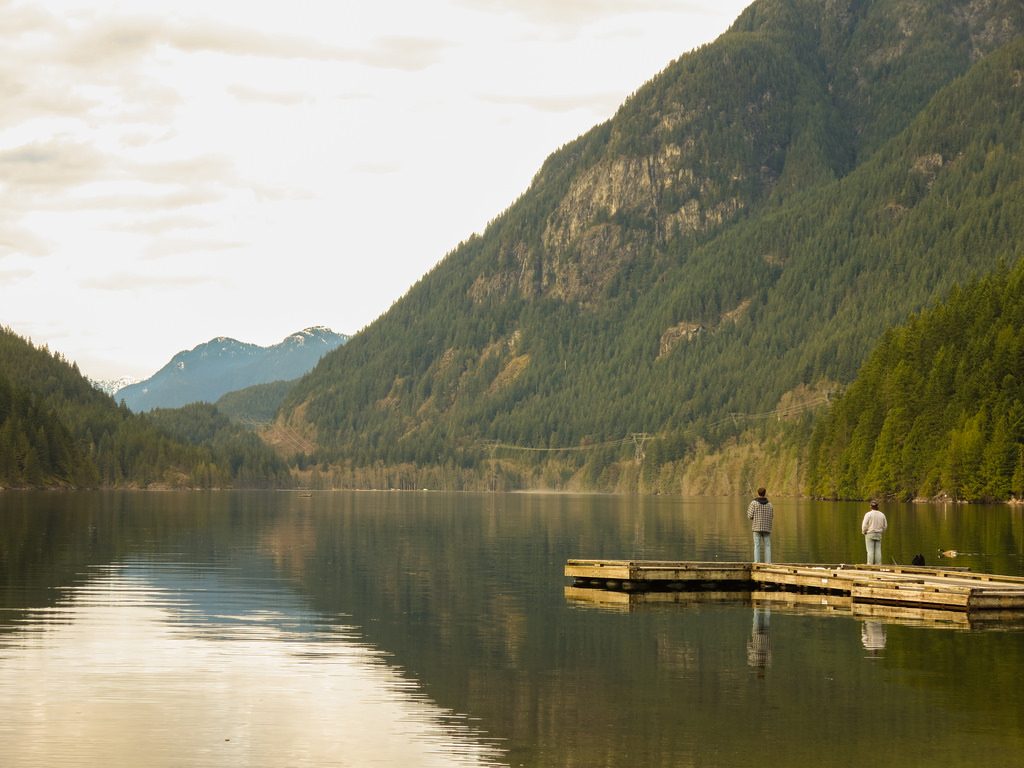
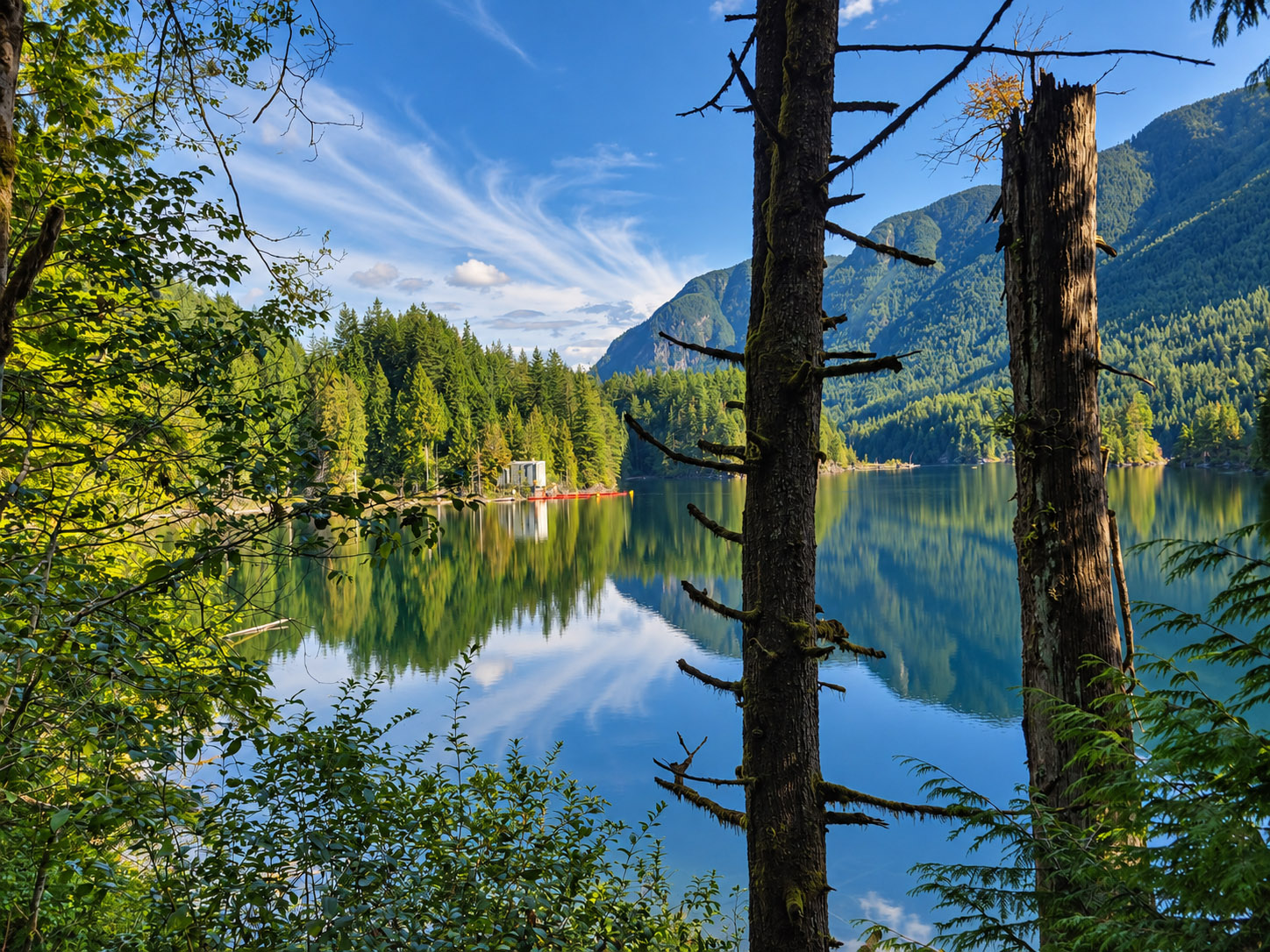
On a calm day, when the surrounding mountains are reflected on the lake, it’s hard to imagine a more peaceful setting.
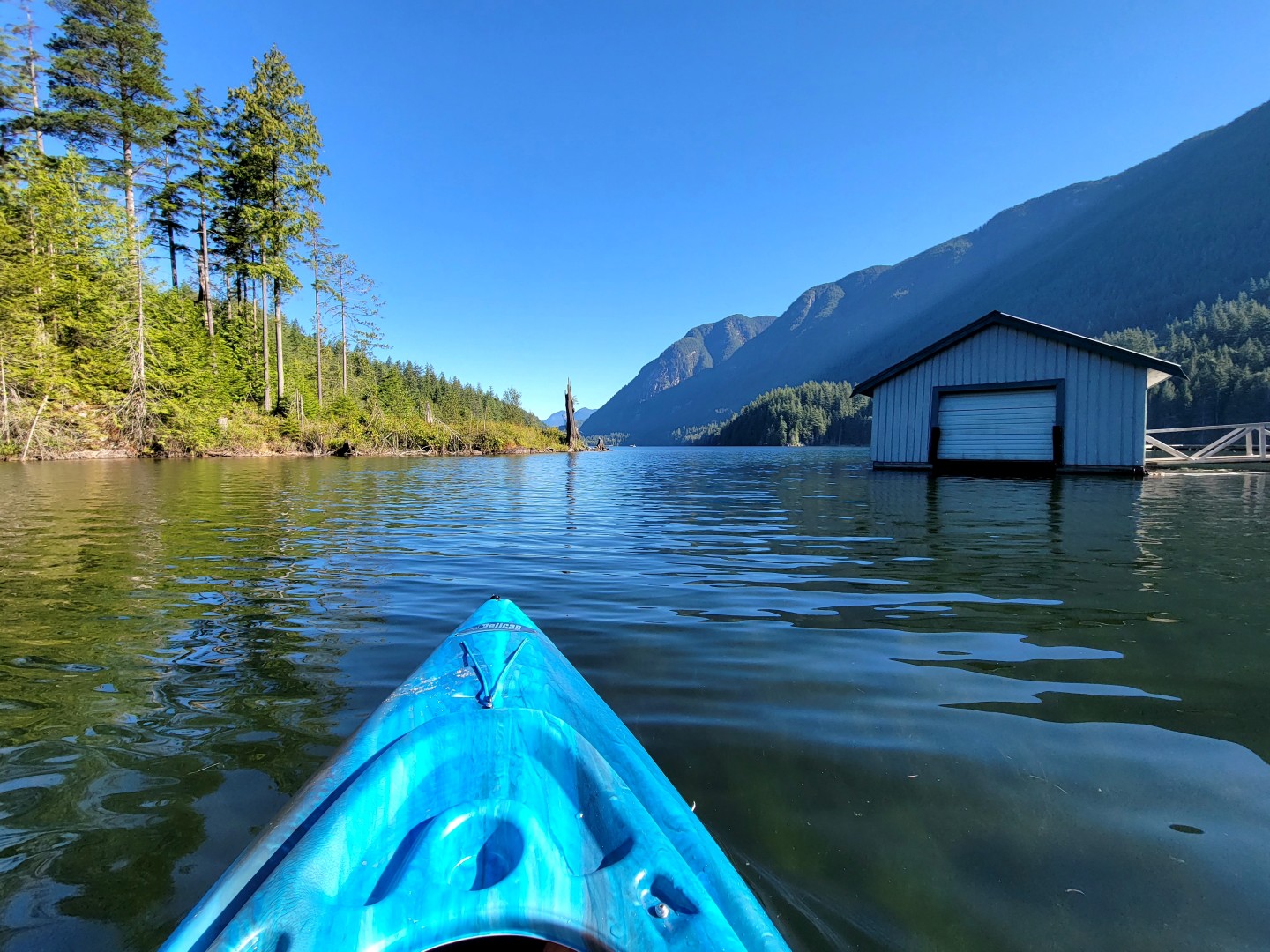
You don’t have to be going anywhere in particular. Sometimes simply paddling slowly and enjoying the scenery is enough.
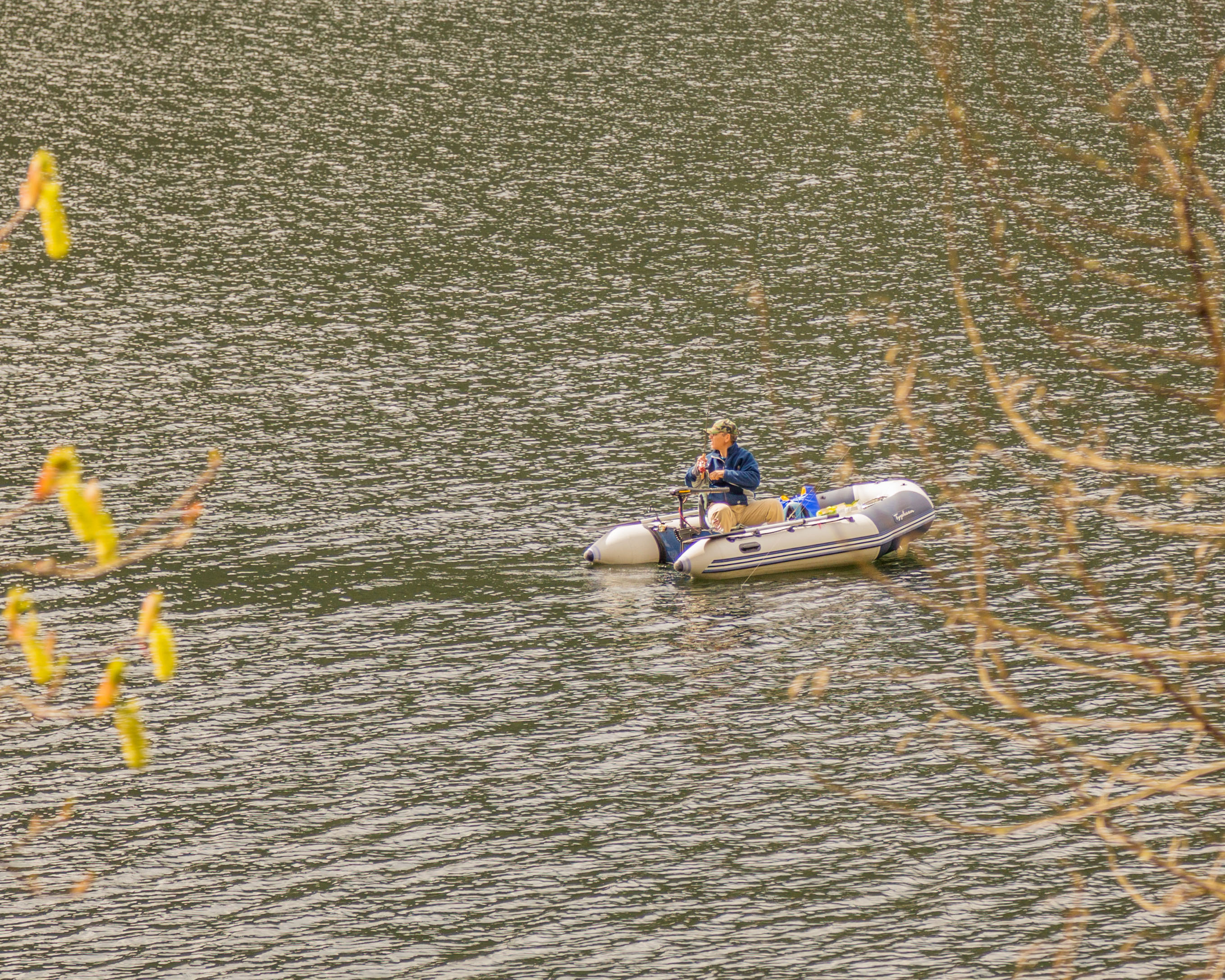
I don’t fish myself, but I imagine someone sitting quietly in a fishing boat might appreciate that same feeling.
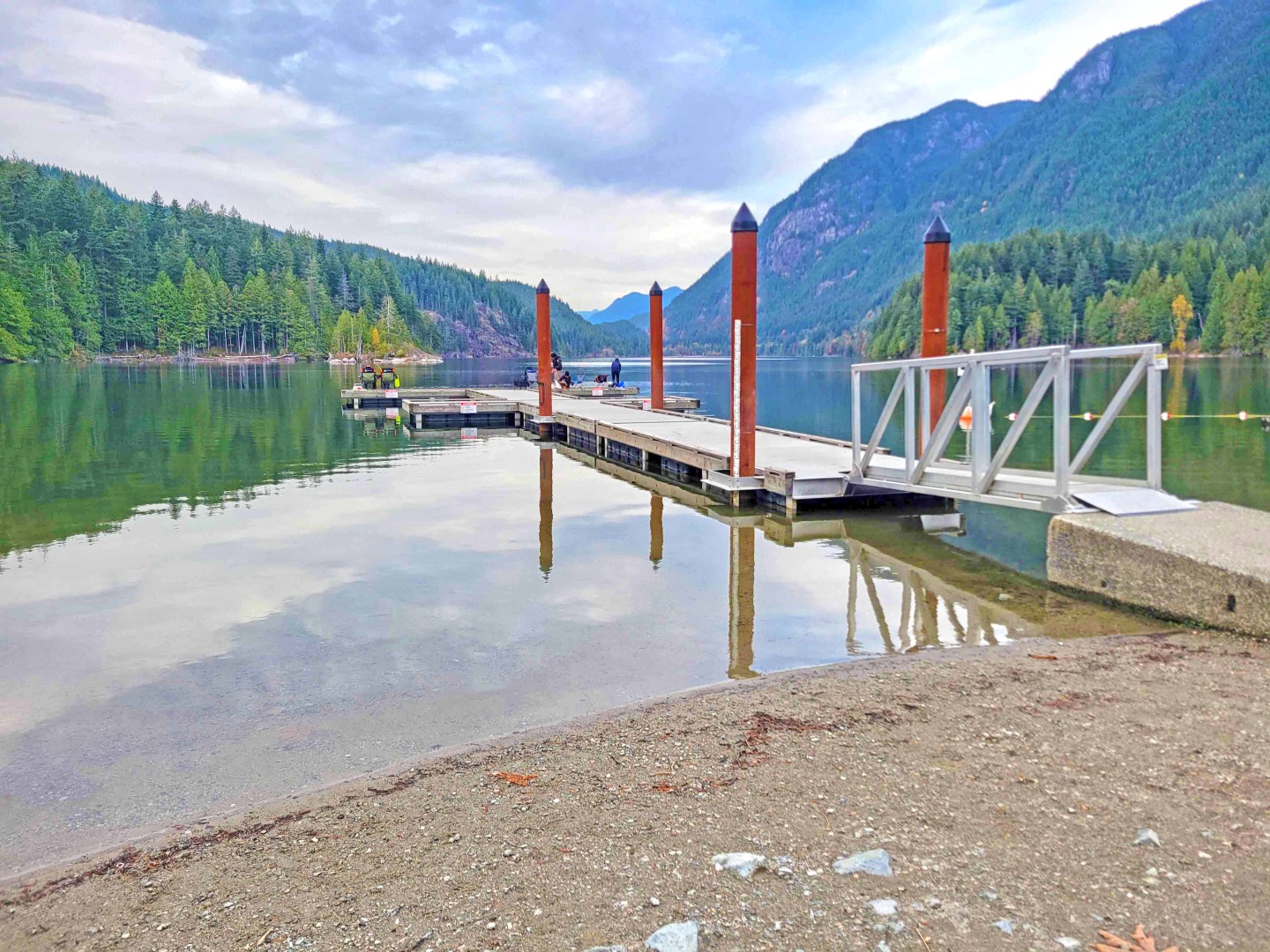
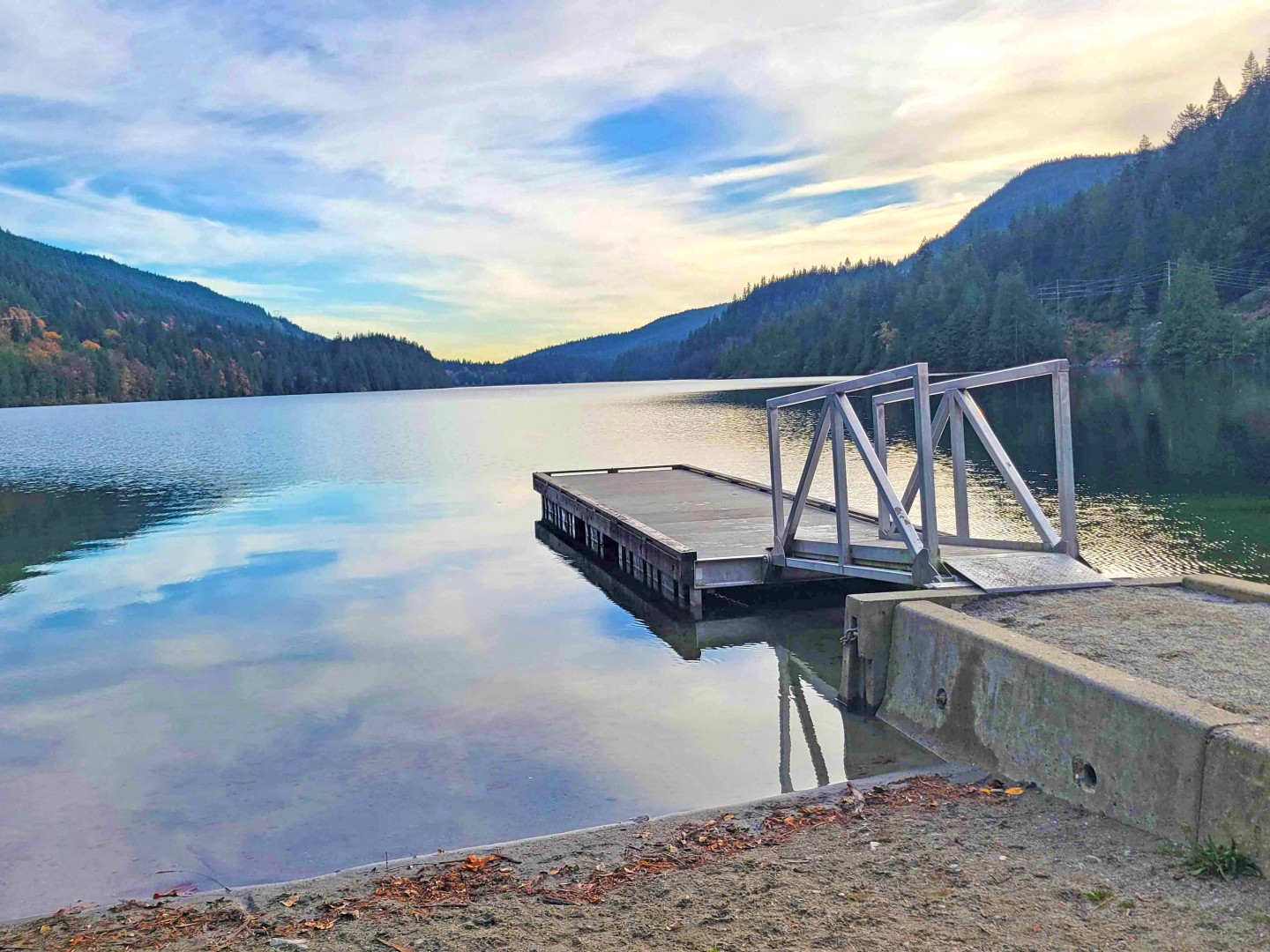
And you don’t necessarily have to be on the water, either. Sitting on a dock or beside the shoreline, watching the lake and listening to the natural sounds around you, can be relaxing in itself.
The studies I found mostly examined walking or spending time in natural environments, rather than kayaking specifically. But from my own experience, the feeling of relaxation out on the water is very real.
You Don’t Have to Hike for Hours
One of the more encouraging things I discovered is that you don’t necessarily need to spend an entire day outdoors to enjoy the benefits.
The BC Parks Foundation supports a program called PaRx, or Park Prescriptions, which encourages healthcare professionals to prescribe time in nature.
The program recommends aiming for at least two hours in nature each week.
That recommendation is supported partly by a large study involving nearly 20,000 people, which found that those who spent at least 120 minutes per week in nature were more likely to report good health and well-being.
The study showed an association rather than proving that nature alone caused the improvements, but it’s still an interesting finding.
And those two hours don’t have to be spent on one long hike.
A shorter forest walk, some time kayaking, or simply sitting quietly beside the lake can all be worthwhile ways to enjoy the outdoors.

You don’t need to climb a mountain, complete the entire Buntzen Lake Loop, or push yourself physically to appreciate the surroundings.
Sometimes the simplest outings are the most relaxing.
More Than Just Exercise
There’s no question that hiking is good physical exercise. It gets your heart pumping, works your muscles, and helps maintain fitness.
But for me, the mental benefits are every bit as valuable.
I enjoy the freedom of being outside, the opportunity to think without distractions, and the peaceful feeling that comes from spending time surrounded by nature.
Some days I return from a hike feeling like I’ve worked through a problem or come up with a useful idea. Other days, I simply feel more relaxed.
And sometimes, after spending a few hours walking through the forest, I realize that I haven’t been thinking about anything particularly important at all.
That’s not necessarily a bad thing!
After all these years of hiking around Buntzen Lake, I think the mental benefits are one of the biggest reasons I keep coming back.
The scenery and exercise are wonderful, of course. But sometimes, simply getting away from everything for a while is the best part of the whole experience.
Have You Had a Similar Experience?
Do you find that hiking, kayaking, or simply spending time at Buntzen Lake helps you relax or clear your head?
I’d be interested to hear your experiences. If you have a story you’d like to share, please feel free to send me a message through my Contact page.
Research and Further Reading
For anyone interested in the research mentioned in this article, here are the studies and resources I found particularly interesting:
- Walking and creative thinking (2014): Oppezzo and Schwartz, Give Your Ideas Some Legs: The Positive Effect of Walking on Creative Thinking.
- Nature and repetitive negative thinking (2015): Bratman et al., Nature Experience Reduces Rumination and Subgenual Prefrontal Cortex Activation.
- Nature and stress hormones (2019): Hunter et al., Urban Nature Experiences Reduce Stress in the Context of Daily Life Based on Salivary Biomarkers.
- Brain activity after a forest walk (2022): Sudimac et al., How Nature Nurtures: Amygdala Activity Decreases as the Result of a One-Hour Walk in Nature.
- Time in nature and well-being (2019): White et al., Spending at Least 120 Minutes a Week in Nature Is Associated with Good Health and Wellbeing.
- Canadian nature prescription program: BC Parks Foundation, PaRx.
These studies explore possible benefits of nature exposure and physical activity. They don’t establish that visiting Buntzen Lake specifically produces the same results. Time outdoors can support well-being, but it isn’t a substitute for professional mental health care when needed.