The Apex Trail at Knox Mountain Park is a great place for an uphill workout, with spectacular views of Okanagan Lake and downtown Kelowna along the way. I hiked the trail on 16 October 2026, starting near the main park entrance and climbing through open ponderosa pine forest and dry grasslands. The trail has several marked variations, and I followed a couple of different branches on the way down. Although it’s a relatively short hike, there’s a substantial climb involved, and the scenery makes it well worth the effort.
Status: No Known Restrictions
No specific trail access restrictions are currently known. Trail construction, restoration work, prescribed burning, or wildfire conditions may result in temporary closures. Check current City of Kelowna information before heading out.
Knox Mountain Apex Trail Stats
🥾 Distance: 4.73 km return
⏱️ Recorded time: 1 hour, 5 minutes
⛰️ Lowest elevation: 330 m
🏔️ Highest elevation: 613 m
📈 Elevation difference: 284 m
💪 Difficulty: Moderate, with steep sections and stairs
🔄 Route type: Out and back, with marked Apex Trail variations
📅 Date hiked: 16 October 2026
📍 Trailhead: Apex Trail entrance, Knox Mountain Park (Google Maps)
🅿️ Parking: Knox Mountain Park main entrance parking (Google Maps)
These statistics are based on my GPS recording. The 284 m elevation difference represents the change between the lowest and highest recorded elevations.
Knox Mountain Apex Trail GPS Route Map
The interactive map below shows my GPS recording from 16 October 2026. I followed Apex Trail uphill and downhill, taking a few local variations where the marked trail branches. You can zoom in and switch between Map and Satellite views.
The map shows a simplified version of my original TCX track, including the minor route variations taken on the ascent and descent. Trail conditions and alignments may change.
Climbing the Apex Trail
Starting from Knox Mountain Park
My hike began near the main entrance to Knox Mountain Park, just north of downtown Kelowna. Apex Trail heads uphill through an open forest of ponderosa pine trees, with dry grasses and scattered rocks covering the surrounding slopes.
It’s quite a contrast to hiking around Vancouver. Instead of thick moss, ferns, and towering western redcedars, the landscape here is much more open and dry, with widely spaced pines and golden grass covering the hillsides.
This first photograph shows a pleasant section of the trail, with wooden fencing and pine trees lining the path.
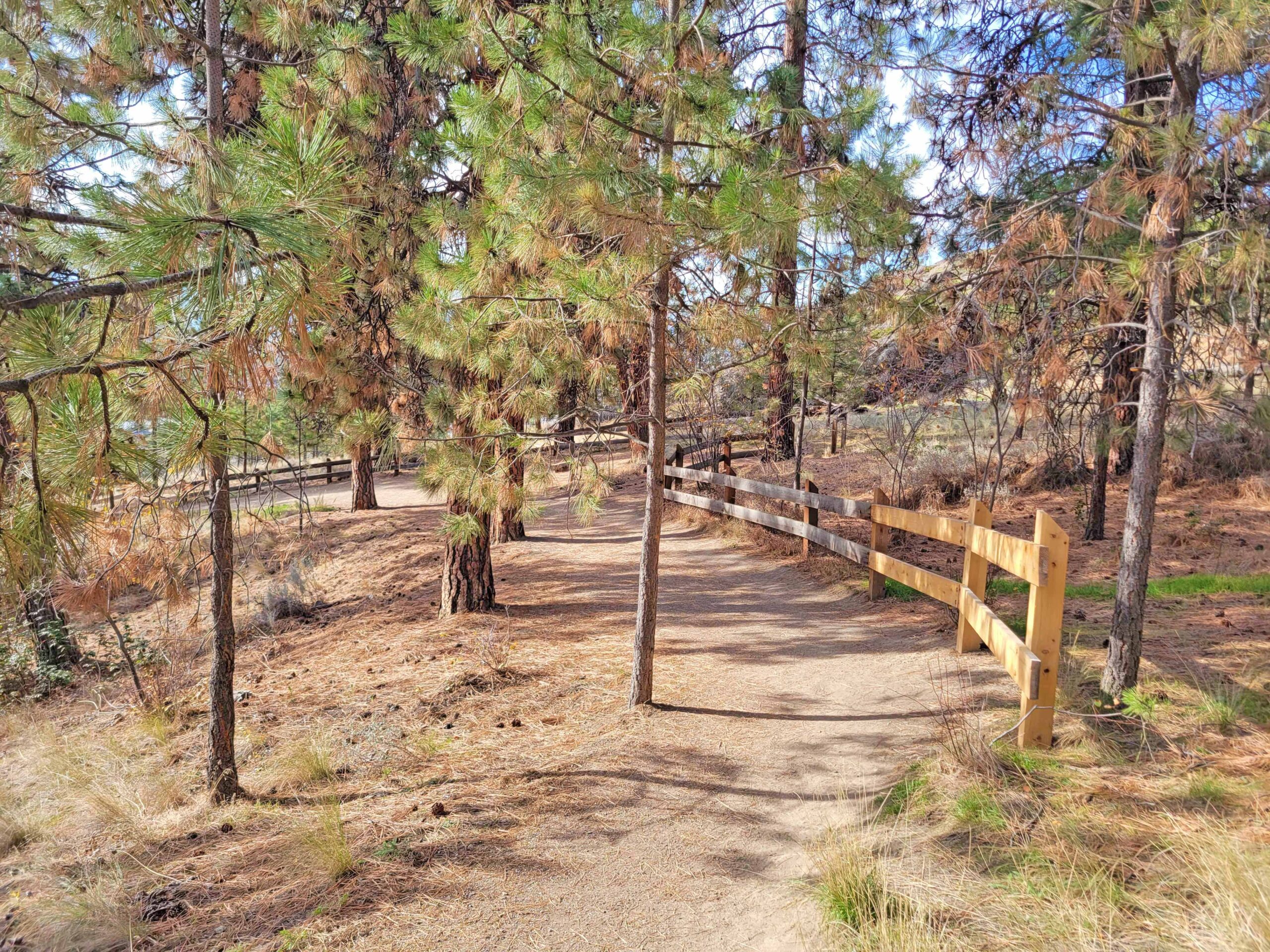
Apex Trail winding through the ponderosa pine forest.
Stairs and Trail Improvements
The trail climbs steadily, with some steeper sections that provide a good workout. Wooden fencing, steps, and other improvements have been installed to help protect the trail and surrounding vegetation.
Here is one of the stair sections I encountered during the climb.
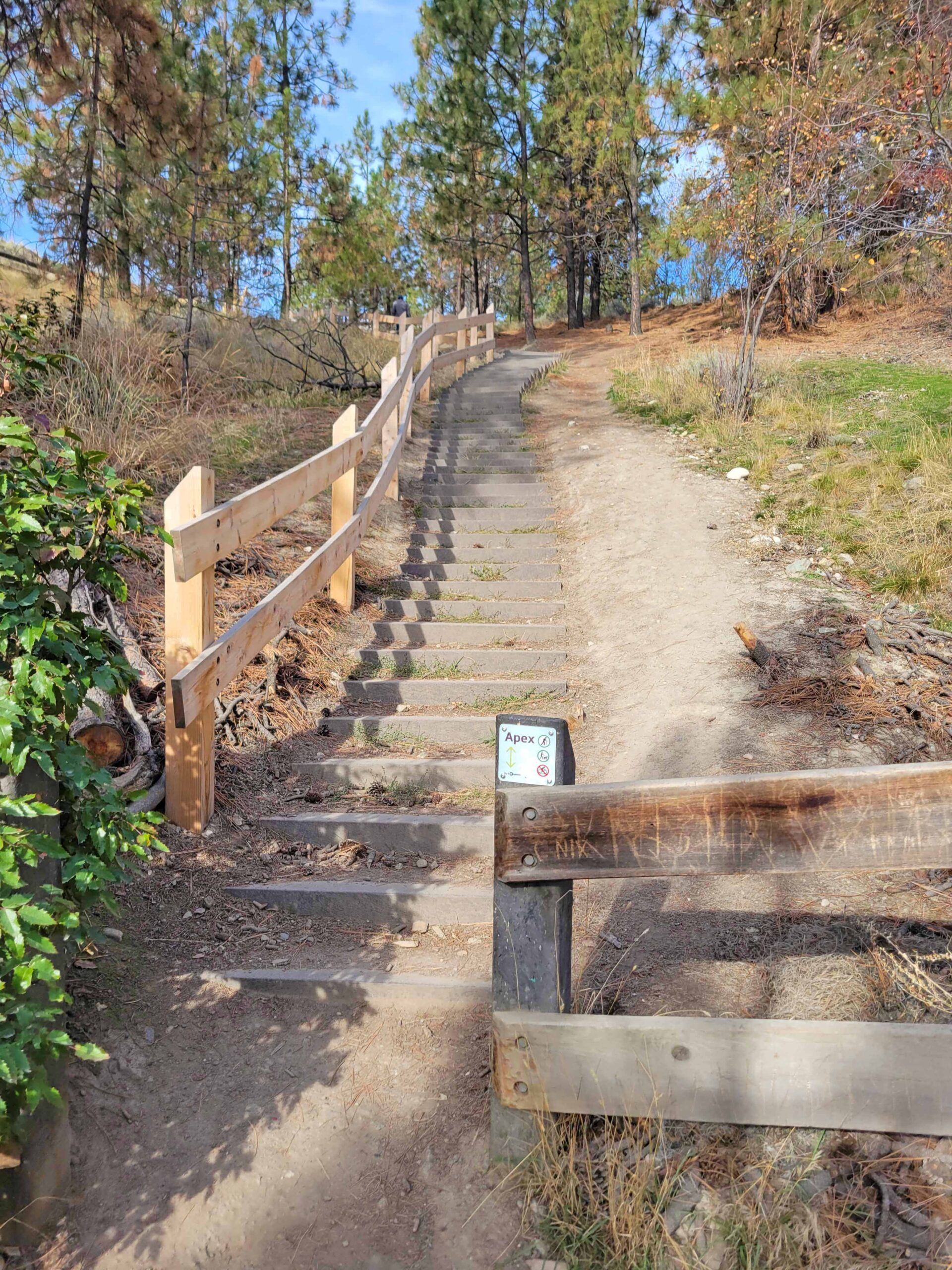
One of the stair sections on Apex Trail.
The improvements provide better footing on the steeper slopes and help keep visitors on designated trails. The fencing is particularly important because many of the surrounding grasslands contain sensitive vegetation.
The City of Kelowna has been carrying out improvements to Apex Trail, including stair reconstruction, signage, and ecological restoration work.
Through the Ponderosa Pine Forest
As the route climbs higher, the trail winds through more open forest, with a mixture of dirt paths, rocky sections, and patches of dry grassland.
Apex Trail has several marked variations along the way. I took one route uphill and followed a couple of different branches on the way down, although both directions stayed on the same general Apex Trail system.
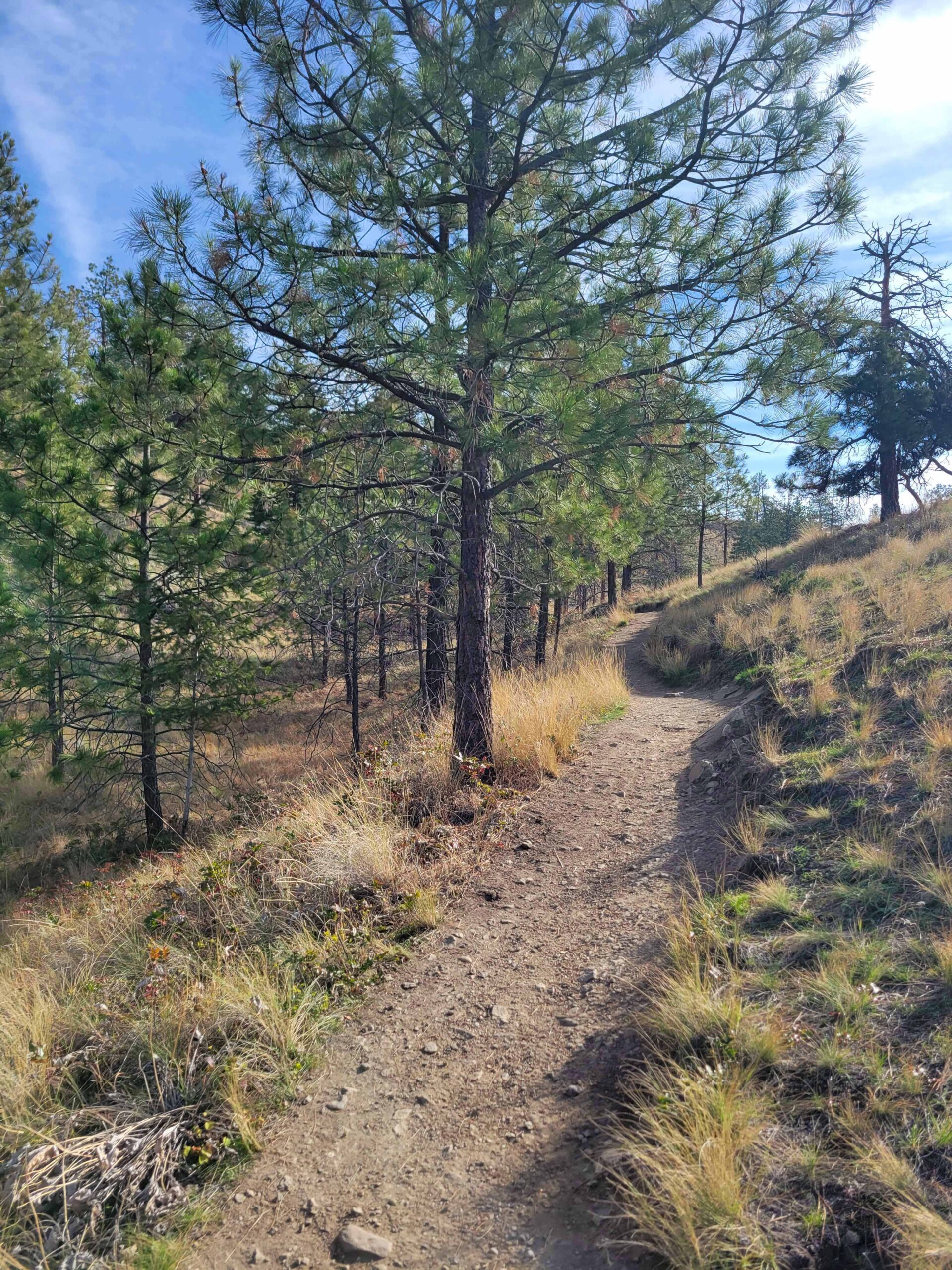
A narrower section of Apex Trail winding through the dry hillside.
One thing I particularly enjoyed was the openness of the forest. There’s plenty of sunlight reaching the ground, and the dry landscape has a completely different character from the coastal forests I’m accustomed to.
Views of Okanagan Lake and Kelowna
As you climb, the views become increasingly impressive. The trail opens onto dry, rocky slopes overlooking Okanagan Lake, with the surrounding mountains stretching into the distance.
The contrast between the golden grasslands, dark green pine trees, blue lake, and surrounding hills makes for some excellent scenery.
Looking Across Okanagan Lake
The first viewpoint photograph shows the broad expanse of Okanagan Lake and the mountains along the opposite shore.
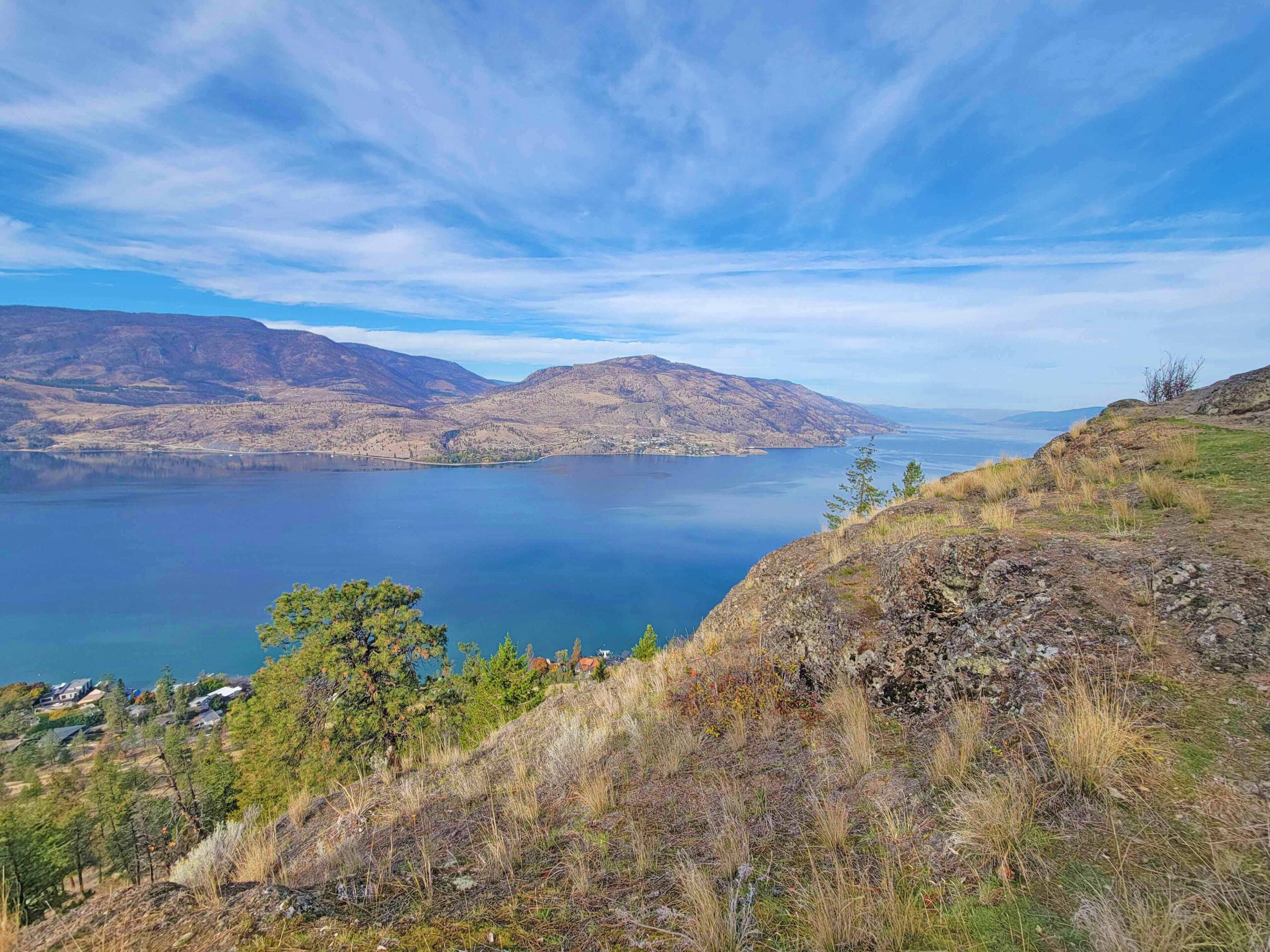
Looking across Okanagan Lake from Knox Mountain.
Okanagan Lake is approximately 135 km long, stretching from Penticton north towards Vernon. From this vantage point, it’s easy to appreciate how the lake occupies a long valley surrounded by mountains.
Looking Towards Downtown Kelowna
Another highlight is the view south towards downtown Kelowna and the surrounding shoreline.
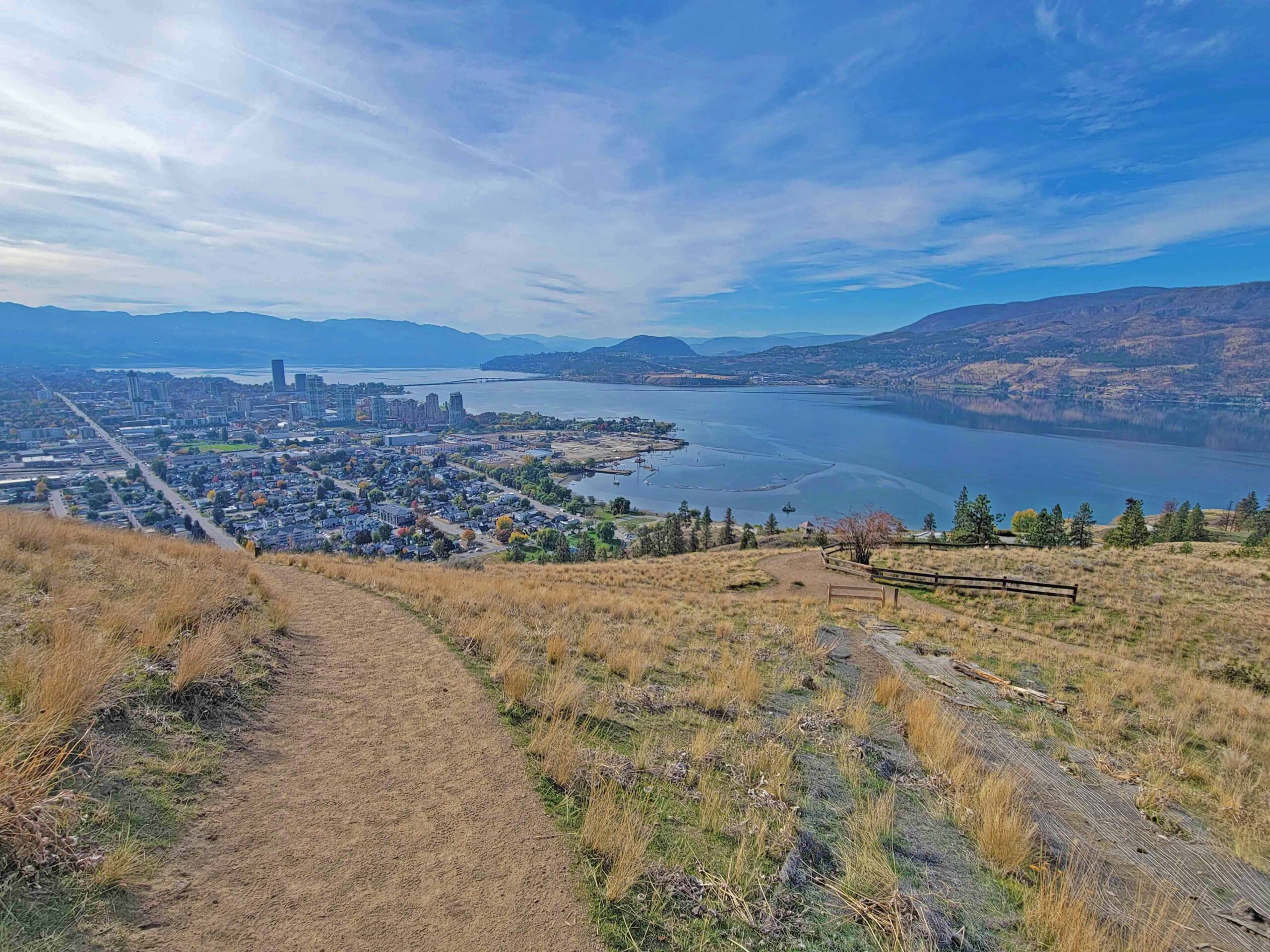
A beautiful view of downtown Kelowna and Okanagan Lake.
It’s an impressive view considering that the hike starts only a short distance from Kelowna’s city centre.
The Upper Apex Trail
My GPS recorded a high point of approximately 613 m. From the upper trail, there are excellent views across the lake, city, and surrounding mountains.
This is one of my favourite photographs from the hike, with ponderosa pine trees in the foreground and Kelowna and Okanagan Lake below.
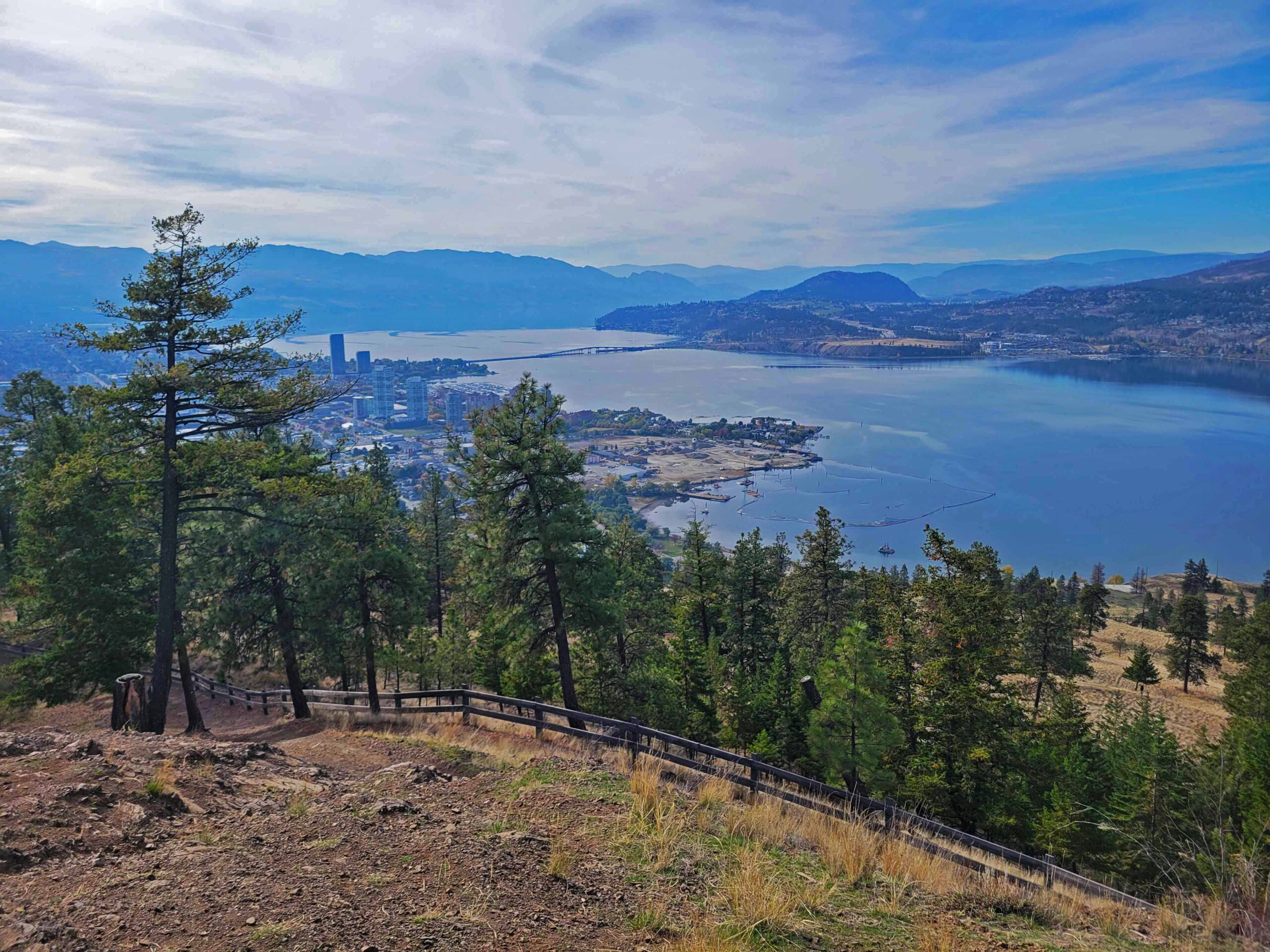
The view towards Kelowna and Okanagan Lake from the upper Apex Trail.
After enjoying the scenery, I headed back down towards the park entrance. I followed the marked Apex Trail, taking a couple of minor variations from my uphill route.
Interesting Facts About Knox Mountain
Geology: A Landscape Shaped by Glaciers
The geology of Knox Mountain and the surrounding Okanagan Valley is particularly interesting. Much of the region’s present landscape was shaped by glaciers during the last ice age.
As the Cordilleran Ice Sheet retreated, meltwater accumulated in the Okanagan Valley, forming a series of glacial lakes. One of these was Glacial Lake Penticton, which occupied portions of the valley at water levels considerably higher than present-day Okanagan Lake.
Fine sand, silt, and clay carried by glacial meltwater settled in these former lakes, leaving extensive deposits that can still be seen in terraces and slopes throughout the Okanagan.
I noticed quite a bit of fine-grained material along Apex Trail, which made me wonder whether some of it was associated with these former glacial lake deposits.
That is certainly possible, although not all fine-grained material on Knox Mountain necessarily originated in a glacial lake. The slopes also contain weathered bedrock, glacial deposits, and soil and rock fragments that have moved downhill over time.
Ponderosa Pine and Bunchgrass Ecosystems
Knox Mountain is home to some fascinating dryland ecosystems, including open ponderosa pine forests and grasslands.
Biogeoclimatic Zones: The lower, drier parts of the Okanagan Valley include the Bunchgrass Zone, while the open pine forests are characteristic of the Ponderosa Pine Zone. These ecosystems experience hot, dry summers and relatively mild winters compared with the higher-elevation Interior forests.
Ponderosa pines are particularly well adapted to these dry conditions. Their thick bark offers some protection from low-intensity fires, and their widely spaced growth allows plenty of sunlight to reach the ground.
The surrounding slopes also support grasses and flowering plants adapted to the dry climate, including bluebunch wheatgrass, arrow-leaved balsamroot, and sagebrush.
Rare and Sensitive Grasslands
One of the interpretive signs I photographed explains that the south-facing slopes of Knox Mountain contain some particularly sensitive grassland ecosystems.
These include big sage–bluebunch wheatgrass and bluebunch wheatgrass–arrow-leaved balsamroot plant communities. The City identifies these as red-listed ecological communities in British Columbia, meaning they are considered threatened or endangered.
Although these grassy slopes might not appear particularly fragile, they can be easily damaged when people create shortcuts or walk off designated trails.
Once vegetation is disturbed, the exposed soil becomes vulnerable to erosion, and invasive plants can become established.
More Than Half the Trails Were Unsanctioned
One of the most interesting statistics I found was on a new interpretive sign along Apex Trail.
According to the City of Kelowna, more than 67 km of trails were identified within Knox Mountain Park in 2025. Of these, over 35 km, approximately 52%, were unsanctioned.
That’s a remarkable amount of unofficial trail development.
The City has been working to restore disturbed areas through trail closures, fencing, reconstructed stairs, native planting, seeding, and erosion-control measures.
Some of the wooden fences and stair improvements I photographed along Apex Trail are examples of the work being carried out to protect these sensitive areas while keeping the designated routes enjoyable for visitors.
Dead Trees and the Forest Ecosystem
During my hike, I photographed this broken and fallen ponderosa pine lying across the dry hillside.
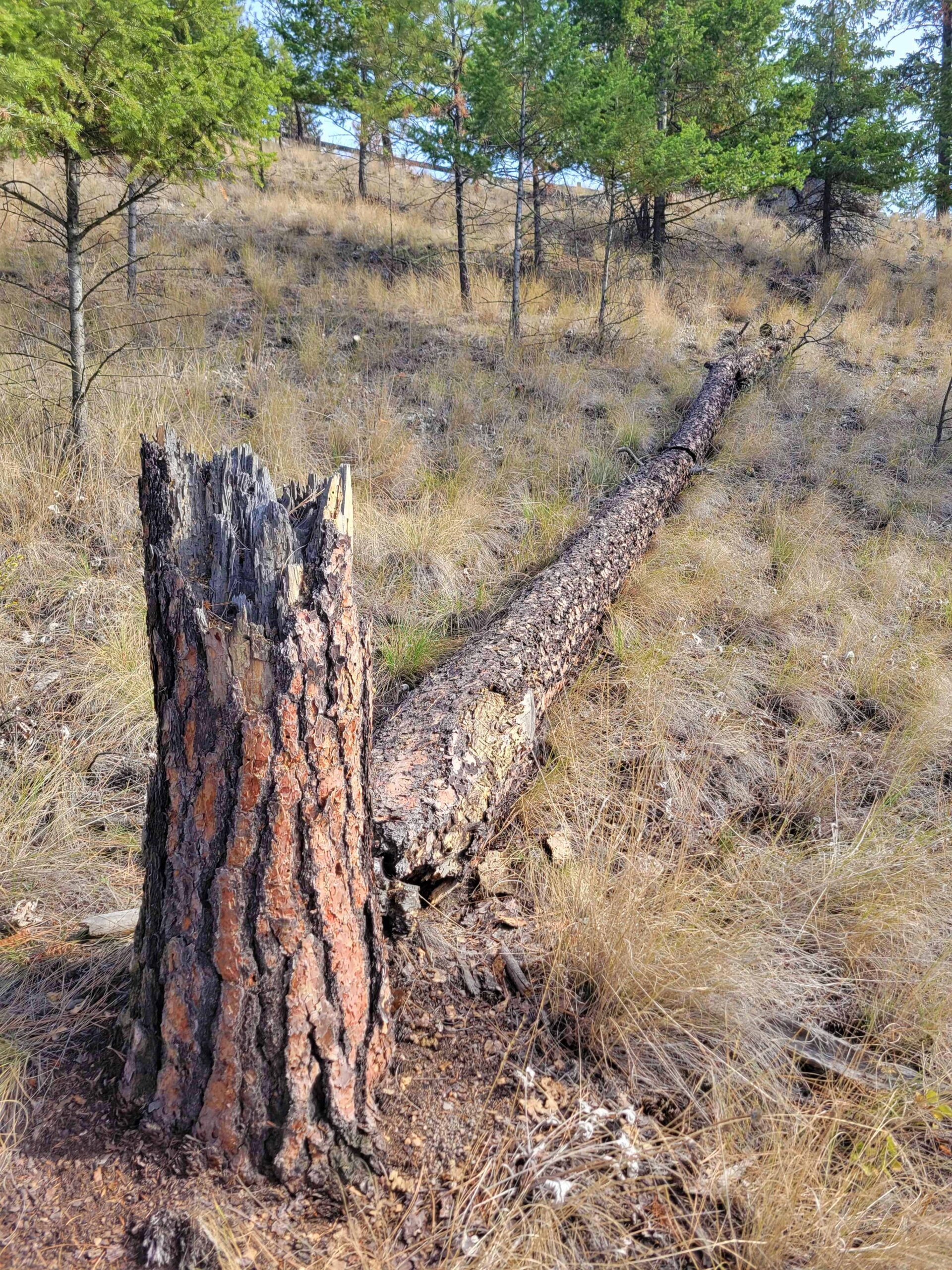
A fallen ponderosa pine on Knox Mountain.
Trees can die or fall for many reasons, including drought, insects, disease, fire, and structural damage. I don’t know what caused this particular tree to fall.
Even after a tree dies, it continues to play an important role in the ecosystem, providing habitat for insects, birds, fungi, and other organisms while gradually decomposing.
Best Time to Hike Apex Trail
Apex Trail can be enjoyed during much of the year, although each season offers a different experience.
Spring is particularly attractive when the hillsides turn green and wildflowers begin to bloom. Summer brings long daylight hours, but the exposed slopes can become extremely hot. Autumn, including my mid-October hike, offers cooler temperatures and beautiful contrasts between the golden grasslands, green pine trees, and blue lake.
Winter conditions can include snow, frost, and icy sections, particularly on stairs and shaded trails.
Trail maintenance, ecological restoration, prescribed burning, or wildfire conditions may also result in temporary restrictions, so it’s worth checking the latest park information before heading out.
Hiking Preparation
Apex Trail is a relatively short hike, but the steady uphill climb provides a good workout. Wear comfortable footwear with good traction, bring water, sun protection, a charged phone, and clothing suitable for the weather. During hot summer weather, consider hiking early in the morning or later in the day.
Leave No Trace
Please stay on designated trails to protect Knox Mountain’s sensitive grasslands and prevent further erosion. Respect fencing and restoration areas, pack out your garbage, and leave plants and wildlife undisturbed.
Final Thoughts
I really enjoyed the Apex Trail. It provides a good uphill workout without requiring a long hike, and the views of Okanagan Lake and downtown Kelowna are excellent.
What I found especially interesting was how different the landscape is from the coastal forests around Vancouver. The open ponderosa pine forest, dry grasslands, rocky slopes, and exposed fine-grained soils make Knox Mountain a fascinating place to explore.
For a route of less than 5 km, there’s certainly plenty to see along the way!
Trail Conditions and Disclaimer
This article describes my hike on 16 October 2026. Trail conditions, access arrangements, construction activity, and route markings may have changed since then. Before heading out, check current information from the City of Kelowna and follow posted trail signs and restrictions.