Buntzen Lake is surrounded by lush coastal forest, wetlands, creeks, and open areas that support a surprisingly colourful variety of flowering plants. Over the years, I have photographed many of them while hiking around the lake and on the surrounding trails.
Some flowers are large and impossible to miss, while others are small enough that you can easily walk past them without noticing. Below are some of my favourites that I have photographed around the Buntzen Lake area.
Columbia Lily
The Columbia lily (Lilium columbianum) is one of my favourite wildflowers around Buntzen Lake. Its brilliant orange flowers, dark reddish-purple spots, and strongly recurved petals make it one of the most distinctive flowers along the trails.
The flowers hang downward from tall stems and can vary considerably in appearance depending on the angle. The strongly curved petals expose the long stamens and anthers, which makes the flower especially striking when viewed up close.
One of my favourite encounters was seeing this Western tiger swallowtail (Papilio rutulus) feeding on a Columbia lily. Butterflies can act as pollinators as they move from flower to flower in search of nectar. Pollen can actually be seen on the butterfly’s body in the photograph below.
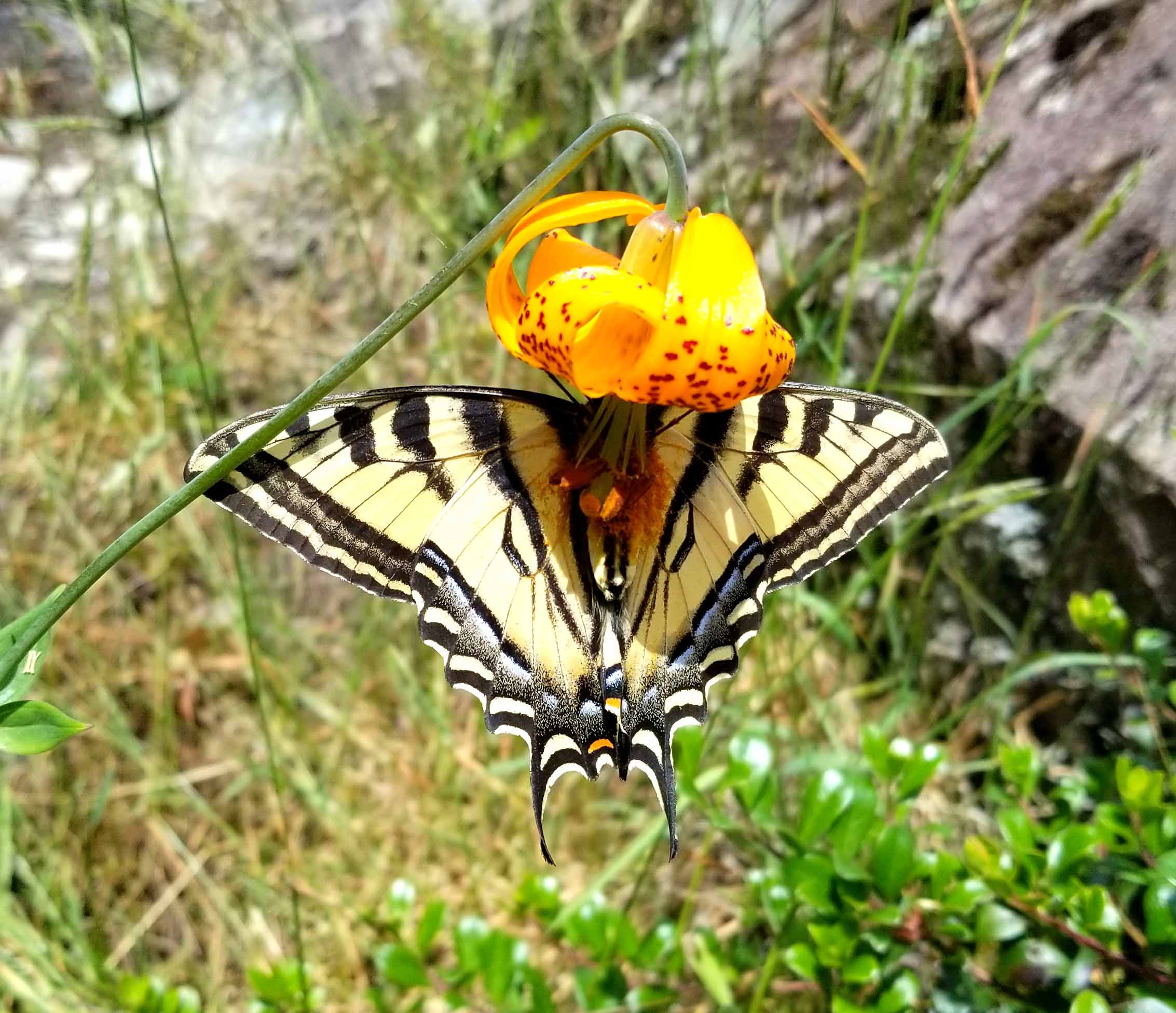
Western tiger swallowtail (Papilio rutulus) feeding on a Columbia lily, with pollen visible on its body.
Columbia lilies are native to British Columbia and are found in open forests, clearings, roadsides, meadows, and similar habitats. Their large orange flowers are visited by both insects and hummingbirds.
From my own observations around Buntzen Lake, Columbia lilies generally bloom from late May into early July, with the peak flowering period somewhere within that range depending on the year and weather conditions. At higher elevations in the surrounding mountains, I have seen them still flowering into August.
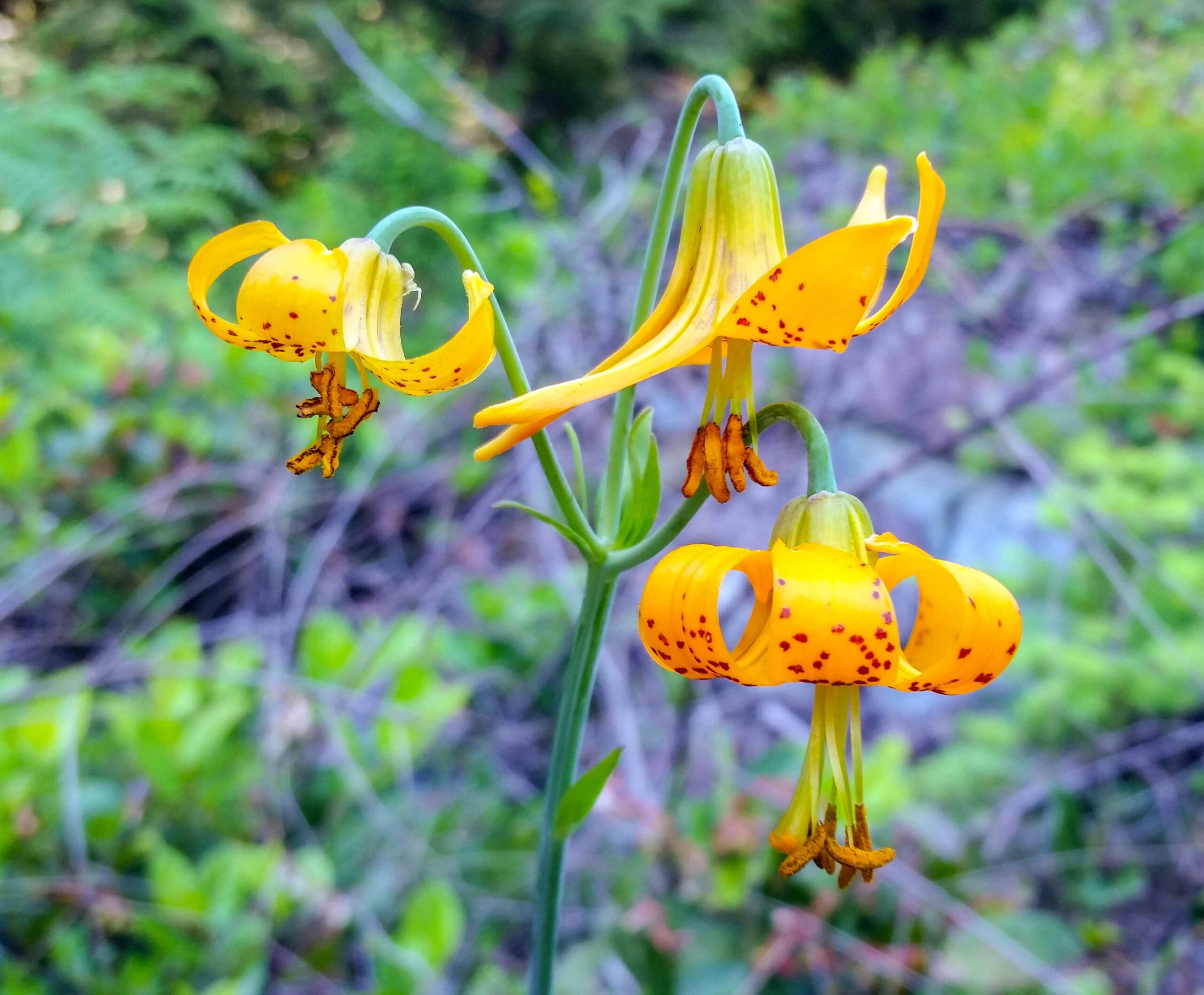
Columbia lilies showing their characteristic hanging flowers and recurved petals.
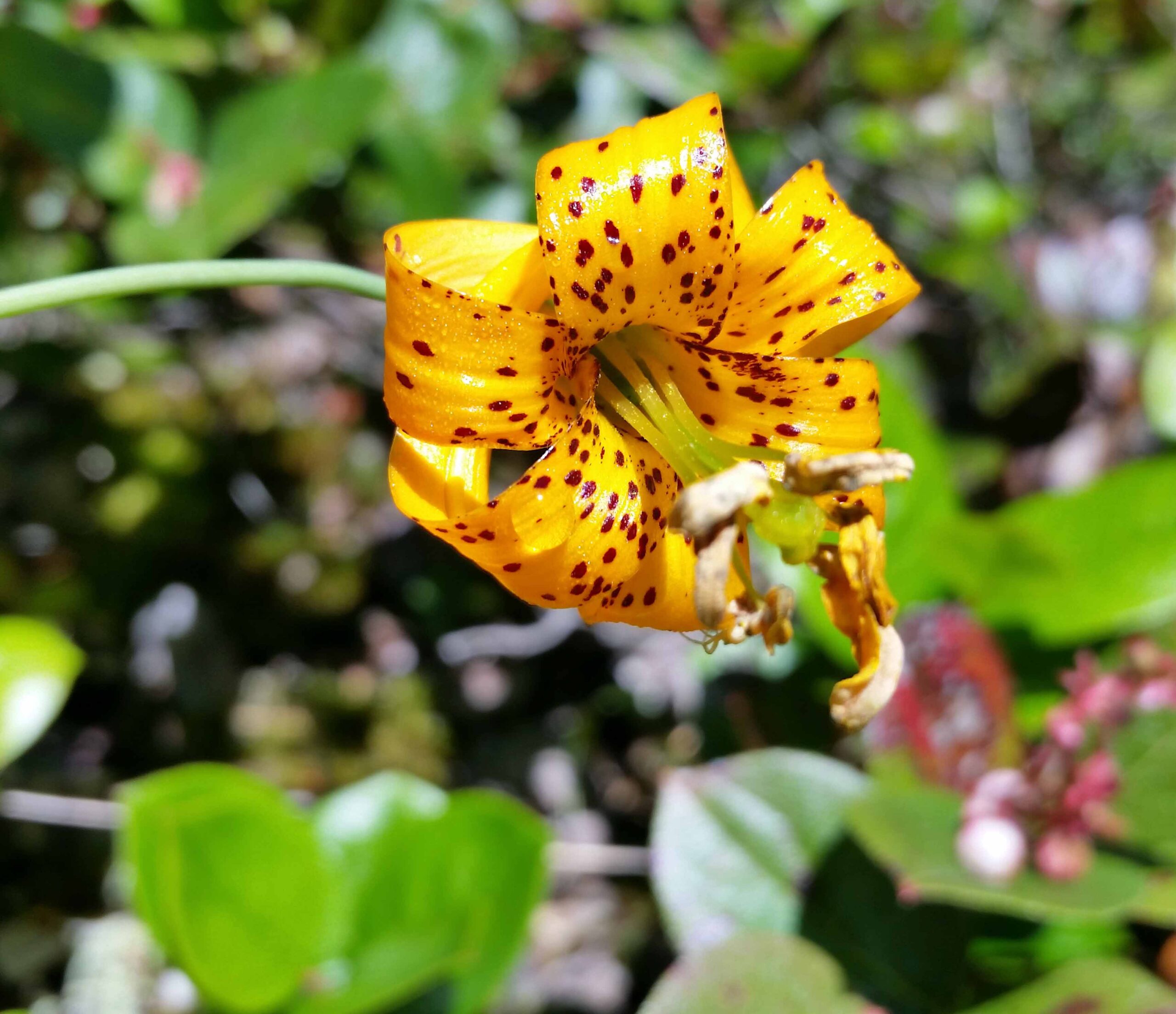
Close-up of the distinctive orange and dark-spotted petals of a Columbia lily.
Western Columbine
Another favourite is the Western columbine (Aquilegia formosa). The unusual red and yellow flowers hang downward, with long red spurs extending above the petals.
It is one of the more distinctive flowers around Buntzen Lake and is especially beautiful when seen close up.
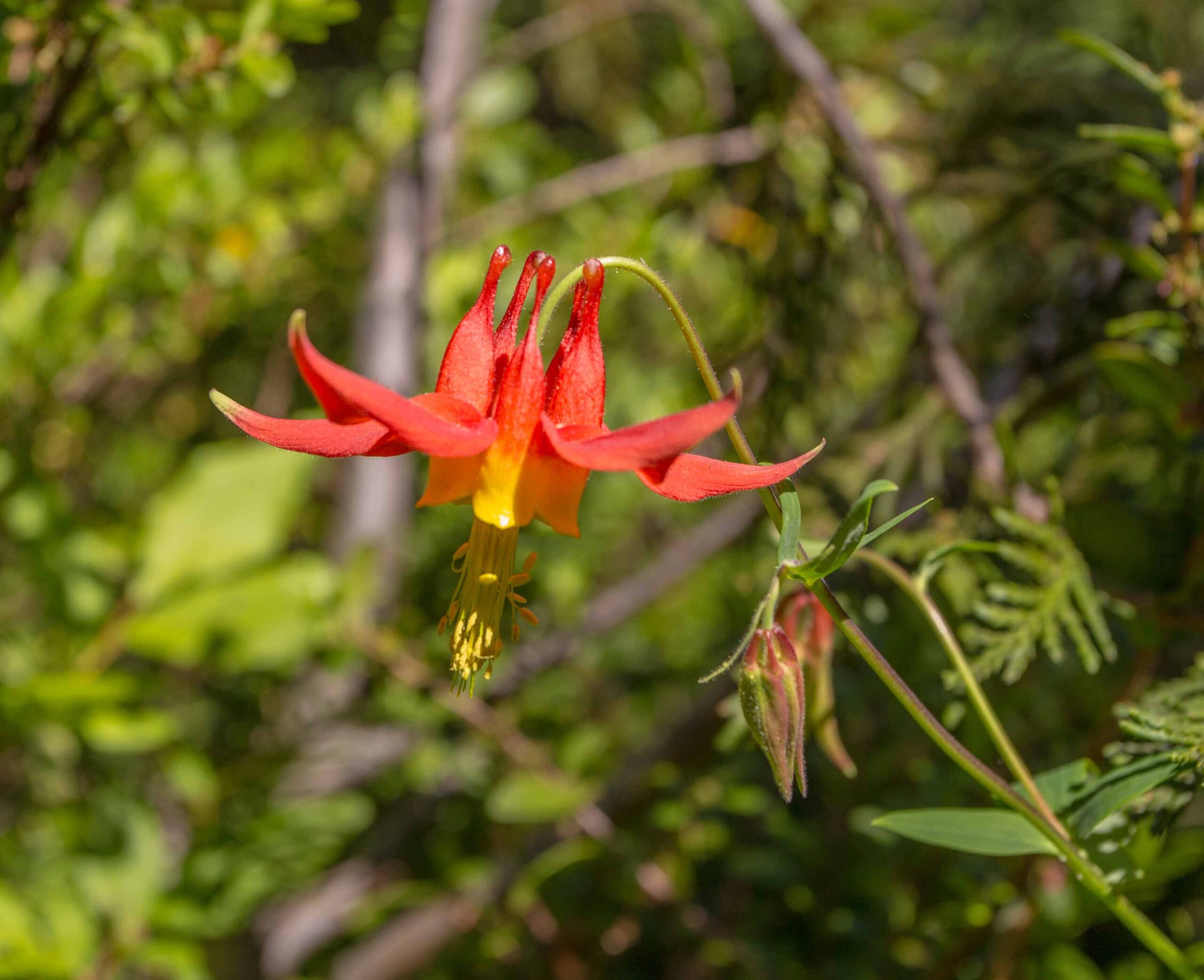
Western columbine (Aquilegia formosa).
Water Lily
Not all of the flowers around Buntzen Lake grow beside the trails. Water lilies can produce beautiful flowers among the floating leaves in quiet areas of water.
The soft pink flower below is particularly attractive against the dark green lily pads surrounding it.
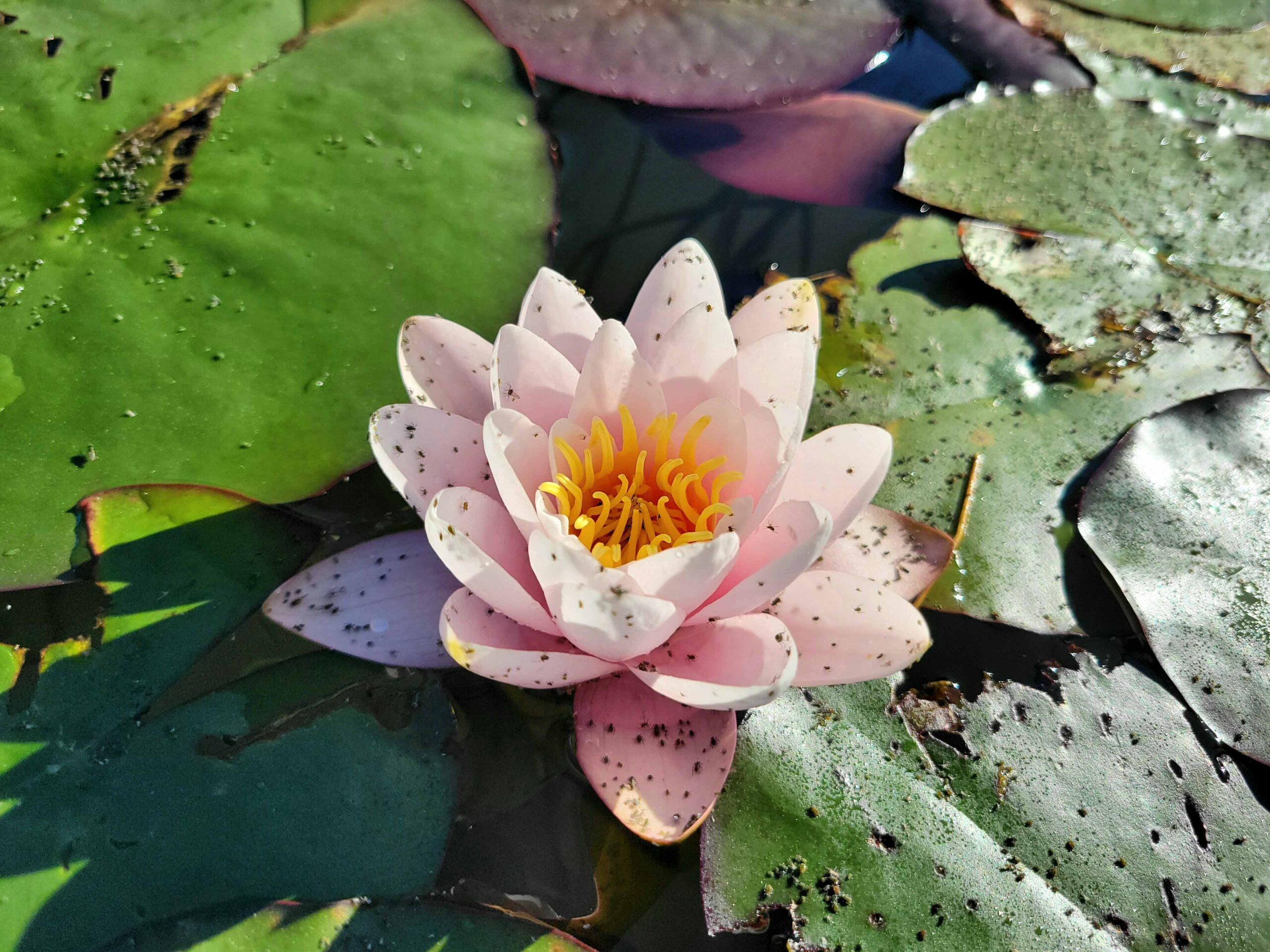
Water lily (Nymphaea sp.).
Salmonberry
Salmonberry (Rubus spectabilis) is common in the moist forests of the Buntzen Lake area. Its vivid pink flowers appear before the familiar raspberry-like fruit develops later in the season.
The flowers can range from pink to a much deeper reddish-purple and provide some of the earliest strong colour along the trails.
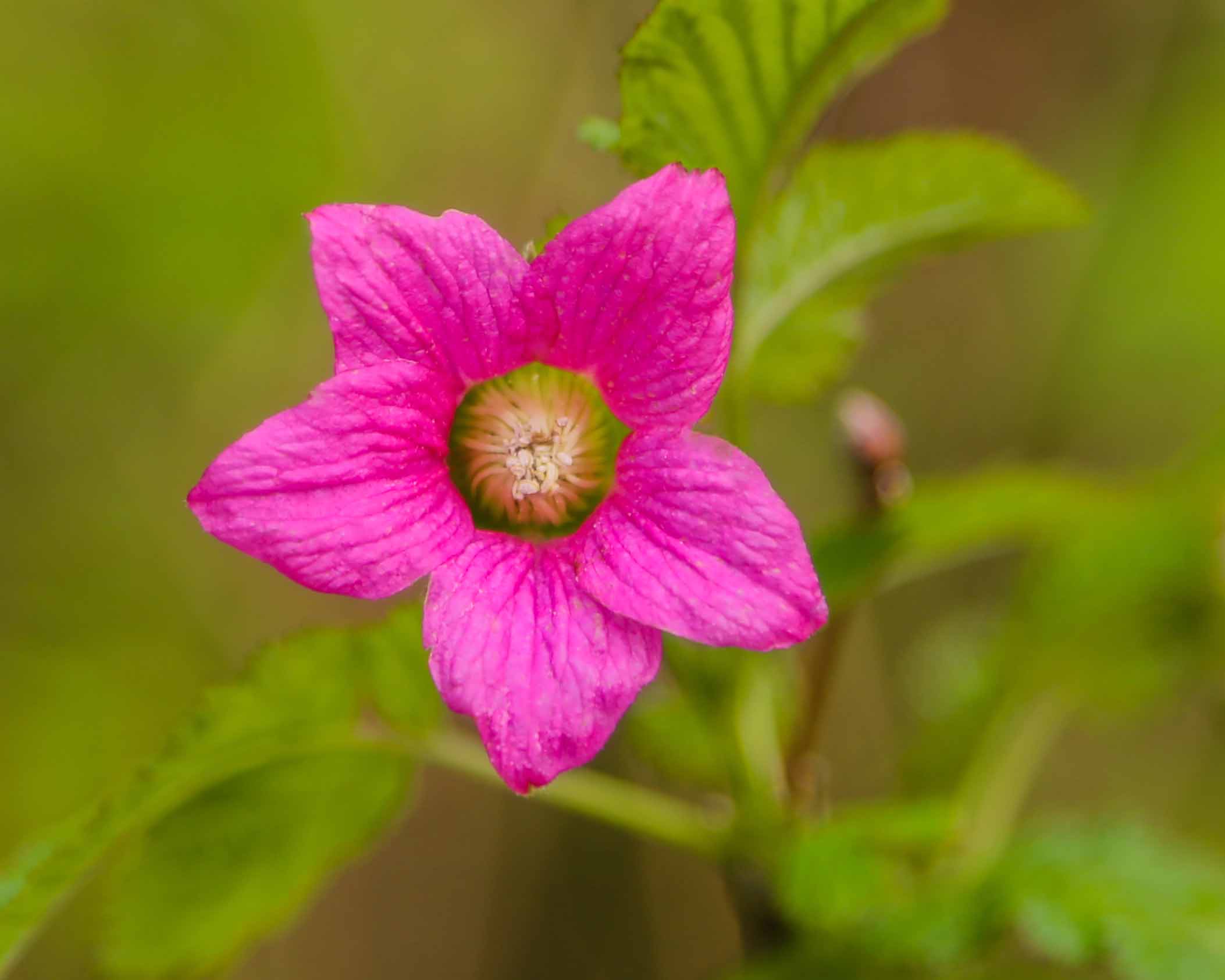
Salmonberry (Rubus spectabilis).
Douglas Spirea
Douglas spirea (Spiraea douglasii), also commonly called hardhack, produces dense clusters of small pink flowers on tall, upright stems.
Rather than one large flower, each plume consists of many tiny flowers packed together, giving the plant its distinctive fuzzy appearance.
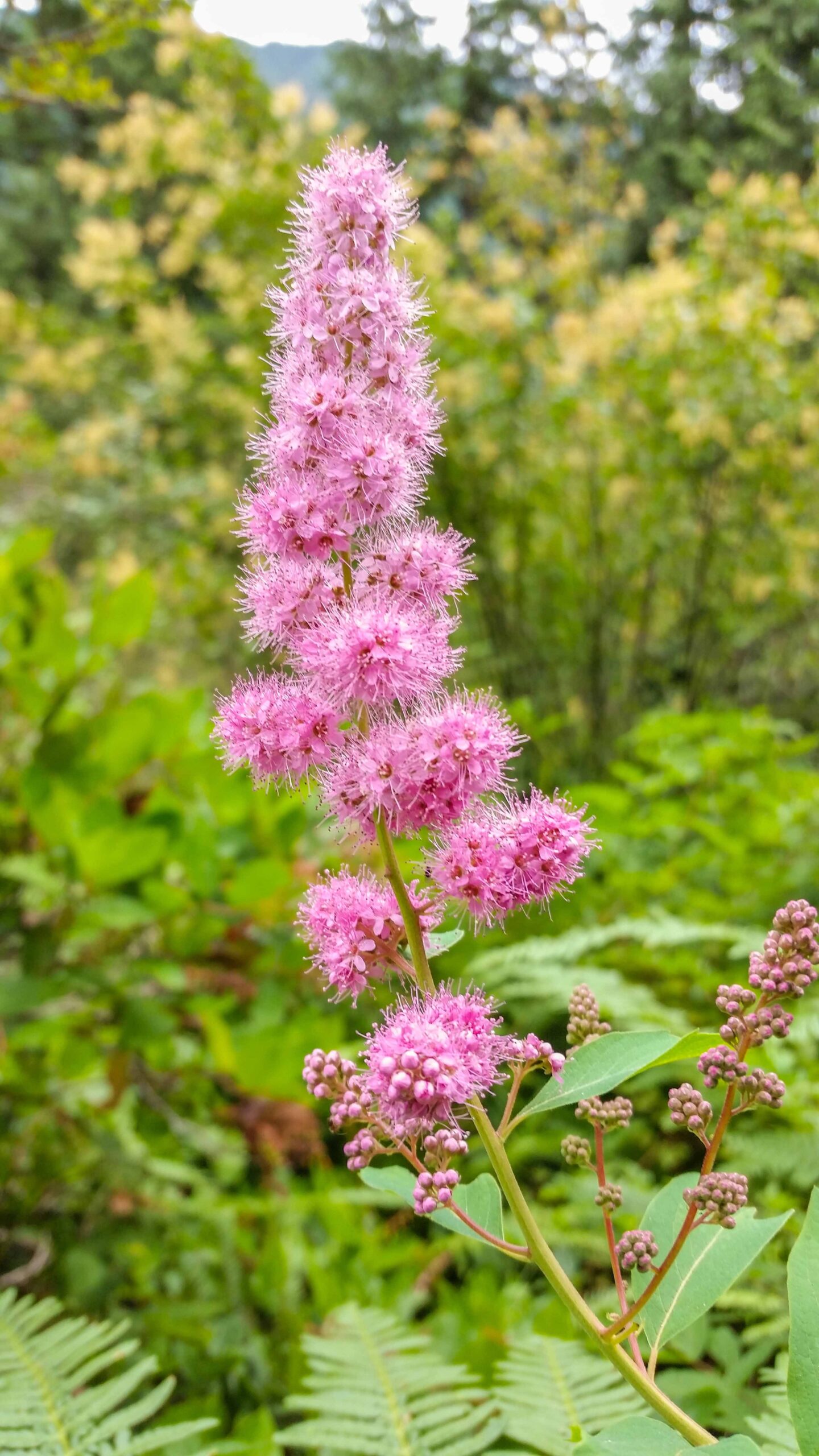
Douglas spirea, also known as hardhack (Spiraea douglasii).
Thimbleberry
Thimbleberry (Rubus parviflorus) is easy to recognize once you become familiar with its large, soft, maple-shaped leaves. The plant produces relatively large white flowers followed later by soft red berries.
It is common along forest edges, trails, and other openings around the Buntzen Lake area.
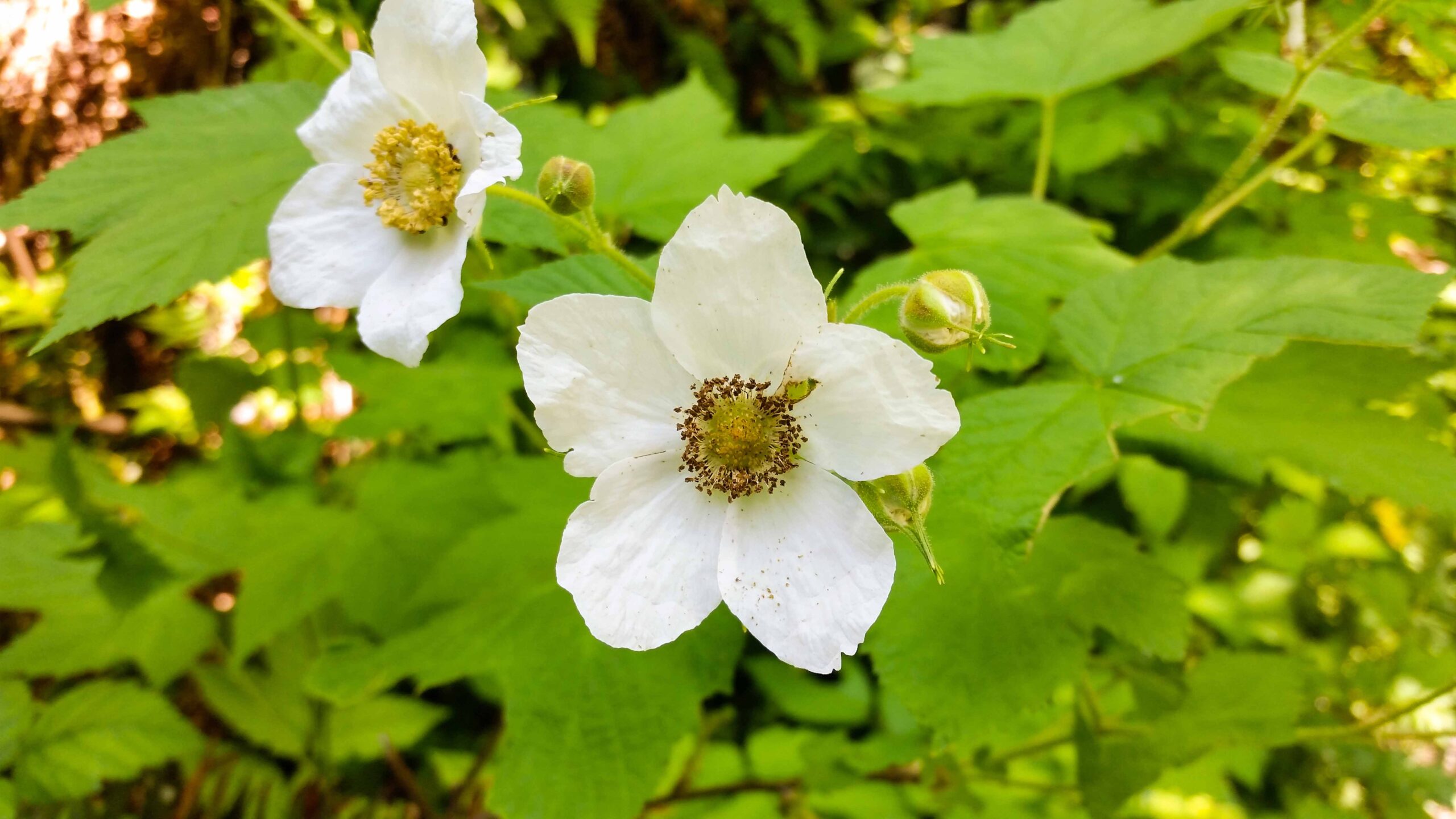
Thimbleberry (Rubus parviflorus).
Western Skunk Cabbage
Western skunk cabbage (Lysichiton americanus) is one of the most recognizable plants in wet areas around Buntzen Lake. It grows in saturated ground, swampy areas, and beside slow-moving water.
The yellow structure that looks like a large petal is called a spathe. It surrounds the central flower spike, or spadix, which carries numerous tiny flowers.
Its enormous green leaves become even more conspicuous after flowering.
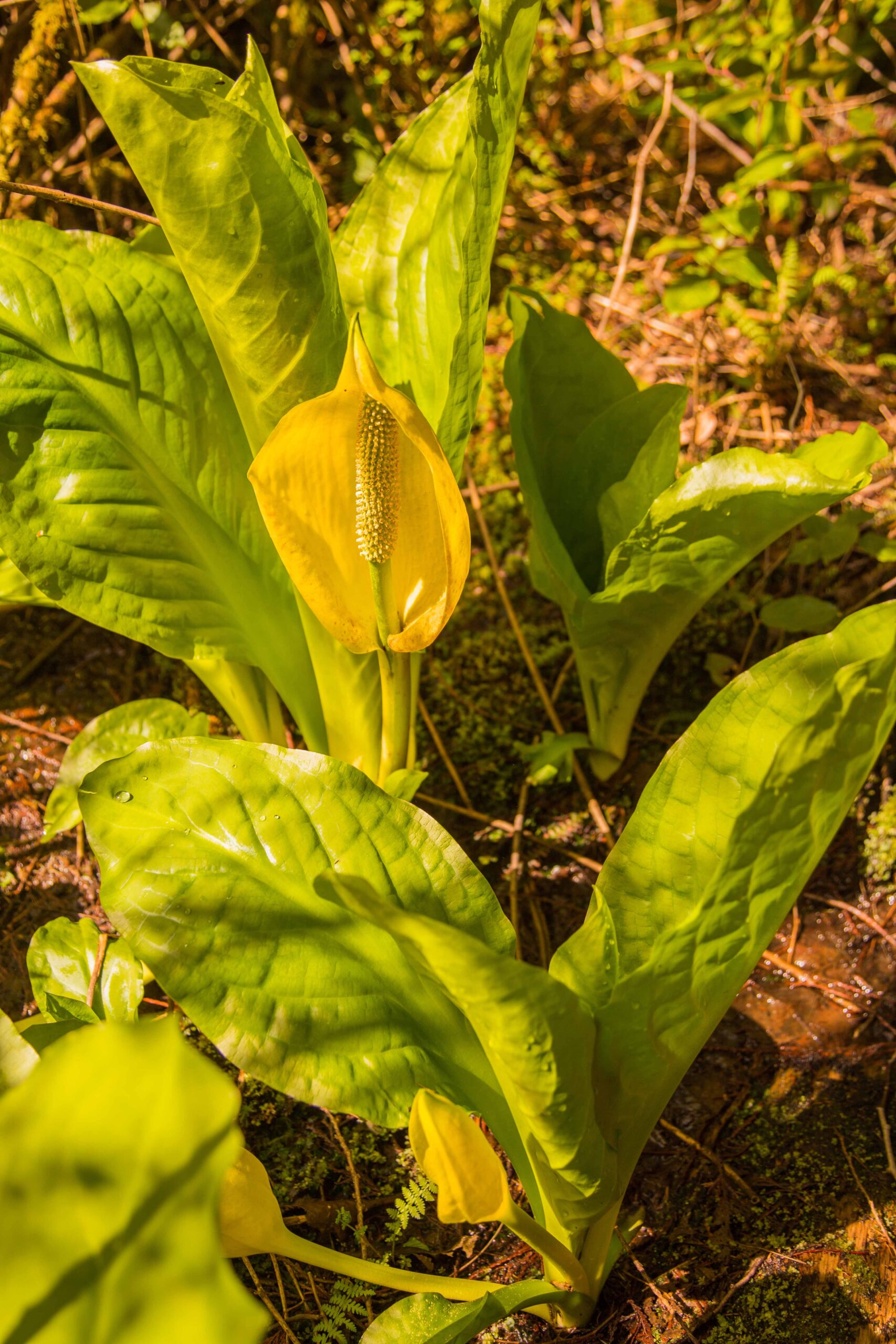
Western skunk cabbage (Lysichiton americanus).
Self-Heal
Self-heal (Prunella vulgaris), also known as heal-all, is much smaller than many of the other flowers on this page. Its purple flowers grow tightly around a short, upright flower head.
It is easy to overlook among grasses and other low vegetation, but the purple flowers are quite attractive when viewed close up.
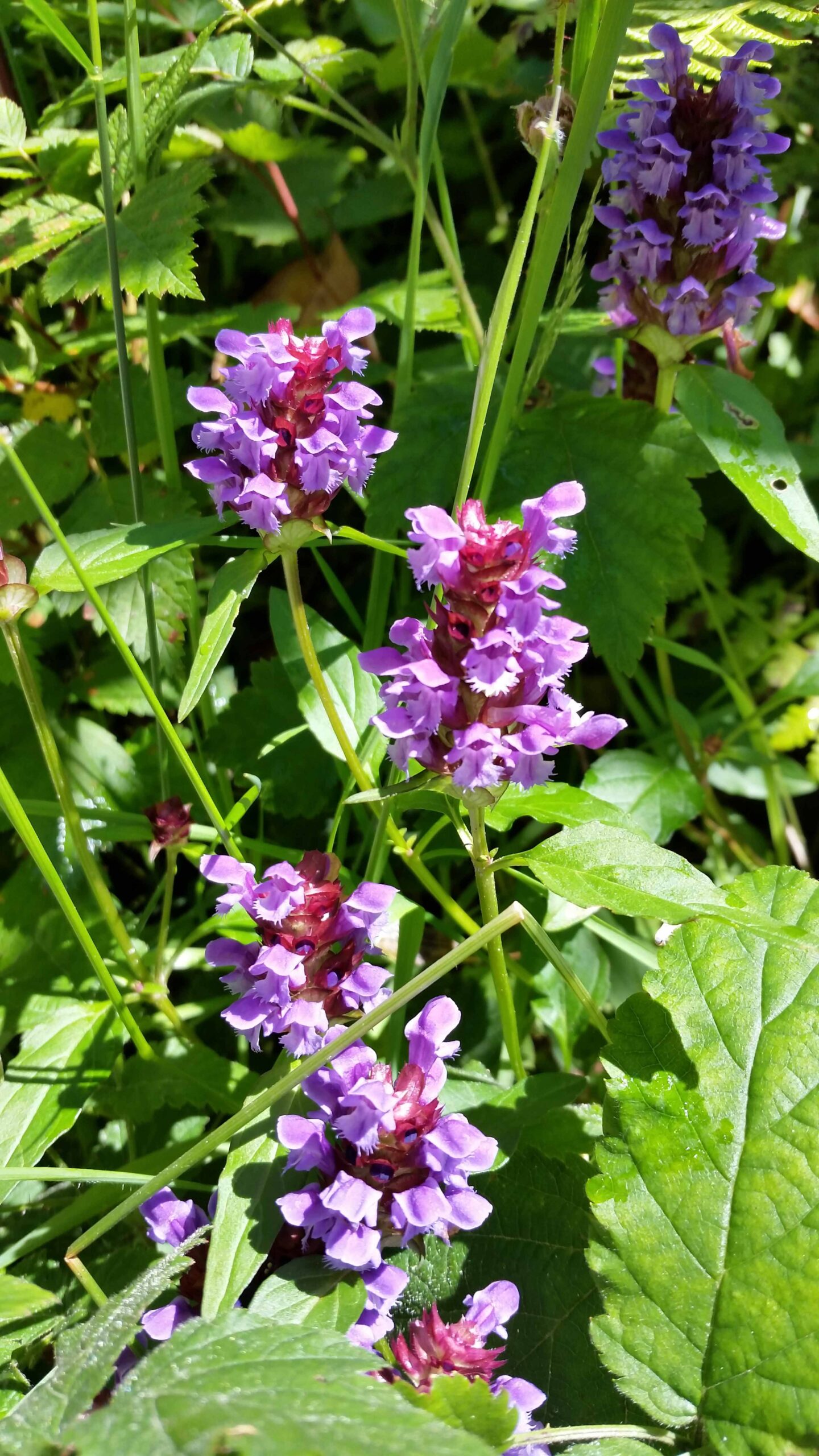
Self-heal, also known as heal-all (Prunella vulgaris).
Welsh Poppy
The bright orange flowers of the Welsh poppy (Papaver cambricum) are difficult to miss against the green forest floor.
The thin petals and long stems give the flowers a delicate appearance, particularly when several are growing together in a patch of filtered sunlight.
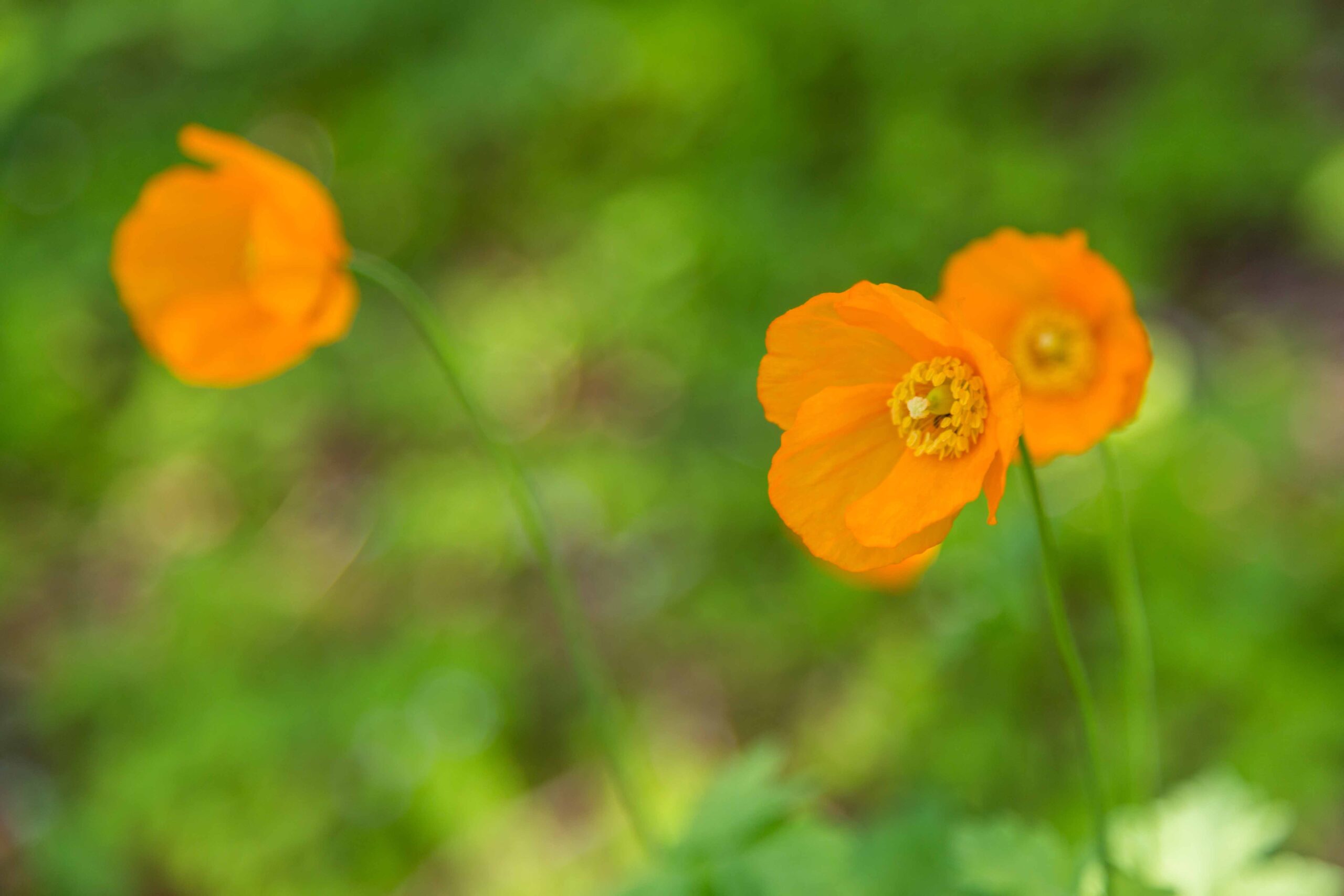
Welsh poppy (Papaver cambricum).
Common Foxglove
Common foxglove (Digitalis purpurea) produces tall spikes covered with large, tubular flowers. Around Buntzen Lake, I have seen both the familiar purple form and striking white-flowered plants.
The spotted interiors of the individual flowers are especially impressive when viewed closely. Foxglove is an introduced plant in British Columbia, and all parts of the plant are toxic if eaten.
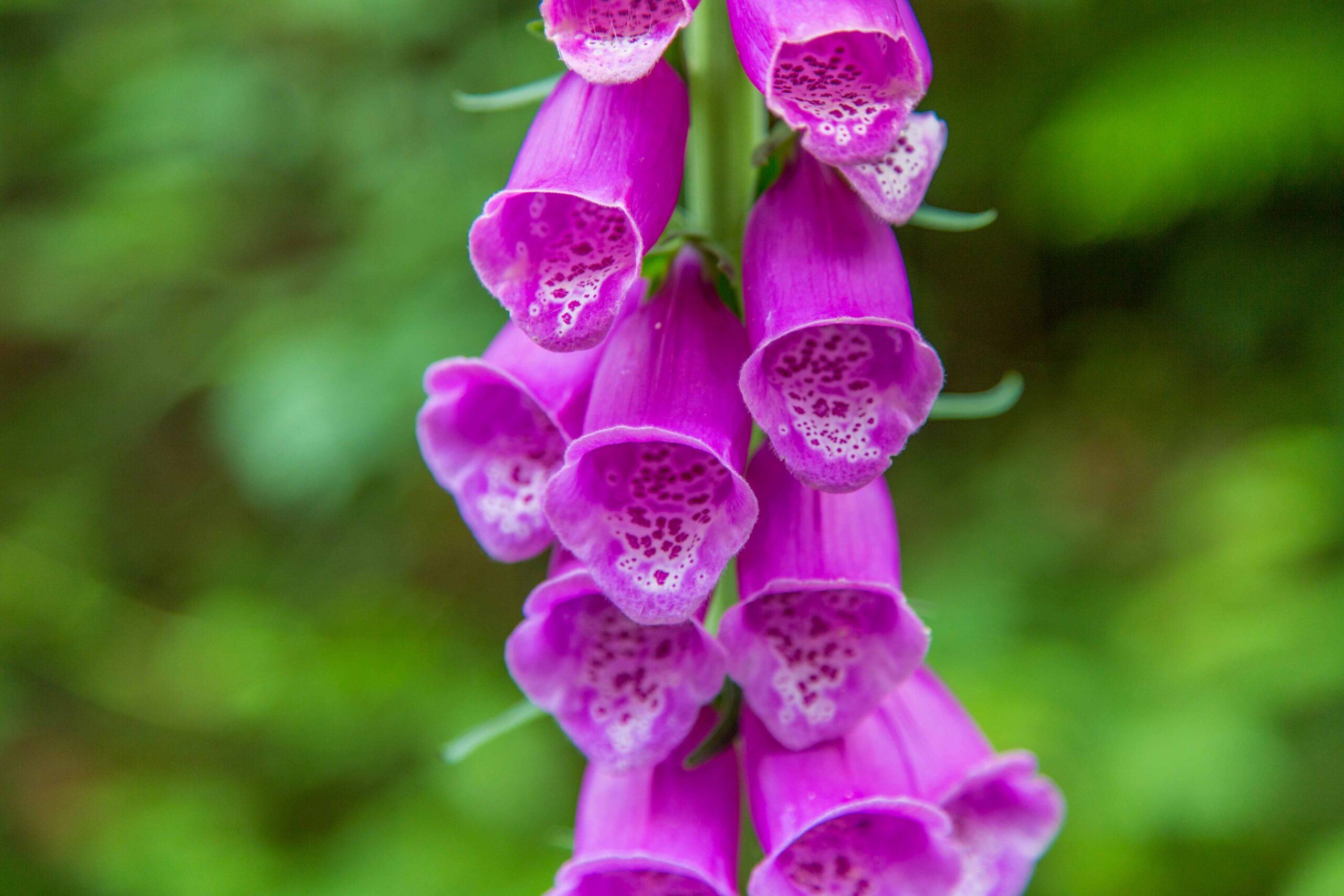
Common foxglove (Digitalis purpurea).
Flowers Through the Seasons
The flowers around Buntzen Lake change considerably through the year. Some of the earliest blooms appear in wet areas and along forest edges in spring, while other species become more noticeable through late spring and summer.
It is one of the things I enjoy about repeatedly hiking the same trails. A section of forest that looks completely green during one visit can have a colourful flower growing beside the trail only a few weeks later.
These are only some of the flowering plants I have photographed around Buntzen Lake. I will continue adding to this page as I come across more.