Fallen trees are a normal part of hiking in the forests around Buntzen Lake. After strong windstorms, particularly during the wetter fall and winter months, trees can come down across trails, roads, and other areas.
The forestry term for trees uprooted or broken by wind is windthrow, although hikers usually just call them blowdowns.
On the heavily travelled Buntzen Lake Trail, fallen trees that block the route are generally dealt with relatively quickly in my experience. On the higher and less-travelled trails, such as Diez Vistas, Swan Falls, and trails on Eagle Ridge, blowdowns can remain for considerably longer.
Strong winds can bring down entire trees as well as large branches. Partially uprooted trees and branches caught in neighbouring trees can remain unstable after the storm has passed. If conditions appear unsafe or a fallen tree cannot be crossed safely, turn around rather than forcing your way through.
Why Do Trees Blow Down?
Windthrow depends on more than just wind speed. Tree height, exposure, root condition, soil depth, drainage, and the amount of water in the soil all affect how firmly a tree is anchored.
Prolonged rain can make trees more susceptible because saturated soil provides less support for the root system. Combine wet ground with a strong Pacific windstorm and the risk of trees being uprooted can increase substantially.
Ridges and other exposed terrain can also experience stronger winds than more sheltered parts of the forest.
Blowdowns on the Higher Trails
Fallen trees are often more noticeable on the higher and less frequently travelled trails, where maintenance naturally takes longer and storm damage can be more extensive.
Below are several large blowdowns I encountered on Eagle Mountain, just east of the White Rock Viewpoint.
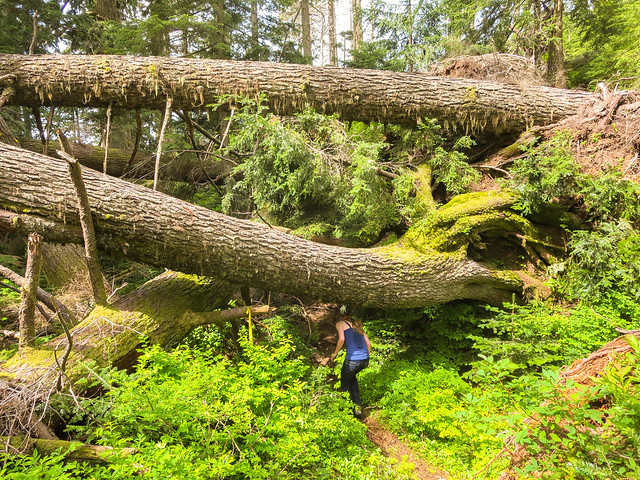
Large blowdowns on Eagle Mountain near the White Rock Viewpoint.
I also encountered these fallen trees on the Swan Falls Trail.
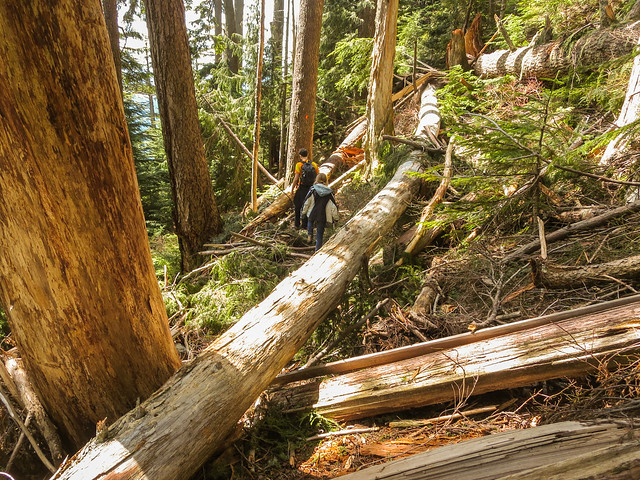
Blowdowns on the Swan Falls Trail.
And below is another example from the Diez Vistas Trail.
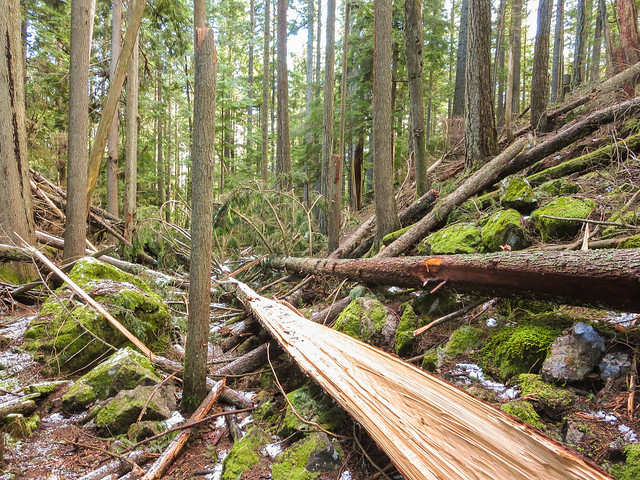
Fallen trees across the Diez Vistas Trail.
Blowdowns on the Main Buntzen Lake Trail
Blowdowns also occur on the main Buntzen Lake Trail, although the trail receives much heavier use and obstructions are generally addressed sooner.
February 2014 was a particularly noticeable period for storm damage. During one storm around 15 February, several large trees came down around the Buntzen Lake Trail.
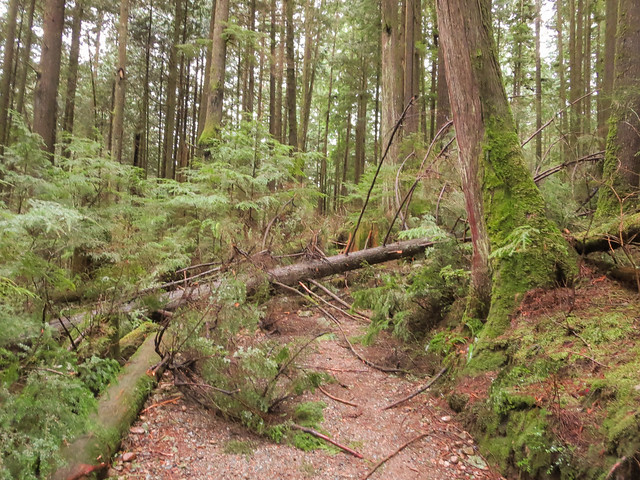
A large tree down across the Buntzen Lake Trail in February 2014.
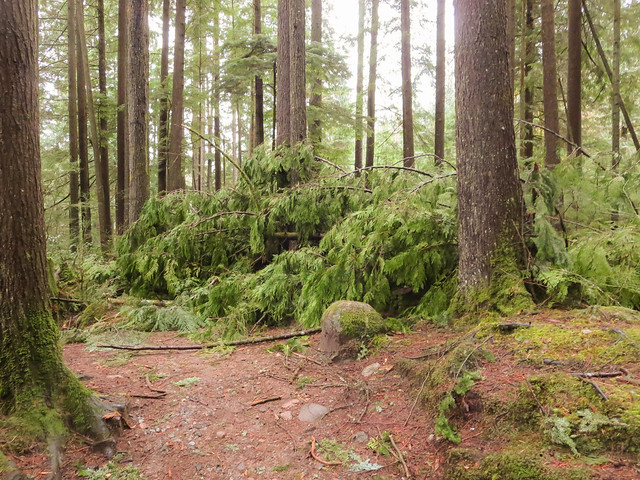
Another tree brought down during the same period of stormy weather.
Fallen Trees Near North Beach
Storm damage is not limited to narrow hiking trails. This tree came down on Powerhouse Road near North Beach.
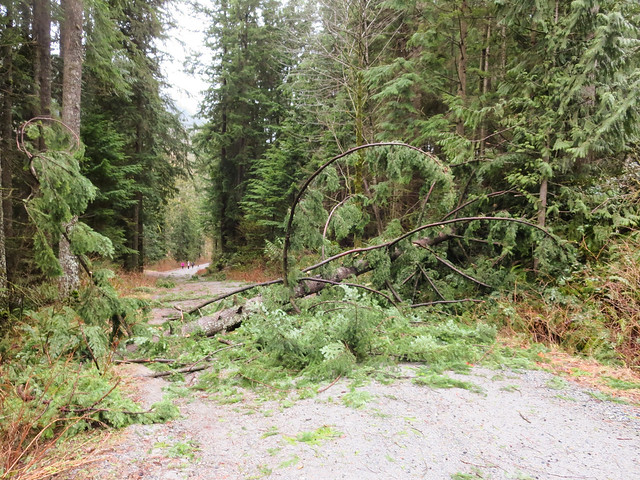
A fallen tree on Powerhouse Road near North Beach.
Hazard-Tree Assessments
Trail maintenance is not limited to removing trees after they fall. Trees that are dead, damaged, leaning toward heavily used areas, or otherwise considered potentially hazardous may also be assessed and removed before they fail.
In 2014, I noticed a number of trees around Buntzen Lake that had been marked during a tree-assessment program. Some were subsequently removed.
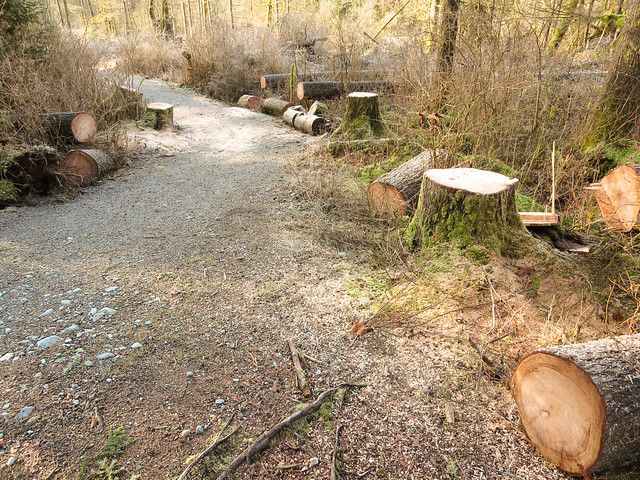
Tree removal near the former floating bridge area in 2014.
Tree work accelerated during May 2014, and the results were very noticeable in several areas around the lake.
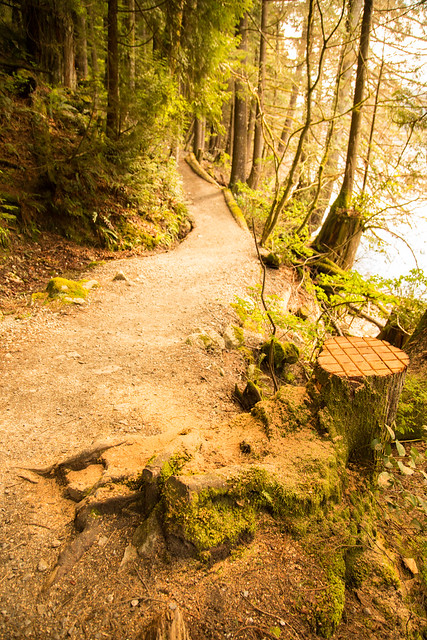
Tree removal work around Buntzen Lake in 2014.
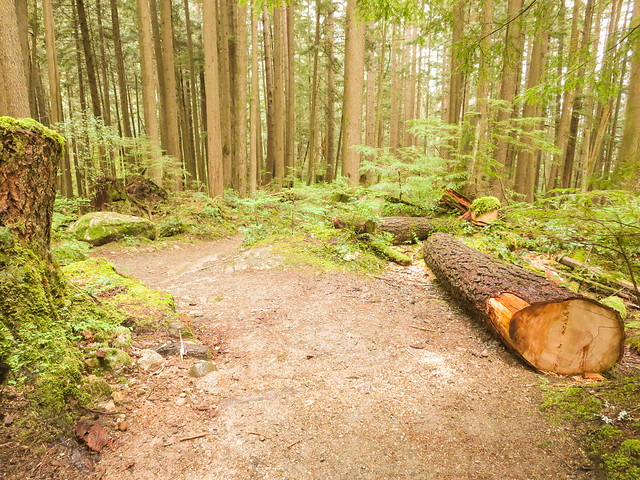
A tree removed beside one of the Buntzen Lake trails.
Before and After: Tree 105
One of the more interesting examples was a large tree on the west side of Buntzen Lake that had been marked for assessment.
The photograph below shows the tree before it was removed.
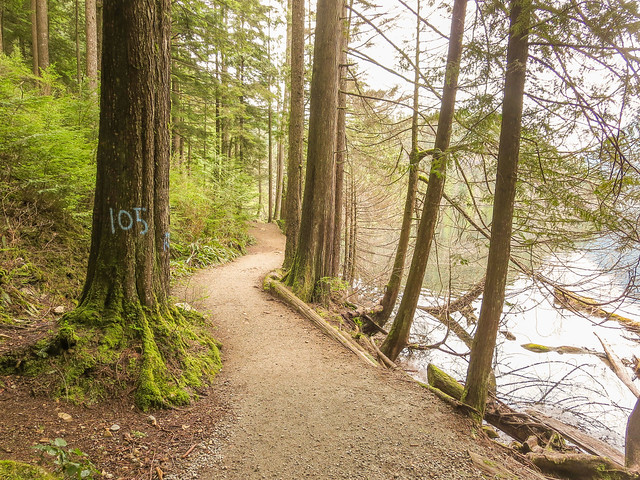
Tree 105 before removal.
About a month later, the tree had been taken down.
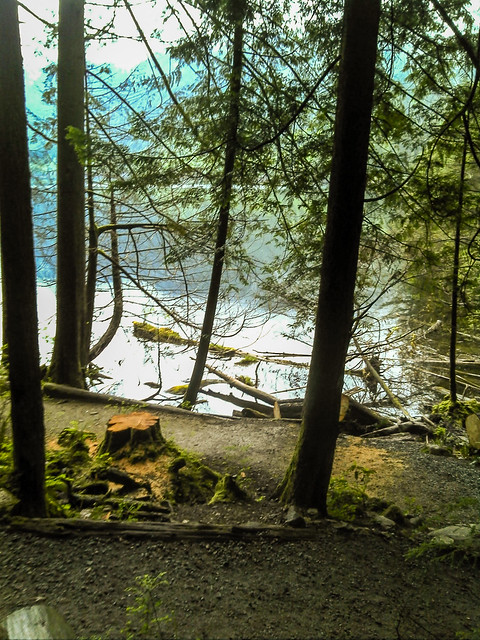
The same area after the large tree was removed.
What to Do if You Encounter a Blowdown
A fallen tree across a trail may be a simple inconvenience, but storm-damaged trees can also create less obvious hazards.
- Be especially cautious during and immediately after periods of strong wind.
- Look above as well as ahead for broken branches or partially fallen trees caught in neighbouring trees.
- Avoid standing beside unstable root plates or underneath leaning trees.
- Do not attempt to move, cut, or climb over a large tree if doing so puts you at risk.
- If the obstruction cannot be crossed safely, turn around.
- On remote or less-travelled trails, be prepared for more than one obstruction following a major storm.
Strong winds combined with rain can be particularly problematic because saturated soil can reduce the anchoring strength of tree roots.
Check Conditions Before Heading Out
Most of the time, a few fallen trees are simply part of hiking in a coastal forest. After a significant windstorm, however, conditions can change quickly and higher or less-travelled routes may take longer to clear.
Before heading out, check the BC Hydro Buntzen Lake trail page for current closures and major safety alerts. BC Hydro notes that some trails in the recreation area cross property it does not maintain, where hikers may encounter rough terrain and other trail hazards.
The photographs on this page show conditions I encountered during earlier hikes, particularly in 2014. Fallen trees, trail maintenance, and route conditions change continually.