One of the nicest wildlife encounters at Buntzen Lake is coming across a mother duck with a group of ducklings following close behind.
On a hot day in late July 2014, I saw two very small ducklings with their mother near the old floating bridge area at the south end of Buntzen Lake. At the time, I thought late July seemed unusually late in the season for such young ducklings.
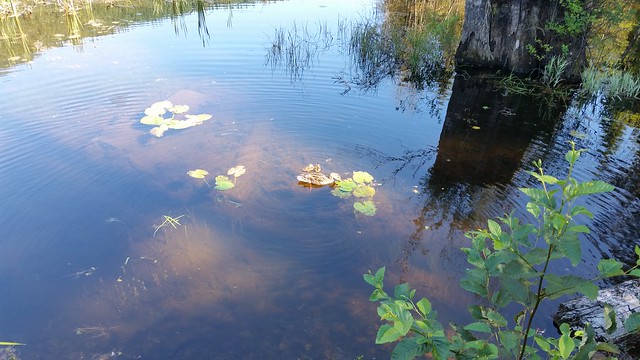
Two young ducklings with their mother near the south end of Buntzen Lake in July 2014.
Late-Season Ducklings
Seeing very young ducklings in late July is not necessarily unusual. Mallards can nest more than once if an earlier nesting attempt is unsuccessful, so later broods can appear well into the summer.
A Mallard hen typically lays roughly 8 to 12 eggs and incubates them for about 28 days. Once the ducklings hatch, things move quickly. Within about a day, the mother leads them away from the nest and toward suitable water and feeding habitat.
Ducklings are surprisingly independent from the beginning. They are able to swim and find much of their own food almost immediately, although they still depend on their mother for protection, warmth, and guidance.
Mallards at Buntzen Lake
The duck family in the photographs below are Mallards (Anas platyrhynchos), one of the most familiar ducks in British Columbia.
Mallards are dabbling ducks. Rather than diving deeply for food, they usually feed in shallow water by dipping their heads below the surface and tipping their bodies upward. Their diet includes aquatic plants, seeds, insects, insect larvae, snails, and other small aquatic organisms.
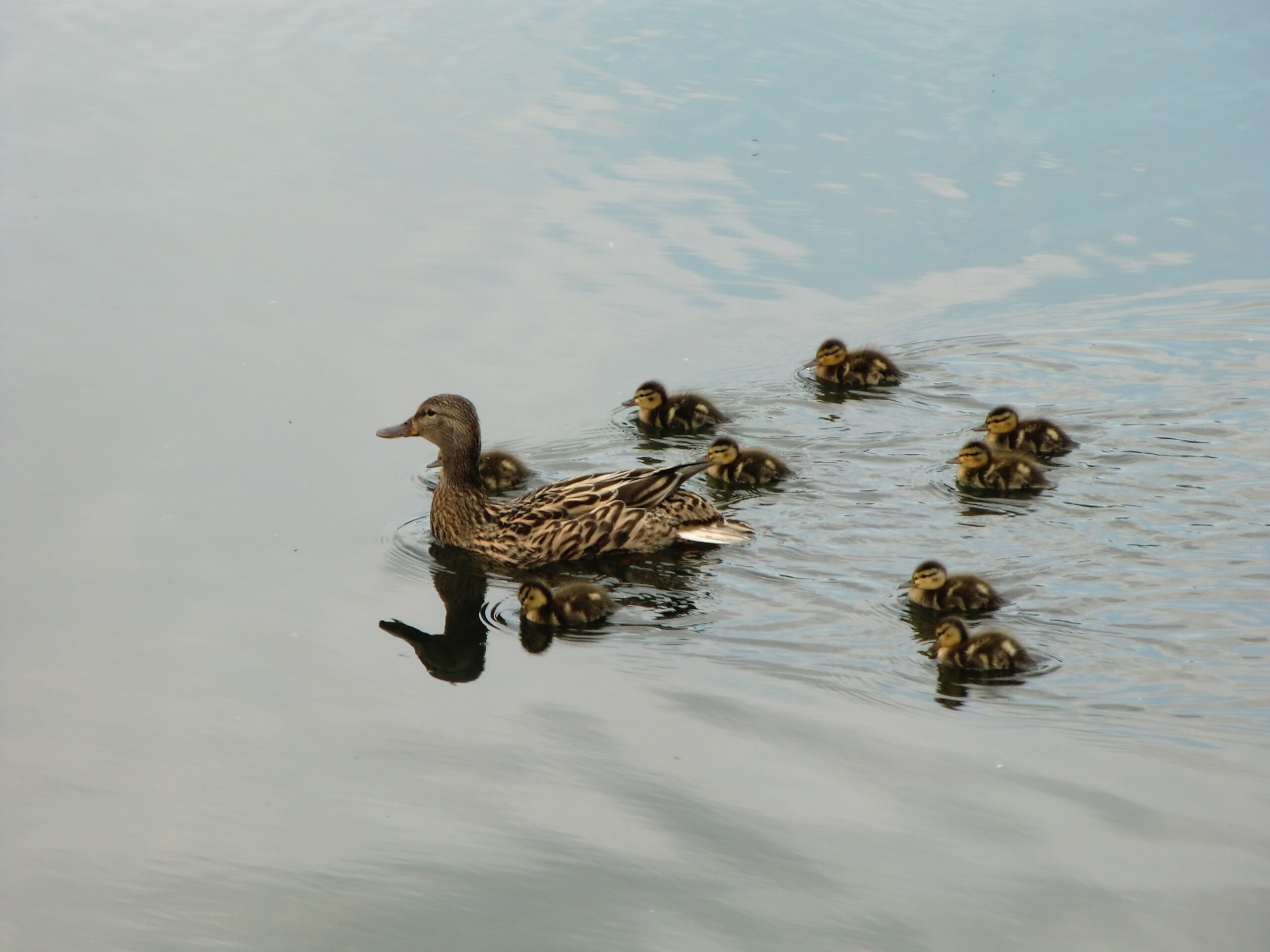
A Mallard hen leading a large brood of ducklings.
Growing Quickly
Ducklings change remarkably quickly. The smallest chicks are covered almost entirely in soft down, but juvenile feathers soon begin to appear as they grow.
Mallard ducklings generally remain with their mother until they are able to fly at about eight weeks of age. By that stage, they can look almost like small versions of the adult female.
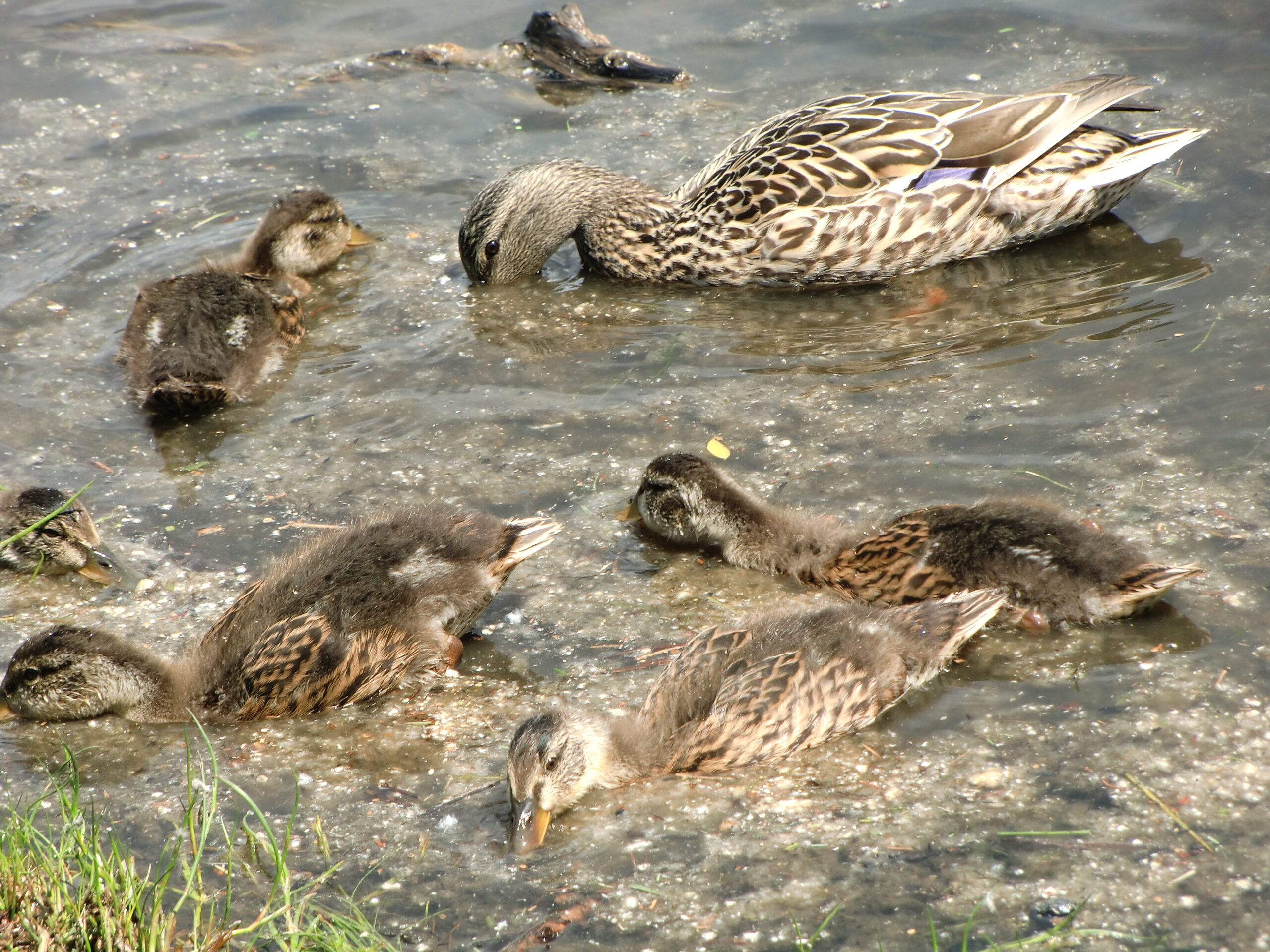
Older Mallard ducklings feeding beside their mother.
Why Do Ducklings Follow Their Mother?
Shortly after hatching, ducklings learn to recognize and follow their mother. This process is known as imprinting.
Following the hen helps the young stay together, locate good feeding areas, and respond quickly when she detects danger. If you watch a brood for a while, you will often see the ducklings form a loose line behind their mother as they move across the water.
What Do Ducklings Eat?
Young Mallards feed naturally on a wide variety of small aquatic animals and plants. Insects and other invertebrates are particularly valuable while the birds are growing.
Although feeding ducks can be tempting, it is best to let them find their own food. Bread and many other foods people commonly give ducks are not nutritionally appropriate, and regular feeding can make wild ducks dependent on people or encourage large numbers of birds to gather in one location.
Keeping Your Distance
A mother duck may appear calm around people, but it is still best to give her and the ducklings plenty of space. If the family changes direction, moves away, or becomes noticeably alert when you approach, you are probably too close.
Dogs should also be kept under control around waterfowl. The regular trails around Buntzen Lake require dogs to be leashed, except within the designated dog off-leash areas.
Watching Wildlife at Buntzen Lake
The shoreline and quieter areas around Buntzen Lake provide habitat for many birds and other wildlife. Mallards are among the easiest to see, particularly when a brood of ducklings is moving along the shoreline.
They are a good reminder that even at one of Metro Vancouver’s busiest recreation areas, there is still plenty of wildlife living and raising young around the lake.