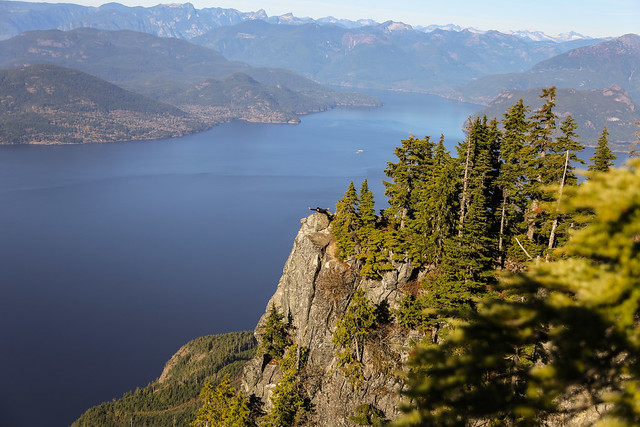
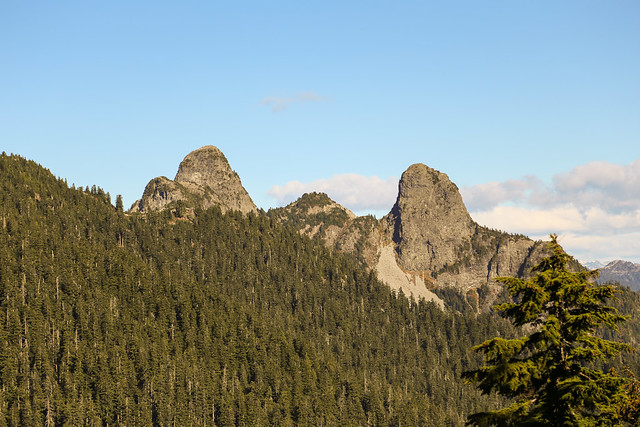
Category Archives: North Shore

Norvan Falls Trail

Norvan Falls is one of the classic longer hikes in Lynn Headwaters Regional Park in North Vancouver. The route follows Lynn Creek through a heavily forested valley before reaching Norvan Creek and the waterfall near the northern end of the maintained trail system.

Norvan Falls: Trail Conditions & Weather
Check current park advisories, road access, and weather before heading out.
📍 Get Driving Directions ↗

The standard route to Norvan Falls is mostly gradual, but the distance makes it a substantial day hike. On my hike, I also used the rougher upper section of the Lynn Loop and Headwaters Trail rather than staying entirely on the lower creekside route, adding both distance and elevation.

This is a long hike despite the moderate grade.
The standard Norvan Falls route is approximately 13.8 km return from the park entrance. My GPS track was approximately 15.6 km because I used the higher parallel trail and started farther from the main trailhead. Allow enough time, carry appropriate supplies, and remember that weather and trail conditions can change quickly in the North Shore mountains.

Trail Stats

These statistics are from my hike and include the longer, rougher parallel route rather than following the easiest creekside route for the entire trip.

  • Distance: approximately 15.6 km return
  • Time: approximately 4 hours 15 minutes
  • Low point: approximately 193 m
  • High point: approximately 445 m
  • Elevation gain: approximately 252 m
  • Recorded cumulative elevation gain: approximately 840 m
  • Difficulty: Intermediate
  • Route: Out and back with an alternate upper trail section
  • 📍 Trailhead: Google Maps and navigation

Metro Vancouver currently lists the standard Norvan Falls hike from the park entrance as approximately 13.8 km return and recommends allowing about six hours. My route was longer because I used part of the higher trail and began farther from the main trailhead.

Parking and Access

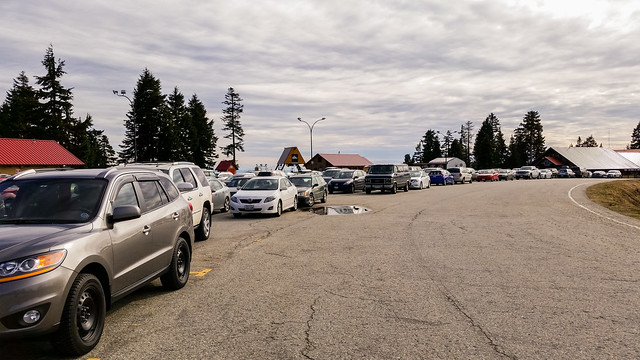
Norvan Falls is accessed from Lynn Headwaters Regional Park at the north end of Lynn Valley Road. Parking can fill quickly on busy weekends and during good weather, so an early start is worthwhile.

Seasonal pay parking is in effect at Lynn Headwaters Regional Park. Check Metro Vancouver Regional Parks before leaving for current park hours, parking information, trail notices, and closures.

Interesting Facts

  • Norvan Falls: The waterfall drops from Norvan Creek through a narrow forested ravine before the creek joins Lynn Creek. Estimates of its height vary depending on how the falls are measured, but it is considerably larger than the old 30-foot description used on this page.
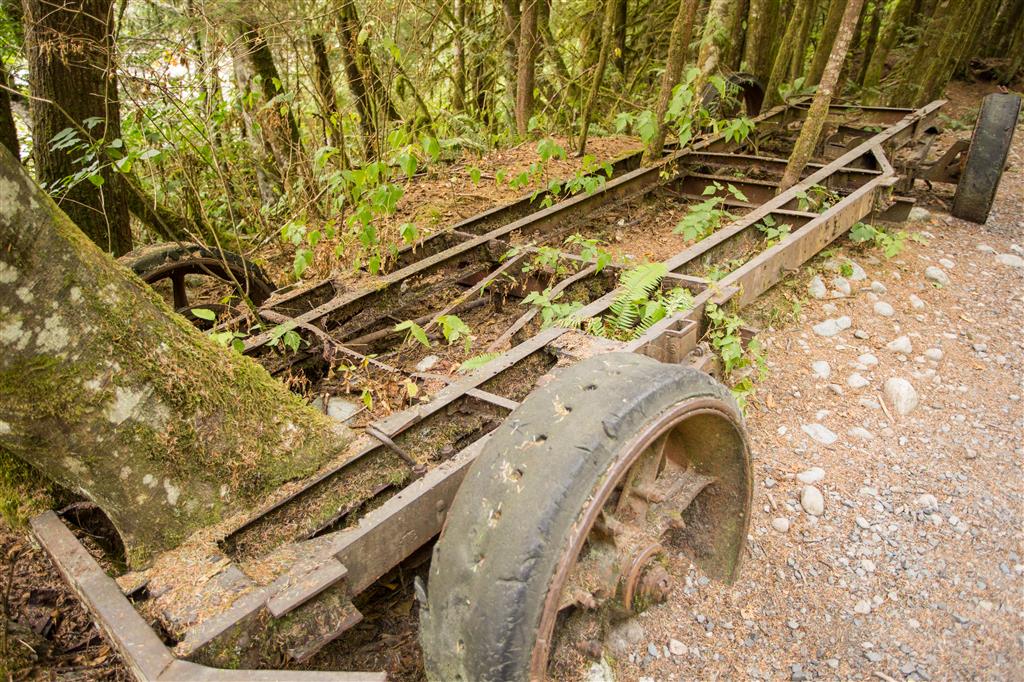
  • Logging history: Lynn Headwaters was extensively logged beginning in the late 1800s. Rusted machinery, old logging equipment, large stumps, cables, and remnants of former logging roads can still be seen beside the trails. These are historic artifacts and should be left where they are.
  • BC Mills House: The small house near the park entrance was built in 1908 as one of BC Mills’ early prefabricated houses. It originally stood elsewhere in North Vancouver and was relocated to Lynn Headwaters Regional Park in 1993.
  • Former water supply: Lynn Creek supplied drinking water to the City of North Vancouver from 1920 until 1983.
  • Biogeoclimatic zone: The lower and middle elevations of Lynn Headwaters lie within the Coastal Western Hemlock biogeoclimatic zone, the cool, moist coastal forest zone that covers much of the lower elevations of British Columbia’s South Coast. Western hemlock and western redcedar are characteristic trees, along with dense mosses, ferns, and other moisture-loving vegetation.
  • Large protected area: Lynn Headwaters Regional Park covers approximately 3,719 hectares, and more than 70 percent of the park is considered backcountry.

The Route

The interactive map below shows my recorded GPS route. The outbound and return routes differ through part of the lower valley because I used both the flatter creekside trail and the rougher, higher parallel route.

Hiking to Norvan Falls

The hike begins beside Lynn Creek on broad, relatively gentle trails. The easiest route remains close to the creek through the lower valley before eventually joining the Headwaters Trail farther north.

For a little more climbing and rougher terrain, the upper Lynn Loop and Headwaters Trail provide an alternate route through the forest. I used this higher option during part of my hike, which is why my GPS track and elevation totals are greater than the standard Norvan Falls route.

Norvan Falls

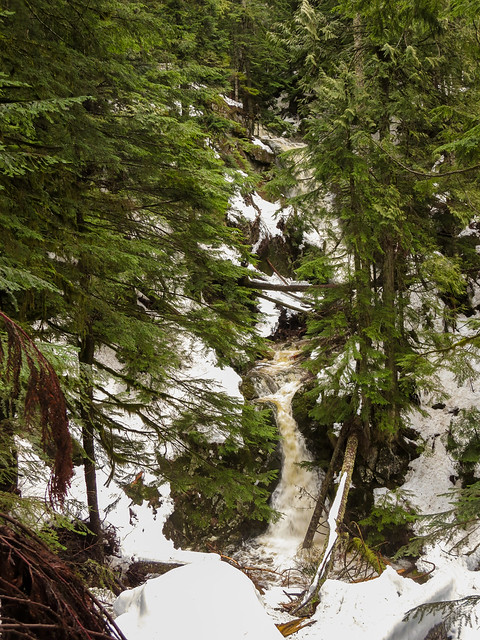
Near the northern end of the route, a short side trail leads from the main trail toward Norvan Falls. The waterfall drops through a narrow, heavily forested ravine and is particularly impressive after periods of rain or snowmelt.
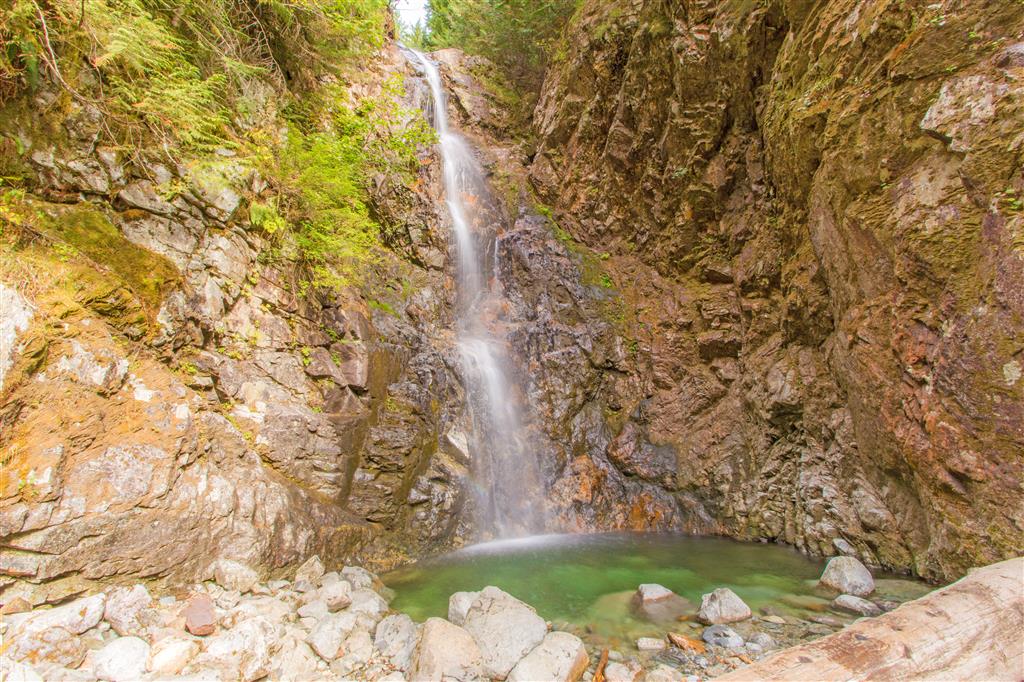
Norvan Falls in Lynn Headwaters Regional Park
Norvan Falls.

Important: If you reach the suspension bridge over Norvan Creek, you have passed the turnoff to the falls. Return a short distance and look for the signed side trail.
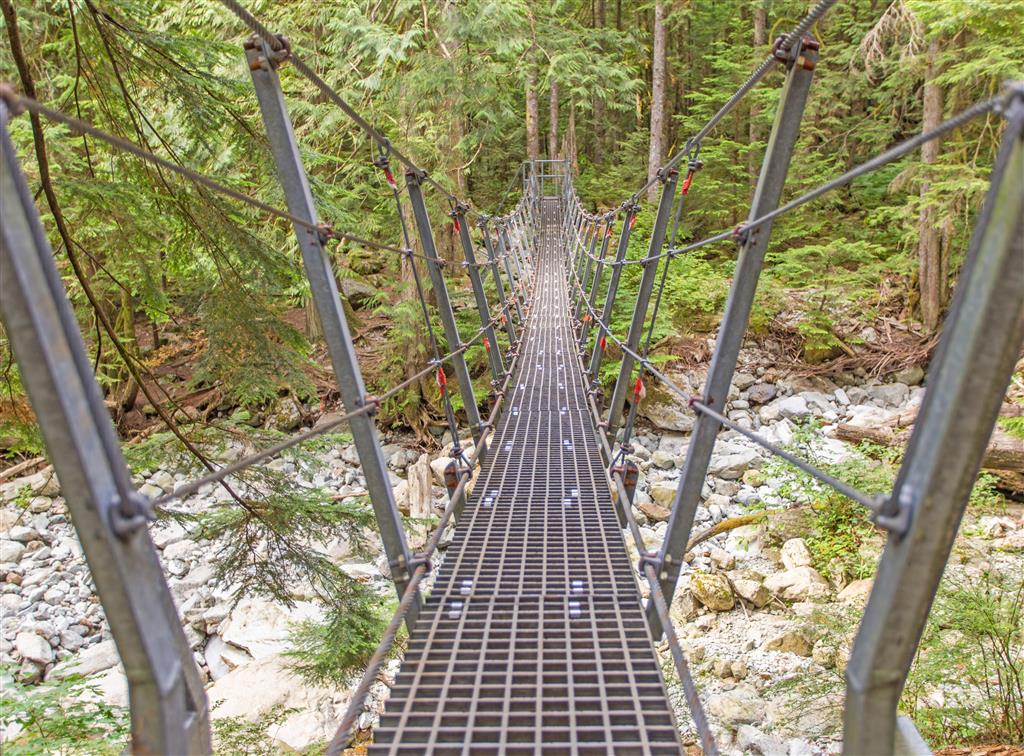
Suspension bridge near the Norvan Falls trail junction
If you reach this suspension bridge, you have passed the Norvan Falls turnoff.

BC Mills House

Near the entrance to Lynn Headwaters Regional Park is the historic BC Mills House. Built in 1908, it was one of the prefabricated houses produced by BC Mills. The building originally stood elsewhere in North Vancouver and was later moved to Lynn Headwaters Regional Park.
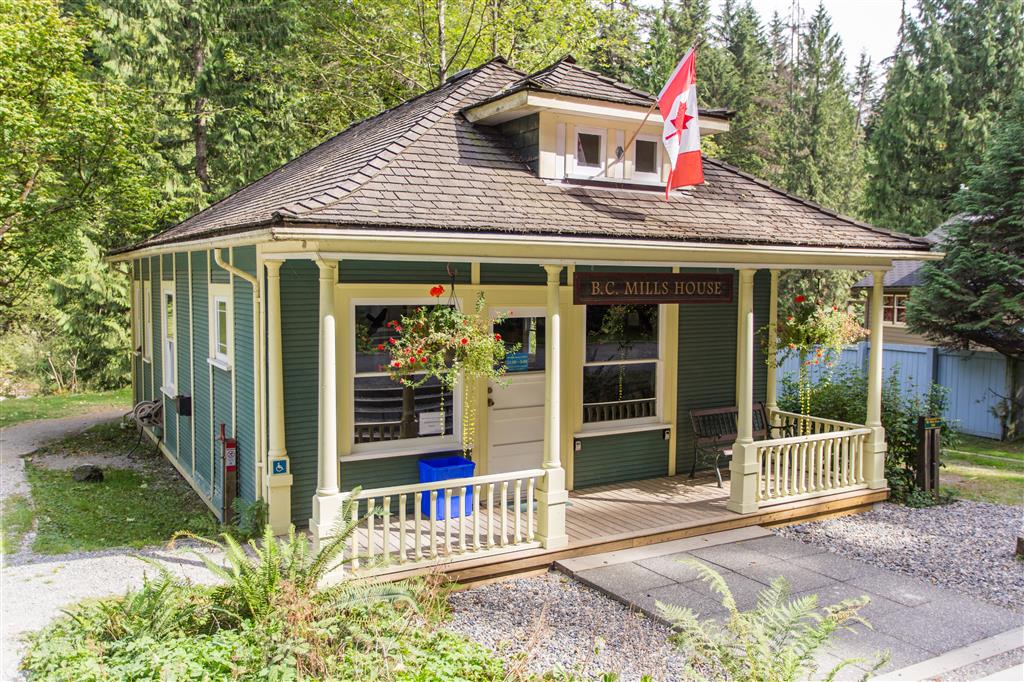
Historic BC Mills House at Lynn Headwaters Regional Park
The historic 1908 BC Mills House.

Lynn Creek

Much of the hike follows Lynn Creek through the broad forested valley. Water levels can change substantially after heavy rain and during periods of snowmelt.
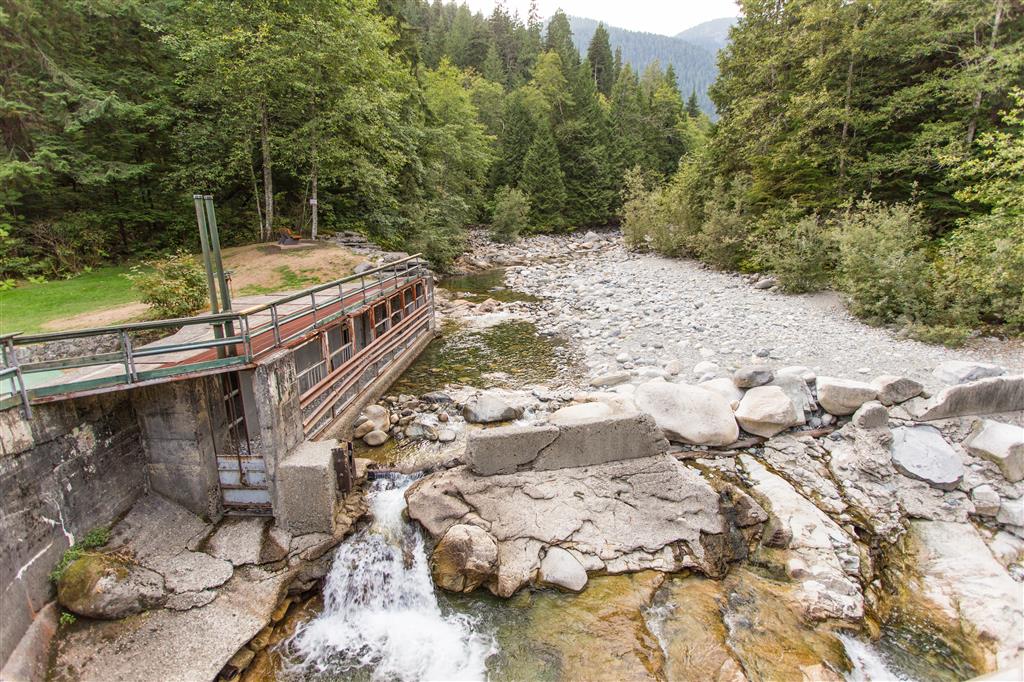
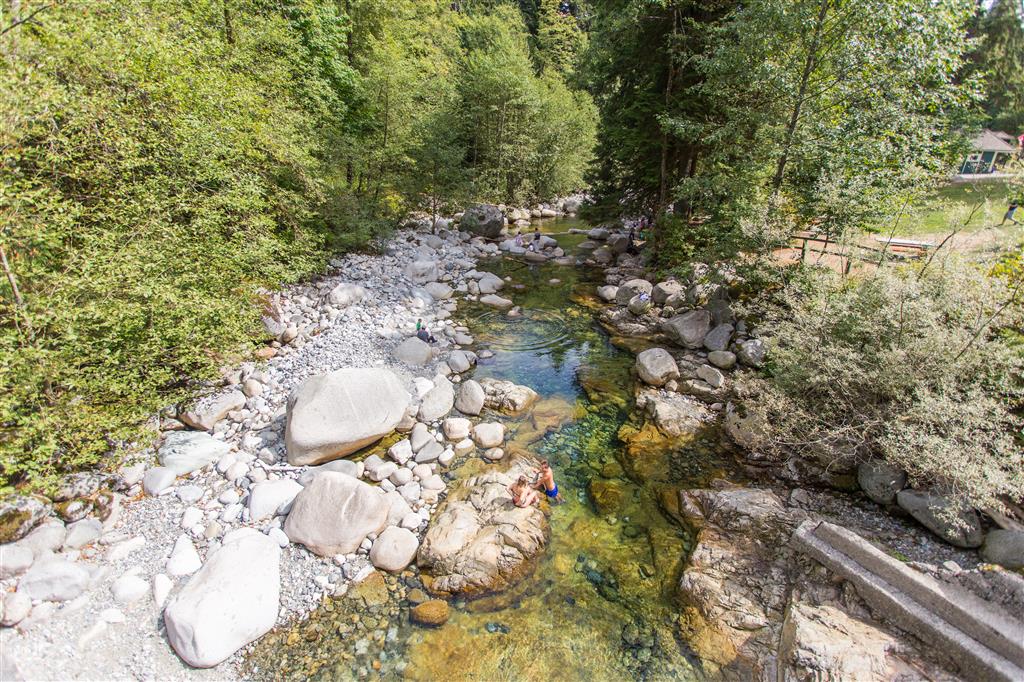
Lynn Creek in Lynn Headwaters Regional Park
Lynn Creek.
Lynn Creek and forest in Lynn Headwaters Regional Park
Another view along Lynn Creek.

Logging Relics

Lynn Headwaters has a long logging history, and remnants of former operations can still be found beside the trail. Rusted machinery, old equipment, large stumps, and sections of former logging road provide reminders of the extensive logging that once took place in the valley.

These artifacts form part of the park’s history, so they should be left undisturbed.
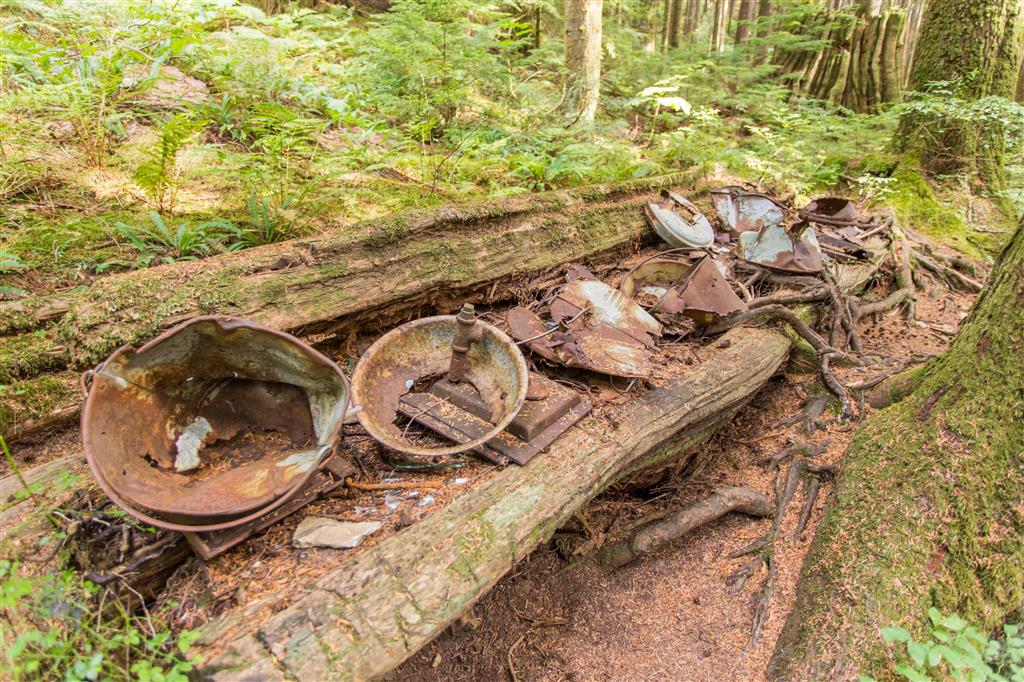
Historic logging relic beside the Norvan Falls trail
One of the old logging relics beside the trail.
Old logging equipment in Lynn Headwaters Regional Park
More evidence of the valley’s logging history.

Along the Trail

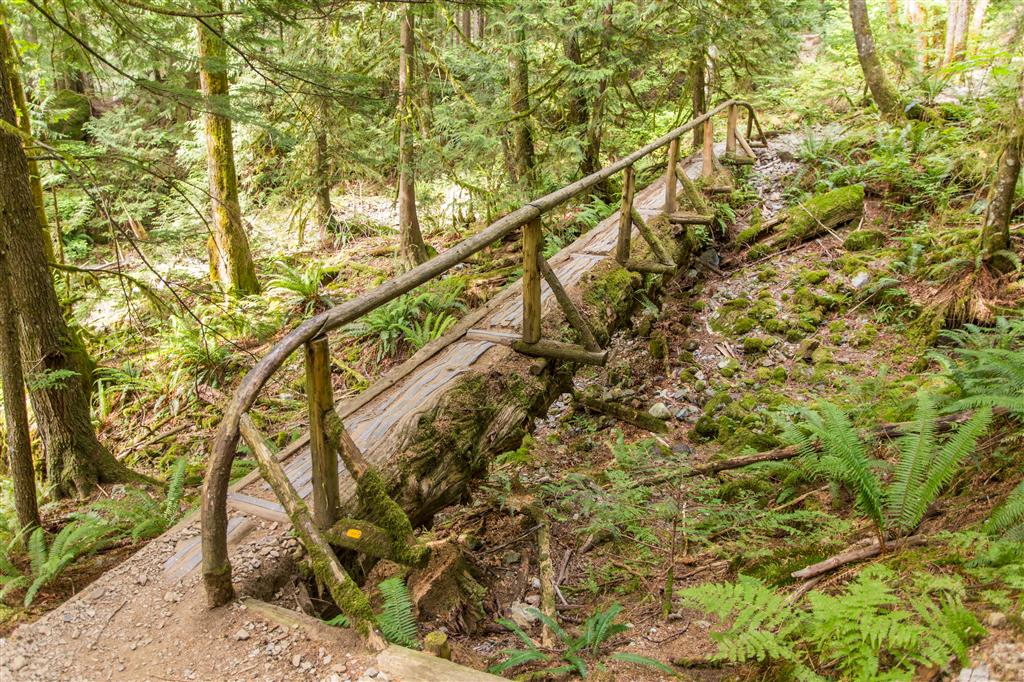
Log crossing beside the Norvan Falls trail
A natural log crossing along the route.
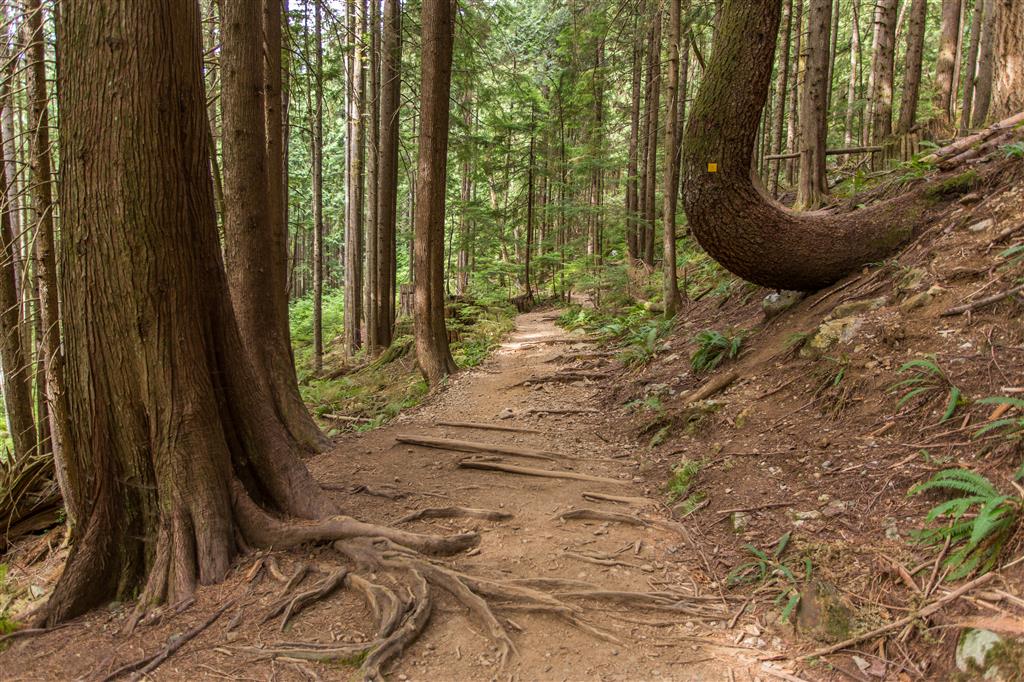
Forest trail on the hike to Norvan Falls
Forest trail in Lynn Headwaters Regional Park.
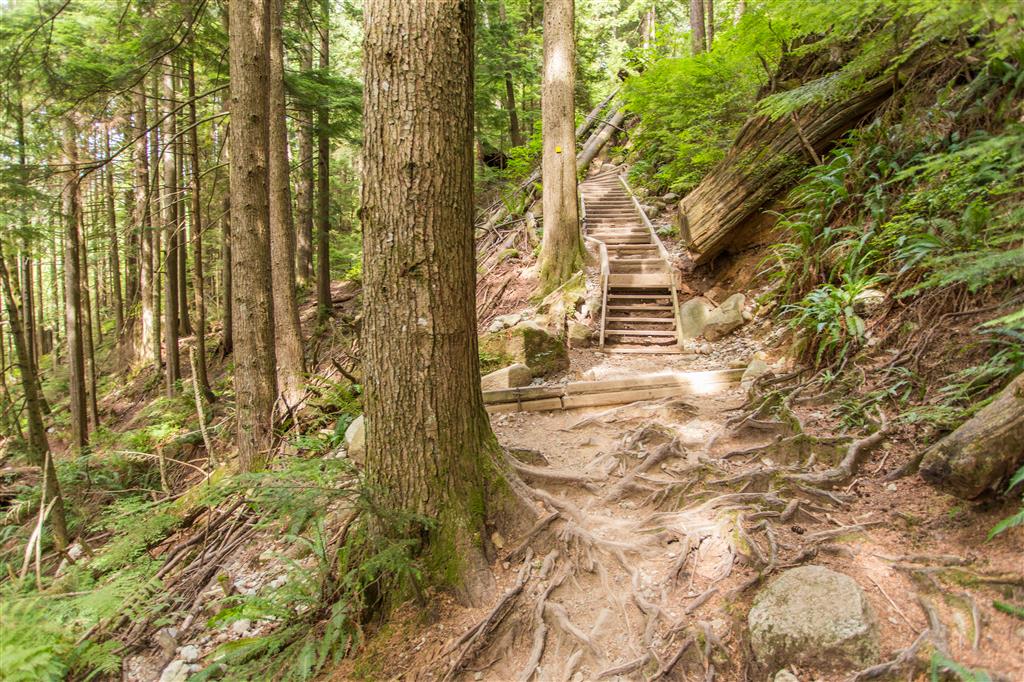
Rugged forest trail toward Norvan Falls
The rougher forest trail on the higher route.
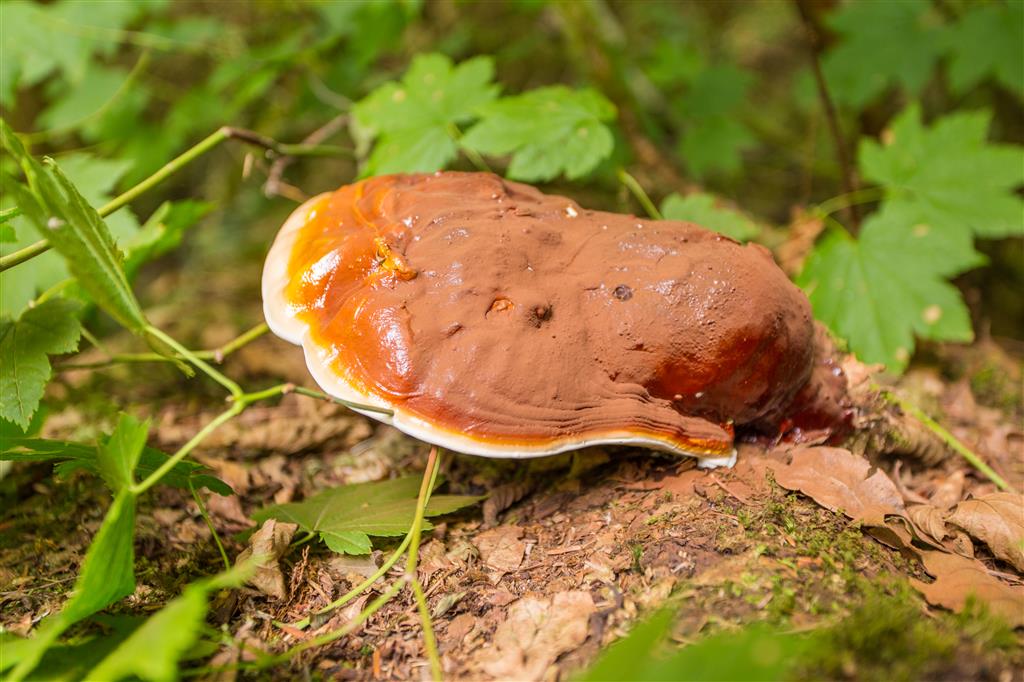
Mushroom beside the trail in Lynn Headwaters Regional Park
A mushroom beside the trail.

What to Bring

Norvan Falls is not technically difficult, but it is long enough that hikers should treat it as a full day hike rather than a short walk. Carry adequate water and food, rain protection, warm clothing, a headlamp, basic first-aid supplies, and reliable navigation.

Because the route extends well into Lynn Headwaters, I also recommend carrying the Ten Essentials. Leave a trip plan with someone you trust, including your route and expected return time. A fully charged phone and backup battery are useful, but cellular service should not be relied upon in the valley.

Leave No Trace

Please follow Leave No Trace principles while hiking in Lynn Headwaters. Stay on established trails, pack out everything you bring in, leave historic artifacts and natural features where you find them, keep wildlife at a distance, and avoid damaging vegetation beside the trail.

The old logging relics are particularly tempting to inspect closely, but they are part of the history of the park and should not be moved or removed.

Before You Go

Check current conditions with Metro Vancouver before leaving home. Trail closures, high water, fallen trees, weather, seasonal parking rules, and backcountry access can all change.
The route description, photographs, GPS track, and trail conditions on this page reflect conditions when I completed the hike. Trail conditions, access, parking, and park regulations may have changed since then. Confirm current conditions before heading out.

Mount Strachan Trail

Mount Strachan is a rugged hike in Cypress Provincial Park that combines the Howe Sound Crest Trail, Strachan Meadows, the steep climb through Christmas Gully, excellent mountain views, and the historic wreckage of a Royal Canadian Navy T-33 jet.

📍 Get Driving Directions ↗

My route began beside the Cypress Mountain lodge and followed the same general trail used for St. Mark’s Summit for the first few kilometres. From Strachan Meadows, I left the main trail and climbed Christmas Gully to the saddle between Mount Strachan’s North and South peaks. I continued to the South Peak before descending past the 1963 aircraft crash site.

Mount Strachan: Trail Conditions & Weather
Check current park advisories, road access, and weather before heading out.
Route-finding is important on this hike.
The Christmas Gully route is considerably less obvious than the main Howe Sound Crest Trail. The turnoff may be easy to miss, and the gully itself is steep, rocky, and can be slippery. Carry reliable navigation and do not rely entirely on trail signage.

Trail Stats

These statistics are based on my uploaded GPS track.

  • Distance: approximately 7.4 km
  • My hiking time: approximately 4 hours 30 minutes, including plenty of breaks
  • Low point: approximately 921 m
  • Highest GPS elevation: approximately 1,429 m
  • Mount Strachan South Peak: approximately 1,442 m
  • Net elevation gain: approximately 520 m
  • Cumulative elevation gain: approximately 520 m
  • Difficulty: Moderate to difficult
  • Route: Loop via Christmas Gully and Mount Strachan South Peak
  • 📍 Trailhead: Google Maps

Interesting Facts

  • Two summits: Mount Strachan has distinct North and South peaks. The North Peak is the higher summit at approximately 1,459 m, while the South Peak is about 1,442 m. My hike visited the South Peak.
  • Christmas Gully: The steep gully between Strachan Meadows and the summit ridge gains more than 300 m over a relatively short distance. It is rocky, can be wet or slippery, and involves some hands-on scrambling.

  • Howe Sound Crest Trail: The approach initially follows part of the Howe Sound Crest Trail, a rugged 29 km backcountry route extending north from Cypress toward the Lions and eventually Highway 99.
  • Biogeoclimatic zone: The upper Cypress area lies largely within the Mountain Hemlock biogeoclimatic zone. Mountain hemlock and yellow-cedar are characteristic trees, with increasingly open subalpine terrain near the higher ridges.
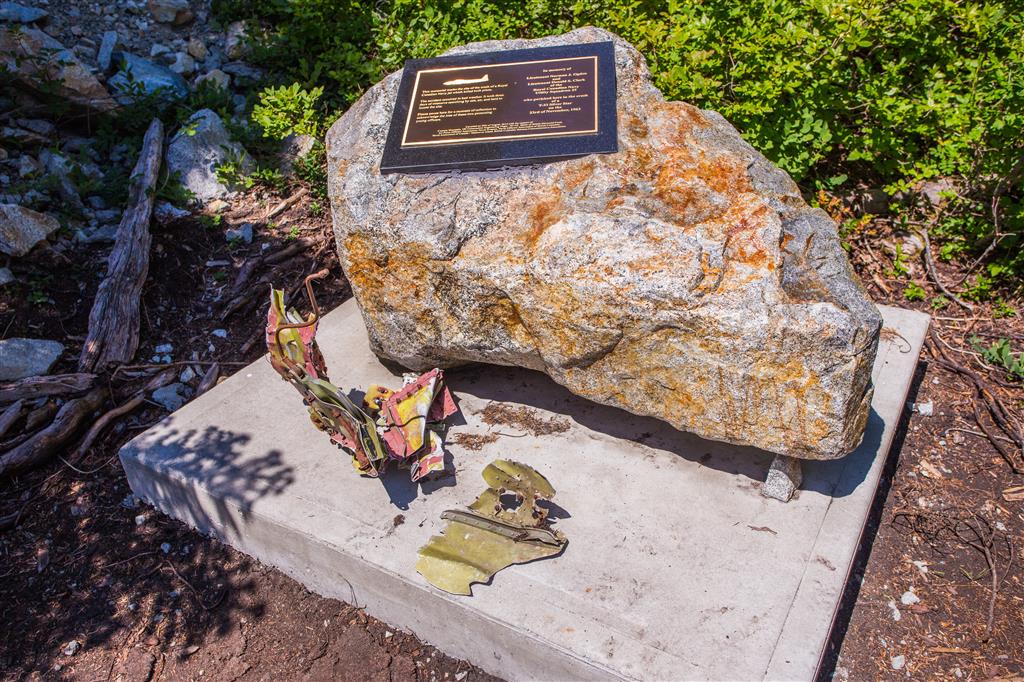
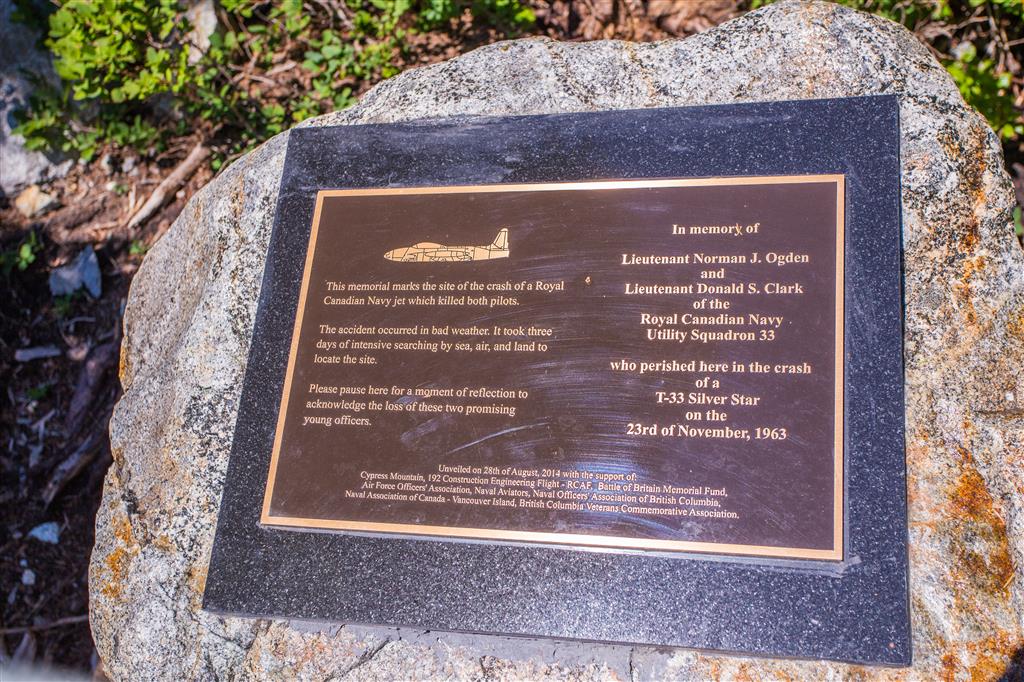
  • 1963 aircraft crash: On November 23, 1963, a Royal Canadian Navy T-33 training jet crashed into Mount Strachan during bad weather. Both pilots, Lt. Norman Ogden and Lt. Donald Clark, were killed. Wreckage remains in the forest below the mountain.
  • Memorial: A more substantial memorial to the two pilots was installed in 2014 near the crash site.
  • Cypress ski area: Much of Mount Strachan forms part of the Cypress Mountain ski area. Summer and winter access can therefore differ considerably, and some routes that are appropriate in summer should not be followed during ski operations.

The Route

The interactive map below shows my actual GPS route. The hike climbs from Cypress through Strachan Meadows and Christmas Gully to the South Peak, then descends on the opposite side of the mountain past the T-33 crash site.

Use the layer control in the upper-right corner to switch between the regular map and satellite imagery.

Strachan Meadows

The opening portion of the hike follows a well-established trail from Cypress toward the Howe Sound Crest Trail. After roughly 3 km, the route reaches Strachan Meadows below Mount Strachan.

The turn toward Christmas Gully was not particularly obvious when I completed the hike. This is one of the places where having an offline map or GPS track is useful.

Strachan Meadows below Mount Strachan
Strachan Meadows.

Christmas Gully

Christmas Gully is the most demanding part of the hike. The route climbs steeply between the North and South peaks, gaining more than 300 m over a relatively short distance.

The footing is rocky and uneven, and there are several places where using your hands makes the climb easier. Water can also run through parts of the gully, making the rocks slippery.

Entering Christmas Gully on Mount Strachan
Entering Christmas Gully.
Climbing the steep Christmas Gully route
Climbing Christmas Gully.
Looking down Christmas Gully toward Strachan Meadows
Looking back down Christmas Gully.

Mount Strachan South Peak

Christmas Gully reaches the saddle between the two Mount Strachan summits. The North Peak is to the north and is actually the higher summit at approximately 1,459 m. I skipped the North Peak on this hike and continued to the South Peak at approximately 1,442 m.

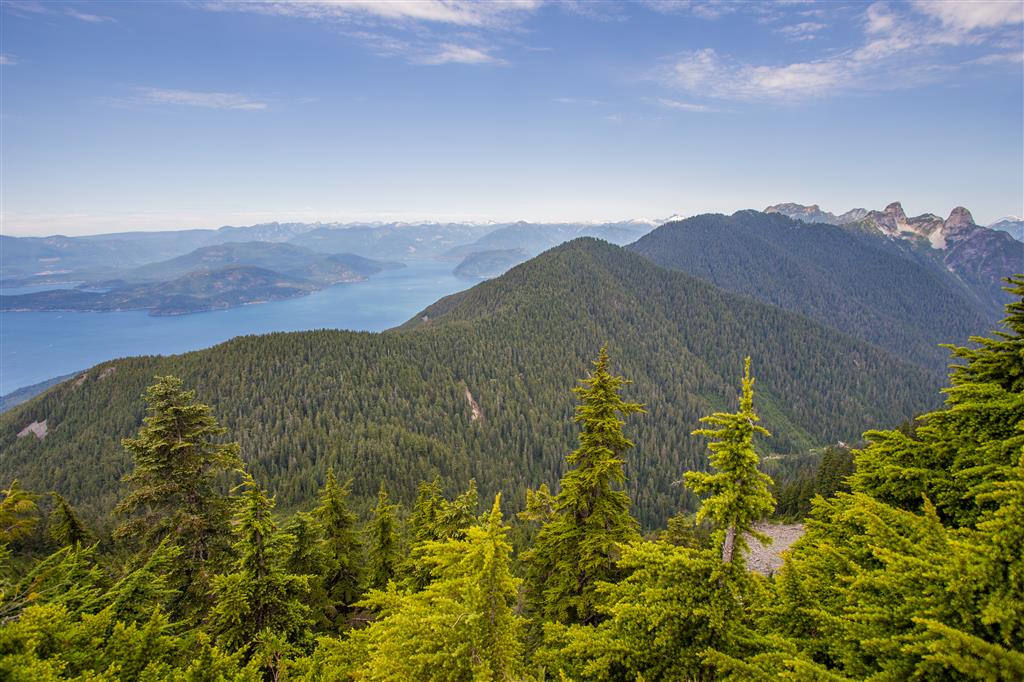
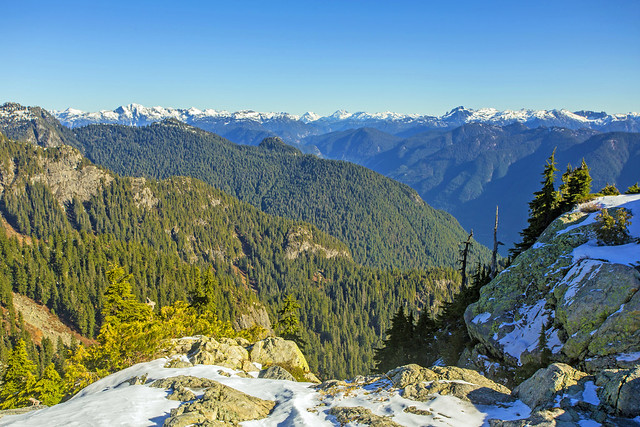
The South Peak provides excellent views over Howe Sound, the North Shore Mountains, and toward the Lions.

Mountain view from Mount Strachan South Peak
View from Mount Strachan.
The Lions visible from Mount Strachan
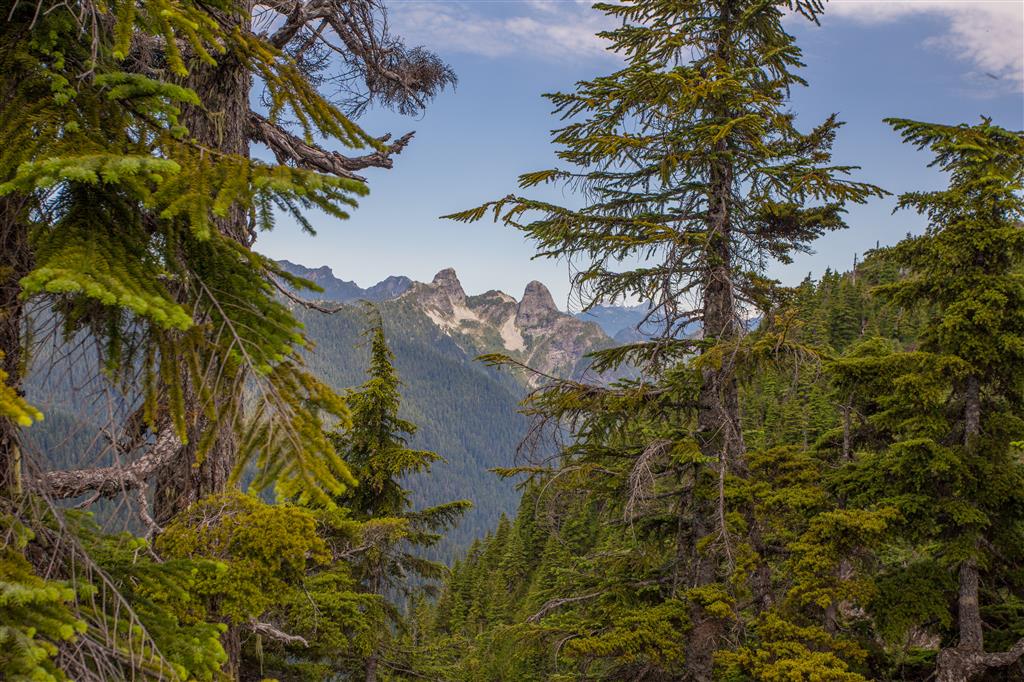
The Lions appearing through the mountain scenery.
View from the summit area of Mount Strachan
Another view from the summit area.

Descending Mount Strachan

Rather than descending Christmas Gully, my route continued down the opposite side of Mount Strachan. This creates a loop and avoids having to descend the steep gully.

View while descending Mount Strachan
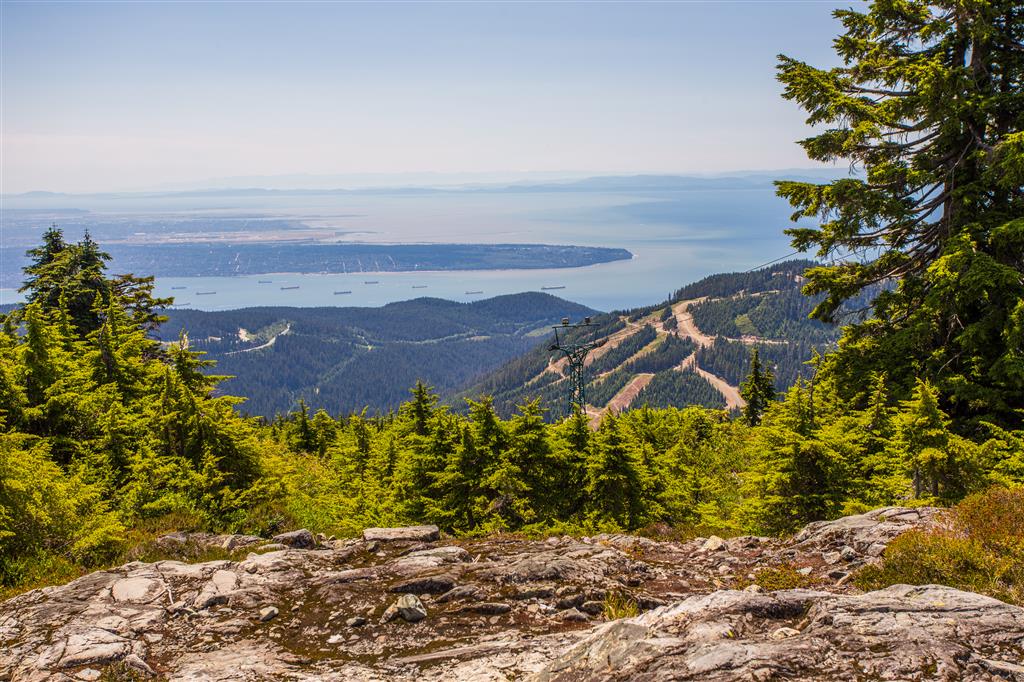
View during the descent.

The 1963 T-33 Aircraft Crash

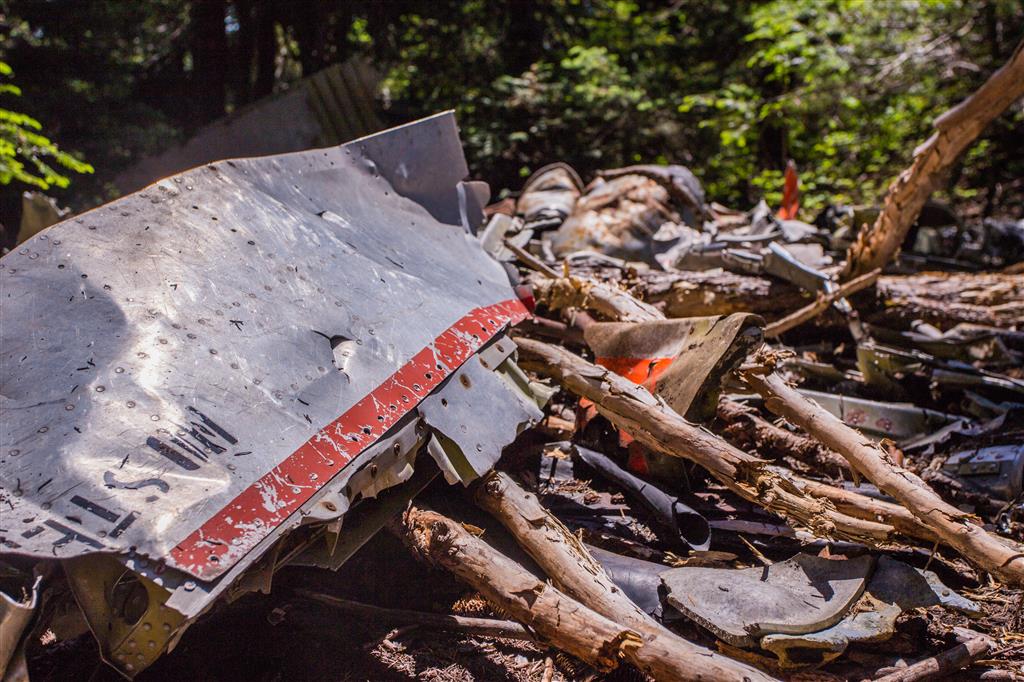
One of the most unusual features of the Mount Strachan route is the wreckage of a Royal Canadian Navy T-33 training jet that crashed into the mountain on November 23, 1963.

The aircraft was on a training flight in poor weather when it struck Mount Strachan, killing both pilots, Lt. Norman Ogden and Lt. Donald Clark. Pieces of the aircraft remain scattered through the forest near the ski runs.

A memorial was installed near the wreckage in 2014 to commemorate the two pilots.

Wreckage from the 1963 T-33 aircraft crash on Mount Strachan
Wreckage from the 1963 T-33 crash.
Memorial at the Mount Strachan T-33 crash site
Memorial near the crash site.
Plaque commemorating the Mount Strachan T-33 crash
The commemorative plaque.
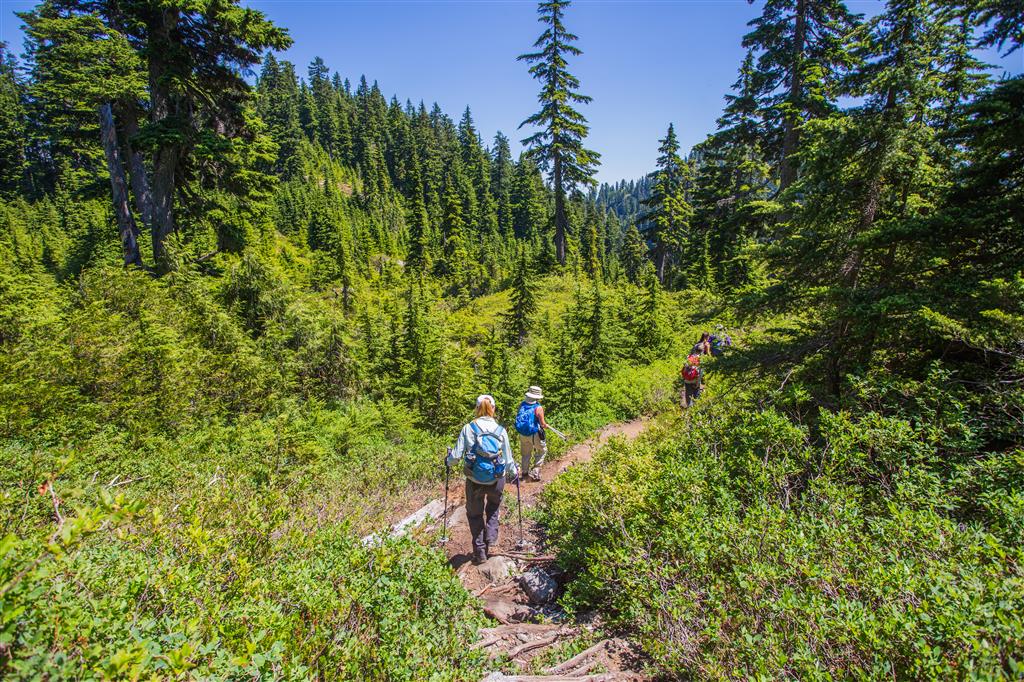
Trail descending Mount Strachan toward Cypress
Descending toward Cypress.

What to Bring

Mount Strachan is not exceptionally long, but the steep climb through Christmas Gully, less-obvious route finding, and mountain terrain make good preparation important. I recommend carrying the Ten Essentials.

Carry reliable navigation, a headlamp, first-aid supplies, extra food and water, sun protection, emergency shelter, and extra clothing. Download an offline map before starting and leave your route and expected return time with someone you trust.

This route is primarily a summer and snow-free-season hike. Winter access in Cypress Park follows different rules and routes, and uphill travel within the active alpine ski area is restricted during ski operations.

Leave No Trace

Please follow Leave No Trace principles throughout Cypress Provincial Park. Stay on established trails and durable surfaces where practical, pack out everything you bring in, and avoid damaging fragile subalpine vegetation.

The aircraft wreckage is a historic site and memorial. Do not move, remove, or disturb any pieces of the aircraft or memorial materials.

Before You Go

Check current BC Parks Cypress information, weather, snow conditions, parking requirements, and trail conditions before heading out. Mountain weather can change quickly, even during summer.

The route description, photographs, GPS track, and trail conditions on this page reflect conditions when I completed the hike. Parking, resort operations, snow conditions, trail access, and route conditions may have changed since then. Confirm current conditions before heading out.

Mt. Seymour Trail

Mount Seymour is one of the classic North Shore mountain hikes, offering excellent views over Vancouver, Indian Arm, Mount Baker, and the surrounding Coast Mountains. The route climbs from the upper parking area through subalpine forest and open mountain terrain, passing Pump Peak and Tim Jones Peak before reaching the true summit of Mount Seymour.

📍 Get Driving Directions ↗

I completed this hike on a beautiful late-winter day with firm snow covering much of the upper mountain. I arrived at the parking area around 9:00 a.m., when only a handful of vehicles were present. By the time I descended, the mountain was considerably busier.

Mount Seymour: Trail Conditions & Weather
Check current park advisories, road access, and weather before heading out.
Winter conditions can make this a very different hike.
The route described on this page was completed with substantial snow on the mountain. Snow, ice, avalanche hazard, cornices, obscured trail markers, and rapidly changing weather can make winter travel significantly more serious than the same route in summer. Check current BC Parks trail information and the Avalanche Canada forecast before heading into the backcountry.

Trail Stats

These statistics are based on my complete GPS recording from the hike.

  • Distance: approximately 8.9 km return
  • My hiking time: approximately 3 hours 35 minutes, including stops
  • Low point: approximately 1,000 m
  • High point recorded by GPS: approximately 1,439 m
  • Mount Seymour summit: approximately 1,449 m
  • Net elevation gain: approximately 450 m
  • Cumulative elevation gain: approximately 550 m
  • Difficulty: Moderate to difficult, depending heavily on snow and weather conditions
  • Route: Out and back
  • 📍 Trailhead: Google Maps and navigation

Interesting Facts

  • Three main summits: The route crosses three prominent high points: Pump Peak, Tim Jones Peak, and the true Mount Seymour summit. Pump Peak is sometimes referred to informally as First Pump or First Peak, while Tim Jones Peak was historically called Second Pump Peak.
  • Mount Seymour summit: The true summit reaches approximately 1,449 m and provides panoramic views over Vancouver, Burrard Inlet, Indian Arm, and the surrounding Coast Mountains.
  • Biogeoclimatic zone: Much of the upper Mount Seymour area lies within the Mountain Hemlock biogeoclimatic zone. Mountain hemlock, yellow-cedar, and amabilis fir are characteristic trees, with increasingly open subalpine terrain near the higher ridges.
  • Heavy snowfall: The North Shore Mountains receive substantial winter precipitation. Snow can accumulate deeply at higher elevations and persist well into spring.
  • Avalanche terrain: Parts of the Mount Seymour backcountry contain terrain capable of producing avalanches. Winter hikers should check the current avalanche forecast and understand how to recognize and avoid avalanche terrain.
  • Winter routes: BC Parks installs marked winter backcountry routes each season. Snow can obscure the normal summer trail, so winter route markers and current conditions are more important than simply following a summer track.
  • Year-round park: Mount Seymour Park is open year-round, although winter parking requirements, gate hours, snow conditions, and road access can change seasonally.

The Route

The interactive map below shows my complete GPS route from the parking area to the Mount Seymour summit and back. Use the layer control in the upper-right corner to switch between the regular map and satellite imagery.

Starting the Climb

The hike begins from the upper Mount Seymour parking area at approximately 1,020 m elevation. On the morning of my hike there were only a few vehicles in the lot and very few people on the trail.

The lower section was initially straightforward, but snow and ice became increasingly firm with elevation. At roughly 2 km into the hike, around 1,230 m, I stopped to put on microspikes.

Winter traction requirements vary enormously from day to day. Microspikes were suitable for the conditions I encountered, but they are not a substitute for appropriate snow-travel skills or avalanche equipment when conditions require it.

Pump Peak

I reached Pump Peak, sometimes historically referred to as First Pump or First Peak, after about one hour of hiking. Snow at the peak was roughly one metre deep during my visit.

The views were outstanding, with Vancouver and the Lower Mainland spread out to the south, Indian Arm to the east, and the Coast Mountains extending northward.

View from Pump Peak on Mount Seymour
The view from Pump Peak.

Beyond Pump Peak

The character of the route changes beyond Pump Peak. The trail descends before climbing again toward Tim Jones Peak and the final Mount Seymour summit. The terrain becomes steeper, narrower, and more rugged, and the route can be substantially more serious when covered by snow or ice.

During my hike, a few centimetres of fresh snow made it easy to see that only two hikers were ahead of me. Some sections required hands-on scrambling and careful footing near steep terrain.

Winter route caution
Do not assume that a summer trail line is the correct winter route. Snow can cover trail markers and create cornices, steep snow slopes, and avalanche hazards. Follow current BC Parks winter markers and route information, and turn around if conditions exceed your experience or equipment.
Continuing toward Mount Seymour through snow
Continuing higher along the route.
Narrow section of the Mount Seymour Trail
A narrower section of the route.

Mount Seymour Summit

I reached the Mount Seymour summit about 30 minutes after leaving Pump Peak. The summit sits at approximately 1,449 m and provides excellent views both south toward Vancouver and north into the Coast Mountains.

Southward view from the Mount Seymour summit
Looking south from the Mount Seymour summit.
Northward view from the Mount Seymour summit
Looking north from the summit.
Deep snow near the top of Mount Seymour
Deep snow near the upper part of the mountain.

Descending

I began descending around 11:00 a.m. with the two hikers I had met at the summit. The quiet trail I had enjoyed on the way up had changed completely. Large numbers of people were now heading uphill, particularly below Pump Peak.

I was surprised to see several people wearing ordinary running shoes despite the hard snow and ice. Winter mountain footwear and traction should always match the actual conditions rather than simply the popularity of the trail.

Hikers gathered at Pump Peak on Mount Seymour
The trail became much busier later in the morning.
Admiring the mountain view on Mount Seymour
Taking in the view during the hike.
Mount Seymour peak viewed from the trail
Mount Seymour ahead along the route.
Busy Mount Seymour parking area after the hike
The parking area was much busier when I returned.

What to Bring

For a full hike to the Mount Seymour summit, I recommend carrying the Ten Essentials. Even though the trailhead is relatively close to Vancouver, this is genuine mountain backcountry where weather, visibility, snow conditions, and route difficulty can change quickly.

Carry reliable navigation, a headlamp, sun protection, first-aid supplies, extra food, sufficient water, emergency shelter, and warm and waterproof clothing. In winter, appropriate traction such as microspikes or crampons may be required depending on conditions, along with avalanche equipment and training when travelling in avalanche terrain.

Before any winter trip, check the current Avalanche Canada forecast and the BC Parks Mount Seymour information.

Carry a fully charged phone and backup power, but do not rely on cellular service alone. Download an offline map before the hike and leave your route and expected return time with someone you trust.

Leave No Trace

Please follow Leave No Trace principles throughout Mount Seymour Park. Stay on established trails and durable surfaces where practical, pack out everything you bring in, do not feed wildlife, and avoid damaging fragile subalpine vegetation.

In winter, travel on established routes where practical and avoid unnecessary disturbance to vegetation as snow begins to melt.

Before You Go

Check current BC Parks trail conditions, weather, snow conditions, avalanche forecasts, parking requirements, and road access before heading out. Winter day-use vehicle passes may be required for backcountry parking during peak periods, and seasonal overnight gate hours apply on Mount Seymour Road.

The route description, photographs, GPS track, snow conditions, and trail conditions on this page reflect conditions when I completed the hike. Road access, parking rules, snow depth, avalanche conditions, trail markings, and weather may have changed since then. Confirm current conditions before heading out.

Brothers Creek Trail

Brothers Creek Trail is a scenic forest hike in West Vancouver, beginning near the upper end of Millstream Road in the British Properties. The area has an extensive network of trails passing through mature forest, alongside rushing creeks and waterfalls, with reminders of its early logging history.

Brothers Creek: Weather
📍 Get Driving Directions ↗

There are several possible routes through the Brothers Creek area. This article describes my original 7.8 km hike, which included snowy sections, creek crossings, waterfalls, and some interesting old logging-related relics.

Brothers Creek Trail Stats

Distance: 7.8 km return
My hiking time: 2 hours
Low point: 375 m
High point: 828 m
Elevation gain: 453 m
Difficulty: Moderate, depending on conditions
Route: My original hike through the Brothers Creek trail network

These statistics are from my original hike. Other routes in the Brothers Creek area have different distances, elevation gains, and completion times.

Important Trail Access Information

⚠️ Bridge closures and trail detours
The District of West Vancouver reports that two pedestrian bridges within the Brothers Creek trail network have been removed or decommissioned. The Crossover Trail bridge was severely damaged in October 2024, with replacement planned for summer 2027. Another bridge near the Baden Powell Trail junction was removed in 2023 and will not be replaced.

Follow posted trail detours, do not attempt unsafe creek crossings, and check the District of West Vancouver’s current trail information before heading out.

Brothers Creek Trail Maps

I no longer have the original GPS track for this particular hike. Rather than show an approximate route that could be misleading, I’ve included two official District of West Vancouver mapping resources.

The Brothers Creek trail network has changed over the years. Use current trail signage and official detour information rather than assuming that older maps or route descriptions remain accurate.

My Brothers Creek Hike

It was a nice day for hiking, although somewhat cold. We started from Millstream Road and headed into the forest. Before long, we encountered snow, and conditions became increasingly difficult as we climbed.

In places, we were punching through the snow, which made travelling more tiring and highlighted how much longer winter conditions can persist on the North Shore mountains than in the city below.

Starting the Trail

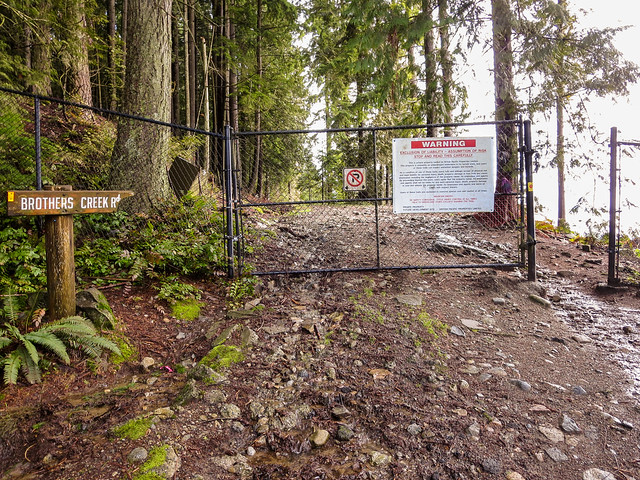
The photograph below shows the beginning of the trail on the day of my hike.

Beginning of Brothers Creek Trail in West Vancouver

Bridges, Creeks, and Waterfalls

One of the highlights of the Brothers Creek area is the combination of forest, steep creek channels, bridges, and waterfalls. The sound of flowing water accompanies portions of the trail, particularly during wetter periods and spring snowmelt.

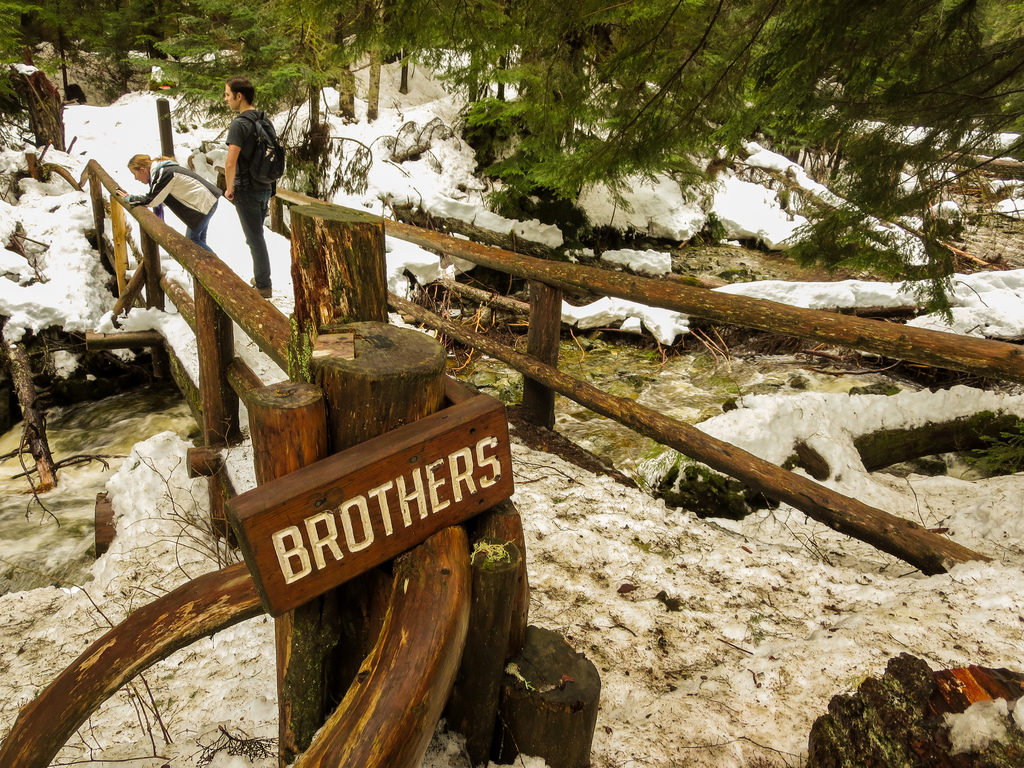
Below is one of the wooden bridges I photographed during my hike. Bridge conditions and access have changed since this photograph was taken.

Wooden bridge along Brothers Creek Trail

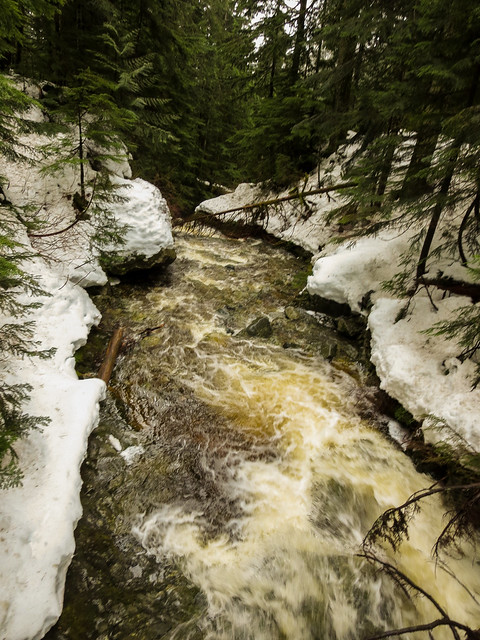
The next photograph shows Brothers Creek flowing through the forest.

Brothers Creek flowing through the forest

And here is one of the waterfalls encountered along the hike.

Waterfall along Brothers Creek Trail

Snow and Forest Trail Conditions

The amount of snow varied considerably along the route. Some stretches were relatively clear, while others had deep, soft snow that made walking difficult.

Snow conditions also made it important to watch our footing and pay attention to the trail. Even when the lower slopes of West Vancouver are snow-free, the upper trails can remain covered well into spring or early summer.

Here is one section where there was less snow.

Forested section of Brothers Creek Trail with less snow

The following photographs show additional sections of the forest trail.

Forest trail in the Brothers Creek area

Another section of Brothers Creek Trail

Trail conditions during my Brothers Creek hike

Old Truck and Logging Relics

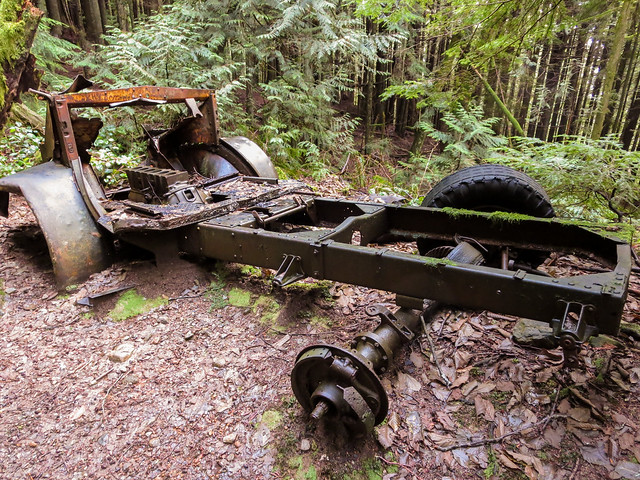
One of the more unusual sights on the hike was an old, rusting truck abandoned in the forest. The Brothers Creek area has an extensive logging history, and remnants of earlier industrial activity can still be found among the trees.

The District of West Vancouver’s historical trail brochure also describes the remains of a war-surplus army truck along one of the old roads in the area.

Here is the truck I photographed.

Old abandoned truck in the Brothers Creek forest

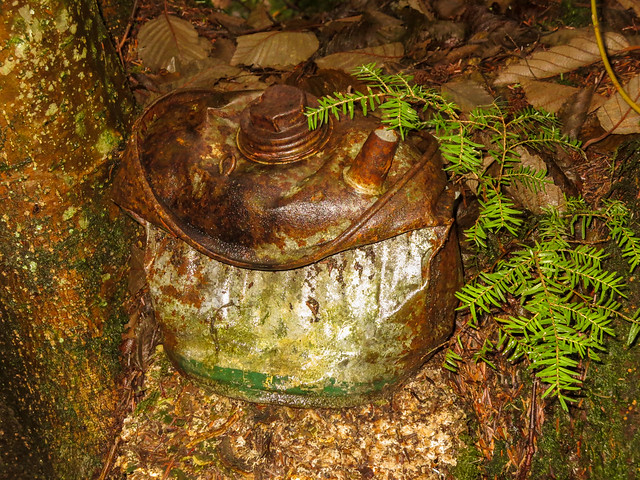
I also came across an old oil can, another reminder of the equipment once used in these forests.

Old rusted oil can found near Brothers Creek Trail

A Scenic View

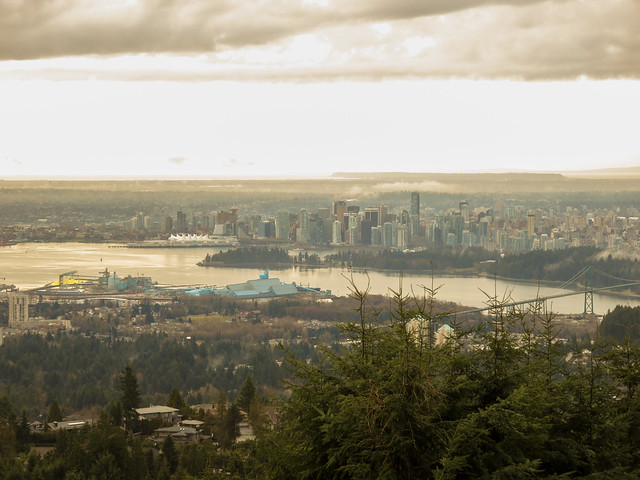
Although much of this hike travels through forest, there are occasional openings with views over the surrounding area. This was my favourite view from the hike.

Scenic viewpoint on Brothers Creek hike in West Vancouver

Interesting Facts About Brothers Creek

  • Logging history: The Brothers Creek forests were extensively logged during the late nineteenth and early twentieth centuries. Steam-powered equipment, logging railways, and cable systems were used to transport timber.
  • Historical remains: Old logging roads, railway remnants, machinery, and large cut stumps can still be found throughout the area.
  • Forestry Heritage Walk: The District of West Vancouver has documented historical logging features along a designated heritage route beginning near Millstream Road.
  • Old-growth trees: Some large, older trees survived historical logging and fires. The area includes large Douglas-firs and western redcedars.
  • Creeks and waterfalls: Brothers Creek and its tributaries drain the forested North Shore slopes. Waterfalls and steep creek channels are prominent features of the trail network.
  • Biogeoclimatic zone: The Brothers Creek area is generally within the Coastal Western Hemlock biogeoclimatic zone, characterized by moist temperate forests, including western hemlock, western redcedar, and Douglas-fir.

What to Bring

Although Brothers Creek is relatively close to developed areas of West Vancouver, it is still a forested mountain environment where weather and trail conditions can change quickly.

For longer routes, carry the Ten Essentials, including navigation, a headlamp, appropriate clothing, food, water, first-aid supplies, and emergency equipment. Bring a fully charged phone and download an offline map before starting.

Snow and ice can persist into late spring or early summer, particularly at higher elevations and on shaded sections. Creeks may also rise rapidly during heavy rainfall or snowmelt. Never attempt to cross a damaged or closed bridge.

Tell someone your intended route and expected return time before heading out.

Leave No Trace

Stay on designated trails, pack out all garbage, avoid disturbing plants and wildlife, and leave historical logging artifacts where you find them. These remnants are part of the area’s history and should remain available for others to appreciate.

Before You Go

Brothers Creek has several possible routes, and some historical connections have changed because of bridge damage and trail closures. Before heading out, consult the District of West Vancouver’s current trail information and detour maps, and follow all posted signs and restrictions.

Trail conditions disclaimer: This description, the photographs, and the hiking statistics reflect conditions when I completed the hike. Trail conditions, bridge access, routes, and signage may have changed since then. Confirm current conditions and access before heading out.

St. Mark’s Summit Hike

St. Mark’s Summit is one of my favourite hikes on Vancouver’s North Shore, offering spectacular views of Howe Sound, its islands, and the surrounding mountains. Starting from the Cypress Mountain parking area in West Vancouver, the route follows the famous Howe Sound Crest Trail through beautiful subalpine forest before reaching a series of rocky viewpoints high above the water.

📍 Get Driving Directions ↗

St. Mark’s Summit Trail Stats

🥾 Distance: 10.3 km return (my original recorded distance)

⛰️ Lowest elevation: 917 m

🏔️ Highest recorded elevation: 1,344 m

📈 Elevation difference: 427 m (lowest to highest; cumulative climbing is greater)

💪 Difficulty: Moderate to challenging in snow-free conditions

🔄 Route type: Out and back via the Howe Sound Crest Trail

🌲 Park: Cypress Provincial Park, West Vancouver, BC

📍 Trailhead: Cypress Mountain, Howe Sound Crest Trail access (Google Maps)

These are my original hiking statistics. The uploaded GPX track measures approximately 10.15 km and records elevations of 917 to 1,344 m. Different GPS recordings and routes to the viewpoints may produce different measurements.

St. Mark’s Summit GPS Route Map

The interactive map below shows my original GPS track from the Cypress Mountain parking area to St. Mark’s Summit and back. You can zoom in, move around the map, and switch between standard Map and Satellite views.

GPS route recorded during my original hike. The blue line includes the return journey. It is a historical track, not a guarantee of current trail alignment or conditions. Always carry a current map and appropriate navigation equipment.

Hiking to St. Mark’s Summit

Starting at Cypress Mountain

My hike began at the Cypress Mountain downhill ski area, where the Howe Sound Crest Trail heads north into Cypress Provincial Park.

The beginning of the route passes through the Cypress Bowl area before continuing into a beautiful forest of mountain hemlock, yellow-cedar, and other coastal mountain trees.

The first part of the hike is relatively gentle compared with the steeper sections farther along. Much of the trail follows a rolling route through forest and subalpine terrain, with occasional openings and small meadows.

Follow the marked Howe Sound Crest Trail towards St. Mark’s Summit. There are other trails in the Cypress Bowl area, including the route towards Bowen Lookout, so pay attention to signs at junctions.

Through the Forest

As you continue north, the trail becomes rougher, with exposed roots, rocks, muddy sections, and several short climbs and descents.

BC Parks describes the Howe Sound Crest Trail as difficult and rough beyond approximately the first 2 km. Although St. Mark’s Summit is a popular day-hiking destination, the route should not be mistaken for an easy walk.

One thing worth remembering is that the trail isn’t a continuous climb. There are several rolling sections, meaning the total elevation climbed over the hike is greater than the difference between the lowest and highest elevations.

The surrounding forest is particularly interesting. At these elevations, the growing season is relatively short, and snow can remain well into summer. Mountain hemlock and yellow-cedar thrive in this cool, wet environment.

The Final Climb and Summit Viewpoints

The final approach to St. Mark’s Summit becomes steeper and more demanding. Expect roots, uneven rock, and sections where you may need to watch your footing carefully.

Eventually, the forest opens onto rocky viewpoints overlooking Howe Sound.

This is the reward for all that climbing!

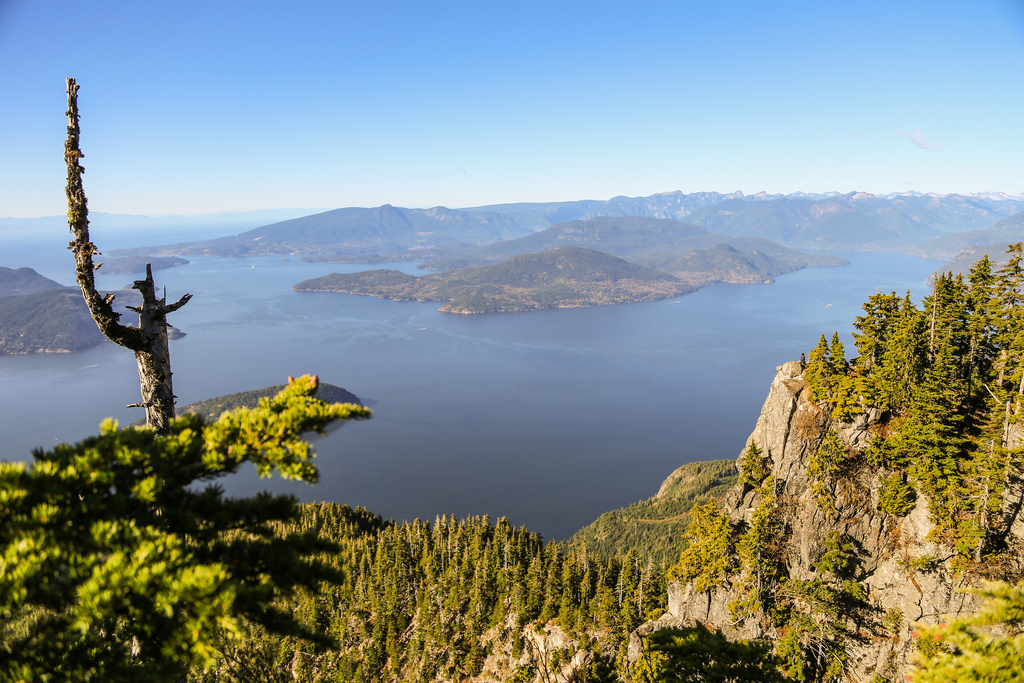
From the summit area, you can enjoy magnificent views across Howe Sound towards its forested islands and the mountains along the Sea-to-Sky corridor. On clear days, the combination of deep blue water, steep forested slopes, and distant peaks is outstanding.

Here is one of my photographs from the top.

Spectacular panoramic view of Howe Sound from St. Mark's Summit

The spectacular view of Howe Sound from St. Mark’s Summit.

And here’s a photograph of me sitting on a rocky ledge overlooking Howe Sound. I couldn’t resist the opportunity for a dramatic photograph!

Me sitting on a rocky ledge at St. Mark's Summit overlooking Howe Sound

Me on a ledge at St. Mark’s Summit. King of the world!

The viewpoints are spectacular, but there are some very steep drop-offs. Keep well back from exposed edges, particularly when the rock is wet, icy, or covered by snow.

Views of the Lions

Another highlight of the hike was the view of the Lions, two prominent peaks that are among the most recognizable mountains on Vancouver’s North Shore.

They lie farther north along the Howe Sound Crest Trail, beyond St. Mark’s Summit and Unnecessary Mountain.

The Lions look particularly impressive from this part of the trail.

The distinctive twin peaks of the Lions viewed during my St. Mark's Summit hike

A great view of the Lions from the St. Mark’s Summit area.

The Howe Sound Crest Trail continues towards the Lions and beyond, but that is a considerably more demanding backcountry route. For this hike, I turned around at St. Mark’s Summit and followed the same trail back to Cypress Mountain.

Wildlife: The Whiskey Jacks

One of the most memorable parts of my hike was the number of Whiskey Jacks flying around the summit area.

These curious birds are also known as Canada Jays, and were previously commonly called Gray Jays. They are remarkably comfortable around people, especially in areas frequently visited by hikers.

Canada Jay, commonly known as a Whiskey Jack, photographed during my St. Mark's Summit hike

One of the many Whiskey Jacks I encountered during the hike.

Canada Jays are fascinating birds. Unlike many other songbirds, they remain in their mountain forest habitat throughout the winter.

They survive partly by storing food in numerous hiding places during times when food is plentiful. Their remarkable ability to cache and recover food helps them survive long, cold winters.

They may approach hikers in search of a snack, but please don’t feed them. Human food can interfere with their natural feeding behaviour and encourages them to associate people with food.

Interesting Facts About St. Mark’s Summit

  • Part of the Howe Sound Crest Trail: St. Mark’s Summit is located along the approximately 29 km Howe Sound Crest Trail, which runs north from Cypress Mountain through rugged mountain terrain towards the Porteau Cove area. St. Mark’s Summit is a popular turnaround point for day hikers.
  • Cypress Provincial Park was established in 1975: The park protects an extensive area of the North Shore Mountains. The Howe Sound Crest Trail was added to the park in 1982.
  • Howe Sound is a glacially carved fjord: During the last ice age, glaciers helped shape the deep valley and steep surrounding mountains. The resulting landscape provides some of the spectacular scenery visible from St. Mark’s Summit.
  • Biogeoclimatic Zone: Cypress Provincial Park includes the Coastal Western Hemlock and Mountain Hemlock biogeoclimatic zones. The higher-elevation forests around St. Mark’s Summit are characteristic of the Mountain Hemlock Zone, with long-lasting snow, cool temperatures, mountain hemlock, yellow-cedar, and amabilis fir.
  • Snow can remain into summer: Even when the weather is warm in Vancouver, substantial snow patches may remain along the higher sections of the trail. Depending on the winter snowpack and spring temperatures, these conditions can persist into July.
  • Whiskey Jacks are year-round residents: Canada Jays remain in the mountains throughout the winter, relying partly on food stored in the surrounding forest.
  • The summit has multiple viewpoints: Visitors can explore several rocky openings near the summit area, although caution is necessary because of steep exposed drop-offs.
  • Popular but still backcountry terrain: Despite its popularity and proximity to Cypress Mountain, this is a mountain route with variable weather, uneven terrain, and limited or unreliable mobile reception.

Best Time to Hike St. Mark’s Summit

For most hikers, the best time to visit St. Mark’s Summit is during the snow-free summer and early autumn months, typically from July through September and sometimes into October, depending on conditions.

However, the timing varies considerably from year to year.

A heavy winter snowpack can leave significant snow along the trail well into early summer. Shaded forest sections and north-facing terrain can hold snow much longer than exposed areas.

Snow can obscure the trail, cover markers, and create dangerous conditions near steep slopes and viewpoints.

Winter travel: BC Parks strongly discourages winter travel along the Howe Sound Crest Trail beyond Bowen Lookout, which includes the route to St. Mark’s Summit. The hazards include avalanche terrain, difficult route-finding, and potentially severe mountain weather.

Even during the summer, it is worth checking the mountain forecast carefully. Conditions around 1,300 to 1,400 m can be very different from those in downtown Vancouver.

Hiking Preparation: The Ten Essentials

St. Mark’s Summit is a substantial mountain hike, so proper preparation is important even when the weather forecast looks favourable.

I recommend carrying the Ten Essentials:

  1. Navigation: A current trail map, compass, and GPS or smartphone with downloaded offline maps.
  2. Headlamp: Bring a headlamp with sufficient battery power in case your hike takes longer than planned.
  3. Sun protection: Sunglasses, sunscreen, and a hat.
  4. First aid: A compact first-aid kit and any necessary personal medications.
  5. Knife or repair tools: A small knife or multitool and basic equipment repair supplies.
  6. Fire-starting equipment: Waterproof matches or another emergency fire starter for survival situations, subject to applicable park regulations and fire restrictions.
  7. Emergency shelter: A lightweight emergency bivy or space blanket.
  8. Extra food: More food than you expect to need during the hike.
  9. Extra water: Carry sufficient drinking water. Do not rely on finding safe drinking water along the route.
  10. Extra clothing: Warm layers, waterproof outerwear, and additional clothing suitable for changing mountain conditions.

For more information, see North Shore Rescue’s Ten Essentials recommendations.

I also recommend leaving a trip plan with someone you trust, including your intended route and expected return time.

Carry a fully charged smartphone and a backup battery pack. GPS navigation can work without cellular reception when maps have been downloaded in advance. However, don’t rely exclusively on a single electronic device.

Mobile coverage can be unreliable in the mountains, and a satellite emergency communicator can provide an additional means of requesting assistance.

Start early enough to allow plenty of daylight for the return journey, especially during autumn when sunset comes much earlier.

Leave No Trace

St. Mark’s Summit is a very popular hiking destination, and protecting the surrounding environment is important.

  • Stay on designated trails: Avoid creating shortcuts or widening muddy sections of trail.
  • Pack out your garbage: Bring back everything you carry in, including food scraps and tissues.
  • Respect wildlife: Observe animals from a distance and never feed the Whiskey Jacks or other wildlife.
  • Protect vegetation: Avoid trampling delicate subalpine plants and mosses.
  • Keep dogs leashed: Dogs must remain leashed in Cypress Provincial Park, and all waste must be removed.
  • Respect other hikers: Keep noise levels down and share viewpoints considerately.

Campfires are prohibited throughout Cypress Provincial Park, and camping is prohibited in the southern section of the park, including the St. Mark’s Summit area.

Final Thoughts

St. Mark’s Summit is one of those hikes where the reward is well worth the effort. The combination of mountain forest, spectacular Howe Sound viewpoints, distant peaks, and curious Whiskey Jacks makes it a memorable destination.

It’s also a reminder that you don’t have to travel far from Vancouver to experience some impressive mountain scenery.

If you’re planning the hike, choose a day with good visibility, check the trail conditions, and give yourself plenty of time to enjoy the summit before heading back.

Trail Conditions and Disclaimer

This article describes my original hike and includes photographs and GPS data from that outing. Trail conditions, access arrangements, and route markings may have changed since then. Snow, fallen trees, erosion, and seasonal restrictions can affect the trail. Before heading out, check the latest information from BC Parks and confirm that conditions are suitable for your experience and equipment. Hiking involves inherent risks, and you are responsible for your own safety.