Category Archives: North Shore

Cypress Falls Trail

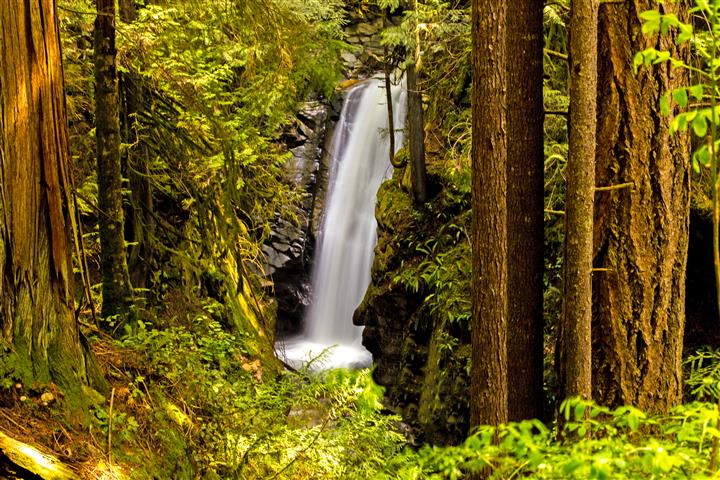
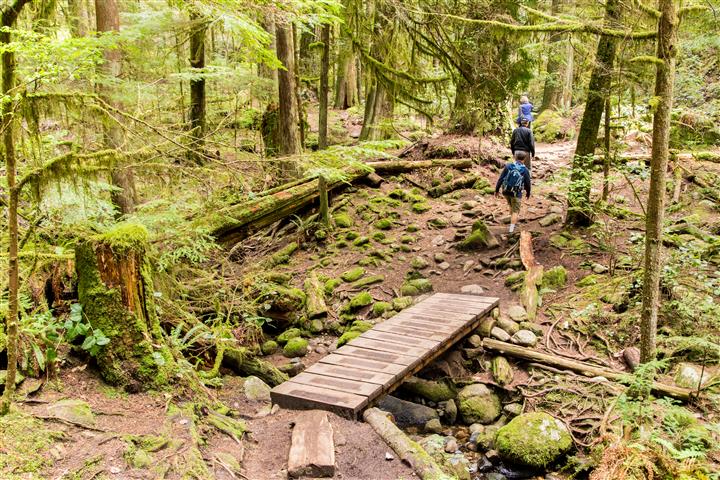
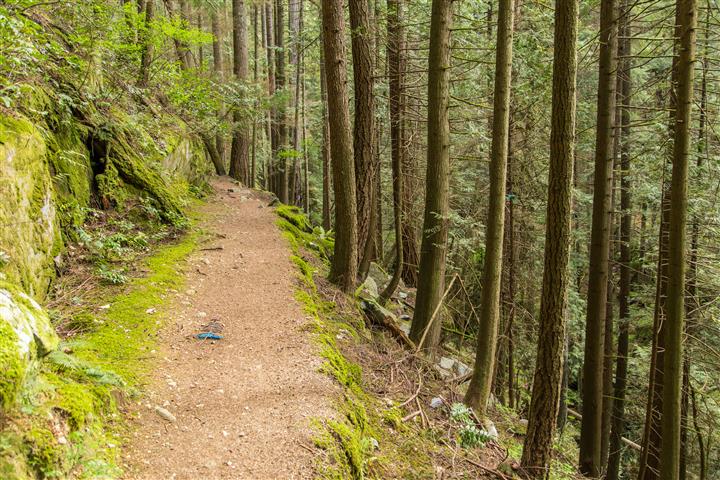
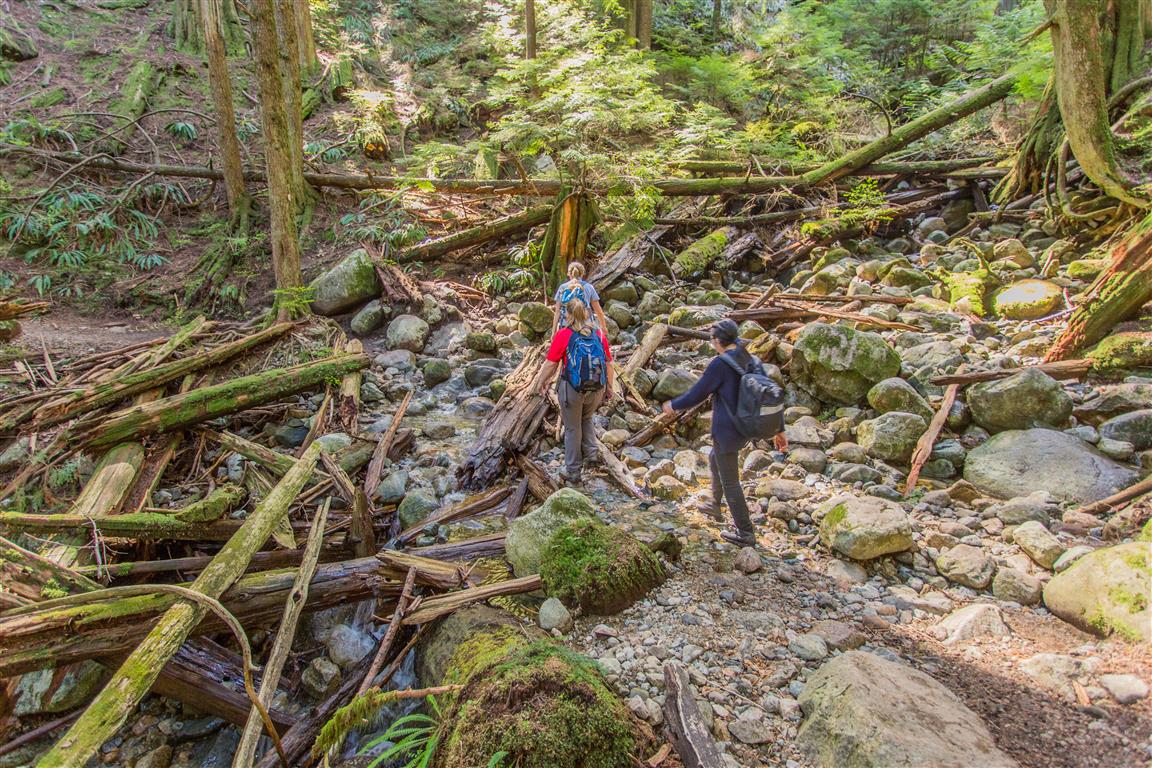
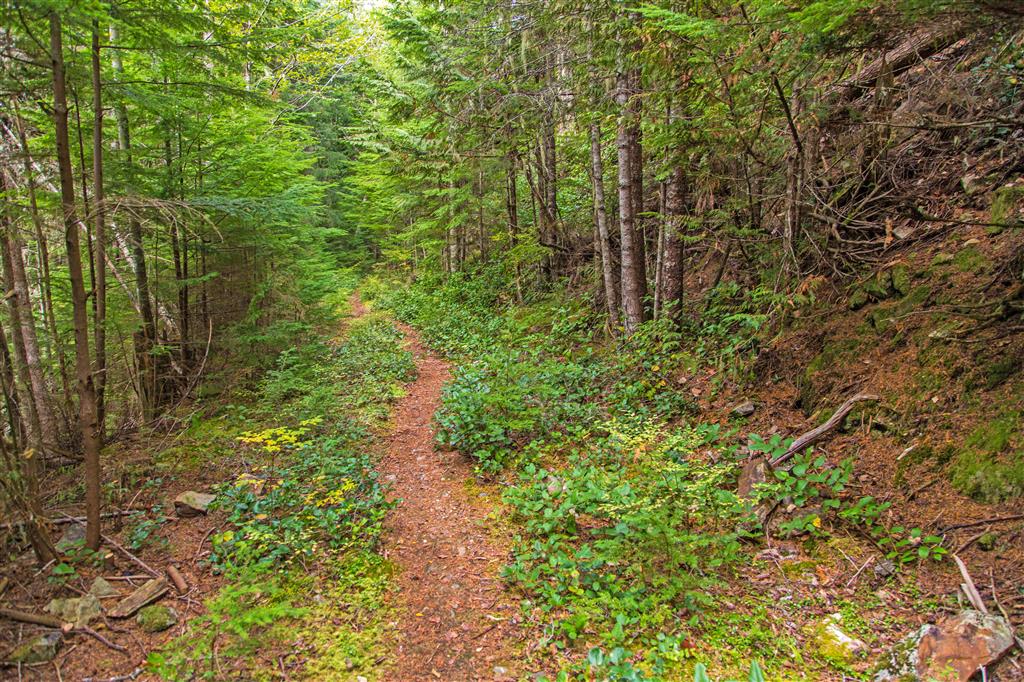
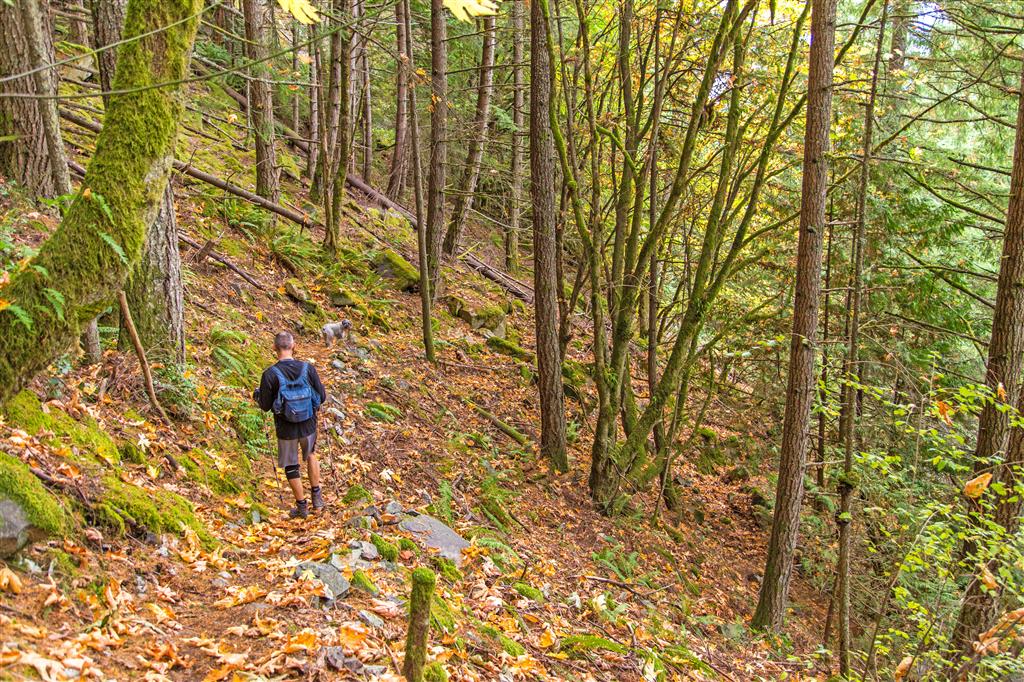
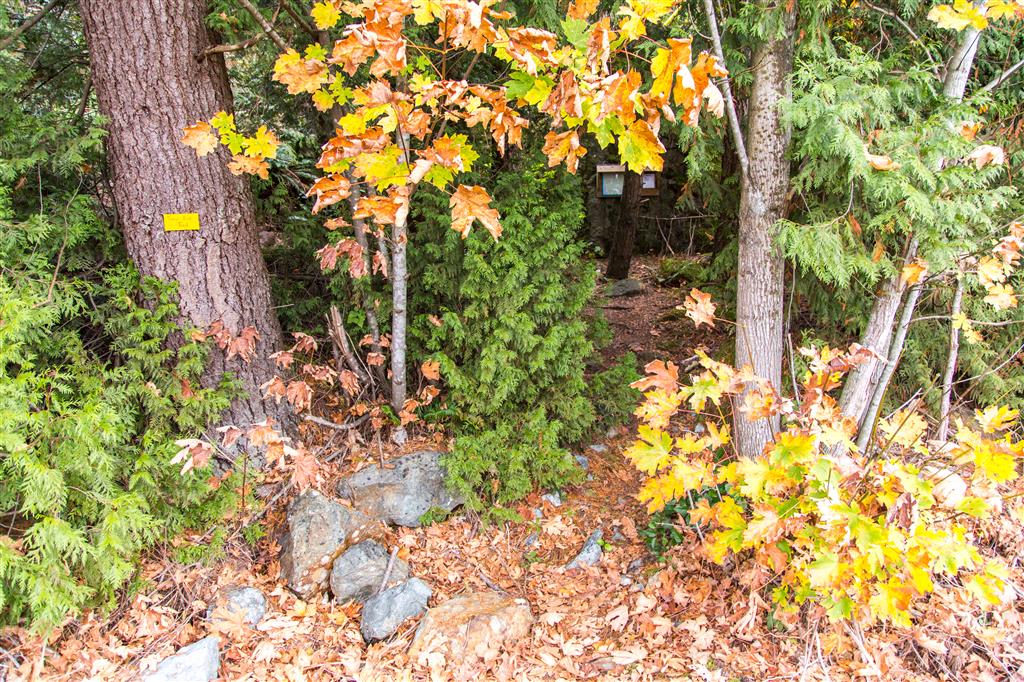
This hike starts in Cypress Falls Park in West Vancouver. The trail is pretty easy, but there are numerous off-trails, and it is very easy to go in the wrong direction. There are two main falls and one third one, which I don’t think most people get to. The first waterfall you reach is named the lower falls and is less than 500 m from the start. The upper falls are another 600 m or so. After the upper falls, you can continue on a more rugged trail to reach what I dub the twin falls, which are quite spectacular. I did the hike in a loop, which is also something I don’t think most people do.

📍 Get Driving Directions ↗

Interesting Facts

  • Cypress Falls Park, along with the much larger Cypress Provincial Park up the mountain, takes its name from the old-growth yellow cypress (also called Nootka cypress, a relative of cedar) that once grew throughout this area
  • That same cypress wood was heavily logged historically for cedar roofing shingles, which were cheap and plentiful enough in that era to help define the look of entire Vancouver neighbourhoods
  • This trail sits within the Coastal Western Hemlock (CWH) biogeoclimatic zone, typical of low-elevation coastal forest in this part of BC
  • The “twin falls” aren’t just a personal discovery. Other hikers have reported finding a further, particularly large waterfall by continuing past where the marked trail stops, suggesting there’s a known, if little-visited, local secret waiting beyond the official trail’s end

Trail Stats

  • Distance: 3.2 km (loop return)
  • Time: 2 hours (with lots of photography breaks)
  • Low point: 193 m
  • High point: 312 m
  • Elevation gain: 119 m
  • Cumulative elevation gain: 200 m

The Route

The actual GPS track from this hike, drawn on the map below. Green marks the start/end point. Use the layer control in the top right to switch to a satellite view.

Photos
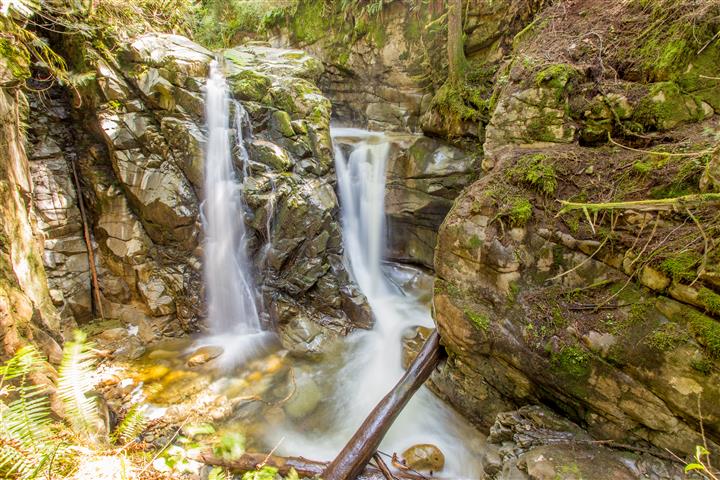
Twin falls
Twin falls
Lower falls
Lower falls
Upper falls
Upper falls
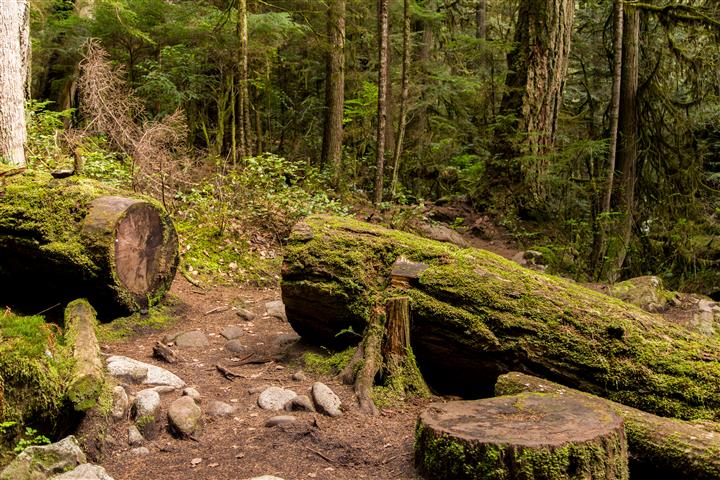
Trail pic
Trail pic
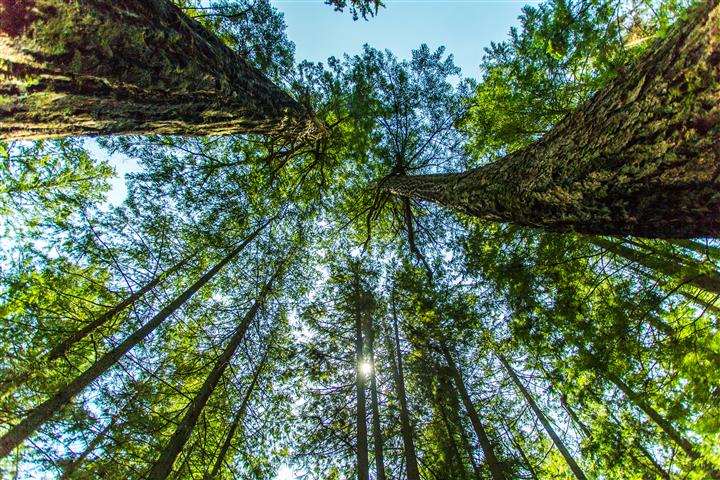
Tall trees
Tall trees
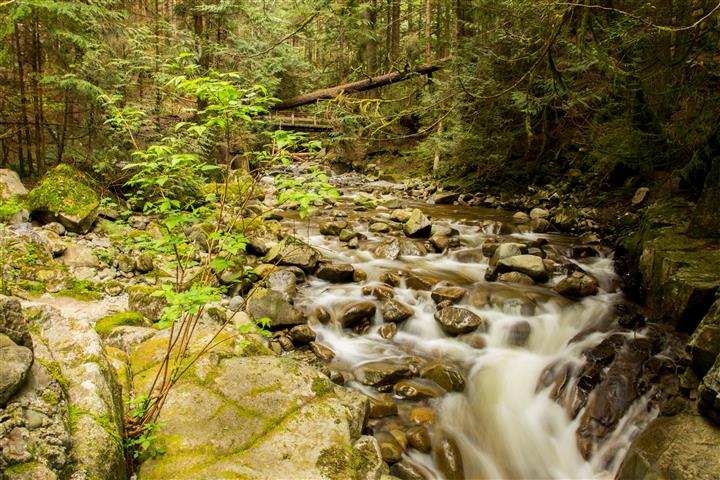
Cypress Creek
Cypress Creek
Trail pic
Trail pic
Trail pic
Trail pic
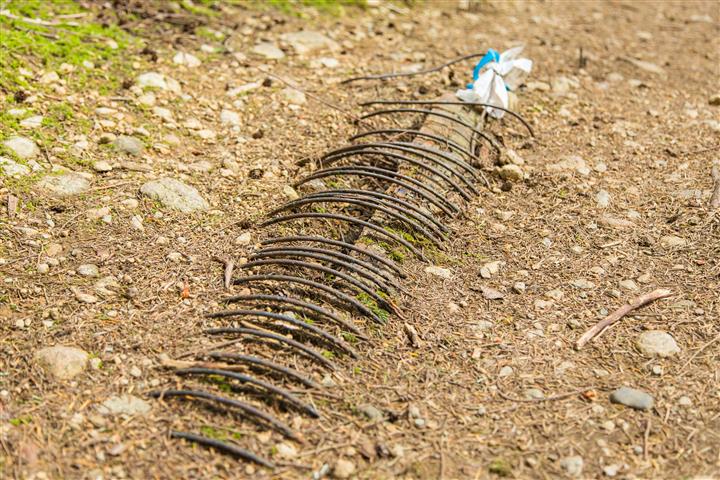
Round wire in trail
Round wire in trail
Conditions on this trail can change over time — trailheads move, access rules shift, and businesses close. This post reflects what I found when I did the hike.

Before You Hike

Before heading out on your hike, make sure you are well prepared. This means having the TEN ESSENTIALS. It is also important to leave a trip plan (route details and estimated return time) with someone you trust.

Bring your smartphone, fully charged, and put it in airplane mode while hiking. I always bring backup battery packs for extra peace of mind. It is highly recommended that you bring a GPS device. I use my smartphone with a GPS app (Backcountry Navigator). The GPS will work in airplane mode. Learn how to use it before your hike.

For anyone new to hiking, there is a rule that hikers follow called “Leave No Trace” or LNT. The concept is generally to pack out what you pack in and respect nature, so all future visitors can enjoy what you have enjoyed. To learn more about LNT, please check out this blog by a certified LNT Trainer.

Big Cedar Trail and Kennedy Falls

This is a great trail with two points of interest. First is the big cedar tree, which has been estimated at over 600 years old; the second is Kennedy Falls. Don’t let the length and elevation gain of 170 m fool you for this hike. There are many ups and downs on this trail, making the cumulative elevation gain 750 m. The length of the trail is 5 km, so the return total is 10 km. The trail traverses the west slope of Lynn Valley, and you will find the big cedar tree 3.3 km from the start; also of note, the big cedar tree is less than 100 m from Lynn Creek. The cedar tree is massive, and the only reason I think it was spared from the saw in the early 1900s, when the whole area was logged, is that there was no saw large enough! The end of the trail marks Kennedy Falls, which is spectacular and fills the air with wind, mist, and rainbows. There is a new parking lot at the trailhead on Mountain Highway, which fills up fast, so get there early. This is a very popular mountain biking area.

📍 Get Driving Directions ↗
Update: as of late 2025, the Big Cedar Tree’s long-term survival has been reported to be at risk due to significant erosion occurring around its base. If you’re visiting, please stay off the exposed root areas and avoid climbing on or around the tree to help protect it for as long as possible.

Interesting Facts

  • Lynn Valley’s first lumber mill began operation in 1863, and most of the valley’s old-growth “cathedral forest” was systematically clear-cut through to the 1920s. The Big Cedar is one of only a handful of old-growth trees on the North Shore to have survived that era
  • Beyond where the historic loggers’ cutting reached near Kennedy Creek, local tree-hunters have since found remnant patches of old-growth forest that were never logged at all, making this area one of the largest publicly accessible tracts of old growth left near Vancouver
  • This trail sits within the Coastal Western Hemlock (CWH) biogeoclimatic zone, typical of the North Shore mountains at this elevation range

Trail Stats

  • Distance: 10 km (return)
  • Time: 5 hours (many breaks)
  • Low point: 300 m
  • High point: 470 m
  • Elevation gain: 170 m
  • Cumulative elevation gain: 750 m
  • Trailhead: 49° 21′ 31″ N, 123° 2′ 7.5″ W (Google Map)

The Route

The actual GPS track from this hike (one-way to Kennedy Falls; the return follows the same path), drawn on the map below. Green marks the trailhead, red marks the turnaround at the falls. Use the layer control in the top right to switch to a satellite view.

Photos

My complete photo set can be seen on Flickr.

Here is the Big Cedar Tree:

Big Cedar Tree

Kennedy Falls:

Kennedy Falls

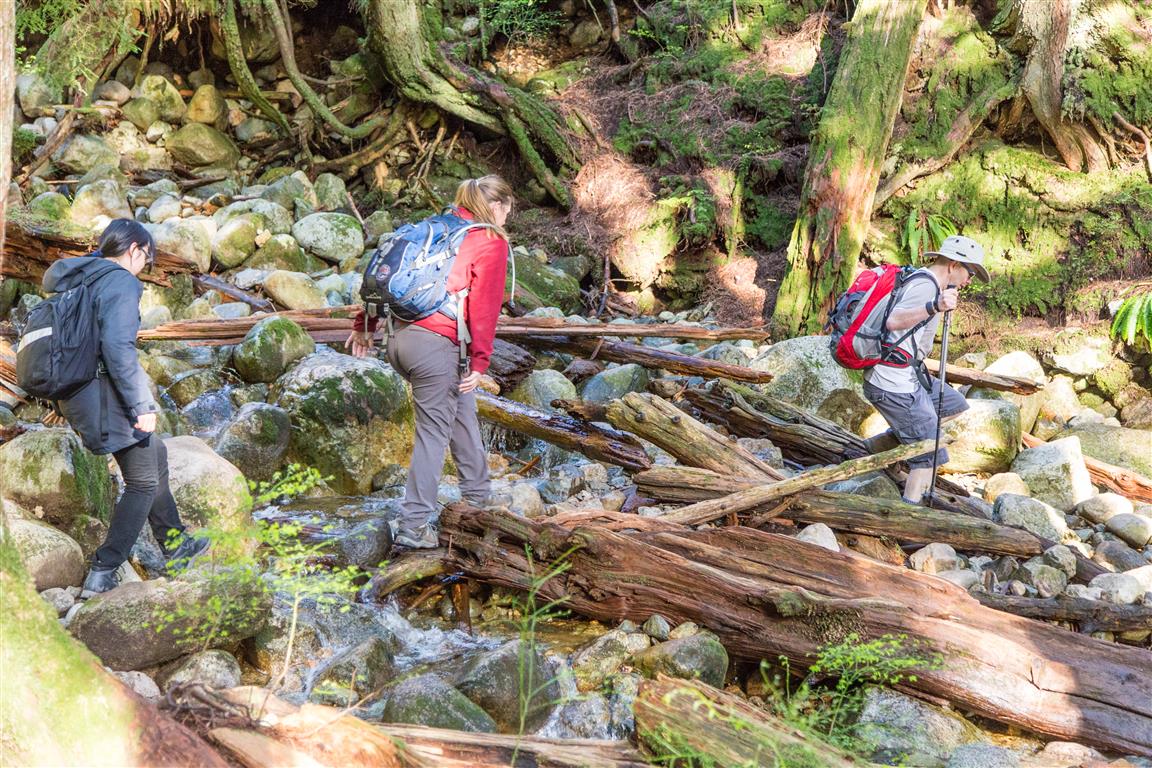
Crossing creeks:

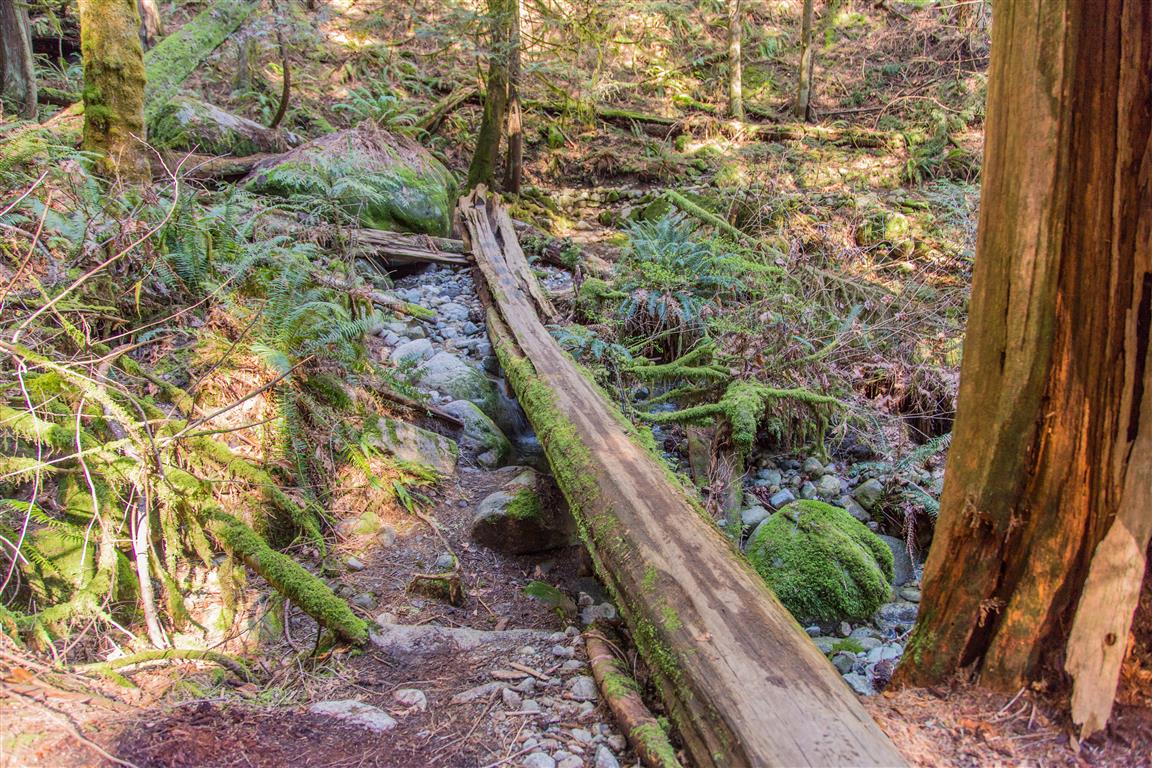
Crossing a creek
Crossing a creek

Relics of the forestry era:

Forestry relics

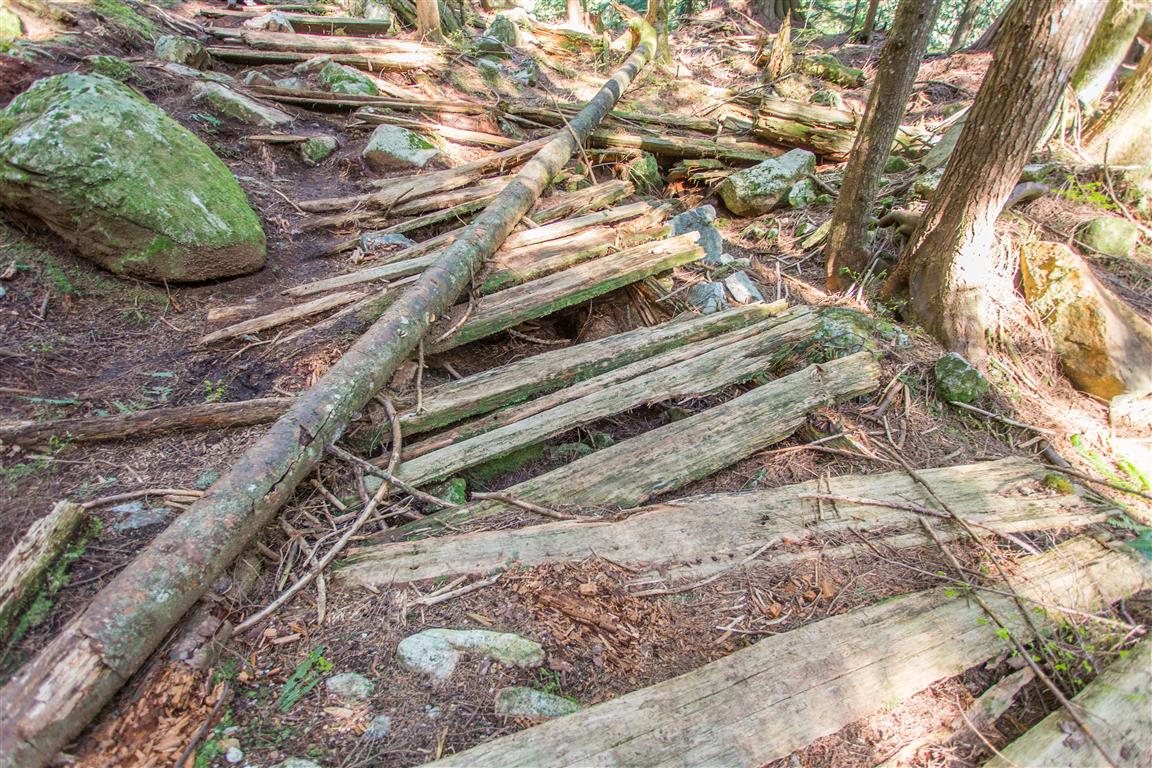
Old wooden boardwalk planks:

Old wooden boardwalk planks

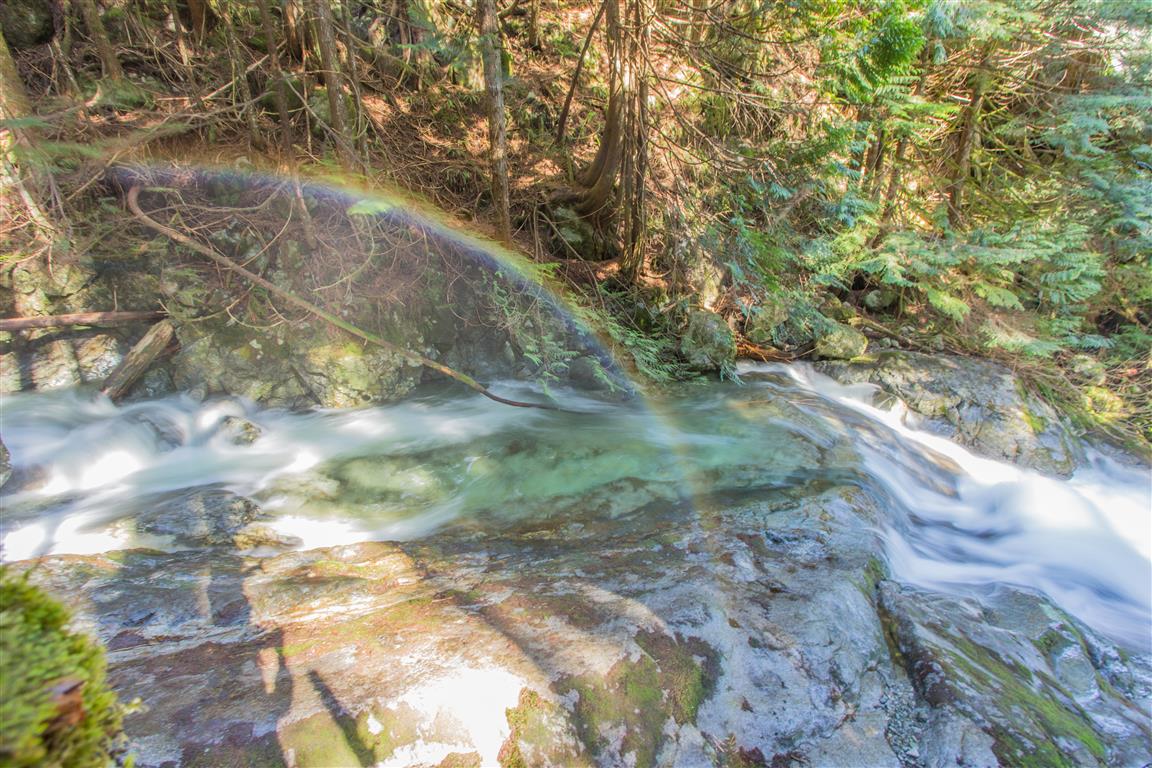
Rainbow:

Rainbow

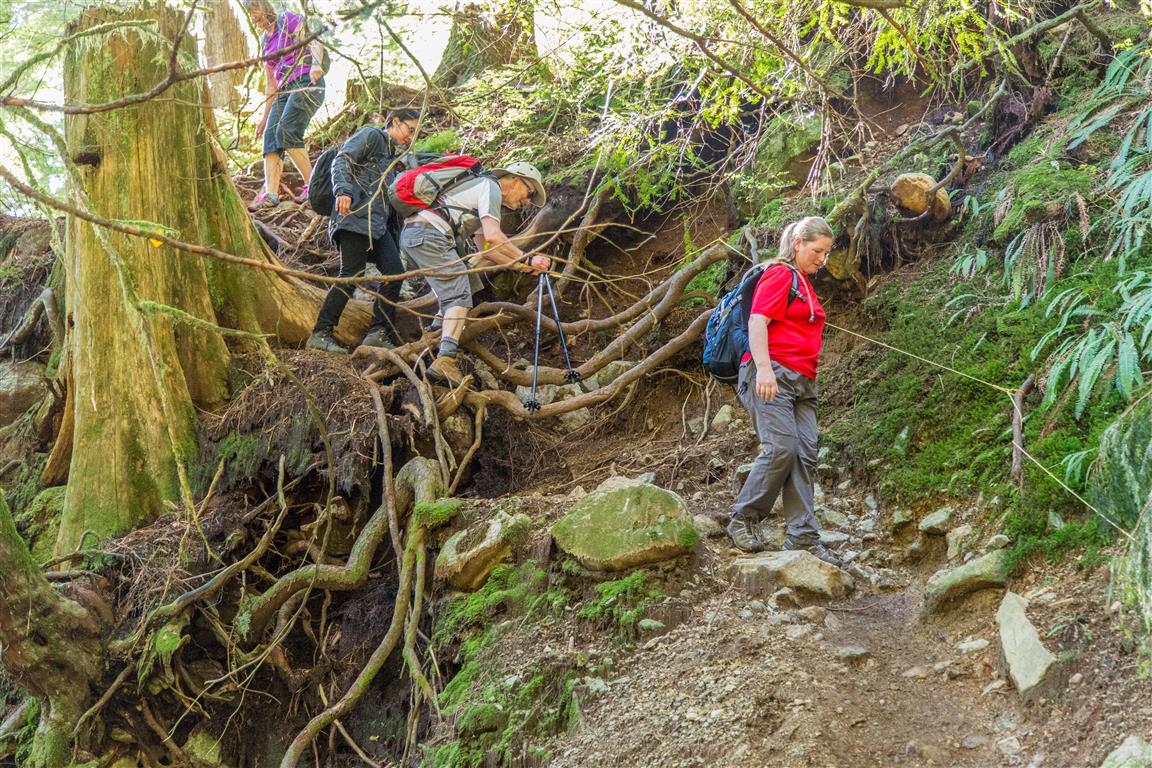
Roots for steps:

Roots for steps

There we are!

There we are!

Trail pics:

Trail
Trail
Trail
Conditions on this trail can change over time — trailheads move, access rules shift, and businesses close. This post reflects what I found when I did the hike.

Before You Hike

Before heading out on your hike, make sure you are well prepared. This means having the TEN ESSENTIALS. It is also important to leave a trip plan (route details and estimated return time) with someone you trust.

Bring your smartphone, fully charged, and put it in airplane mode while hiking. I always bring backup battery packs for extra peace of mind. It is highly recommended that you bring a GPS device. I use my smartphone with a GPS app (Backcountry Navigator). The GPS will work in airplane mode. Learn how to use it before your hike.

For anyone new to hiking, there is a rule that hikers follow called “Leave No Trace” or LNT. The concept is generally to pack out what you pack in and respect nature, so all future visitors can enjoy what you have enjoyed. To learn more about LNT, please check out this blog by a certified LNT Trainer.

Quarry Rock Trail

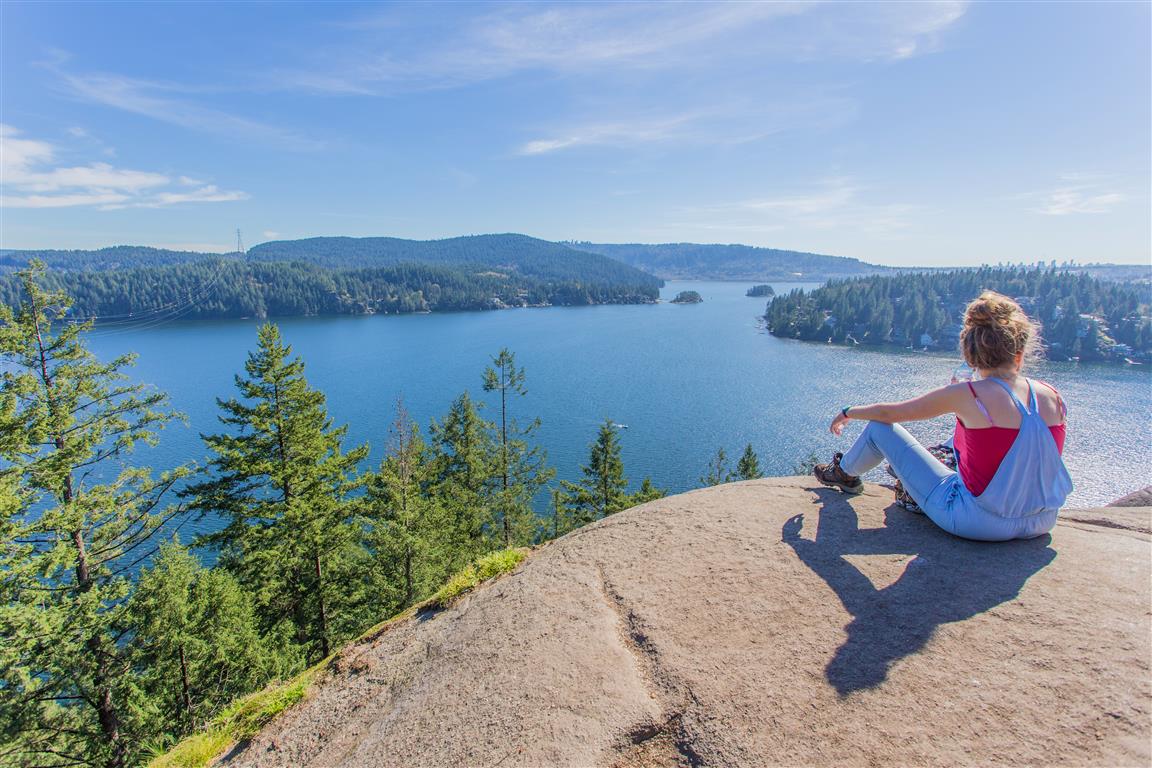
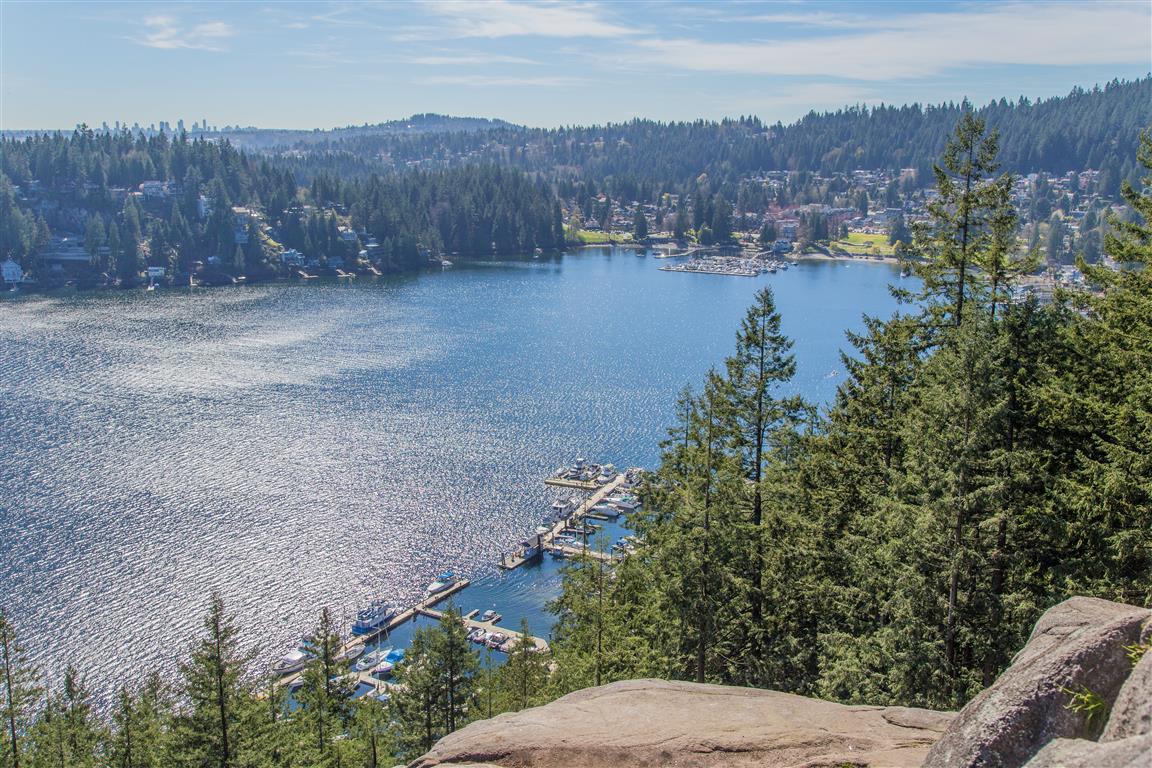
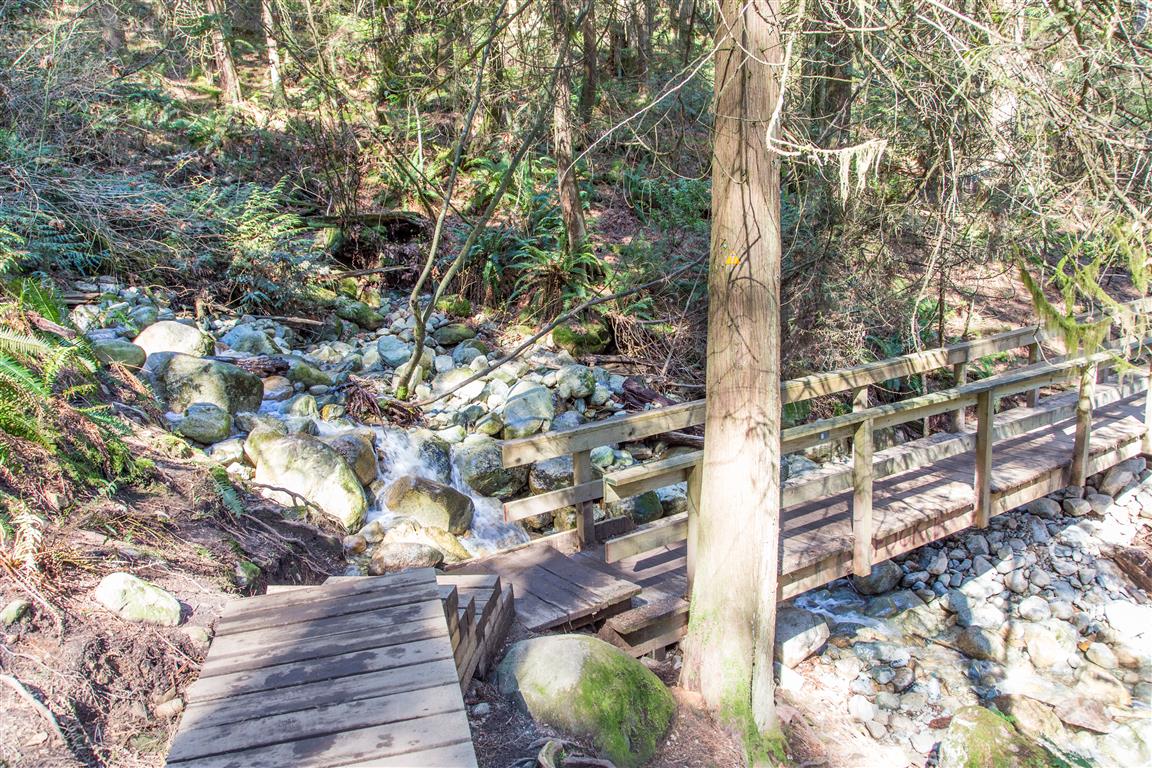
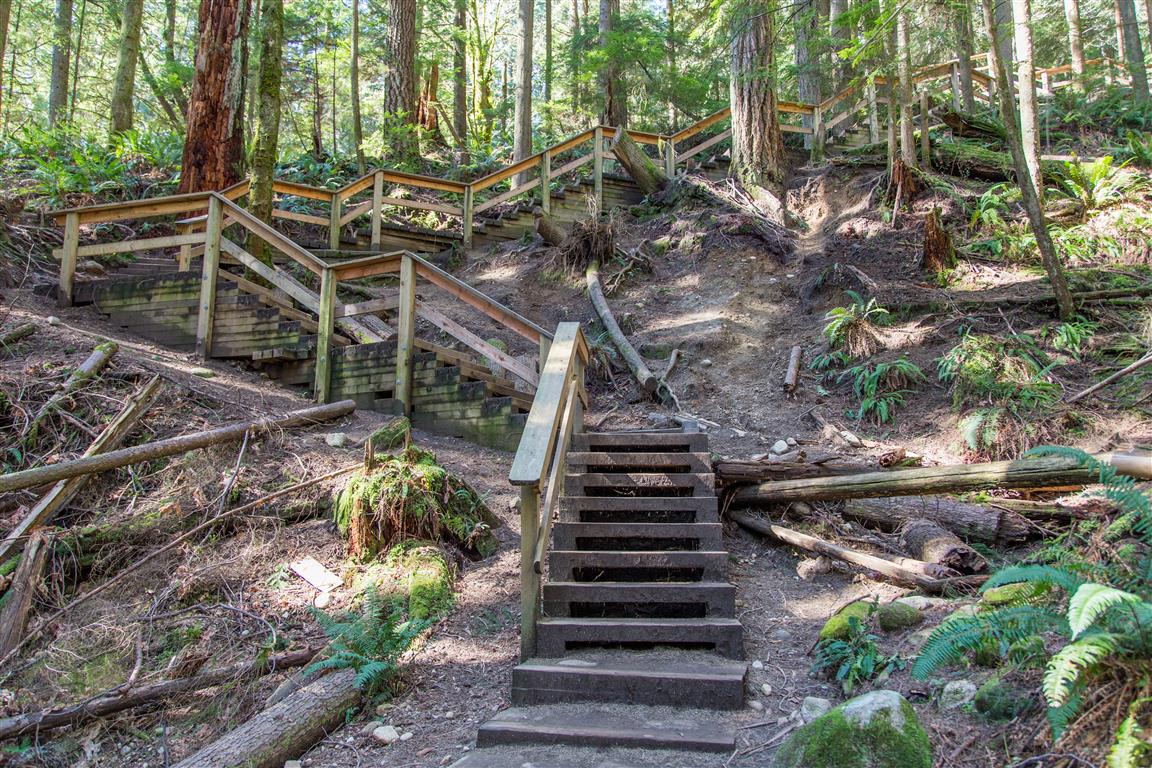
Quarry Rock hike is a very popular hike in North Vancouver. It is relatively easy for regular hikers, and you will see many people on the trail, including families and runners. The trail starts just off Panorama Drive in Deep Cove, North Vancouver, and it traverses through Cove Forest. There are many steps, boardwalks, and bridges, which make the trail family-friendly. On my route today, I took the regular trail to the viewpoint at Quarry Rock, but then on my return, I took a trail north to Indian River Drive, where it then turns west. Most people will follow the same path back, and that is just fine. The trail I took on my return is not very busy and less marked.

📍 Get Driving Directions ↗

Overall, this is a great little hike, especially for families. The parking and crowds would be the only problems I see with this hike.

Interesting Facts

  • Quarry Rock is literally named for its history — Deep Cove became a popular summer resort in the 1910s, and logging and granite quarrying were both part of the local industry at the time. The granite outcrop you stand on at the viewpoint is a remnant of that quarrying activity
  • This trail follows a section of the historic Baden-Powell Trail, a 48 km route built in 1971 by Boy Scouts and Girl Guides, linking Deep Cove all the way to Horseshoe Bay
  • The granite platform at Quarry Rock is only big enough to comfortably fit about a dozen people at a time, which is part of why it can feel crowded on busy weekends. Locals who want it to themselves tend to go before 8 a.m., when it’s mostly just trail runners, dog walkers, and the occasional wildlife photographer hoping to catch eagles over the inlet

Trail Stats

Here are the stats for the loop (which I took) and the back-and-forth on the same trail route:

Same Trail ReturnLoop
Distance4 km5 km
Low point9 m9 m
High point130 m222 m
Elevation gain121 m213 m
Cumulative elevation gain325 m411 m

Trailhead: 49° 19′ 48.4″ N, 122° 56′ 59.4″ W (Google Map)

The Route

The actual GPS track from this hike (the loop route), drawn on the map below. Green marks the start, red marks the end. Use the layer control in the top right to switch to a satellite view.

Photos

Here are some photos from the viewpoint:

View from Quarry Rock

Bridge and boardwalk:

Bridge and boardwalk

Bridge over creek:

Bridge over creek

Stairs:

Stairs

Steps on trail:

Step on trail

Trail pics:

Trail
Trail
Trail
Trail
Tree to walk across
Conditions on this trail can change over time — trailheads move, access rules shift, and businesses close. This post reflects what I found when I did the hike.

Before You Hike

Before heading out on your hike, make sure you are well prepared. This means having the TEN ESSENTIALS. It is also important to leave a trip plan (route details and estimated return time) with someone you trust.

Bring your smartphone, fully charged, and put it in airplane mode while hiking. I always bring backup battery packs for extra peace of mind. It is highly recommended that you bring a GPS device. I use my smartphone with a GPS app (Backcountry Navigator). The GPS will work in airplane mode. Learn how to use it before your hike.

For anyone new to hiking, there is a rule that hikers follow called “Leave No Trace” or LNT. The concept is generally to pack out what you pack in and respect nature, so all future visitors can enjoy what you have enjoyed. To learn more about LNT, please check out this blog by a certified LNT Trainer.

Lynn Peak Trail

This is my second post about hiking in Lynn Headwaters Regional Park. The first was a hike to Norvan Falls. Lynn Peak is a very different hike. Instead of following the valley, this route climbs steadily through the forest and is much more of a workout.

Lynn Peak: Trail Conditions & Weather
Check current park advisories, road access, and weather before heading out.
📍 Get Driving Directions ↗

The route begins at the Lynn Headwaters park entrance at the north end of Lynn Valley Road. After crossing Lynn Creek, the route follows the lower trails before branching onto the Lynn Peak Route and beginning the long climb.

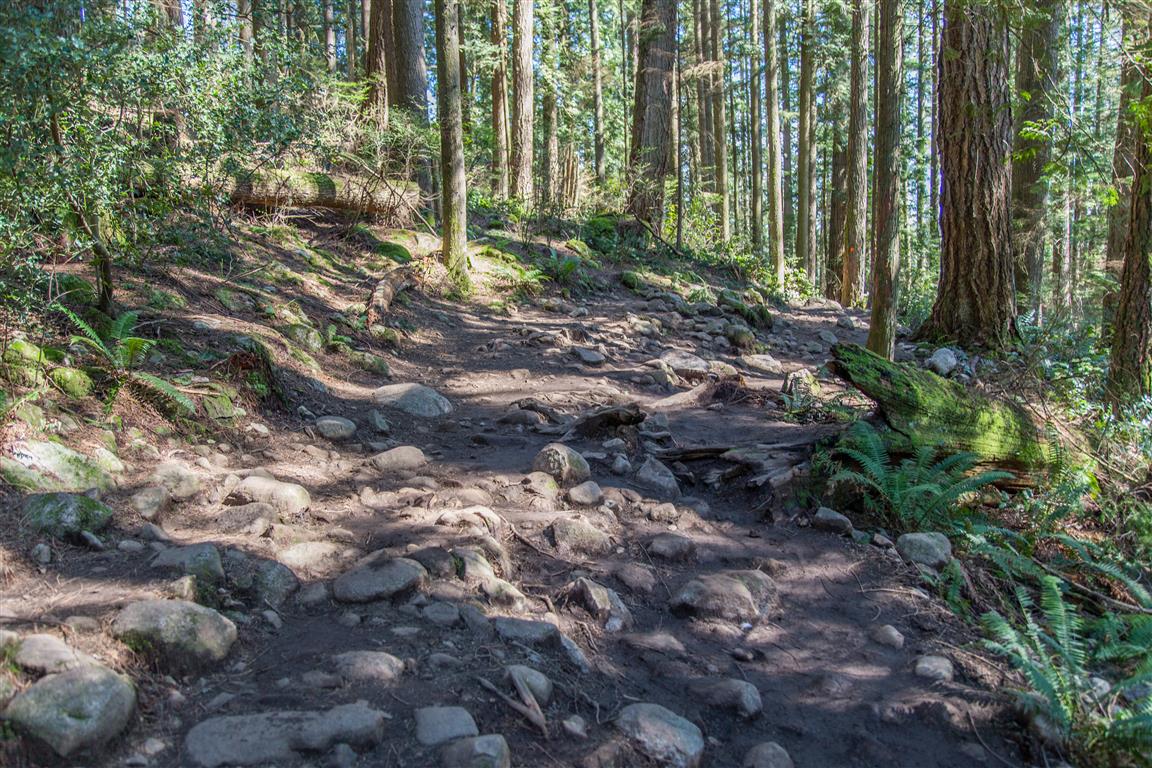
I found the trail well marked, although there are some fairly rocky sections. Overall, the trail was very manageable. Compared with the nearby Grouse Grind, I found this hike easier and much less crowded. There are also occasional flatter sections along the climb where you can catch your breath.

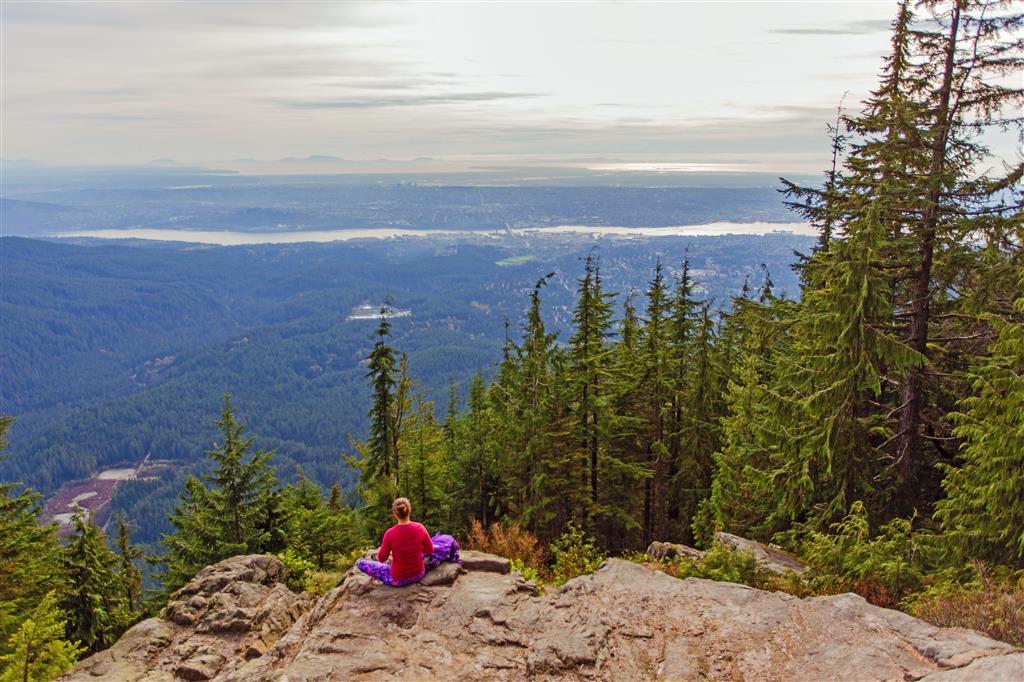
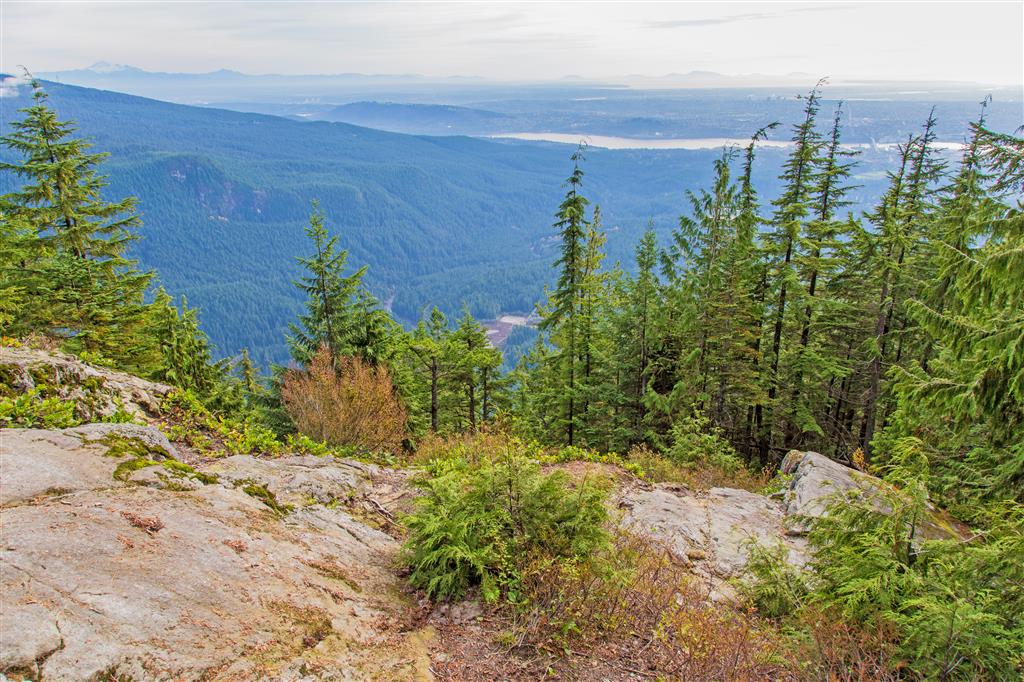
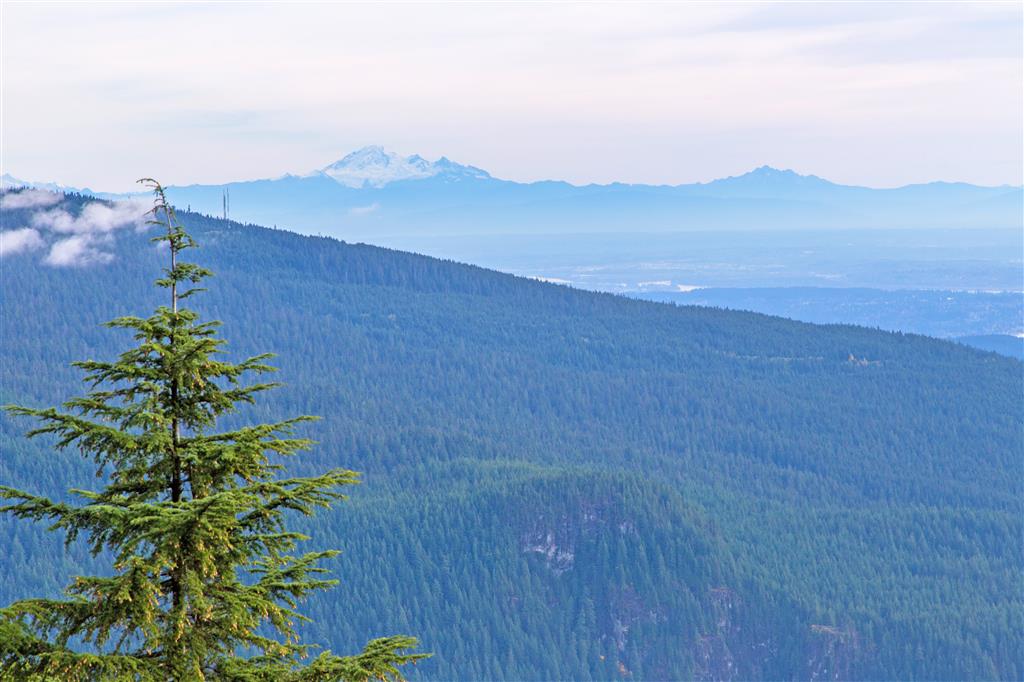
The main destination on this hike is a large rocky viewpoint near the upper end of the marked route. From here there are excellent views looking south across the Lower Mainland and east towards Mount Seymour. It was overcast when I did the hike, but I could still see Mount Baker in the distance.

Interesting Facts

  • Metro Vancouver classifies the Lynn Peak Route as a challenging route because of its steep, steady climb and rough, uneven terrain. The current park map lists it as approximately 8.8 km return from the park entrance.
  • The rocky viewpoint reached on this hike is below the actual summit of Lynn Peak. My GPS track reached approximately 927 m, while the true summit of Lynn Peak is approximately 992 m. The true summit is farther north along the ridge and is heavily forested, so the lower viewpoint is the more popular destination.
  • The hike is primarily within the Coastal Western Hemlock biogeoclimatic zone. As the trail climbs towards 900 m, the forest becomes cooler and wetter and approaches the transition towards the higher-elevation Mountain Hemlock zone.
  • Lynn Headwaters was one of the North Shore areas affected by a major western hemlock looper outbreak between 2018 and 2021. The native moth caused substantial defoliation and mortality of western hemlock trees throughout parts of the park.

Trail Stats

  • Distance: 9.1 km (return)
  • Time: 3 hours moving time
  • Low point: 192 m
  • High point: 942 m
  • Elevation gain: 750 m

The Route

The actual GPS track from this hike is drawn on the map below. Green marks the start/end point. Use the layer control in the top right to switch to a satellite view.

Photos
View from the Lynn Peak viewpoint
Great view from the upper viewpoint
View from Lynn Peak
Another view from the bluff
Mount Baker from Lynn Peak
Mount Baker visible in the distance
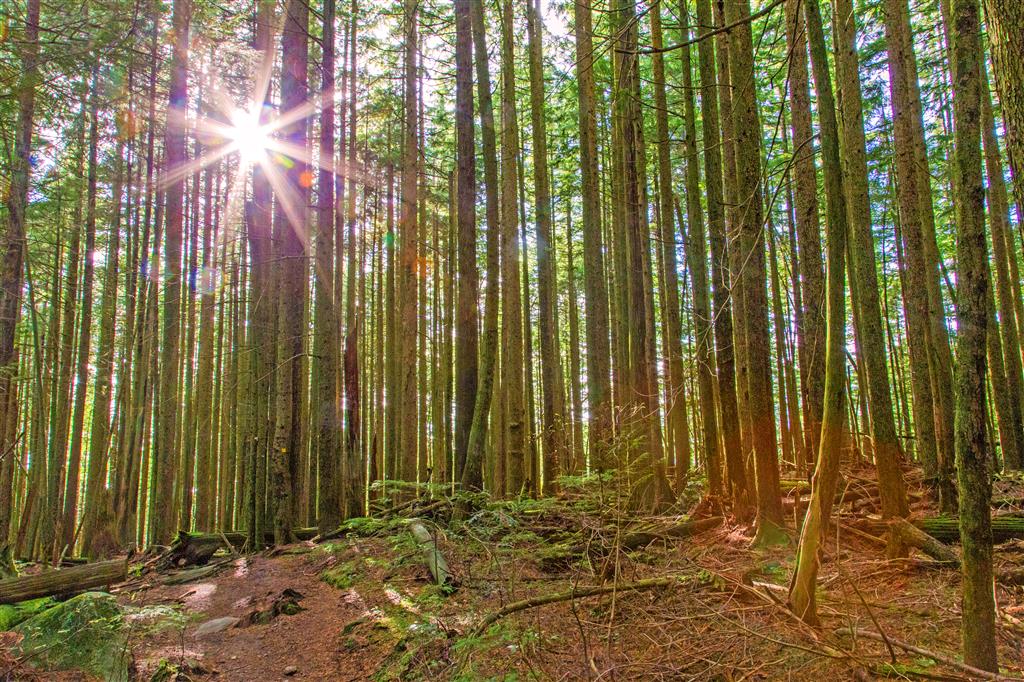
Sunlight through the forest
Sunlight breaking through the trees
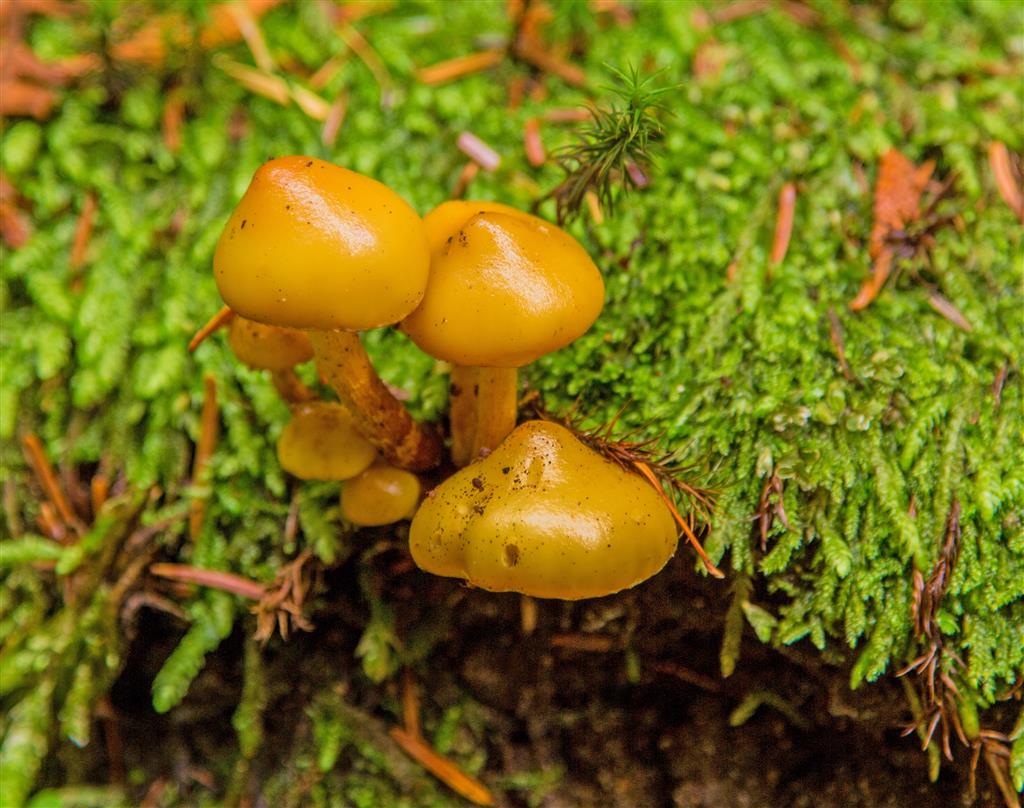
Mushrooms beside the trail
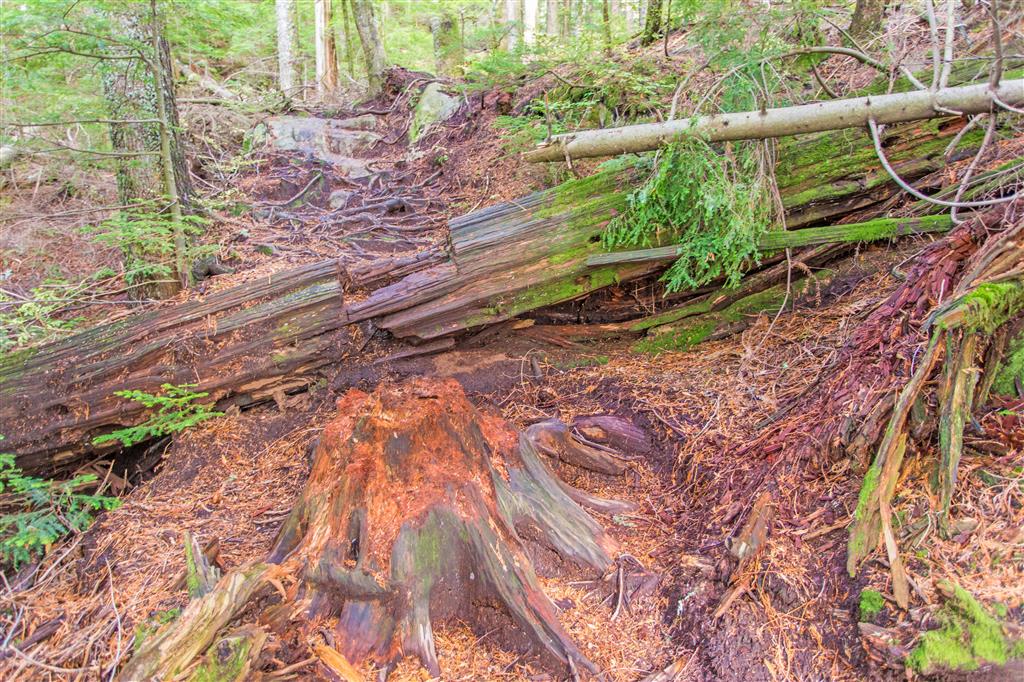
Notch cut through a fallen tree
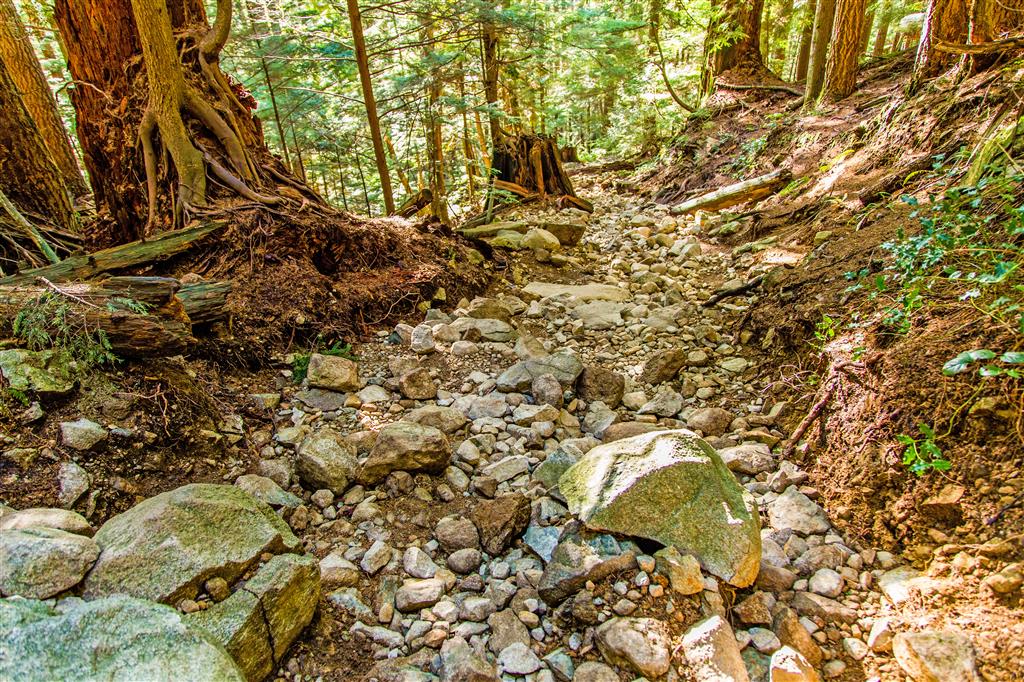
Rocky section of the Lynn Peak trail
One of the rockier sections
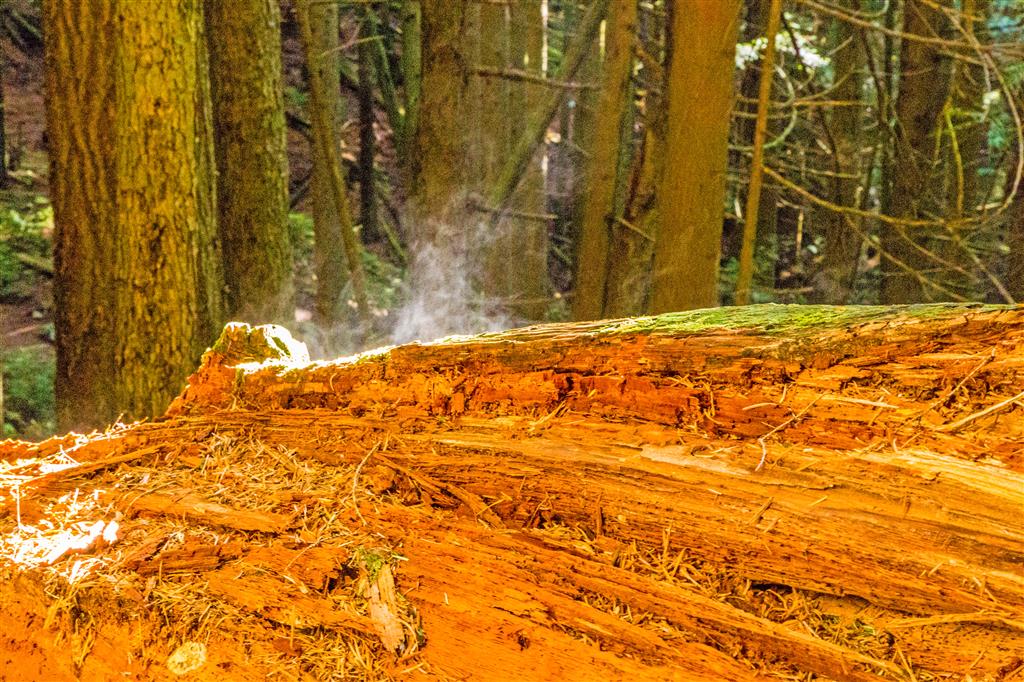
Steam rising from a fallen tree
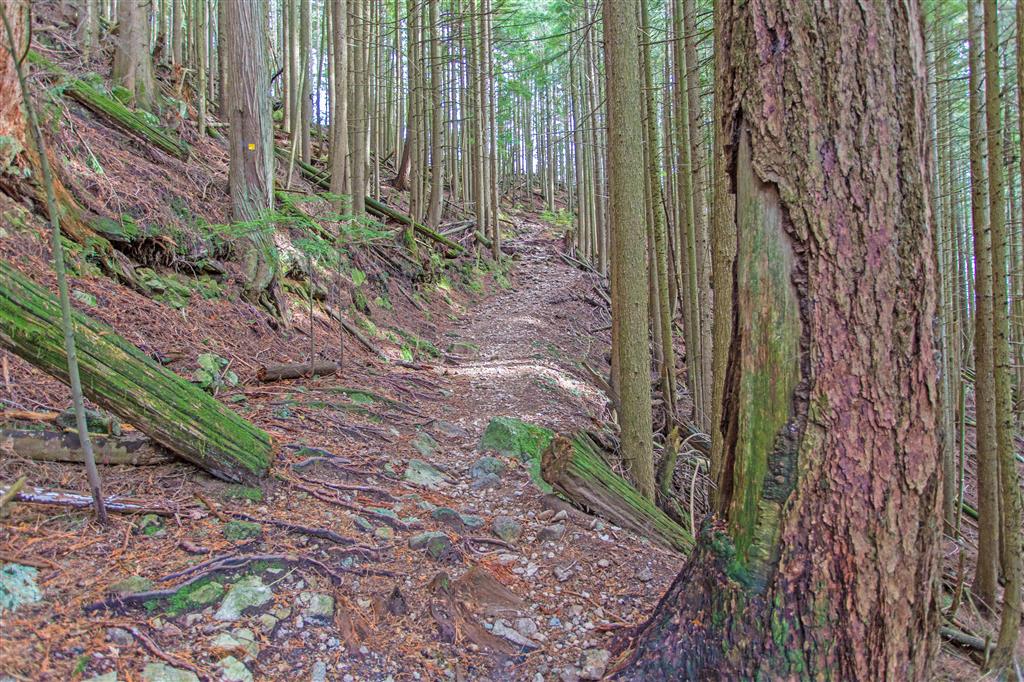
Lynn Peak trail
Trail through the forest
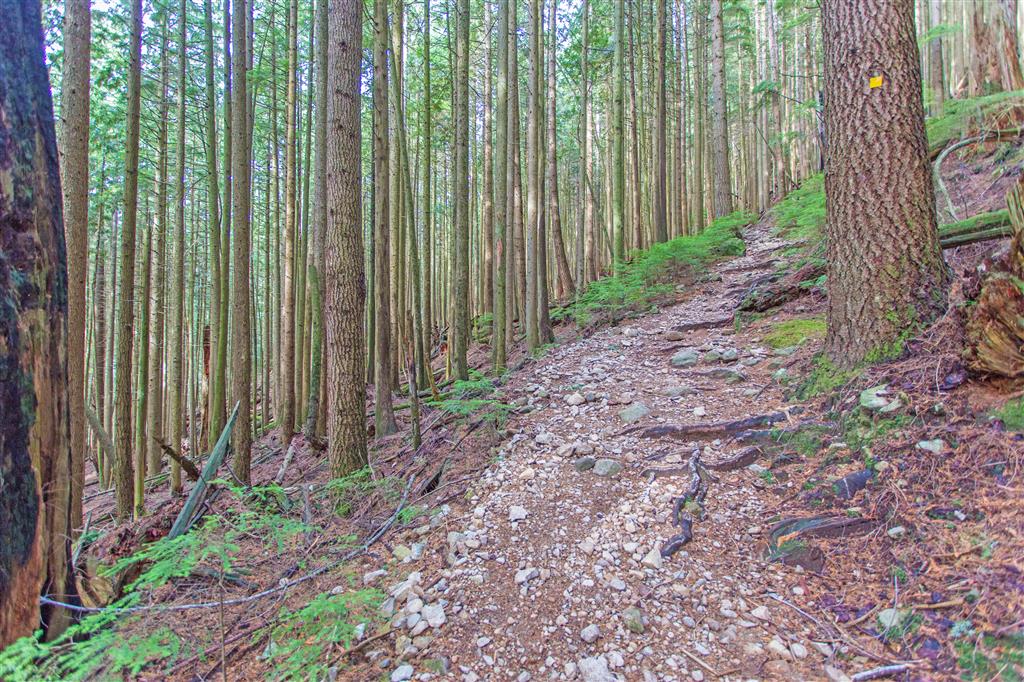
Forest trail on Lynn Peak
Another section of trail
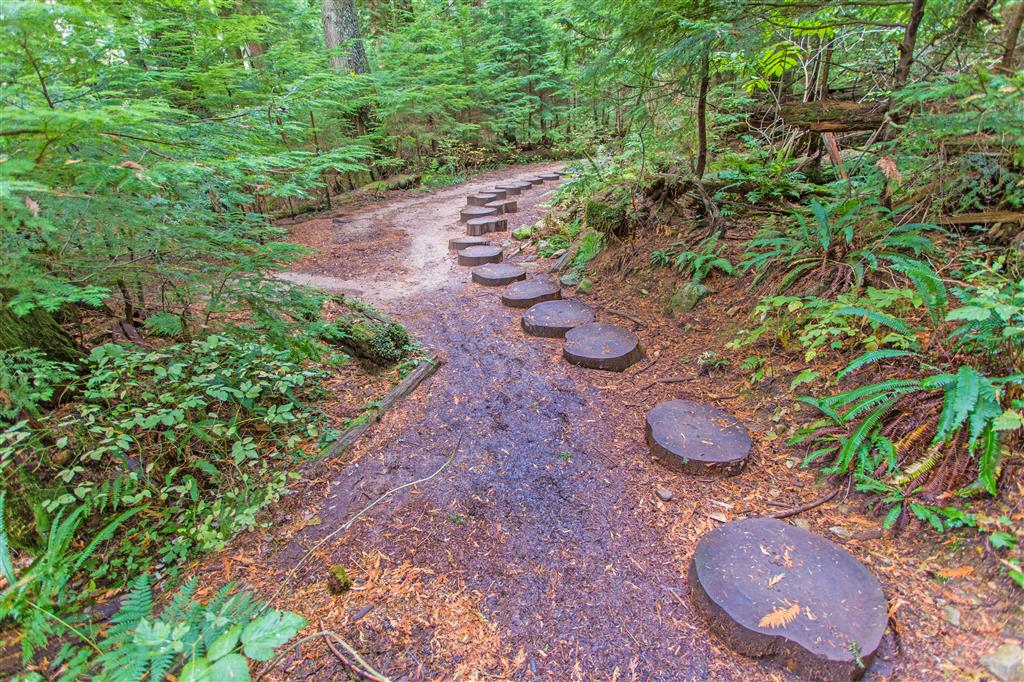
Wooden stepping blocks through a wet section
Wooden stepping blocks through a sometimes swampy section
The route description and trail conditions in this post reflect what I encountered when I completed the hike. Trail conditions, access, signage, and routes can change over time. Before heading out, check current conditions and do your own research.

Before You Hike

Before heading out on your hike, make sure you are well prepared. This means having the TEN ESSENTIALS. It is also important to leave a trip plan (route details and estimated return time) with someone you trust.

Bring your smartphone, fully charged, and put it in airplane mode while hiking. I always bring backup battery packs for extra peace of mind. It is highly recommended that you bring a GPS device. I use my smartphone with a GPS app (Backcountry Navigator). The GPS will work in airplane mode. Learn how to use it before your hike.

For anyone new to hiking, there is a rule that hikers follow called “Leave No Trace” or LNT. The concept is generally to pack out what you pack in and respect nature, so all future visitors can enjoy what you have enjoyed. To learn more about LNT, please check out this blog by a certified LNT Trainer.
Tunnel Bluffs Trail

This hike is also known as Tunnel Point.

📍 Get Driving Directions ↗
Update: When I did this hike, I started just north of Lions Bay, but you can no longer park in that parking lot (beside the highway) for more than 30 minutes. Based on my research, this starting point in a residential neighbourhood appears to be a more practical option. Please park considerately and follow any posted signs.

Trail Details (from the Highway Trailhead)

The trail statistics below are from my route, which started at the highway trailhead. They are not measured from the new starting point in the residential neighbourhood, so the distance, time and elevation gain from there may differ.
  • Distance: 7.3 km (return)
  • Time: 3 to 5 hours
  • Low point: 64 m
  • High point: 708 m
  • Elevation gain: 644 m
  • Cumulative elevation gain: 850 m

The Trail

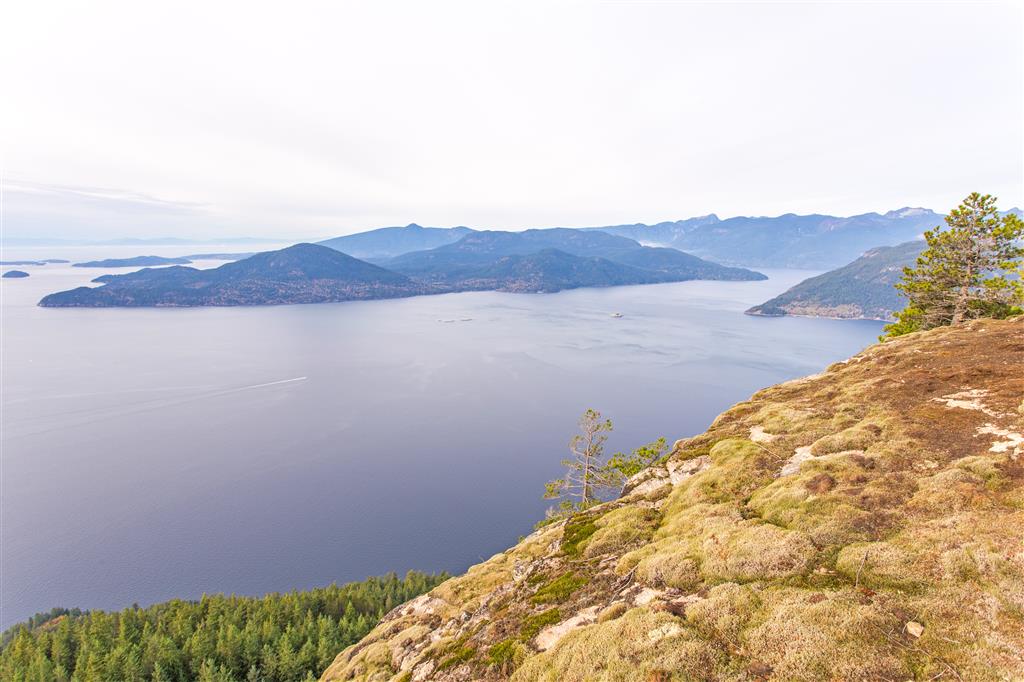
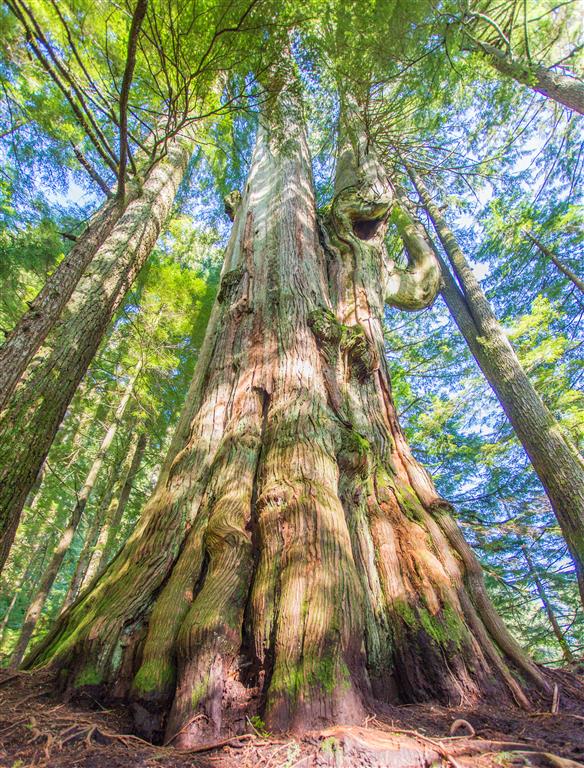
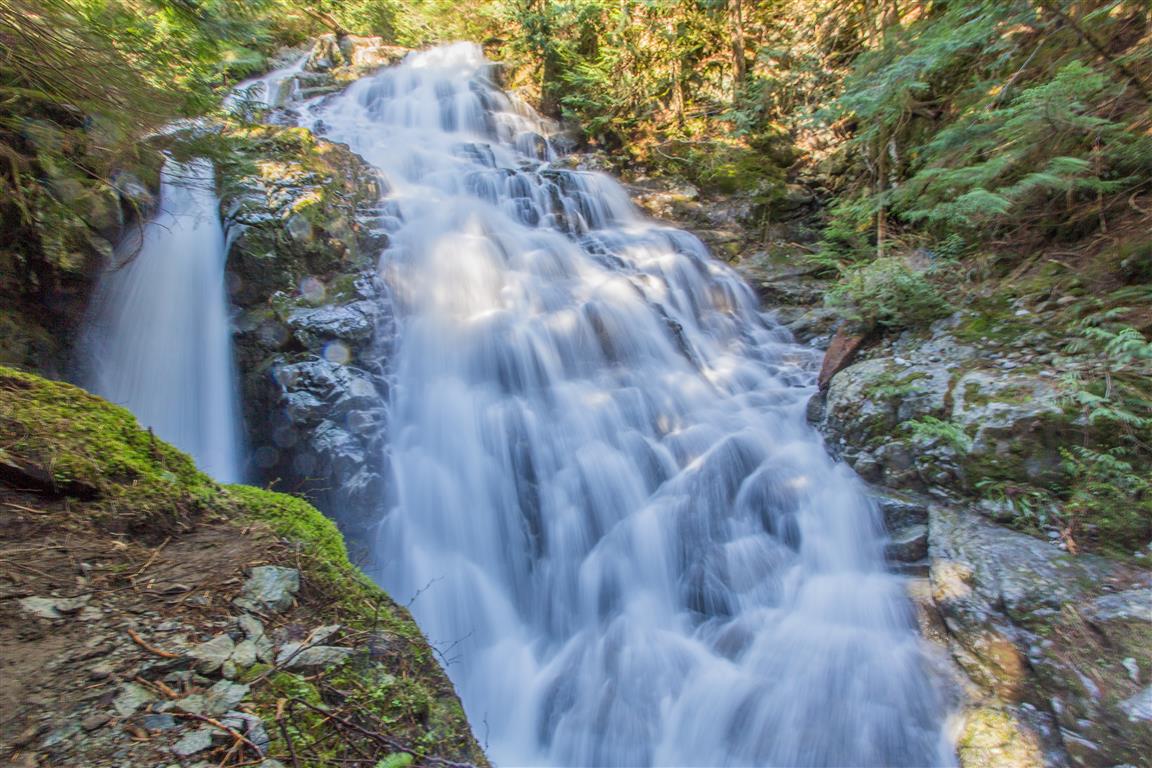
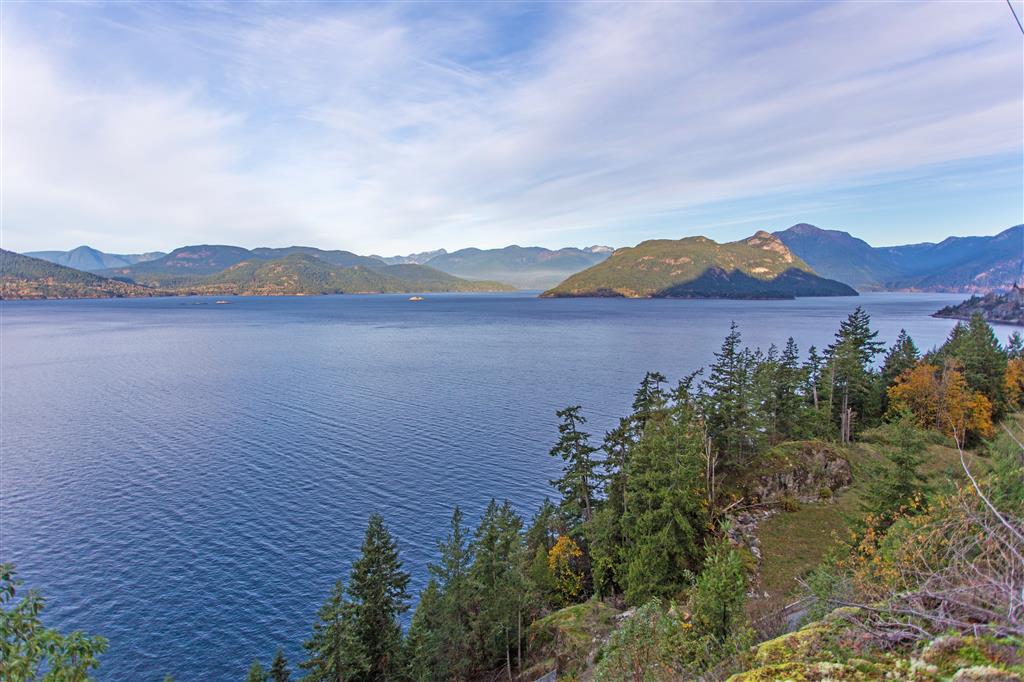
The hike starts uphill immediately and continues so until about the 600 m elevation mark. At this point you travel on an old logging road until you reach the end. On the way up, there are 3 viewpoints, but none are nearly as good as what you’ll see at the end. The trail is in good shape and is not technical. There are a couple of ropes, but they aren’t really needed. There is one small creek (at 640 m) and a few monster trees. The view from the bluff is quite spectacular. You can see Howe Sound, Bowen Island, Gambier Island and Anvil Island, among others.
Photos

The view from the top bluff

A short video from the bluff:

View from the first viewpoint at 100 m elevation
View from the first viewpoint (100 m elevation)
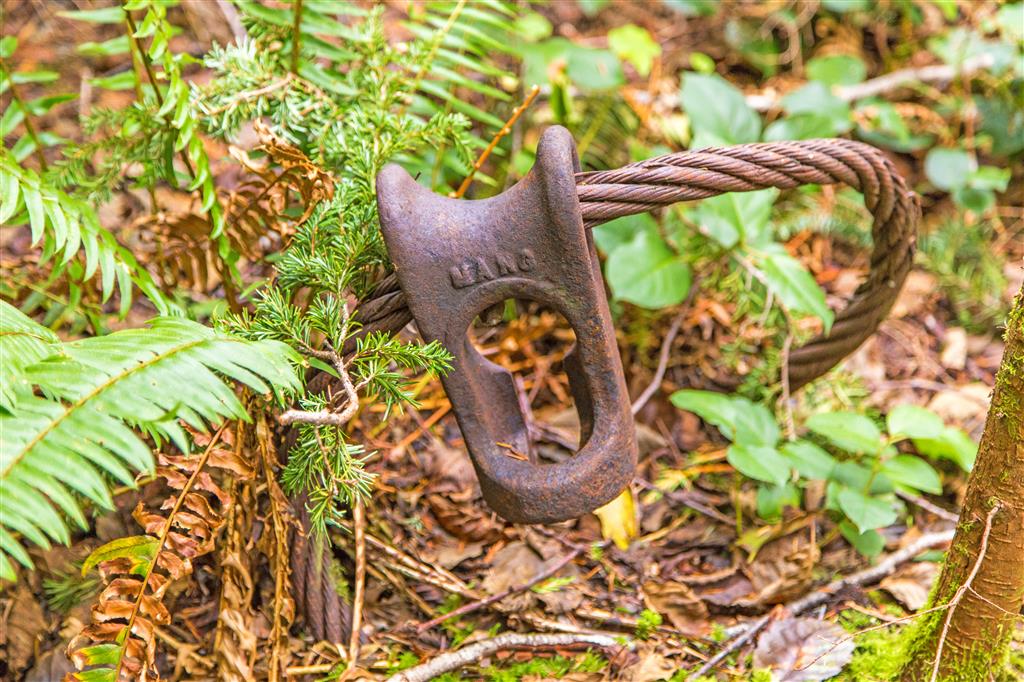
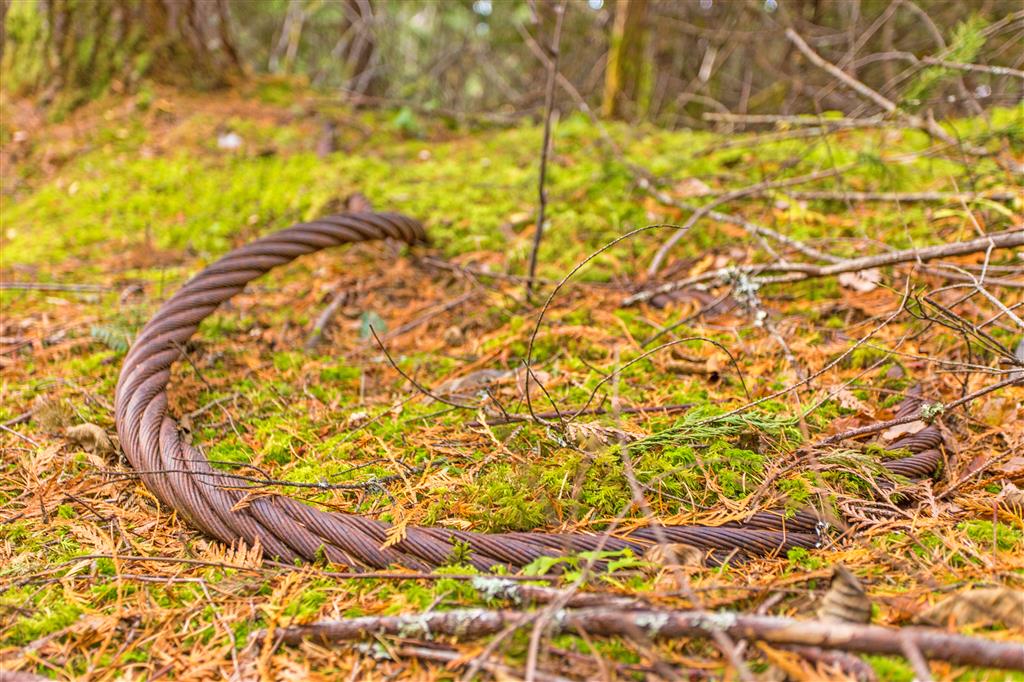
Steel wire left over from the old logging days
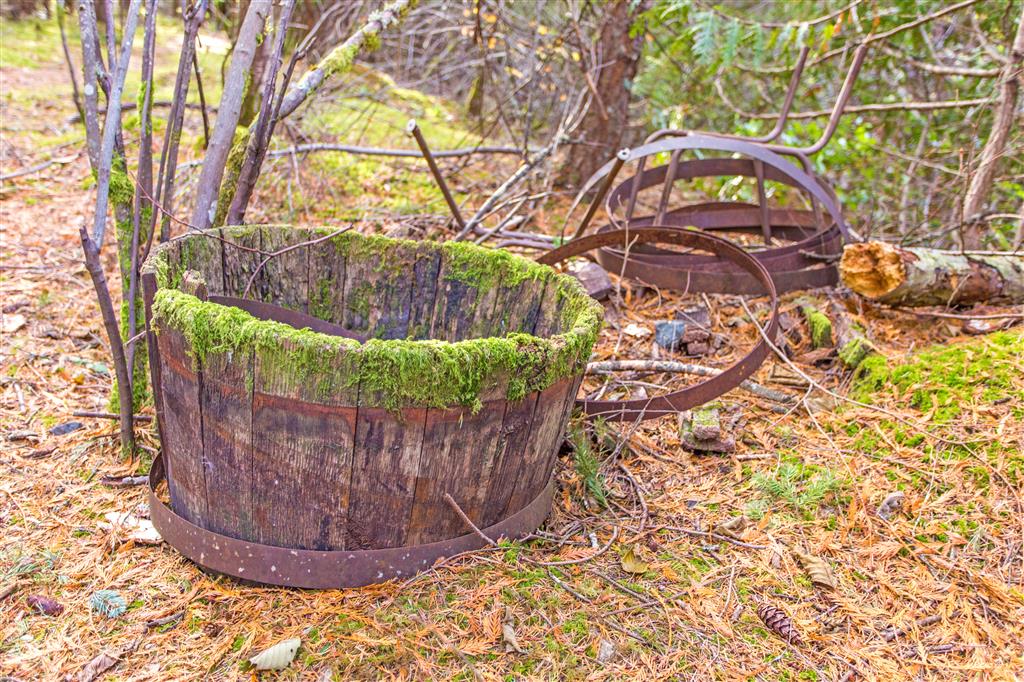
Old wooden barrel
Old wooden barrel
Another relic left over from the logging days
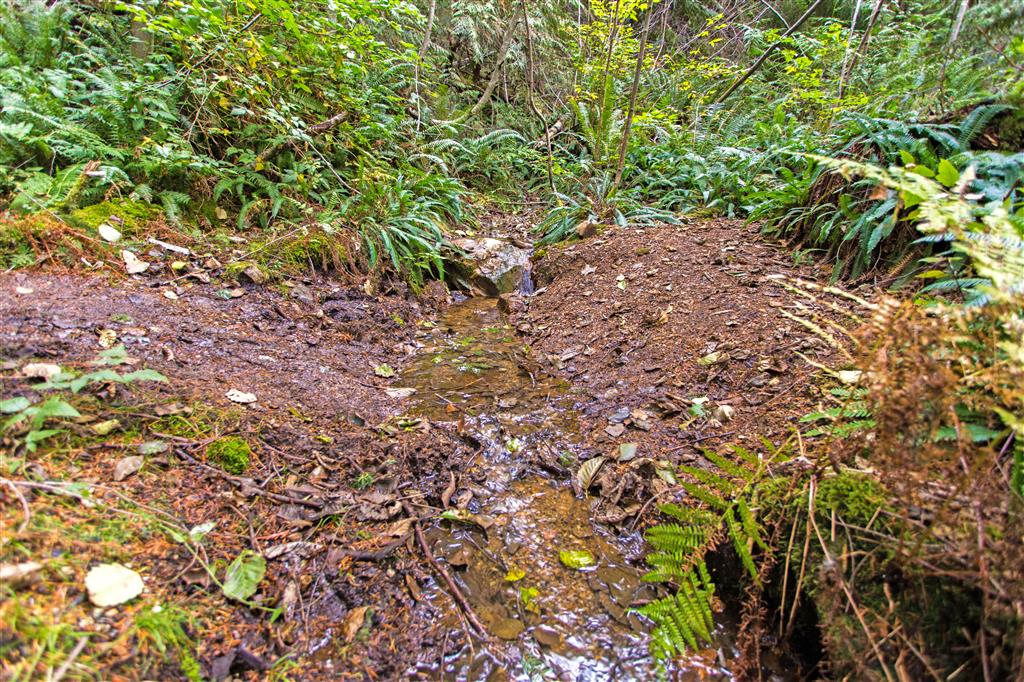
The only stream on the trail
The old logging road
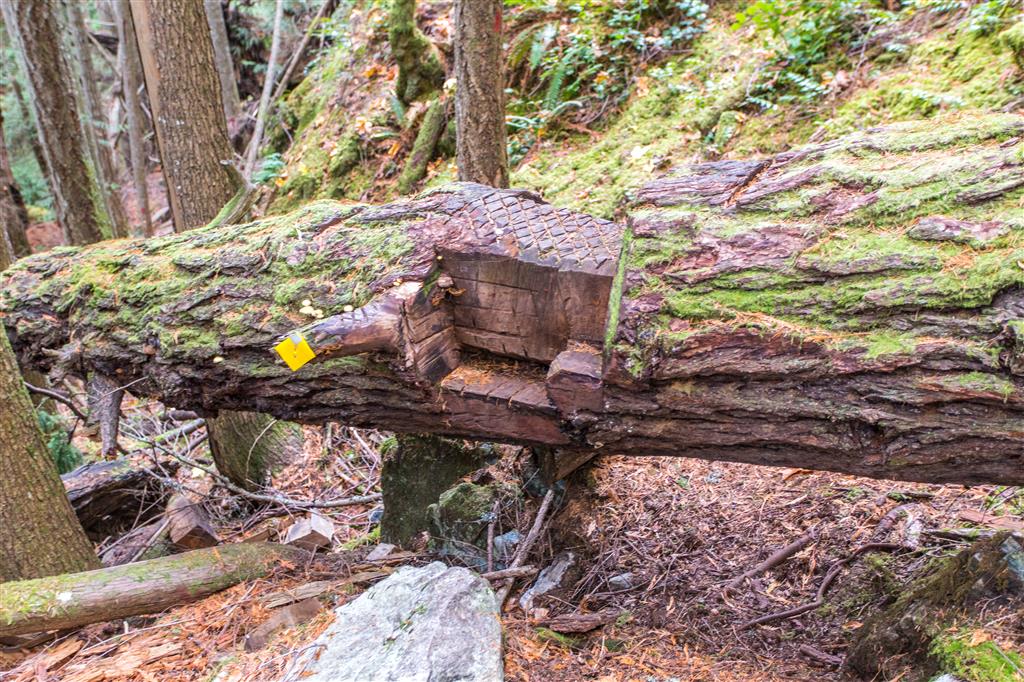
A notch step cut in a tree
A nice notch step cut in a tree
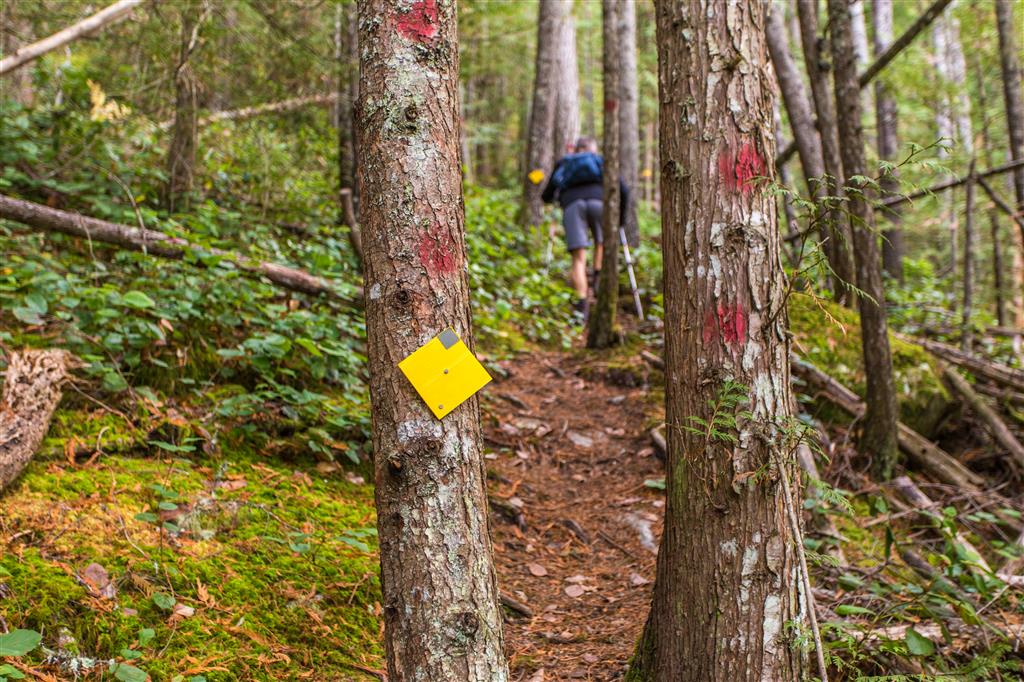
A well-marked section of the trail
The trail was well marked
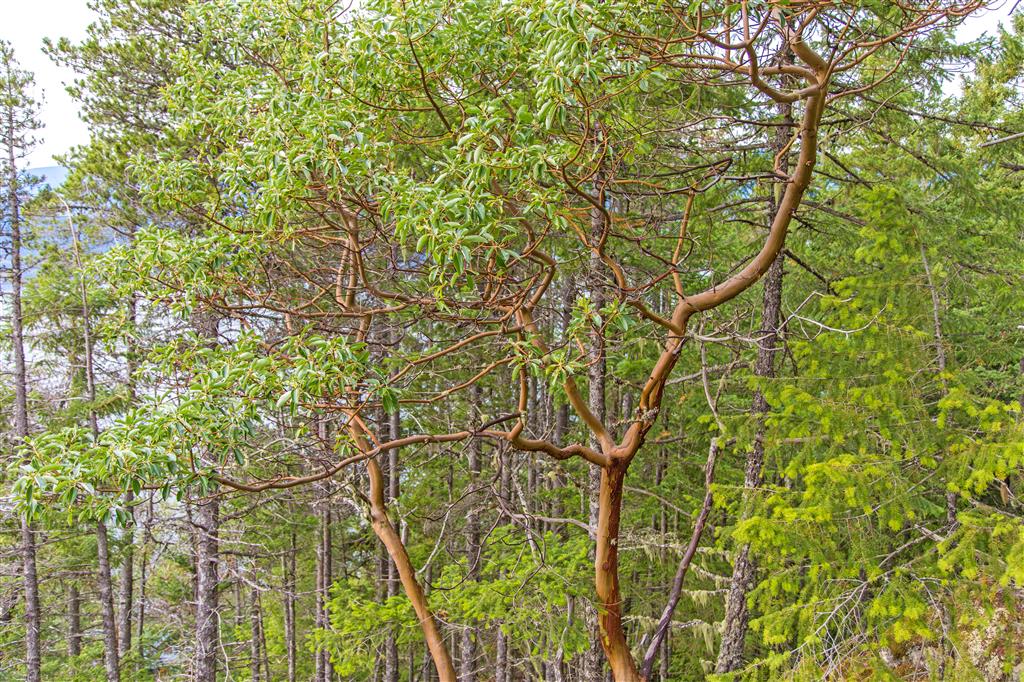
Arbutus trees along the route
Some Arbutus trees on the route
On the trail
On the trail
The trailhead
The trailhead

Before You Hike

Before heading out on your hike, make sure you are well prepared. This means having the TEN ESSENTIALS. It is also important to leave a trip plan (route details and estimated return time) with someone you trust.

Bring your smartphone, fully charged, and put it in airplane mode while hiking. I always bring backup battery packs for extra peace of mind. It is highly recommended that you bring a GPS device. I use my smartphone with a GPS app (Backcountry Navigator). The GPS will work in airplane mode. Learn how to use it before your hike.

For anyone new to hiking, there is a rule that hikers follow called “Leave No Trace” or LNT. The concept is generally to pack out what you pack in and respect nature, so all future visitors can enjoy what you have enjoyed. To learn more about LNT, please check out this blog by a certified LNT Trainer.