Buntzen Lake is bear country. Black bears occasionally travel through the recreation area and surrounding forests, and BC Hydro regularly posts wildlife-awareness signs around the lake.
The bears found around Buntzen Lake are black bears, not grizzly bears. The safety guidance on this page is therefore focused on black bear encounters.
I have completed hundreds of hikes around Buntzen Lake and have probably seen bears only six or seven times. Most of those encounters have been uneventful, with the bear either ignoring me or moving away. That does not mean every encounter will be the same, so it is important to know what to do before you see one.
Stay calm, do not run, give the bear plenty of space, and slowly move away. Do not approach it for a photograph or block its escape route. Keep the bear in sight, but avoid staring directly at it. If you carry bear spray, keep it accessible and know how to use it.
Bear Encounters at Buntzen Lake
Seeing a bear at Buntzen Lake is not especially common in my experience, but it does happen. Bears may cross hiking trails, travel along forest edges, or feed in areas where berries and other natural foods are abundant.
Most of the bears I have encountered have shown little interest in me. However, I once made the mistake of watching a bear too intently. The bear responded with what appeared to be a bluff charge. That was a useful reminder that even a bear that initially seems calm can react if it feels threatened or crowded.
WildSafeBC recommends avoiding direct eye contact with an agitated bear while still keeping it in sight. Speak calmly, back away slowly, and give the bear a clear route to leave.
Avoid Surprising a Bear
One of the best ways to stay safe is to avoid surprising a bear in the first place. Be especially alert on narrow trails, around blind corners, beside noisy streams, and in dense vegetation where visibility is poor.
- Talk normally or call out occasionally when hiking in areas with poor visibility.
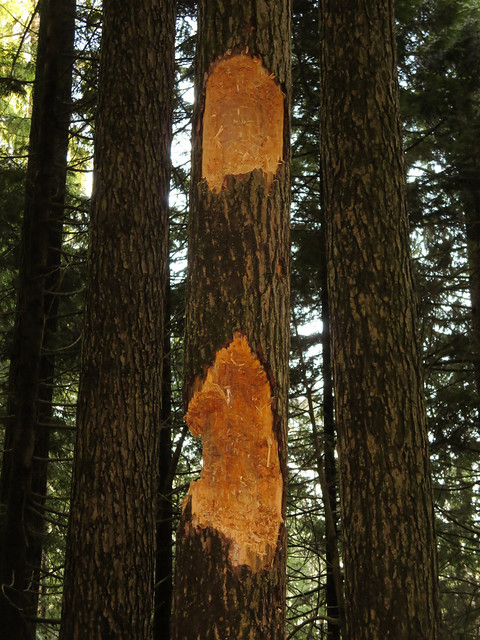
- Pay attention to fresh bear scat, tracks, claw marks, overturned logs, and other signs of recent activity.
- Avoid wearing headphones that prevent you from hearing what is happening around you.
- Keep dogs under control and follow current leash requirements.
- Be particularly cautious around berry patches and other natural food sources.
- Never deliberately approach a bear, even if it appears calm.
Bears and Berries
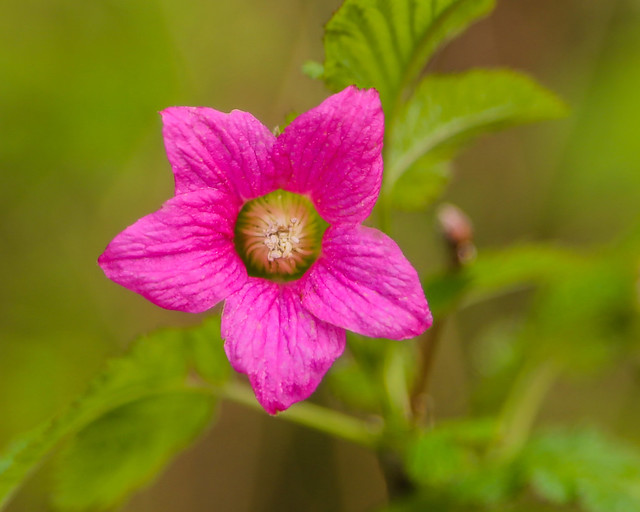
Salmonberries are common around Buntzen Lake, particularly in sunny openings and along forest edges. Their pink flowers appear in spring and are followed by edible berries later in the season.
Bears eat a wide variety of natural foods, including berries. Salmonberries, blackberries, blueberries, and huckleberries can all attract feeding bears when the fruit is ripe. If you find yourself in a productive berry patch, pay extra attention to your surroundings and watch for fresh bear sign.
What to Do if You Encounter a Bear
Every bear encounter is different, and the bear’s behaviour matters. In general, if a bear becomes aware of you but is not approaching aggressively, remain calm, speak in a low voice, and slowly increase the distance between you and the bear.
- Do not run. Running can trigger a chase response.
- Do not approach. Give the bear plenty of room and allow it to leave.
- Do not stare directly at the bear. Keep the bear in sight, but avoid prolonged direct eye contact, especially if it appears agitated or defensive.
- Back away slowly. Avoid sudden movements.
- Have bear spray ready. It should be carried somewhere immediately accessible, not buried inside a backpack.
- If a bear bluff charges: stand your ground, prepare your bear spray, and do not run.
A bear that stomps, woofs, jaw-pops, or bluff charges may be telling you that you are too close. Increase your distance calmly and give it space.
Carry Bear Spray
Bear spray can be an effective deterrent, but only if it is accessible and you know how to use it. Carry it in a holster or another location where you can reach it immediately rather than storing it inside your backpack.
Check the expiry date, practise removing the safety clip before heading out, and learn the correct technique before you need it. Bear spray is emergency equipment, not something to experiment with on the trail.
Never Feed Bears
Never intentionally feed a bear or leave food where wildlife can access it. Food-conditioned bears can lose their natural wariness of people, increasing the risk of conflict for both the bear and visitors.
Pack out food scraps and other garbage, including fruit peels and cores. Even biodegradable food waste can attract wildlife to trails and recreation areas.
Bear Photos from Deboville Slough
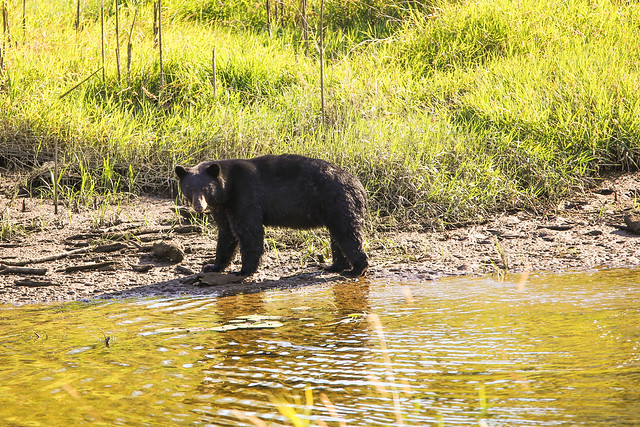
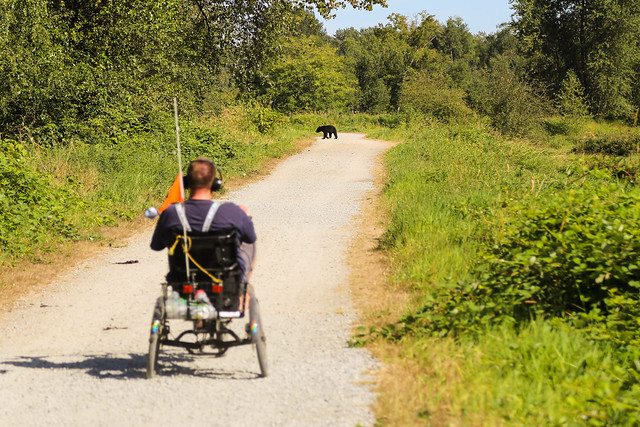
The two bear photographs below were not taken at Buntzen Lake. I photographed these black bears at Deboville Slough in northeast Coquitlam in 2013 while they were feeding on berries.
They appeared much more interested in their natural food than in me, but photographs like these should always be taken from a safe distance. A bear that appears relaxed can still react quickly if approached or disturbed.
Dogs and Bears
Dogs can complicate bear encounters. A dog may chase or provoke a bear and then run back toward its owner. Keep dogs under control and follow posted leash requirements, particularly where bears or other wildlife have recently been reported.
Report Problem Bears
A bear simply moving through the forest does not normally require intervention. However, aggressive behaviour, bears repeatedly accessing human food, or other serious wildlife conflicts should be reported to the BC Conservation Officer Service at 1-877-952-7277.
Learn More About Bear Safety
For current information about bear behaviour, avoiding encounters, bear spray, and what to do during an encounter, visit WildSafeBC’s black bear safety information.
BC Hydro also reminds visitors to its recreation areas that wildlife, including bears and cougars, may be encountered and that wildlife should never be fed.