The Coquitlam-Buntzen diversion tunnel is one of the most remarkable pieces of infrastructure at Buntzen Lake. It carries water from Coquitlam Reservoir through Eagle Mountain and into the north end of Buntzen Lake, forming a key part of the hydroelectric system that helped bring hydroelectric power to Vancouver more than a century ago.
The tunnel is approximately 3.9 km long and passes as much as 1.2 km beneath the surface of Eagle Mountain. Considering that the original tunnel was excavated more than a century ago using drilling, blasting, hand tools, and surveying equipment of the period, the engineering achievement is remarkable.
A Tunnel Through Eagle Mountain
The tunnel carries water west from Coquitlam Reservoir beneath Eagle Mountain before emerging at the north end of Buntzen Lake.
Water entering Buntzen Lake can eventually be directed through large penstocks down the steep western side of the mountain toward the hydroelectric facilities on Indian Arm.
Construction of the Original Tunnel
Construction of the original tunnel began in January 1903. Rather than excavating from only one end, crews worked from both sides of Eagle Mountain and drove the tunnel toward the centre.
The contractor was Ironside, Rannie & Campbell. More than 175 men were employed on the work, with the workforce reportedly reaching as many as 300 at times. Crews worked eight-hour shifts through days, nights, and holidays.
The two headings finally met in April 1905. The surveying accuracy was extraordinary: the closing error was reported as only 7/8 inch in horizontal alignment and 1¾ inches in grade.
For a tunnel driven through several kilometres of mountain using early twentieth-century surveying and construction techniques, that level of accuracy is difficult to imagine today.
How Big Was the Original Tunnel?
The original tunnel was approximately 9 feet by 9 feet. Demand for electricity grew so quickly that the tunnel was enlarged between 1909 and 1911 to approximately 14 feet by 14 feet, greatly increasing the amount of water that could be transferred from Coquitlam Reservoir to Buntzen Lake.
The expansion was part of a much larger enlargement of the hydroelectric system, including major work at Coquitlam Dam and the eventual construction of additional generating capacity on Indian Arm.
How Deep Is the Tunnel?
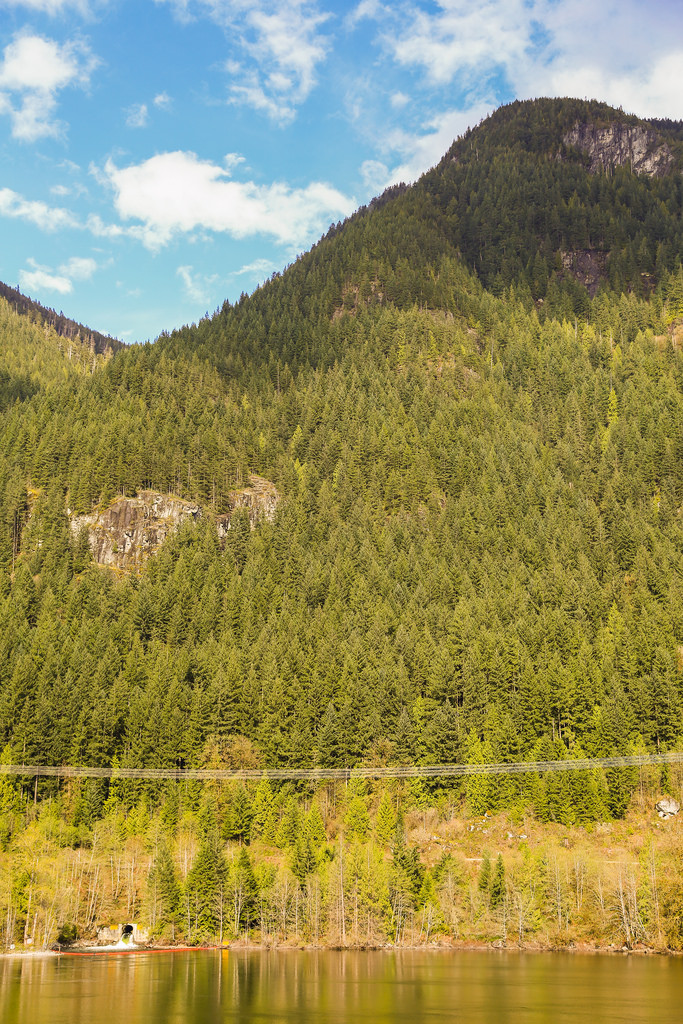
At its deepest point, the tunnel lies approximately 1.2 km below the surface of Eagle Mountain. The photograph below helps put that depth into perspective.
Tunnel Construction Camp
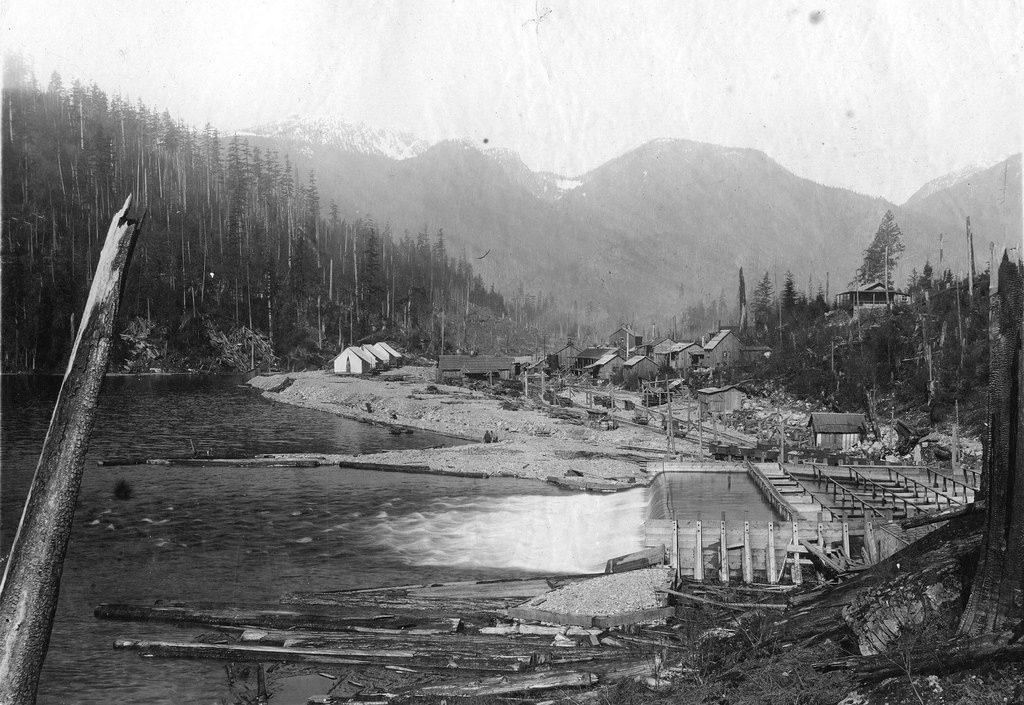
A construction camp was established near what is now North Beach to support the tunnel project. The camp included workers’ accommodation and facilities such as a blacksmith shop.
For several years, the quiet recreation area we know today would have been a busy industrial construction site filled with workers, equipment, supplies, blasting materials, rail carts, and excavation debris.
A Dangerous Project
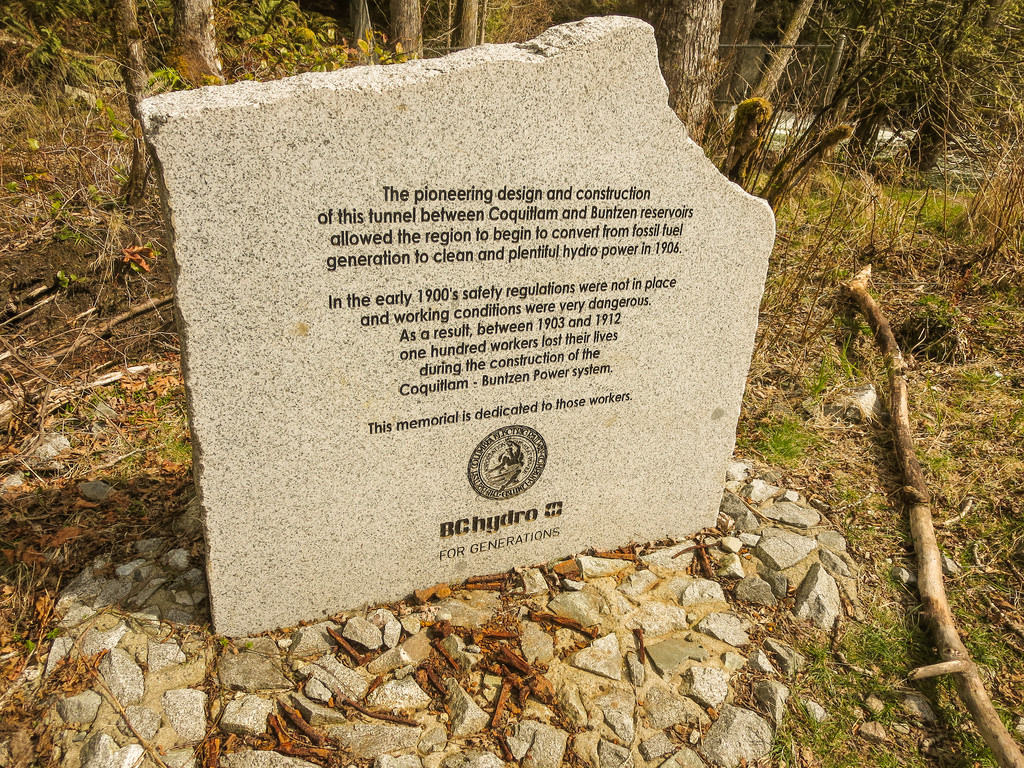
Underground construction in the early 1900s was extremely dangerous. Workers drilled and blasted rock with explosives in confined underground spaces while dealing with falling rock, machinery, darkness, dust, water, and limited safety equipment by modern standards.
A memorial near the tunnel recognizes workers associated with the construction of the hydroelectric system and the sacrifices involved in building it.
Tunnel Flow Can Change Dramatically
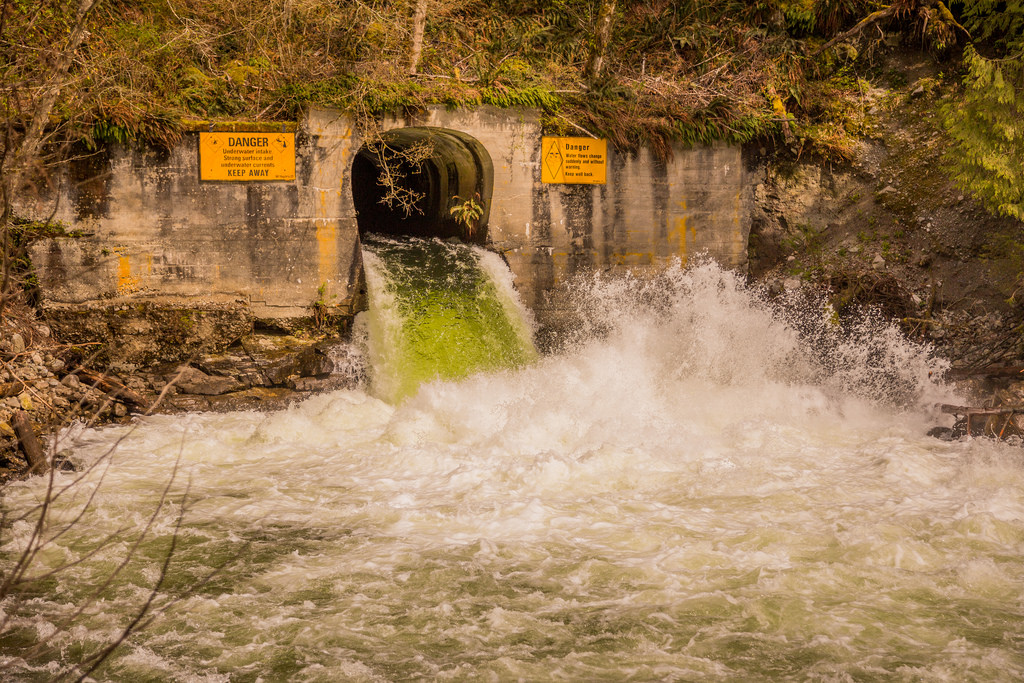
The amount of water flowing from the tunnel can vary considerably. On some visits, the outlet can look relatively calm; at other times, a tremendous volume of water pours into Buntzen Lake.
The Coquitlam-Buntzen system has historically been capable of transferring roughly 40 m³ of water per second. That is about 40,000 litres every second.
Why the Tunnel Area Is Dangerous
The quiet appearance of the tunnel outlet can be deceptive. Water flows can change as the hydroelectric system is operated, and currents around the outlet can be powerful and unpredictable.
BC Hydro has warning signs around the area for good reason. Visitors should stay outside restricted areas and well away from the tunnel opening and strong currents.
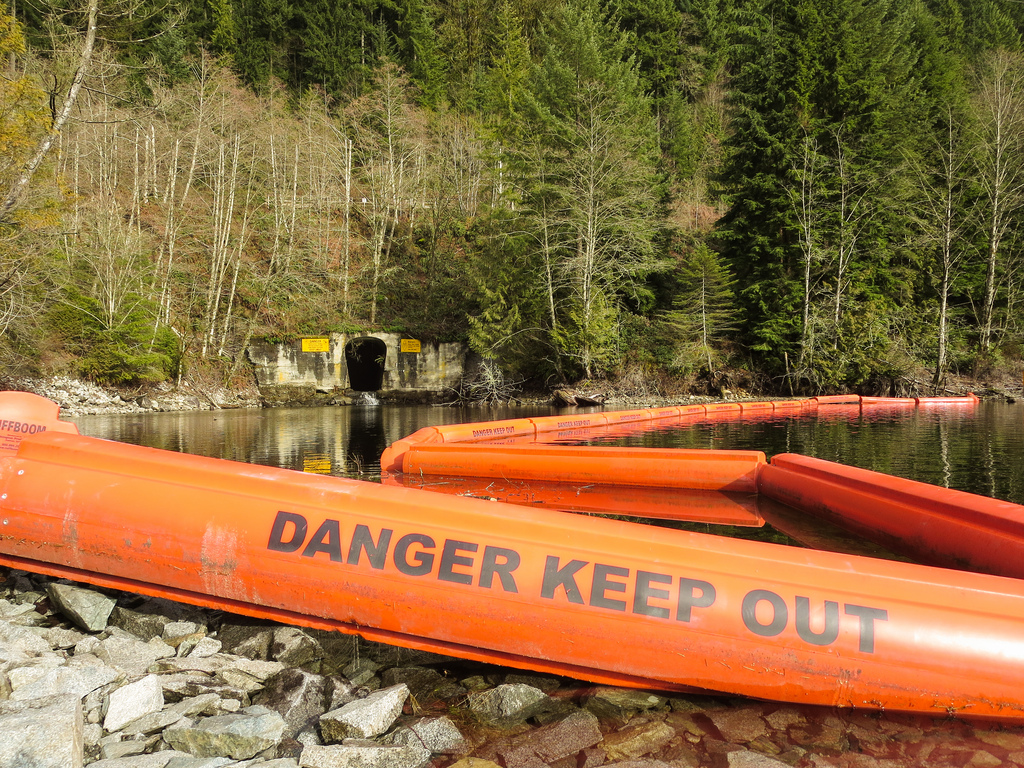
The diversion tunnel is active hydroelectric infrastructure. Water can be released through the system, currents can be extremely strong, and entering restricted areas is dangerous. Observe all BC Hydro signs and barriers.
The Tunnel and Vancouver’s First Hydroelectric Power
The tunnel was a key component of one of the Lower Mainland’s earliest major hydroelectric developments.
Water diverted from Coquitlam Reservoir enters Buntzen Lake, which acts as a reservoir for the generating system. From Buntzen Lake, water can travel through large penstocks down the steep mountainside toward the powerhouse on Indian Arm.
Buntzen No. 1 began generating electricity in the early 1900s and became part of the system that supplied Vancouver with hydroelectric power. A second powerhouse, Buntzen No. 2, was later completed farther south along Indian Arm.
Water from Coquitlam Lake to Indian Arm
The complete system takes advantage of a dramatic difference in elevation:
- Water is stored in Coquitlam Reservoir.
- Water travels through the diversion tunnel beneath Eagle Mountain.
- The tunnel empties into Buntzen Lake.
- Buntzen Lake acts as a forebay for the hydroelectric system.
- Water is directed through large penstocks down the mountainside.
- The falling water drives hydroelectric generating equipment near Indian Arm.
In other words, Buntzen Lake is not simply a natural-looking recreational lake. Its water level and much of its modern history are closely connected to a working hydroelectric system.
Video of Heavy Tunnel Flow
This video gives a much better impression of how powerful the tunnel discharge can become.
Above the Tunnel
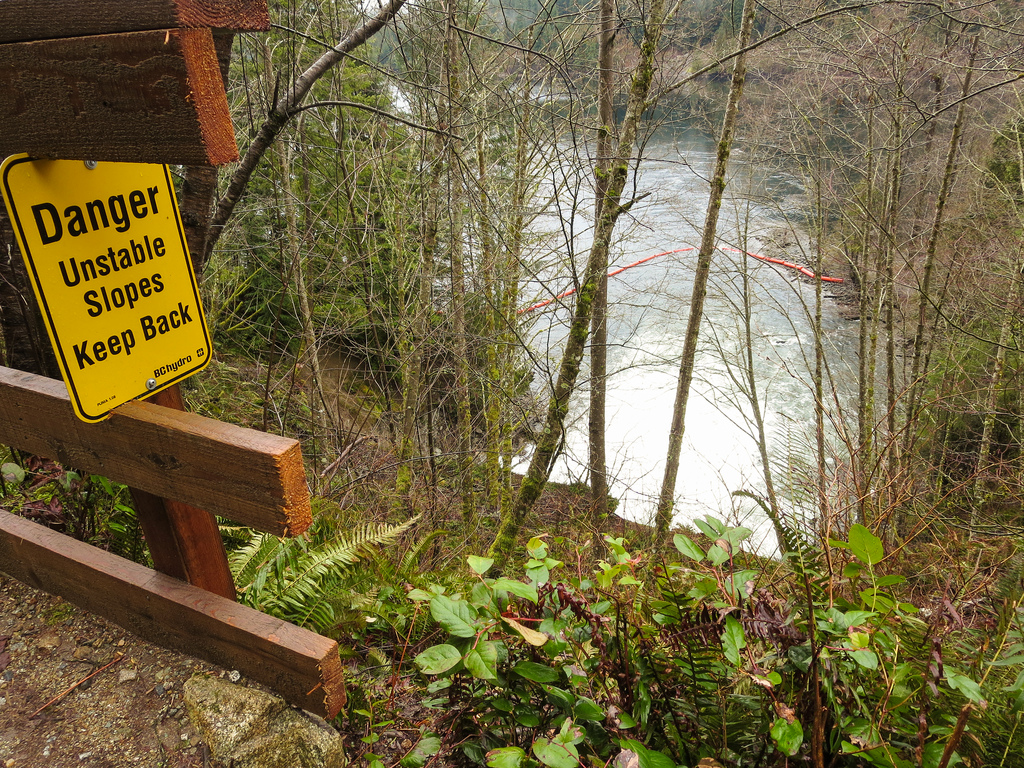
A trail climbs above the north end of Buntzen Lake and provides another perspective on the area where the tunnel emerges from beneath Eagle Mountain.
Still Operating More Than a Century Later
Perhaps the most remarkable part of the story is that the Coquitlam-Buntzen diversion tunnel remains part of the operating water and hydroelectric system more than a century after it was built.
BC Hydro has continued to maintain and modernize the infrastructure. Recent work included replacing three tunnel gates and installing modern control equipment so the system can be monitored and operated remotely.
Few visitors walking along North Beach probably realize that beneath Eagle Mountain is a tunnel bored through kilometres of solid rock more than 120 years ago and still serving essentially the same purpose today.