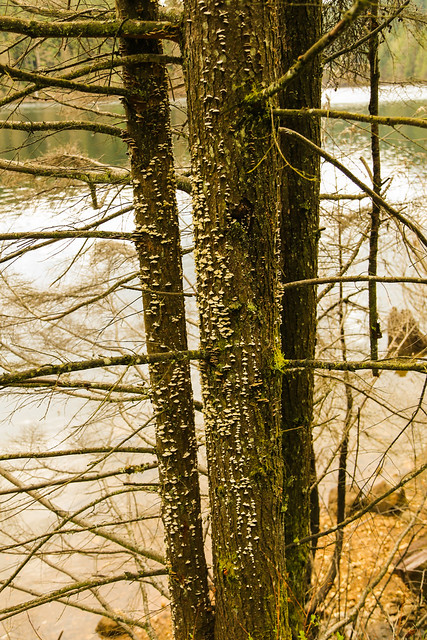
While hiking around Buntzen Lake, you may have noticed sections of an old metal pipeline running through the forest. I’ve come across it many times over the years, particularly near the pumphouse at the southern end of the lake and along the lower section of the Diez Vistas Trail.
It might look like an abandoned piece of industrial infrastructure, but this pipeline has an interesting history. It once carried freshwater from Buntzen Lake to the Burrard Thermal Generating Station in Port Moody, approximately 6 km to the south.
During my hikes, I’ve photographed several sections of the old pipeline, including its joints, fittings, and some rather unusual structures.
What Was the Buntzen Lake Pipeline Used For?
The pipeline supplied freshwater to the Burrard Thermal Generating Station, a natural gas-fired power plant on the shores of Burrard Inlet in Port Moody.
The pumphouse at Buntzen Lake, shown below, was part of the system that delivered water to the generating station.
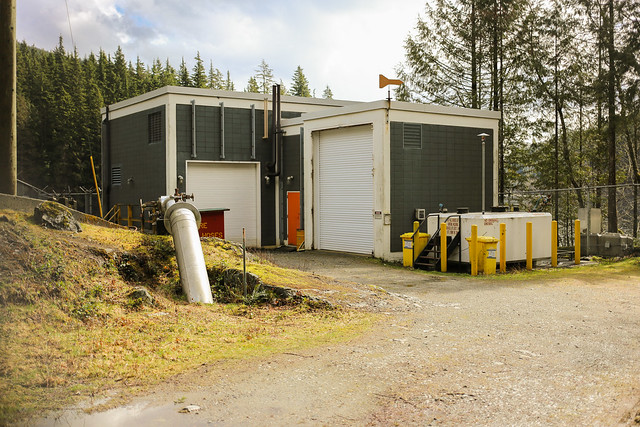
The Buntzen Lake pumphouse, photographed during one of my visits.
The freshwater supply served several important purposes at Burrard Thermal, including:
- Boiler make-up water for steam generation.
- Fire protection.
- Domestic and potable water supply.
- Other plant cooling and utility services.
Boiler make-up water was particularly important. Burrard Thermal burned natural gas to produce steam, which drove turbines connected to electrical generators. Water lost from the steam system had to be replaced with treated freshwater.
The plant also used seawater from Burrard Inlet for major cooling operations. The freshwater pipeline from Buntzen Lake served a different purpose from the large saltwater cooling system.
Below is one of my photographs of the Burrard Thermal Generating Station.
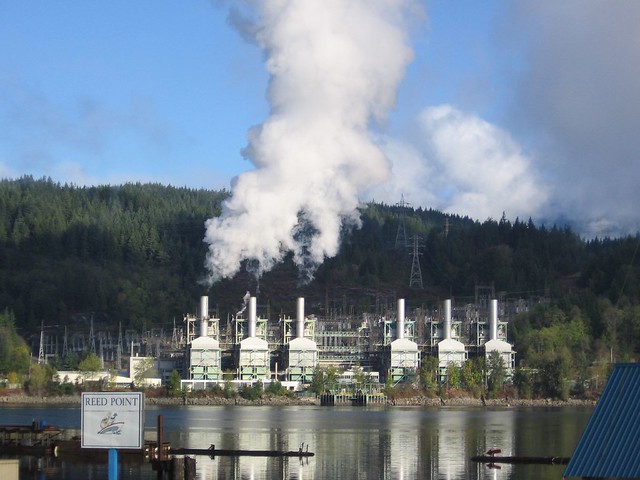
Burrard Thermal Generating Station in Port Moody.
The Original Above-Ground Pipeline
According to my original research, the old pipeline had a diameter of approximately 20 cm (8 inches). It was subsequently replaced by a larger underground pipeline with a nominal diameter of 30 cm (12 inches).
Interestingly, increasing the pipe diameter from 20 cm to 30 cm provides approximately 2.25 times the cross-sectional area. That is a substantial increase in potential water-carrying capacity, although the actual flow also depends on factors such as pumping pressure, pipe length, and friction losses.
The old pipeline followed portions of the forested terrain around the southern end of Buntzen Lake. Some sections were above ground, making them easy to recognize.
Here are two photographs of the old pipeline that I took while exploring the area.
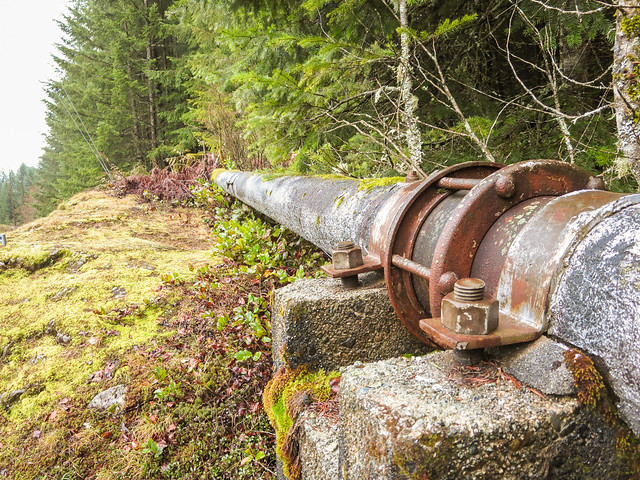
A section of the original above-ground pipeline.
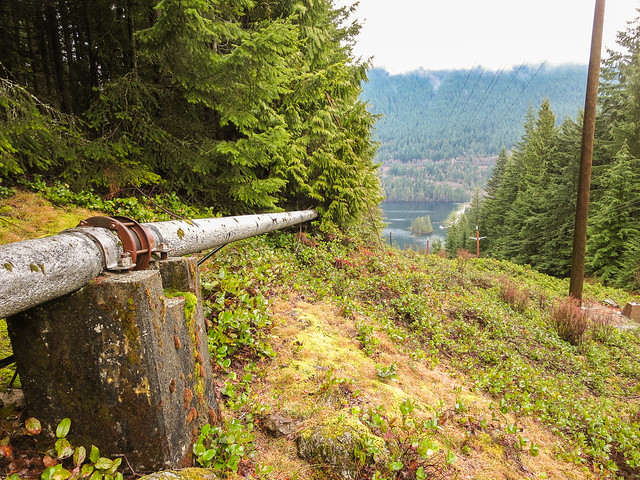
Another view of the old pipeline.
The Pipeline on the Diez Vistas Trail
One of the more noticeable sections of the old pipeline was on the lower portion of the Diez Vistas Trail, where the route climbs through the forest on the western side of Buntzen Lake.
BC Hydro’s historical trail descriptions specifically mention hikers crossing the powerline corridor and pipeline before beginning the steep switchbacks.
In the photograph below, you can see where a section of the old pipeline was removed to provide clearance for the trail. Fortunately, that meant we didn’t have to do the limbo every time we hiked past it!
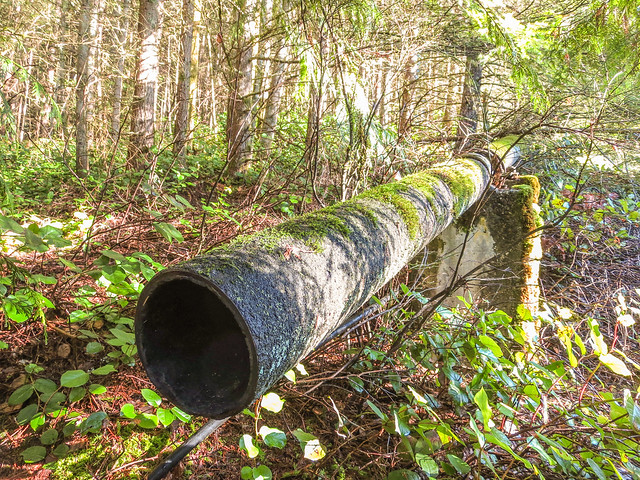
The old pipeline where it crossed the Diez Vistas Trail.
Some Interesting Pipeline Features
During my explorations, I also came across some unusual features of the old pipeline.
An Unusual Apparatus
The photograph below shows an interesting metal apparatus attached to the pipeline. I’m not certain what its function was, but fittings like these can form part of a pipeline’s flow-control, pressure-management, or maintenance systems.
Without engineering drawings or identifying markings, I wouldn’t want to guess exactly what this particular piece of equipment did.
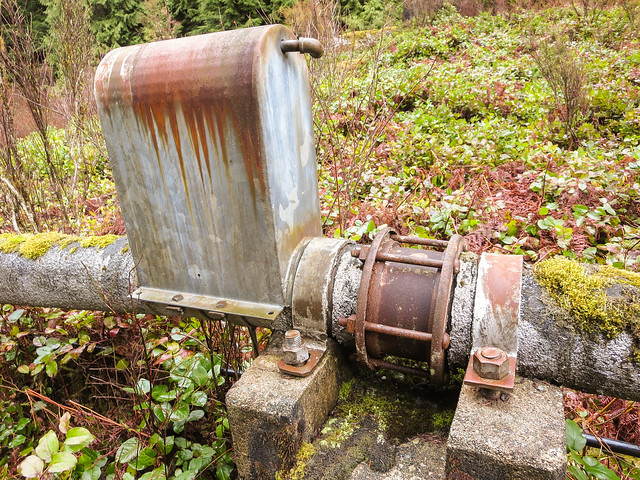
An unusual piece of equipment attached to the old pipeline.
A Much Larger Cylindrical Structure
Near the pumphouse, I found something even more intriguing. The smaller pipeline appears to emerge from a much larger cylindrical metal structure.
In my original notes, I recorded the larger section as approximately 75 cm (30 inches) in diameter and 25 m long.
At the time, I wondered whether it had something to do with preventing water from flowing backwards. However, I have never confirmed its actual purpose.
It could have served a protective or other engineering function, but identifying it properly would require historical plans or information from someone familiar with the original water supply system.
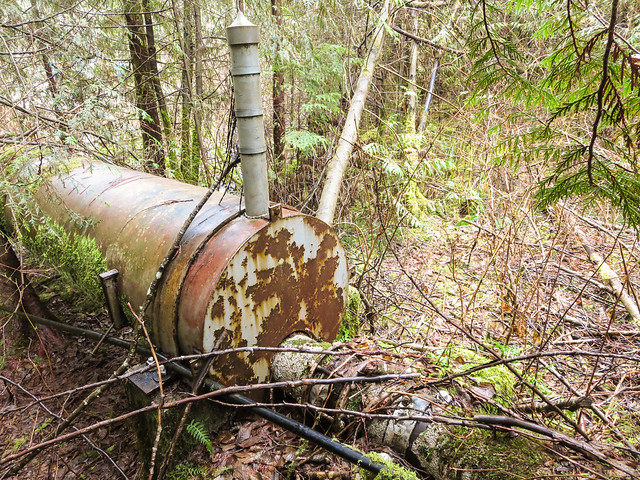
The old pipeline emerging from a larger cylindrical structure near the pumphouse.
Pipeline Couplings
One of my favourite detail photographs shows the metal clamps connecting sections of the pipeline.
These mechanical couplings help join individual pipe sections. Depending on their design, they can also facilitate maintenance and accommodate small amounts of movement.
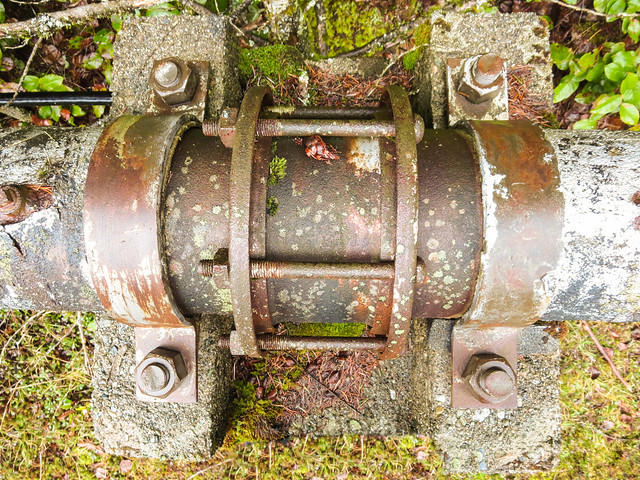
A closer look at the pipeline’s coupling clamps.
What Happened to Burrard Thermal Generating Station?
When I originally published this article in December 2013, Burrard Thermal was still operating, although the provincial government had already announced plans to end electricity generation by 2016.
That closure did take place in 2016.
According to BC Hydro, Burrard Thermal was built in 1960 and had an installed generating capacity of approximately 950 megawatts. It was one of the largest natural gas-fired generating stations in British Columbia.
Although electricity generation ended in 2016, the facility did not simply shut down completely. Some of its electrical equipment continued providing voltage support to the Lower Mainland transmission system.
A Major Update in 2026
On 27 January 2026, BC Hydro presented plans to Port Moody City Council for the eventual dismantling and remediation of much of the former generating station.
The proposed work includes removing major generating equipment, boilers, buildings, and parts of the marine cooling-water infrastructure.
Under the schedule presented in January 2026, major decommissioning work was expected to begin in 2028, with dismantling and restoration continuing into the 2030s, subject to regulatory approvals.
However, there was one particularly interesting detail for this article: BC Hydro indicated that the freshwater supply system from Buntzen Lake would be retained.
In other words, although the original above-ground pipeline was replaced long ago and the generating station no longer produces electricity, the connection between Buntzen Lake and the former Burrard Thermal property remains part of BC Hydro’s infrastructure plans.
For more information about the proposed dismantling, see the February 2026 report by Tri-Cities Dispatch.
Not to Be Confused With the Buntzen Hydroelectric Penstocks
Buntzen Lake has another, much older connection to electricity generation.
Long before Burrard Thermal was constructed, water from Buntzen Lake was being used to generate hydroelectricity at the northern end of the lake.
The original Buntzen No. 1 Powerhouse began operating in 1904, and Buntzen No. 2 followed in 1914. Large pipes known as penstocks carried water downhill from the lake to the generating stations beside Indian Arm.
These penstocks are entirely different from the smaller freshwater pipeline shown in my photographs.
The distinction is interesting:
- The Burrard Thermal pipeline: Used pumps to transport freshwater south from Buntzen Lake to the natural gas-fired generating station in Port Moody.
- The Buntzen hydroelectric penstocks: Carry water from the northern end of Buntzen Lake downhill to hydroelectric generating equipment beside Indian Arm, using the pressure created by the elevation difference.
Both systems are part of the industrial history of Buntzen Lake, but they were designed for very different purposes.
For more about the early hydroelectric developments, see my article on the history of Buntzen Lake.
Interesting Facts
- The pipeline supplied a natural gas-fired power plant. Unlike the hydroelectric stations at the northern end of Buntzen Lake, Burrard Thermal generated electricity by burning natural gas to produce steam.
- Freshwater and seawater served different purposes. Freshwater from Buntzen Lake was used for boiler make-up and other plant services, while seawater from Burrard Inlet was used in the plant’s major cooling system.
- The replacement pipeline was substantially larger. Based on the nominal diameters recorded in my original article, increasing the diameter from 20 cm to 30 cm provided approximately 2.25 times the cross-sectional area.
- The original exposed pipeline became part of the hiking landscape. Historical trail descriptions refer to the Diez Vistas Trail crossing the pipeline before the steep climb up Buntzen Ridge.
- Burrard Thermal stopped generating electricity in 2016. However, electrical equipment at the property continued providing voltage support to the Lower Mainland transmission system.
- The freshwater supply system is being retained. During BC Hydro’s January 2026 presentation on the planned dismantling of Burrard Thermal, the freshwater supply system from Buntzen Lake was identified as infrastructure that would remain.
- Buntzen Lake has supplied two very different types of generating stations. Its water has supported both hydroelectric generation at Indian Arm and the former natural gas-fired Burrard Thermal plant in Port Moody.
A Reminder of Buntzen Lake’s Industrial Past
Most people visit Buntzen Lake for the beaches, forests, and hiking trails, but there is a tremendous amount of industrial history hidden among the trees.
Old pipelines, hydroelectric equipment, abandoned foundations, transmission structures, and other remnants are reminders that the area has been used for electricity generation for more than a century.
I’ve photographed several other examples in my article on industrial decay around Buntzen Lake.
The photographs in this article were taken during my earlier explorations. Pipeline sections and other structures may have been removed, modified, or become inaccessible since then. Please respect posted signs, remain on designated trails, and stay clear of restricted utility infrastructure.
It’s fascinating to think that something as ordinary as a rusty old pipe in the forest once helped support one of the largest generating stations in British Columbia.