The forests around Buntzen Lake contain many reminders of the area’s logging history. Large old stumps, springboard notches, cut logs, and other remnants can still be seen beside the trails today.
Much of the forest visitors see today regenerated after logging in the late nineteenth and early twentieth centuries. Some of the remaining stumps are enormous and give a sense of the size of the old-growth trees that once stood here.
Giant Old Logging Stumps
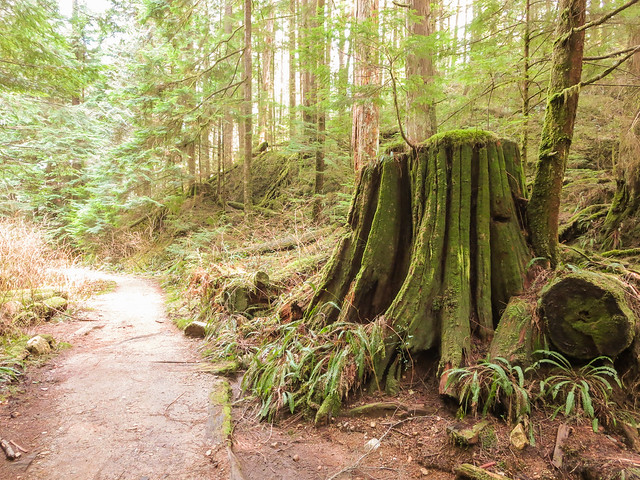
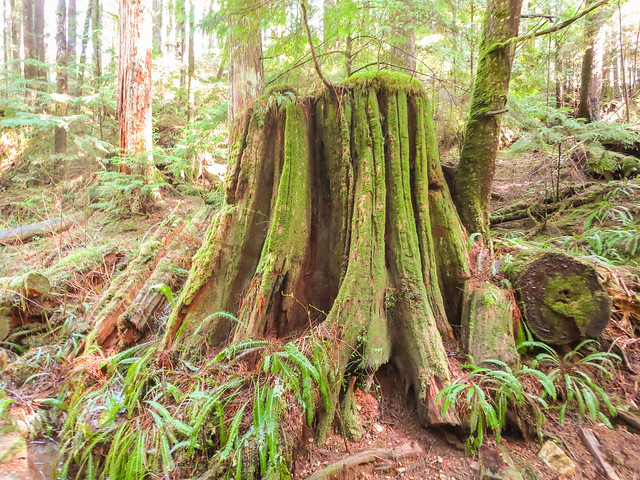
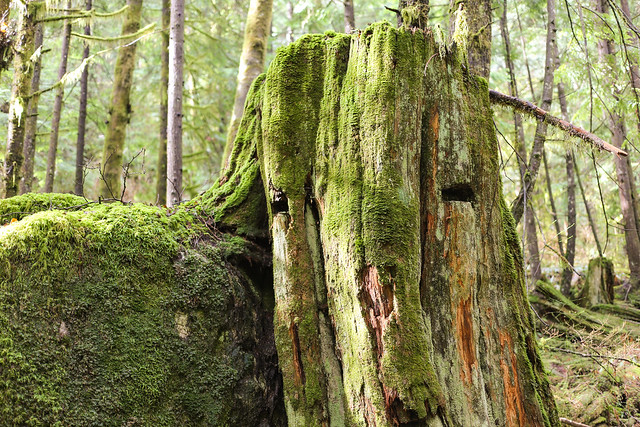
One of the most obvious reminders of early logging is the number of huge stumps scattered around the recreation area.
The stump below is near the beginning of the Buntzen Lake Trail. Even after decades of decay, its size is impressive.
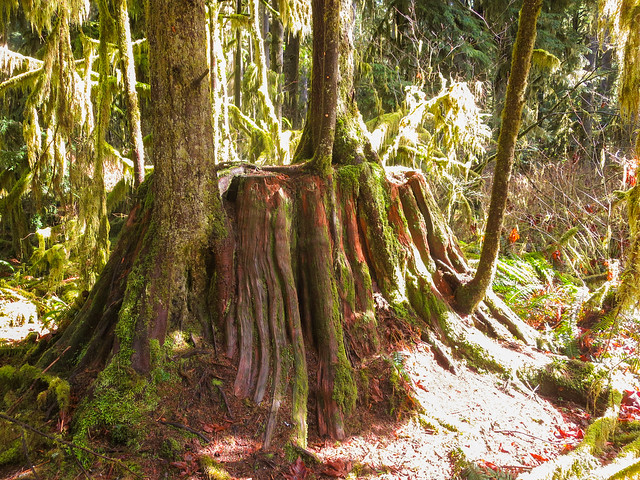
There are many more like it along the trail.
What Are Springboard Notches?
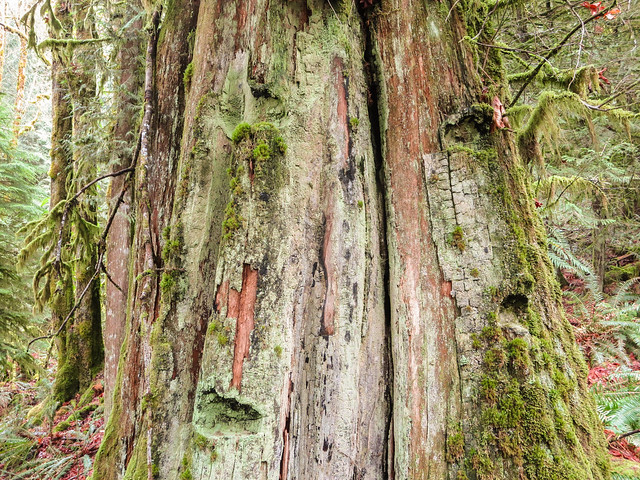
Some of the old stumps have rectangular cuts in their sides. These are springboard notches, evidence of the way very large trees were once felled by hand.
Loggers chopped a notch into the base of the tree and inserted a wooden plank called a springboard. Standing on the springboard raised the workers above the widest and most difficult part of the trunk and gave them a better working position for axes and crosscut saws.
Several springboards could be used around a particularly large tree, leaving multiple notches that are still visible more than a century later.
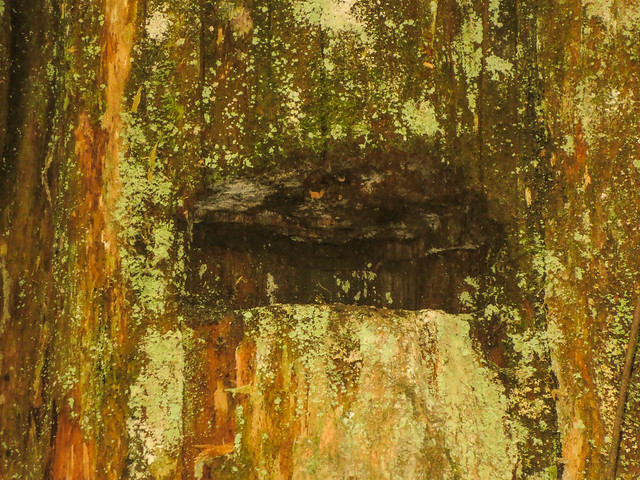
A Close Look at a Springboard Notch
Up close, the rectangular shape is easy to recognize. The plank would have been inserted into a notch like this to create a temporary working platform.
How the Trees Were Cut
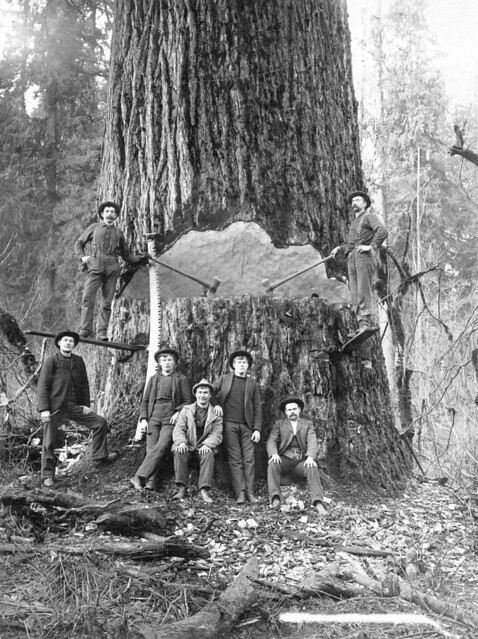
Before chainsaws and modern logging equipment, falling a giant coastal tree required a team of workers using axes, springboards, and long crosscut saws.
The archival photograph below shows a logger standing on a springboard while cutting into a very large tree.
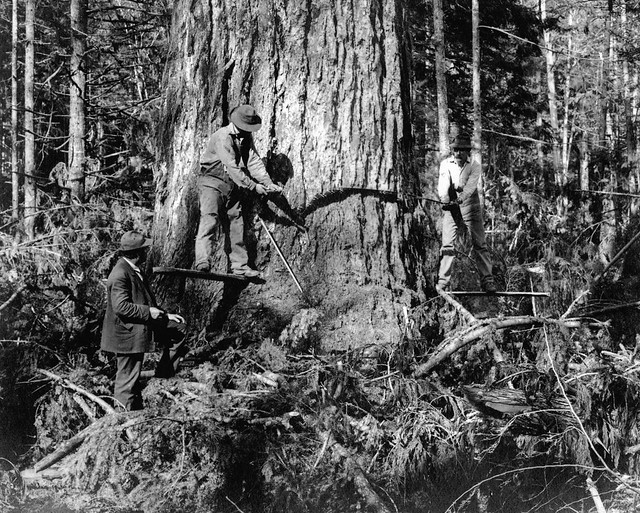
This next photograph gives an even better sense of the scale of some of the trees that were being harvested.
Historic Logging Video
This old footage shows the methods used to fall very large trees before modern logging machinery became common.
New Trees Growing from Old Stumps
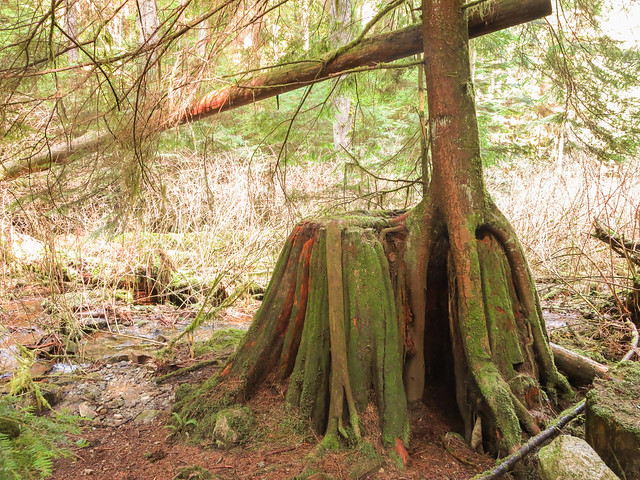
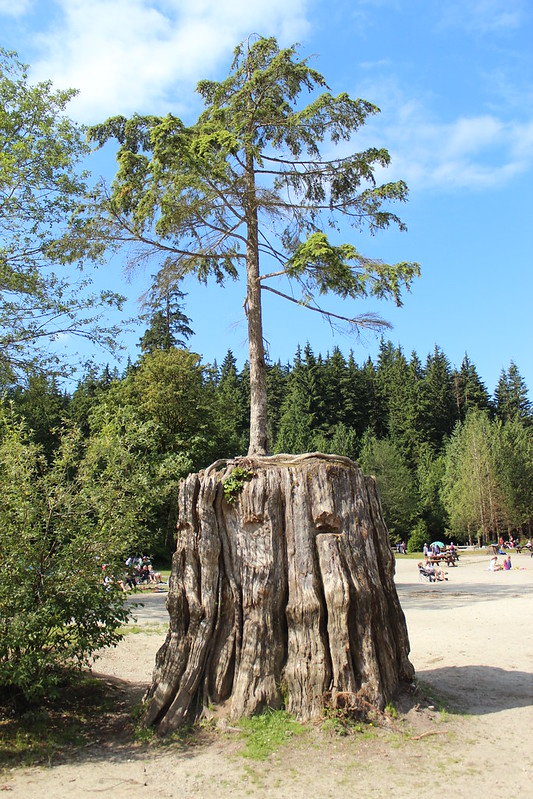
Old stumps do not simply disappear. As they decay, they can become what ecologists call nurse stumps, providing an elevated place for mosses, shrubs, and young trees to establish.
This example near South Beach shows a younger tree growing directly from an old logging stump.
The Hollow Stumps on Energy Trail
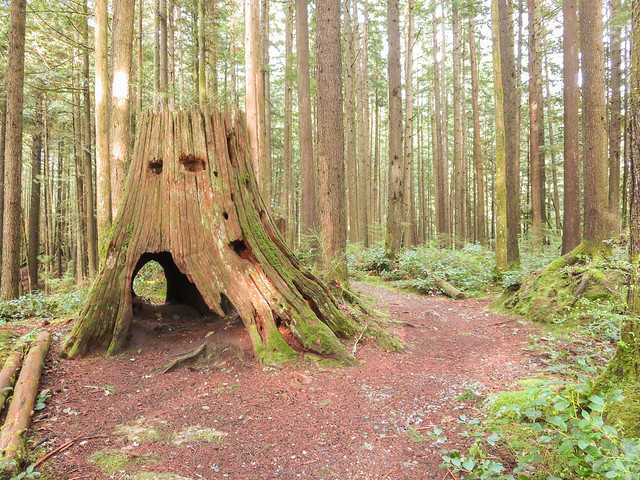
One of the easiest places to see very large old stumps is along the Energy Trail near the recreation area.
Some are large enough to stand inside. The hollow stump below is one of the more memorable examples.
Why So Many Stumps Remain
The giant stumps are surprisingly durable. The original trees were enormous, and the lower trunks contained a huge volume of dense wood. Even after decades of rot, fire, moss growth, and weathering, many remain prominent features of the forest.
They also help tell the story of how the forest changed. What now looks like a mature natural forest is largely younger growth that developed after the original trees were harvested.
Look for Them on Your Next Visit
Once you know what a springboard notch looks like, you will start noticing them all over the Buntzen Lake trail system.
The next time you pass one of these giant stumps, take a moment to look at its diameter, the old axe cuts, and the springboard notches. They are some of the most visible reminders of the landscape that existed here before today’s forest grew up around them.