Category Archives: Non-Buntzen Lake Hikes

Lake Ann and Lower Curtis Glacier

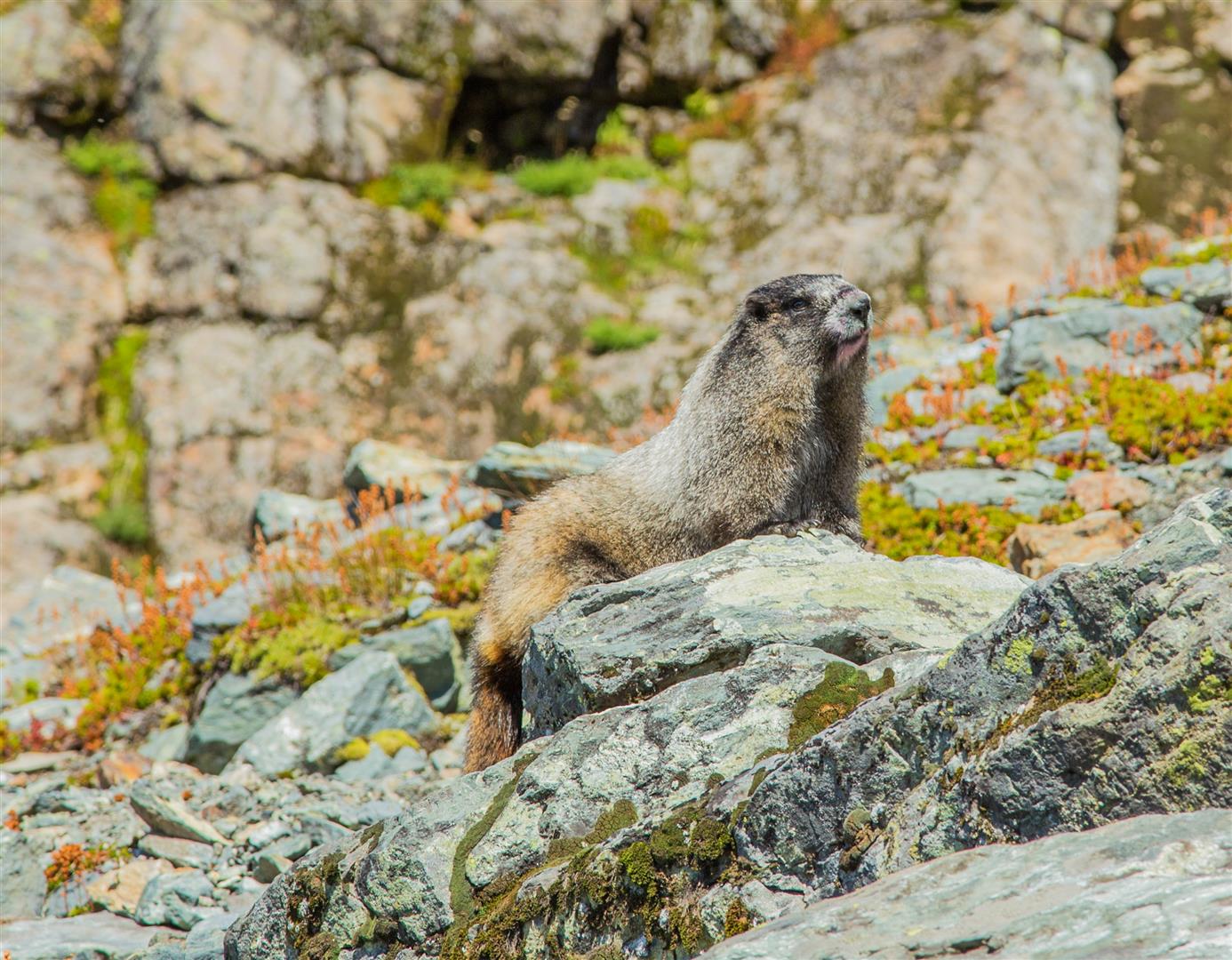
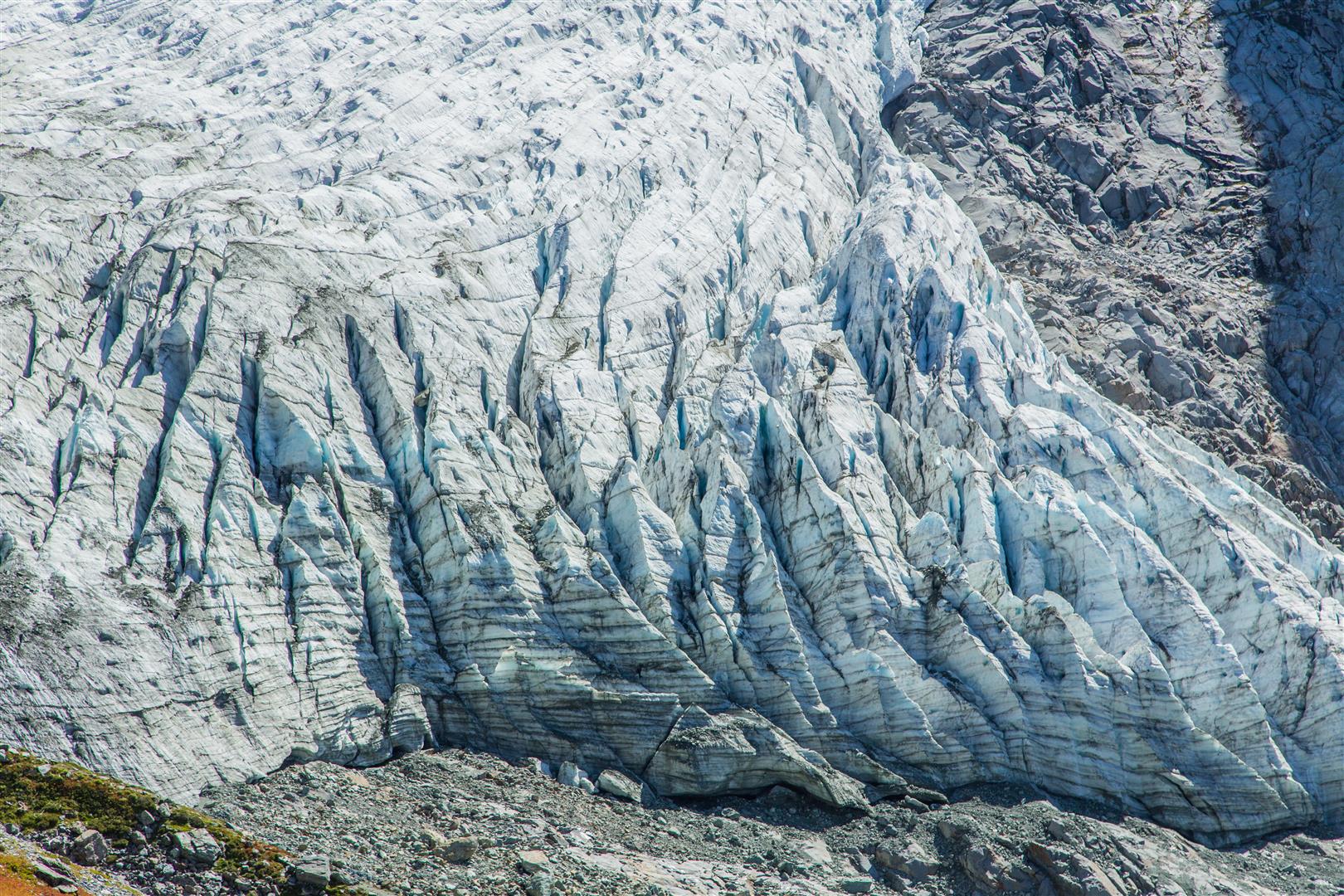
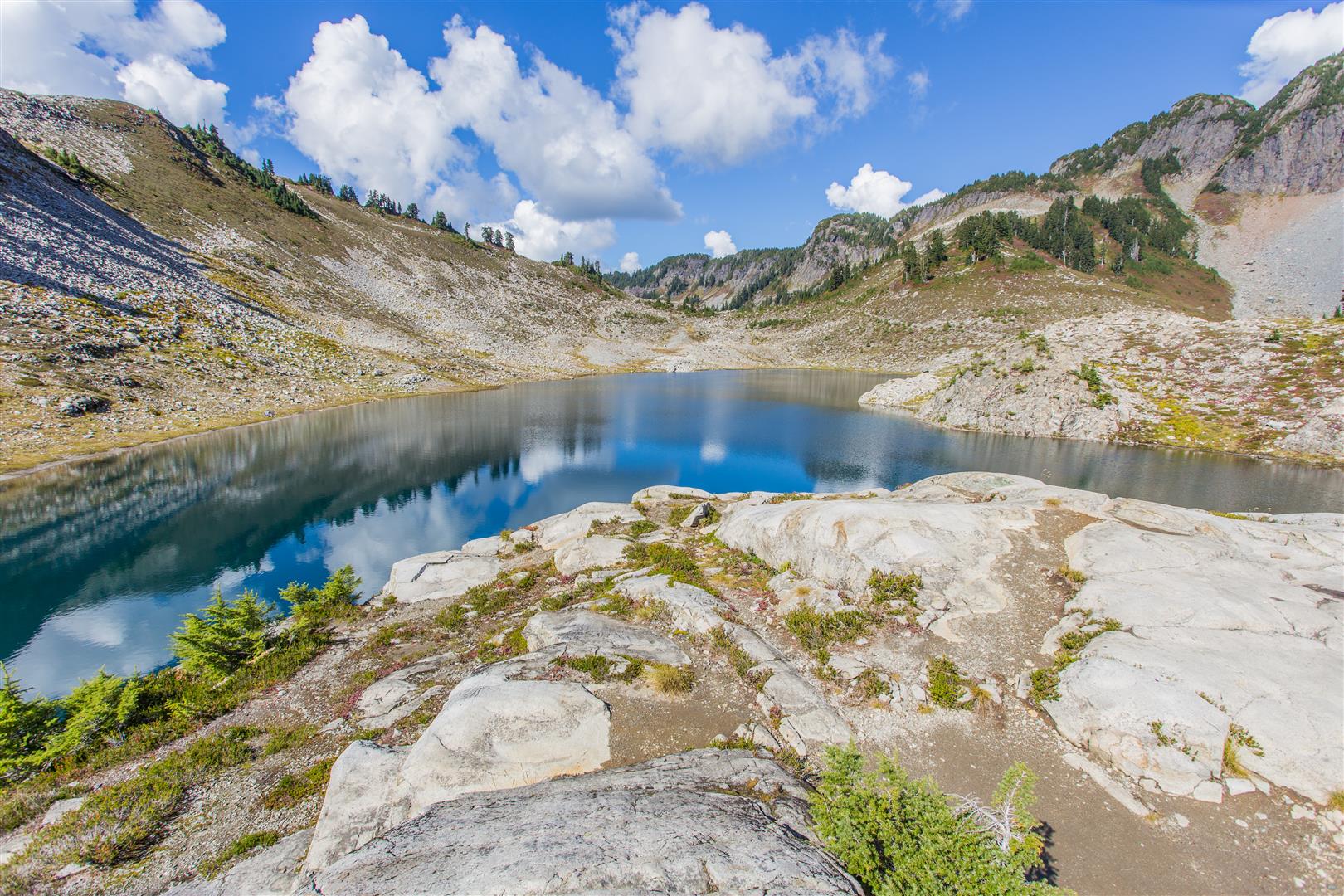
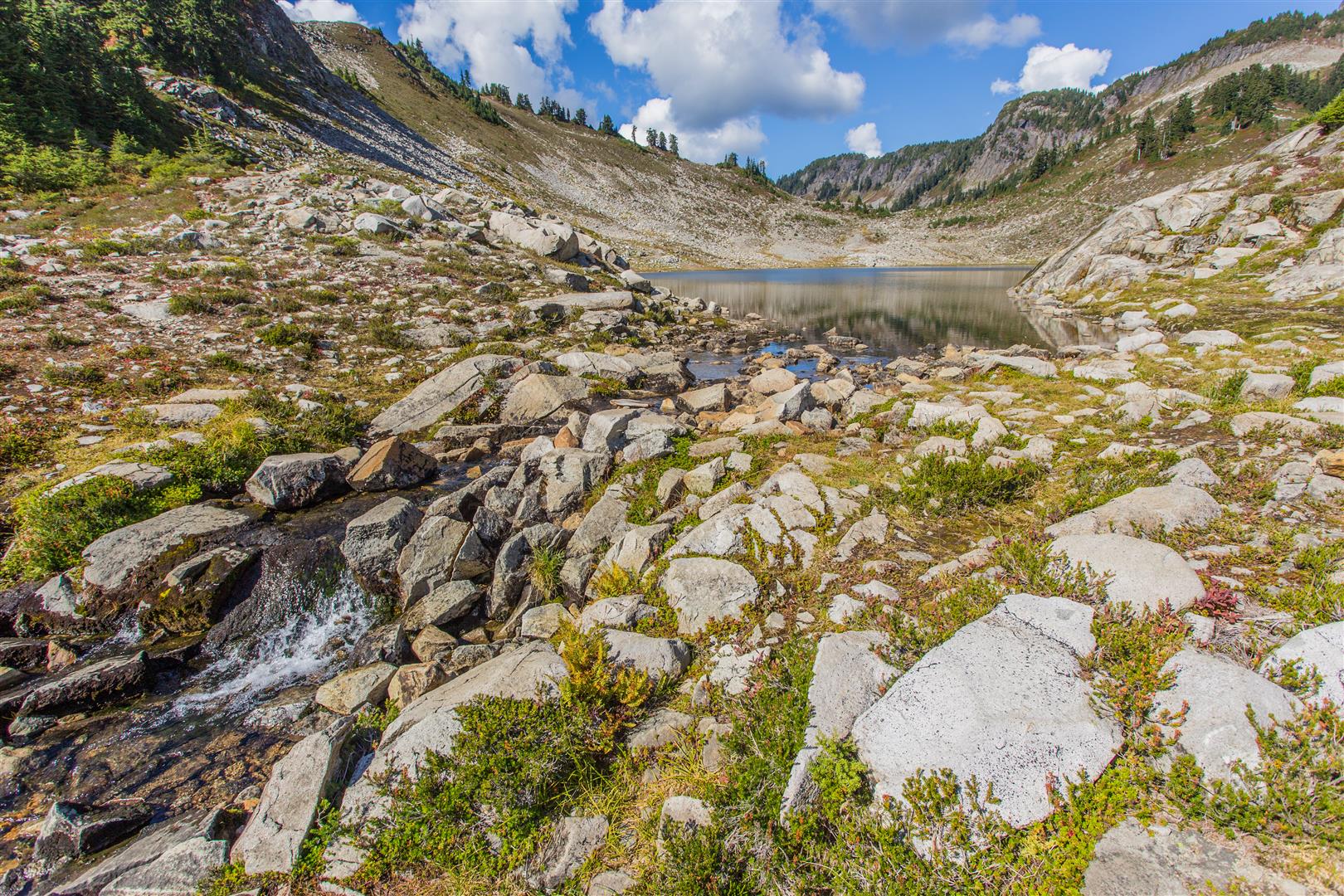
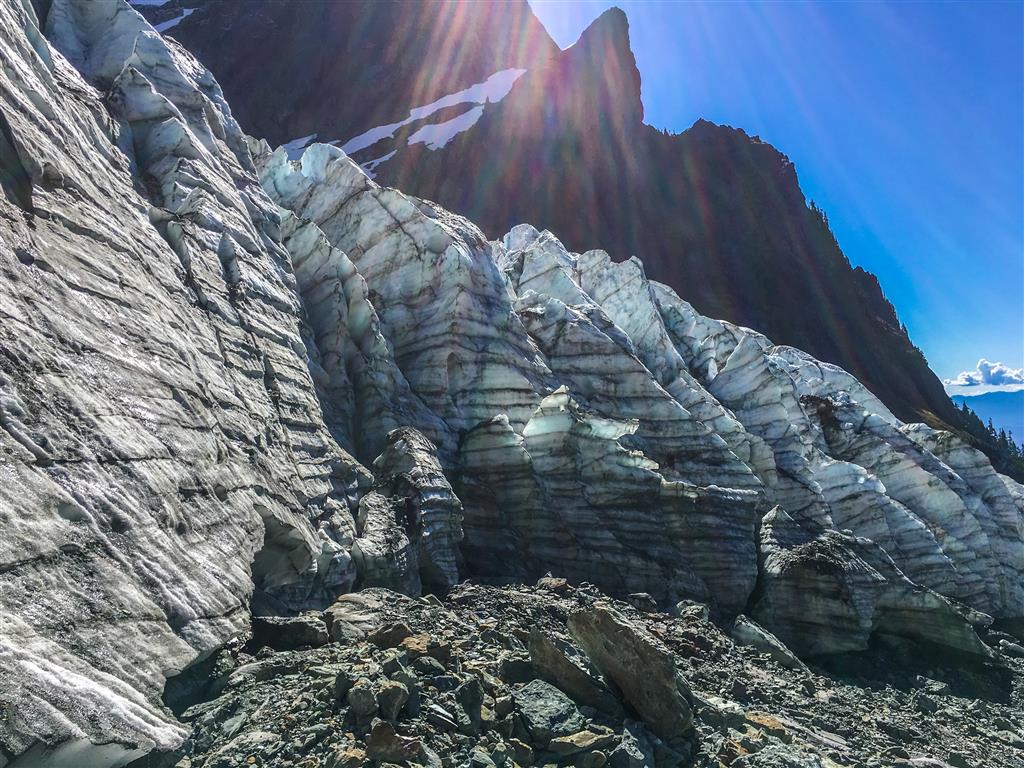
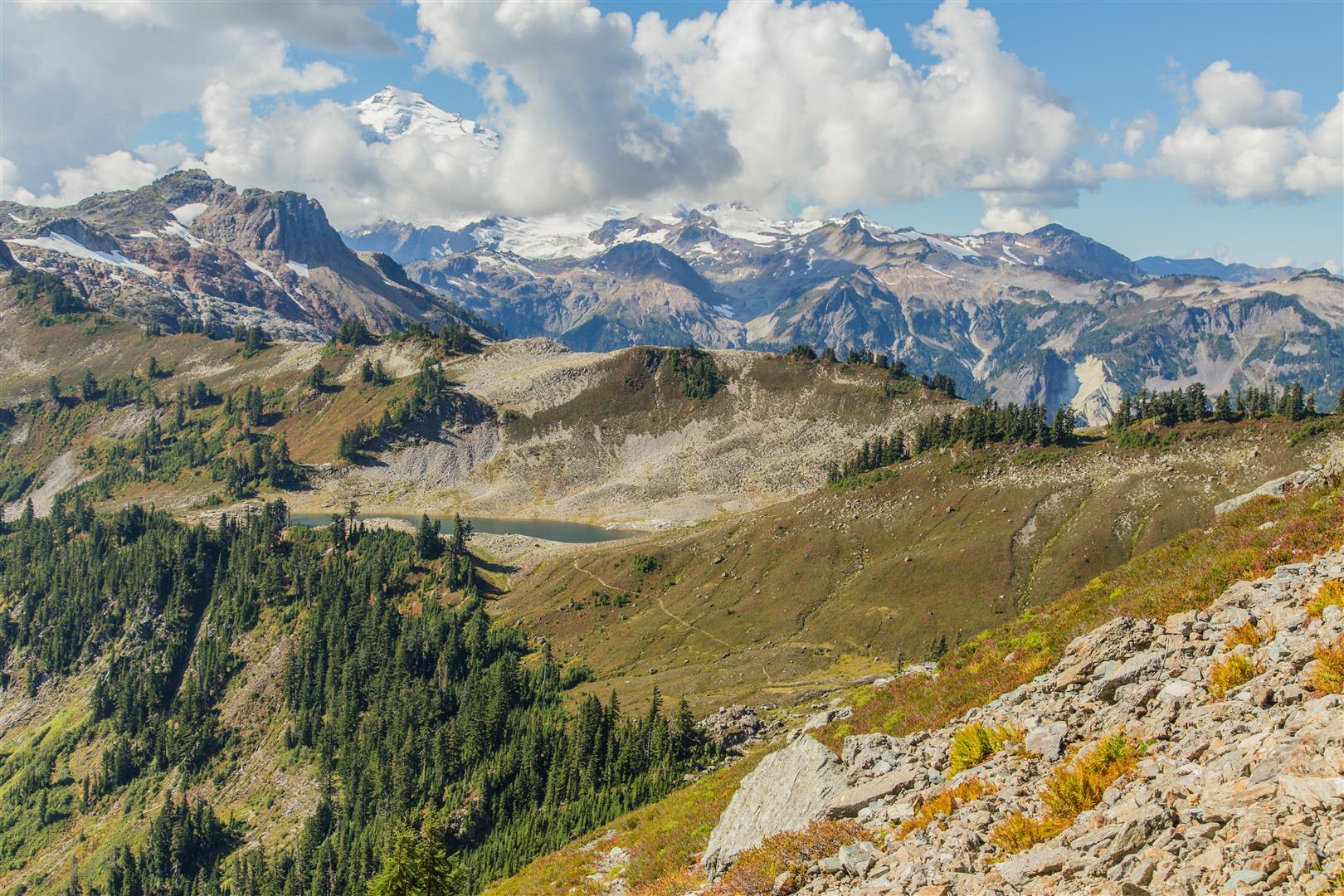
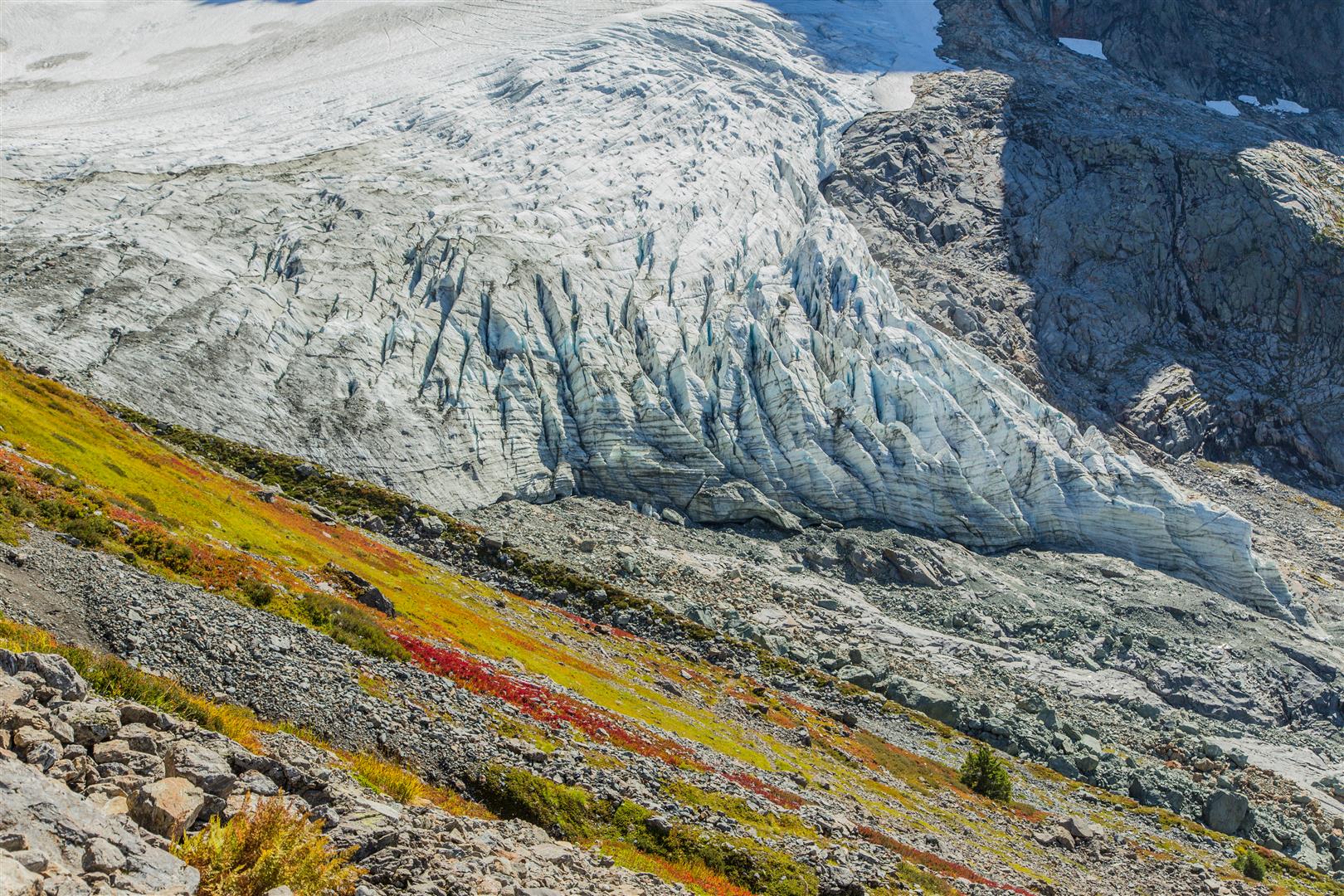
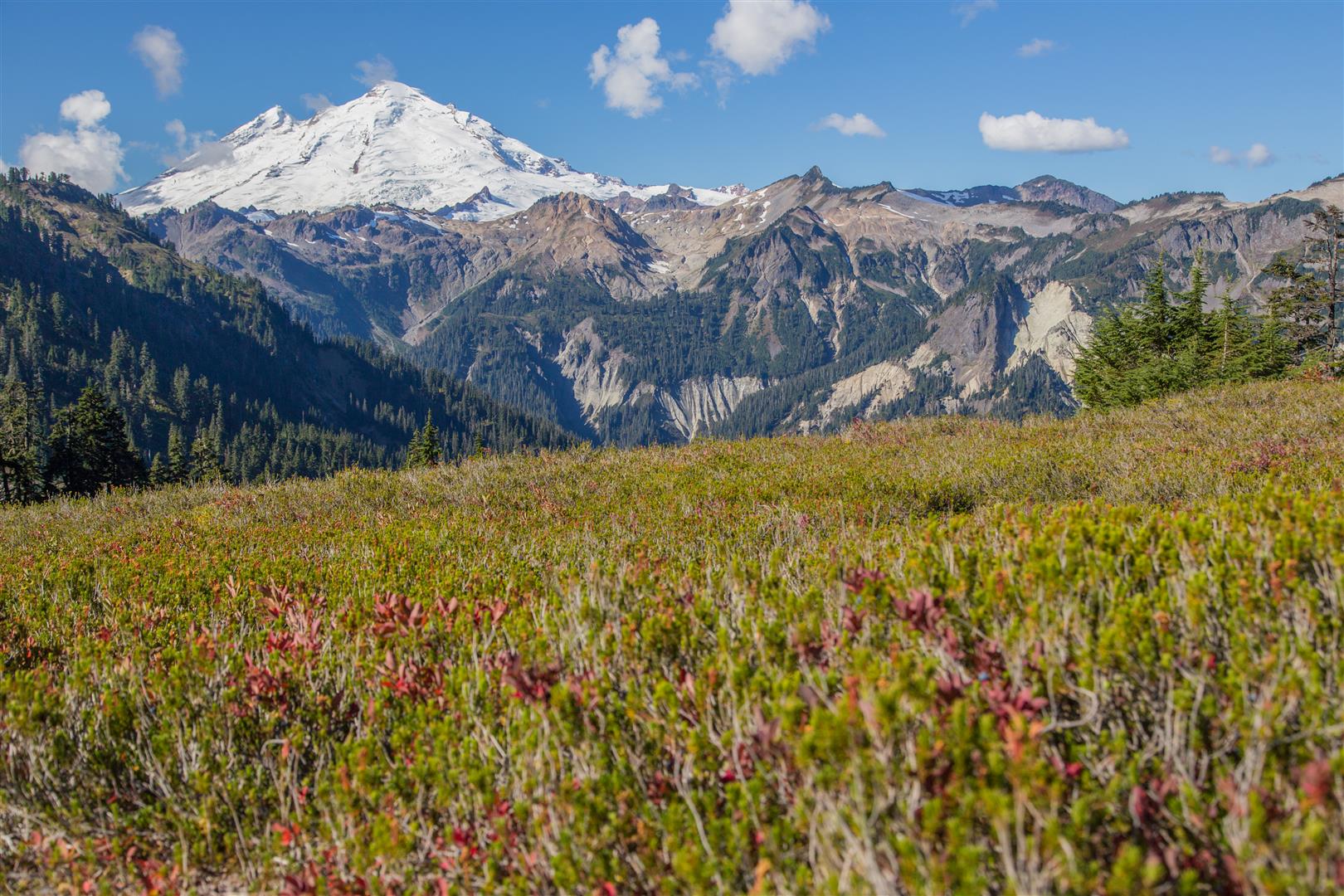
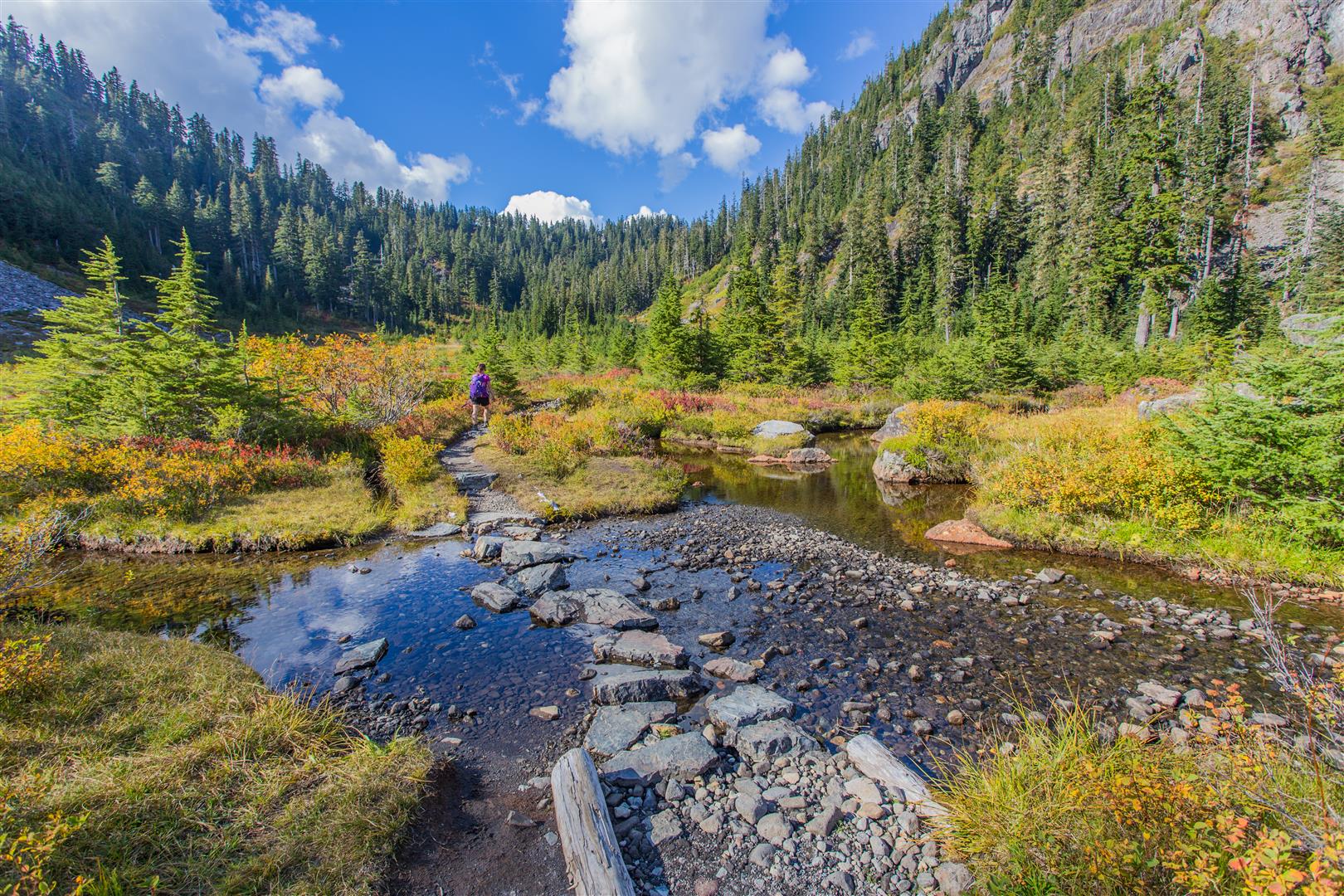
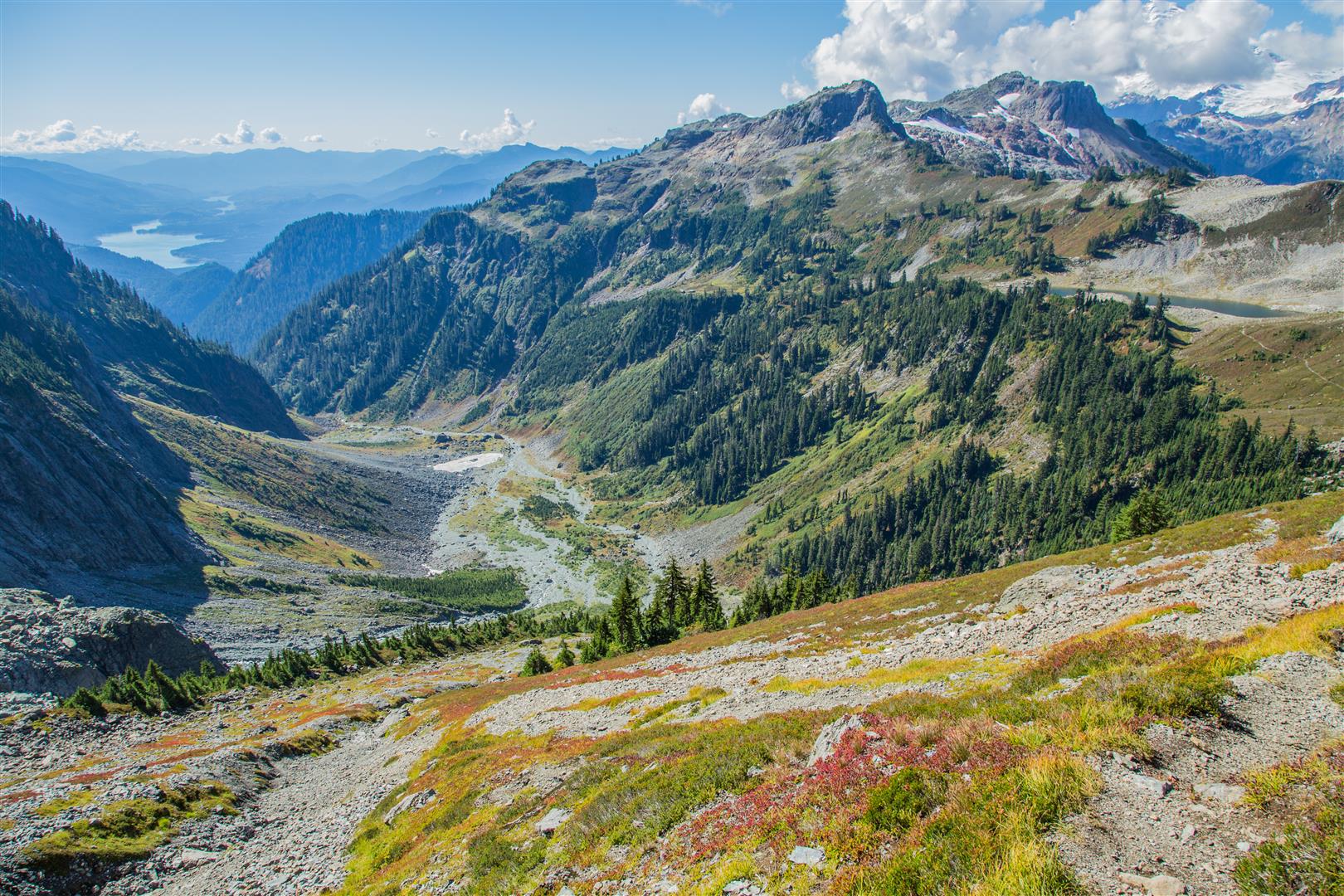
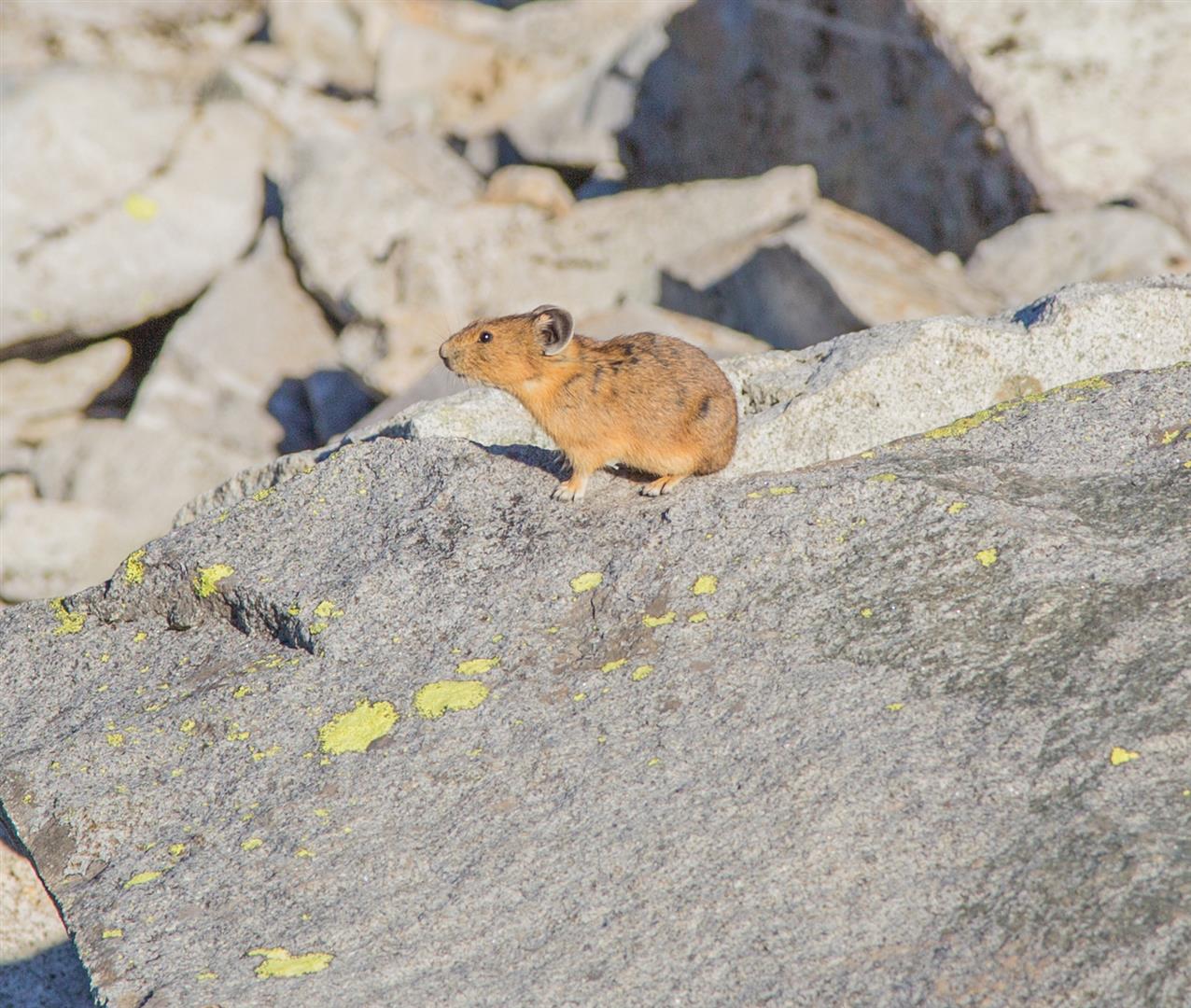
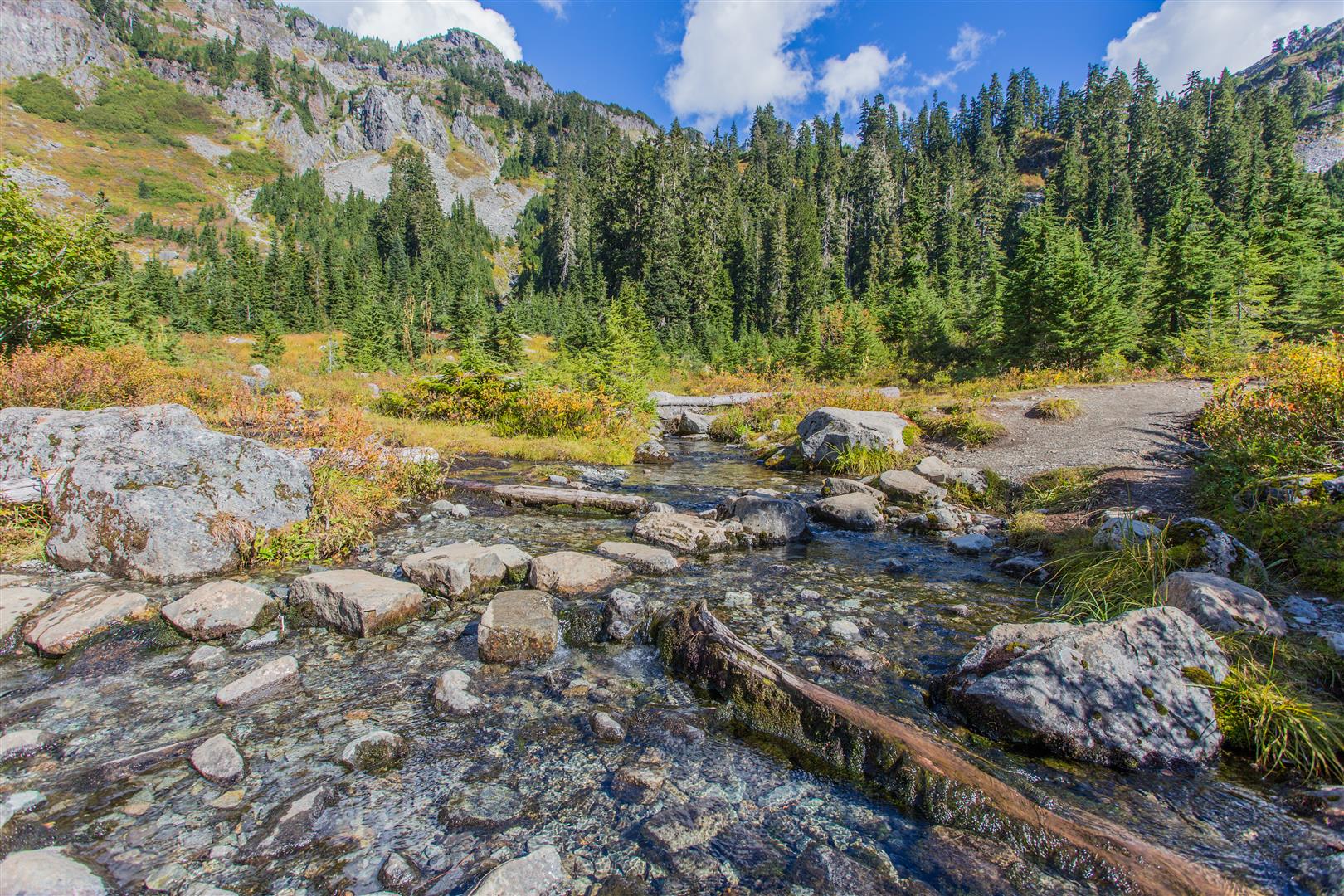
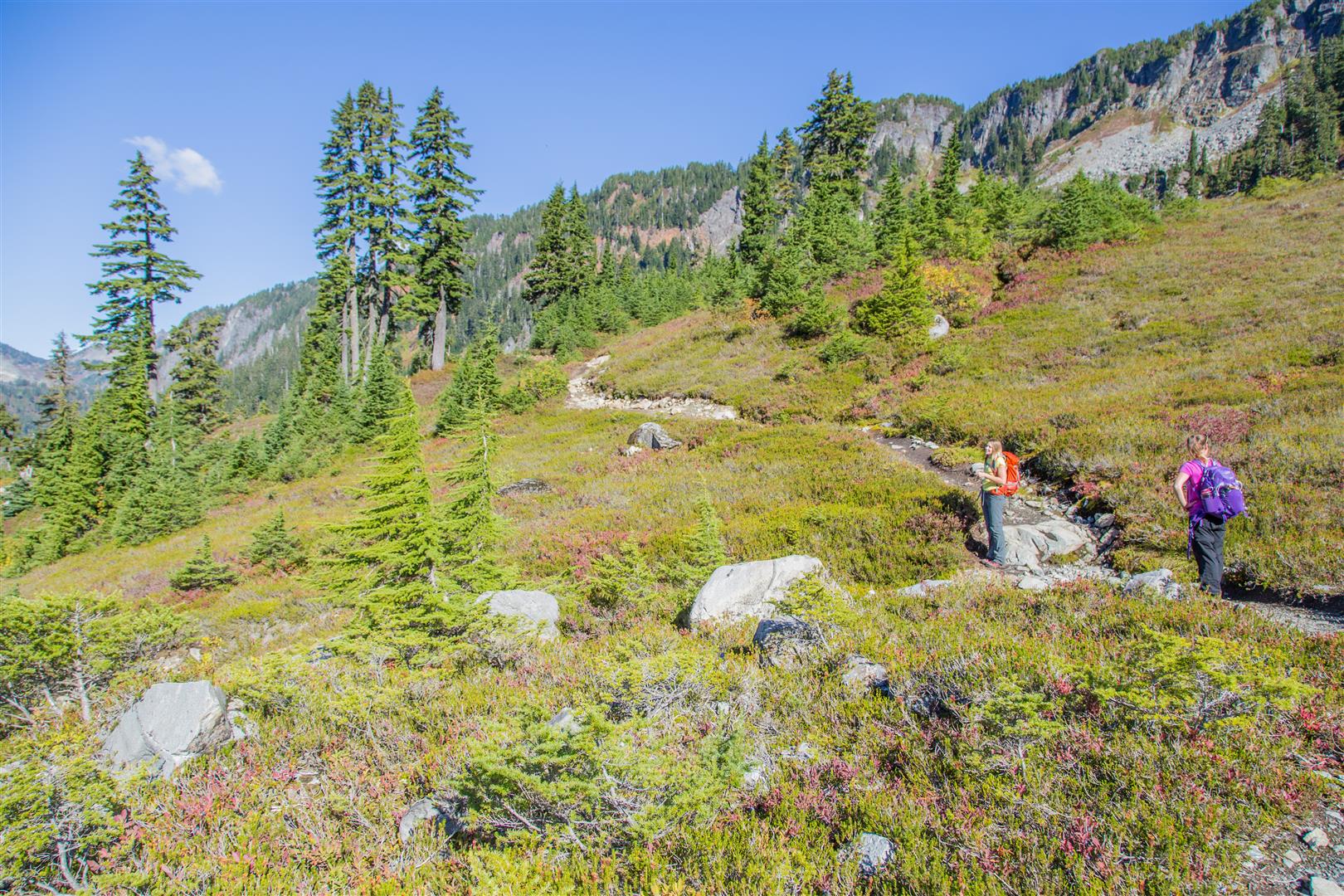
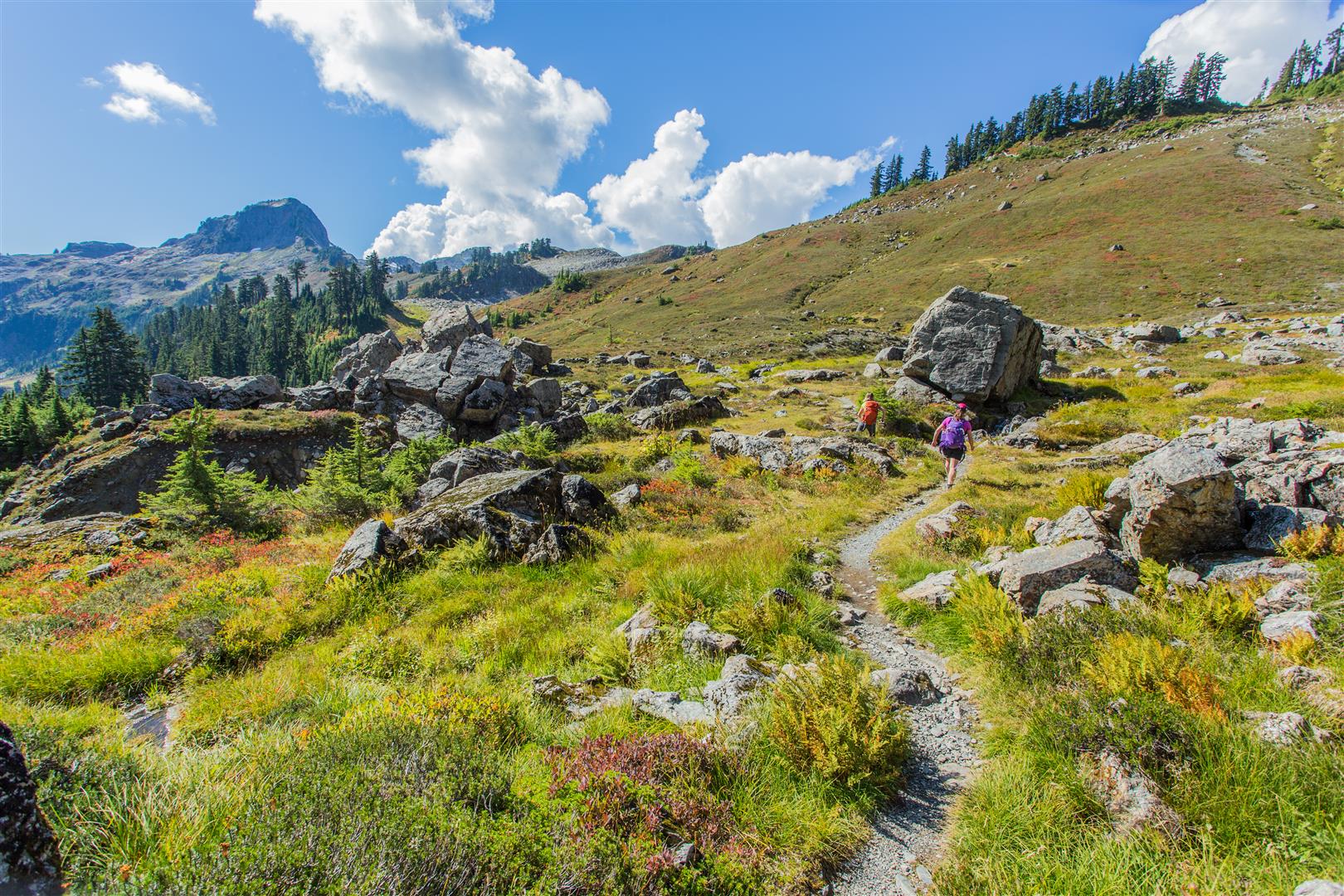
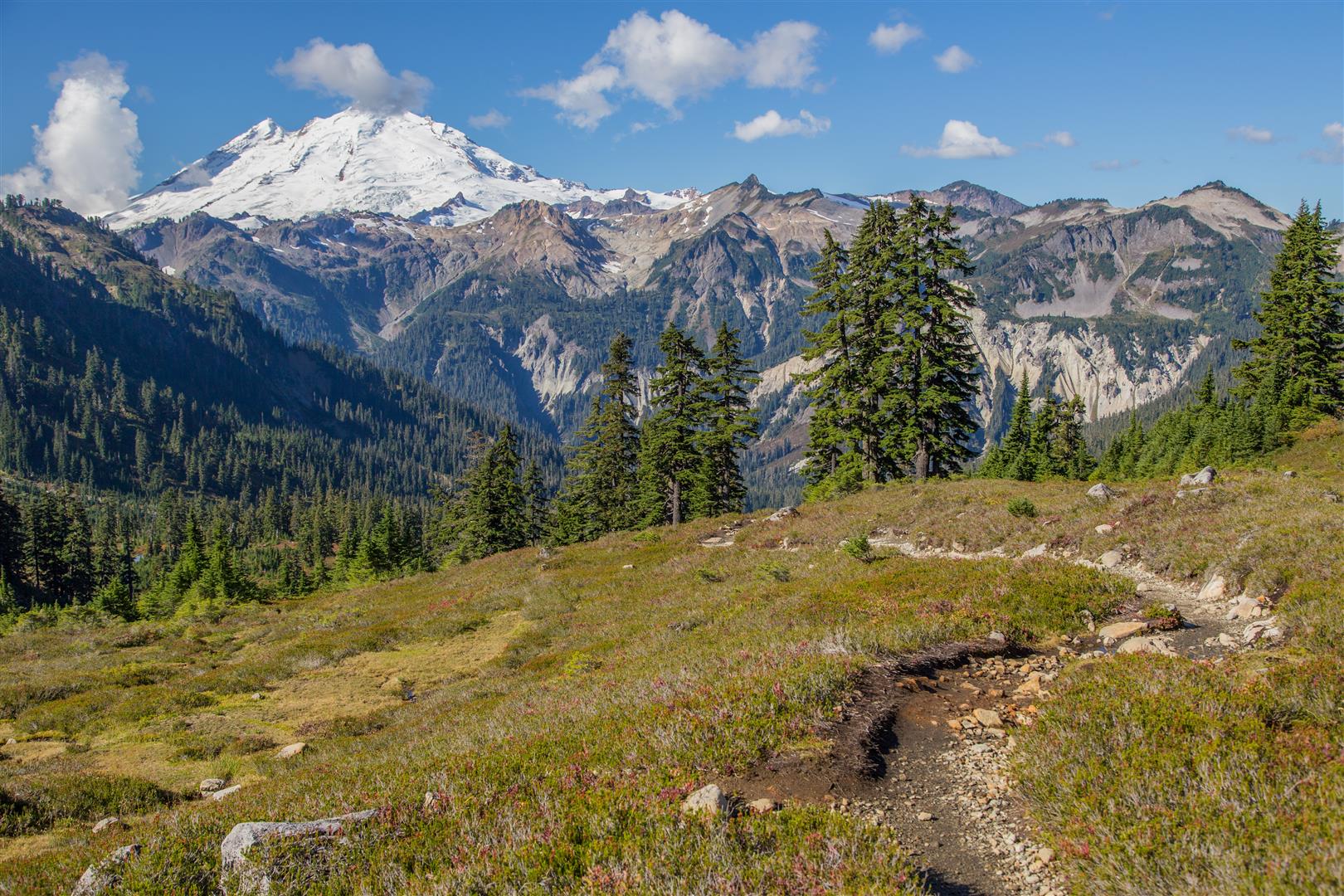
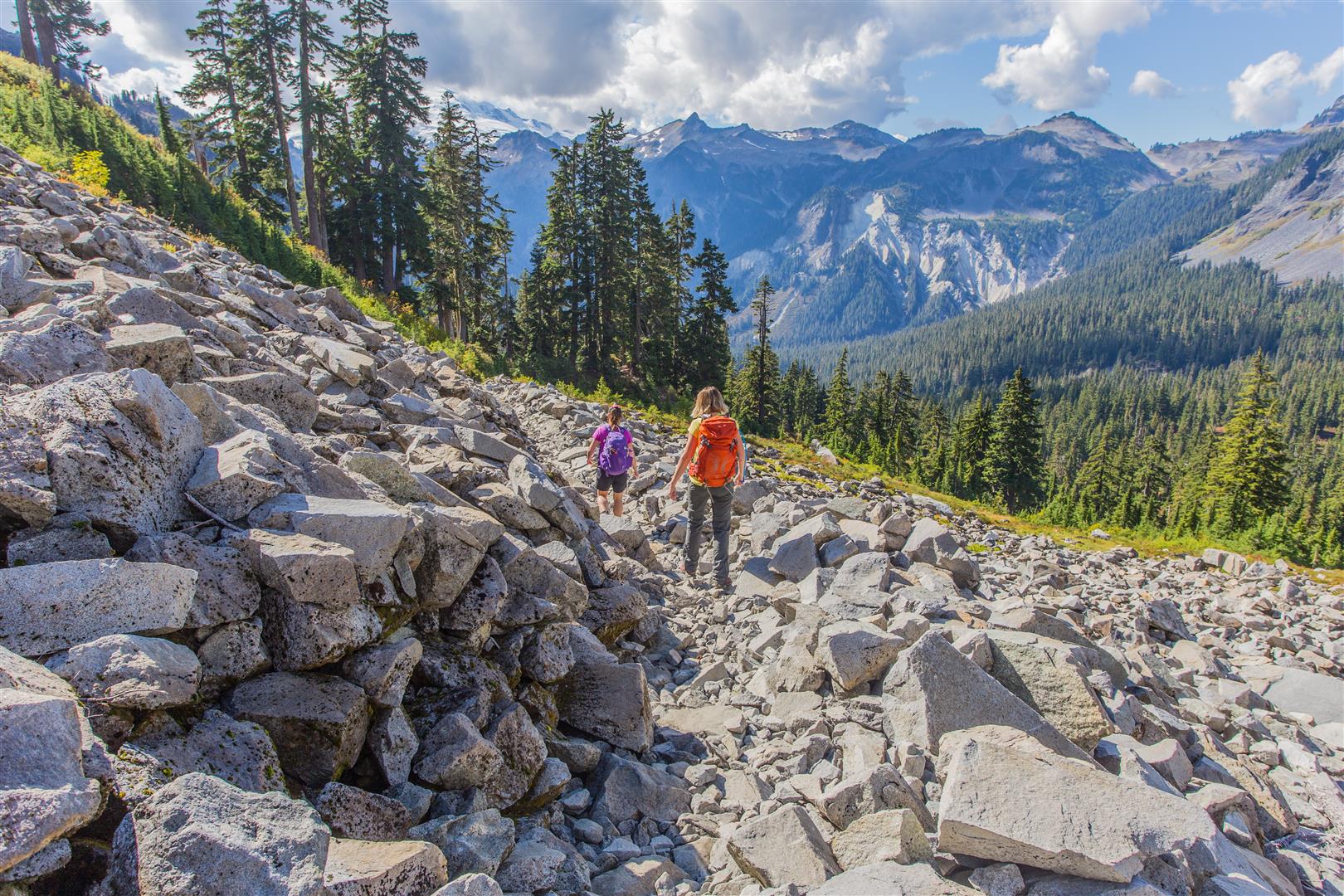
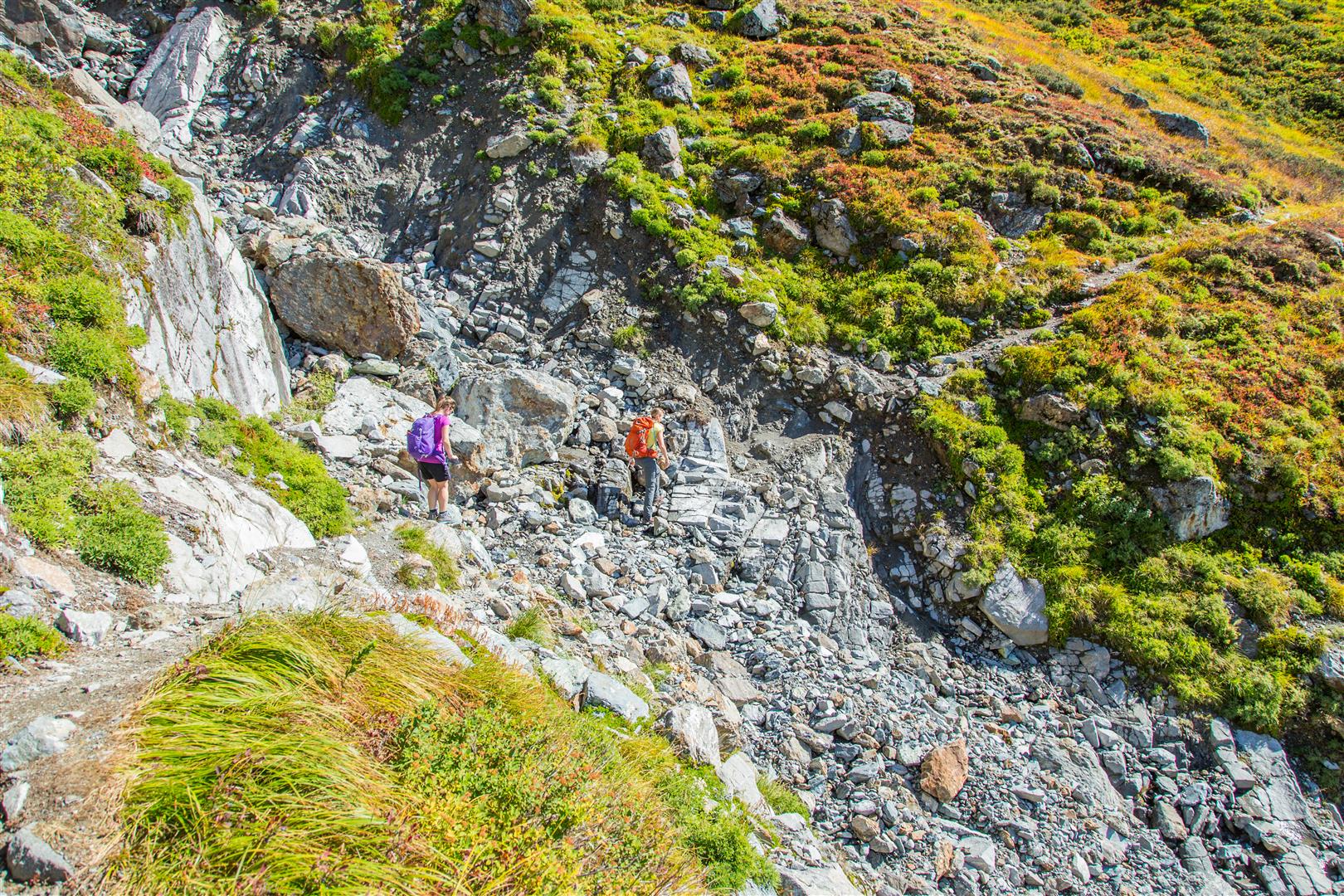
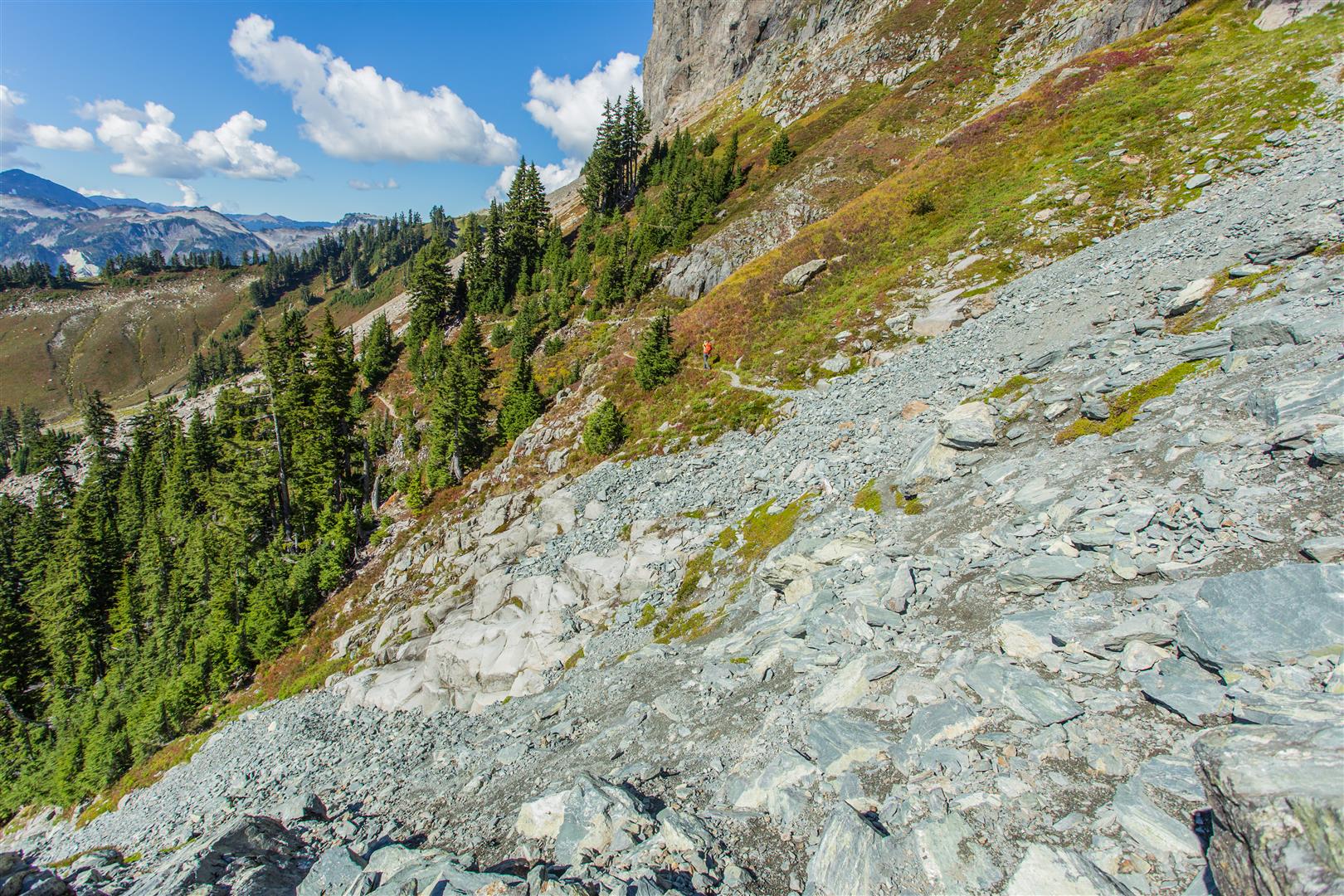
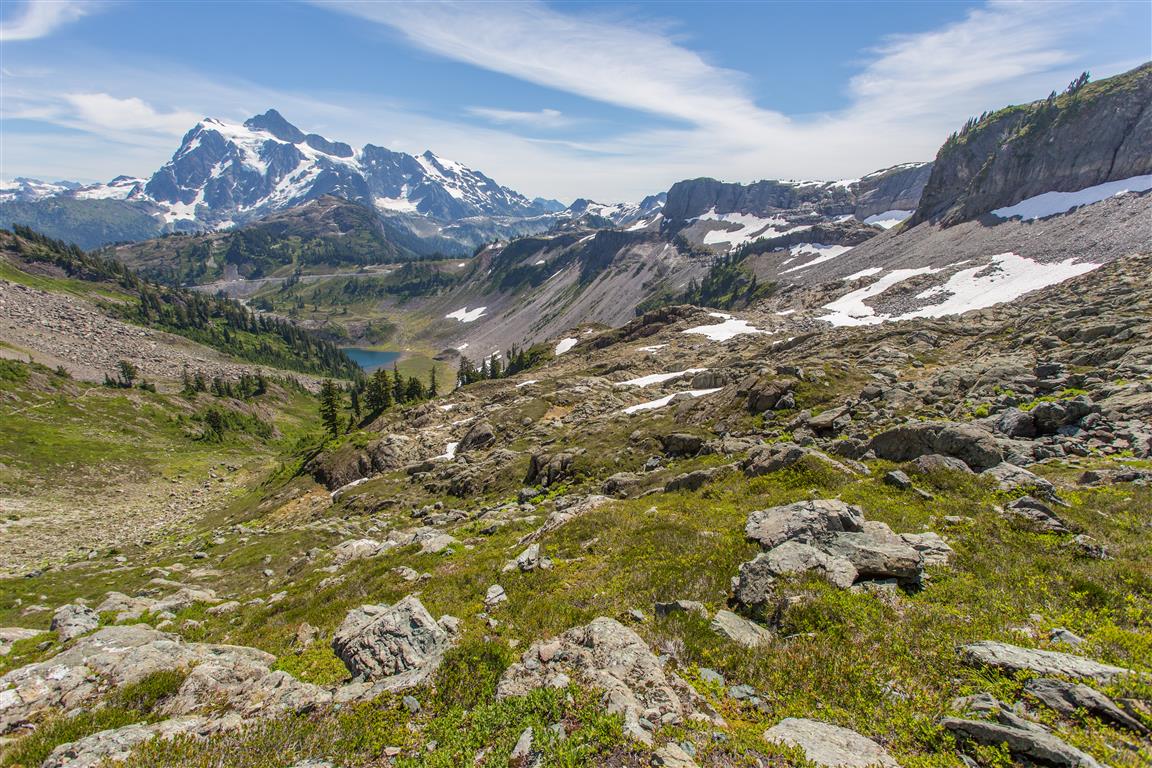
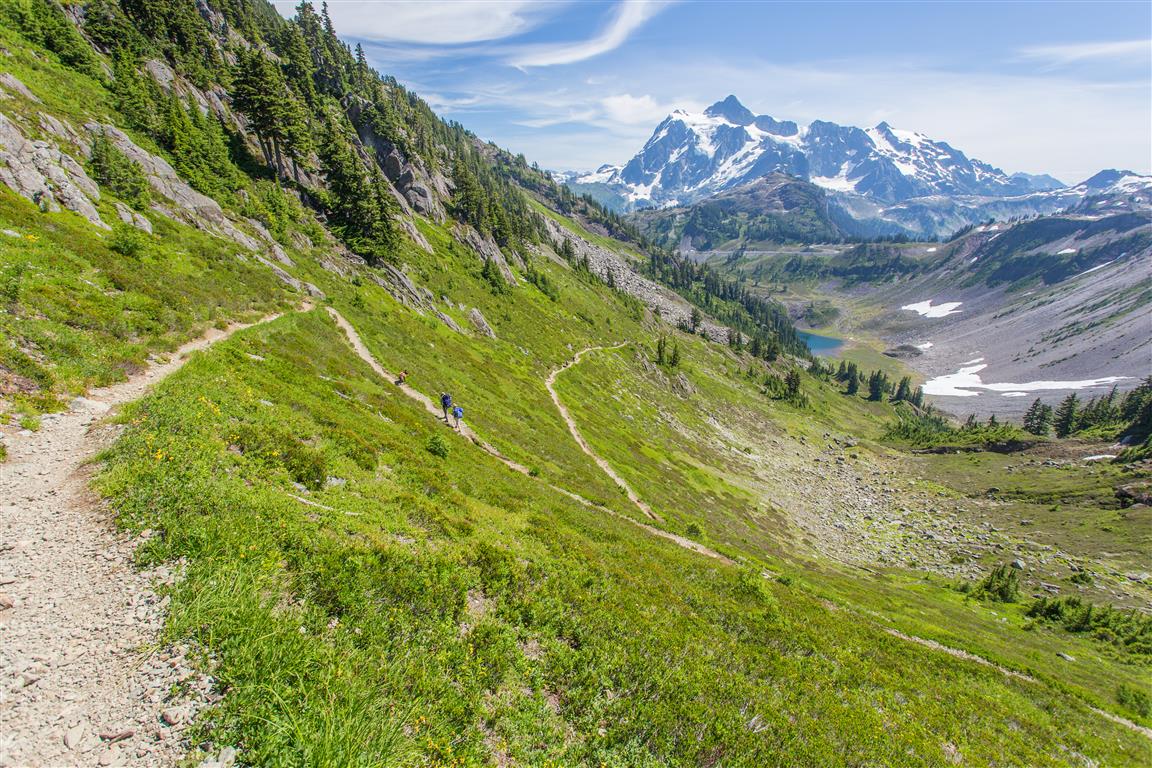
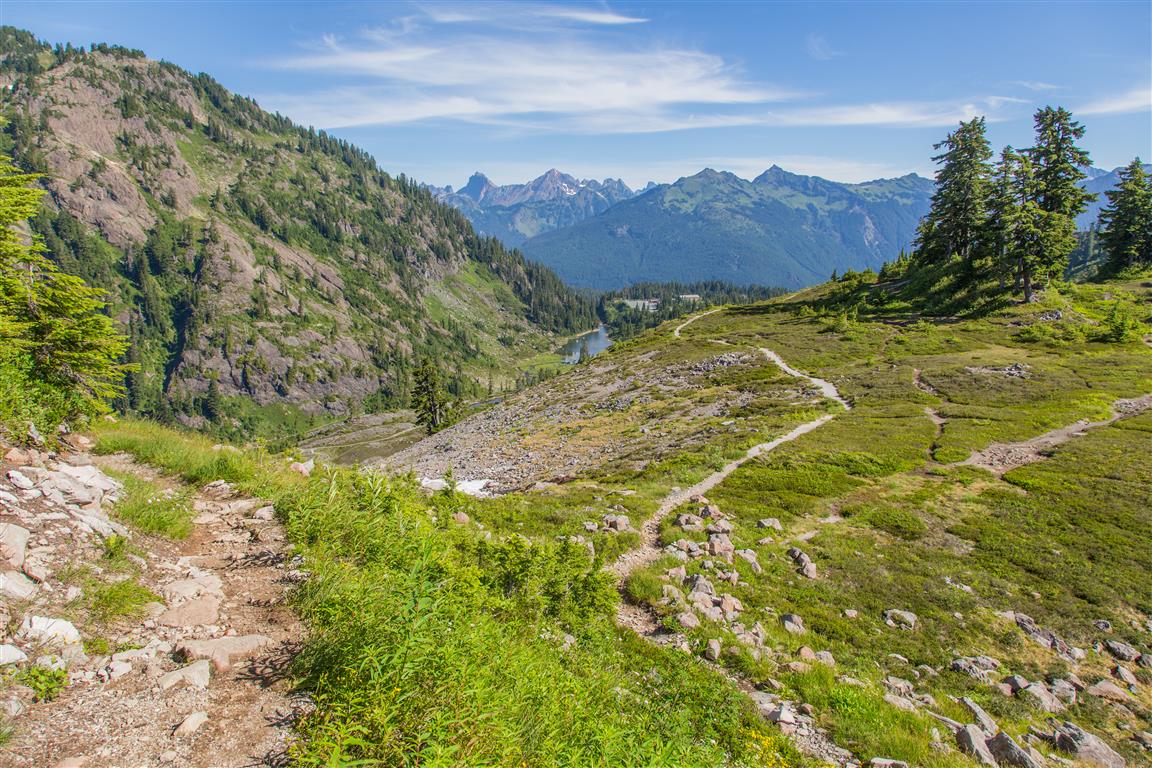
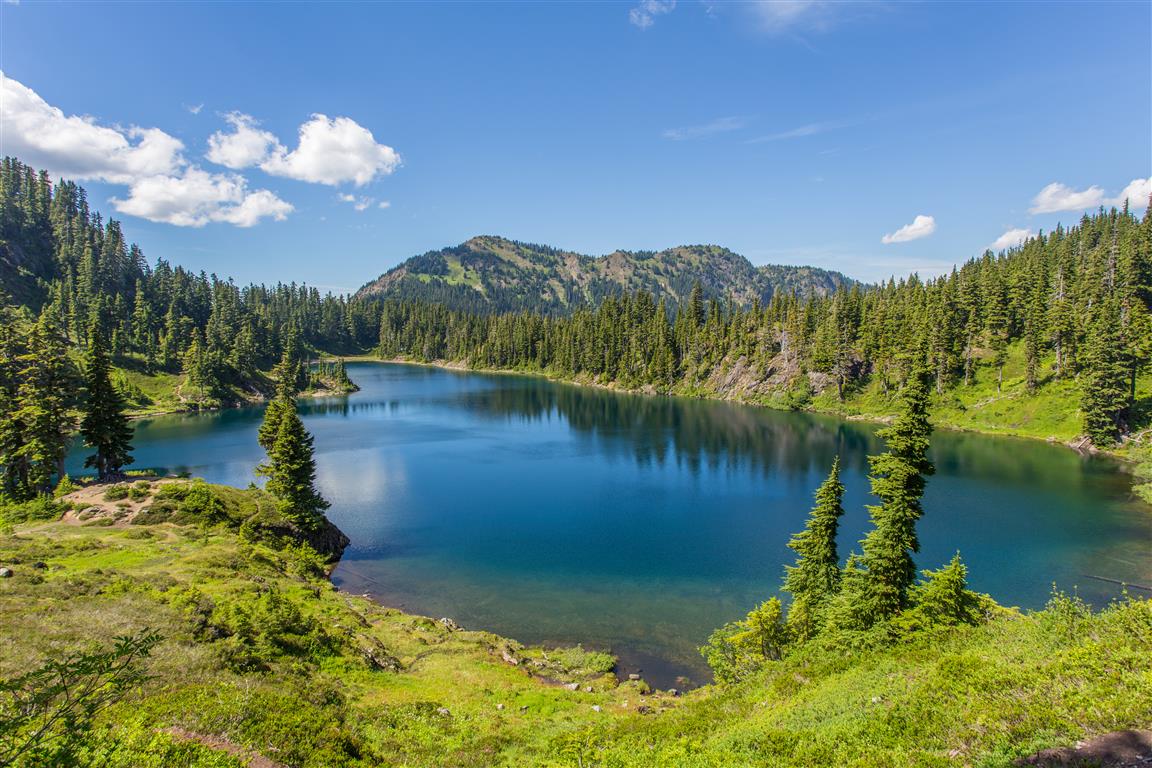
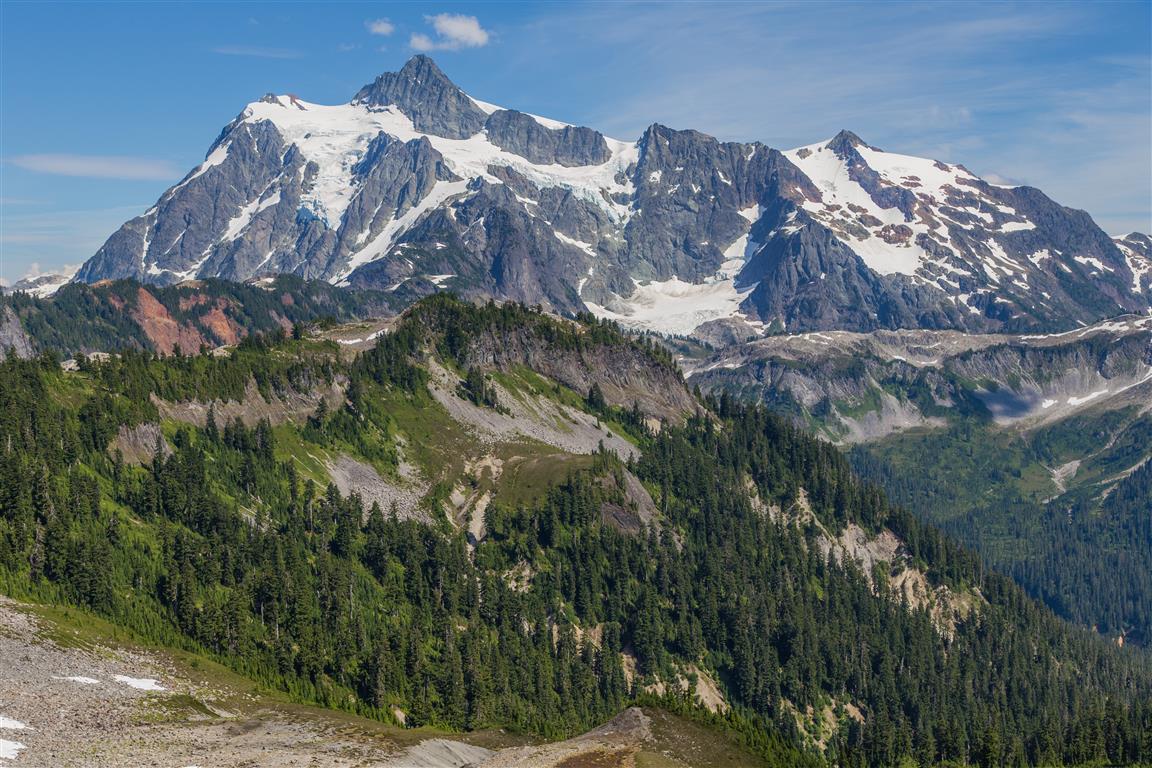
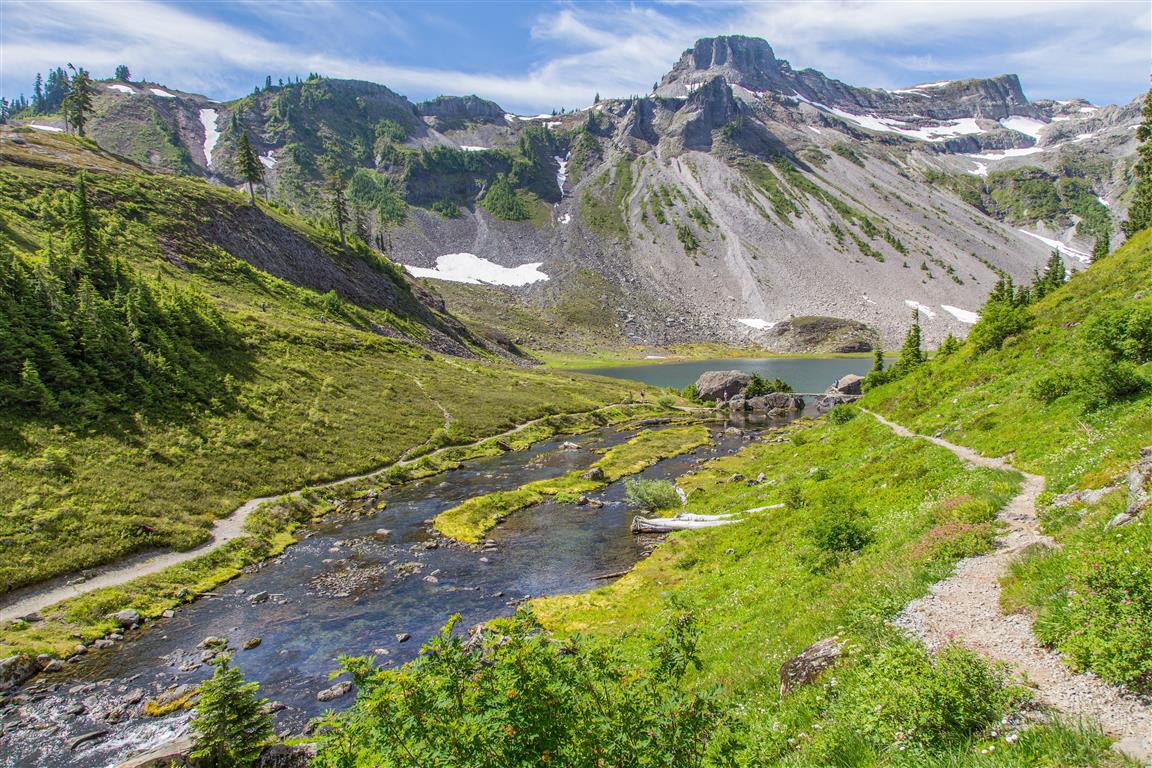
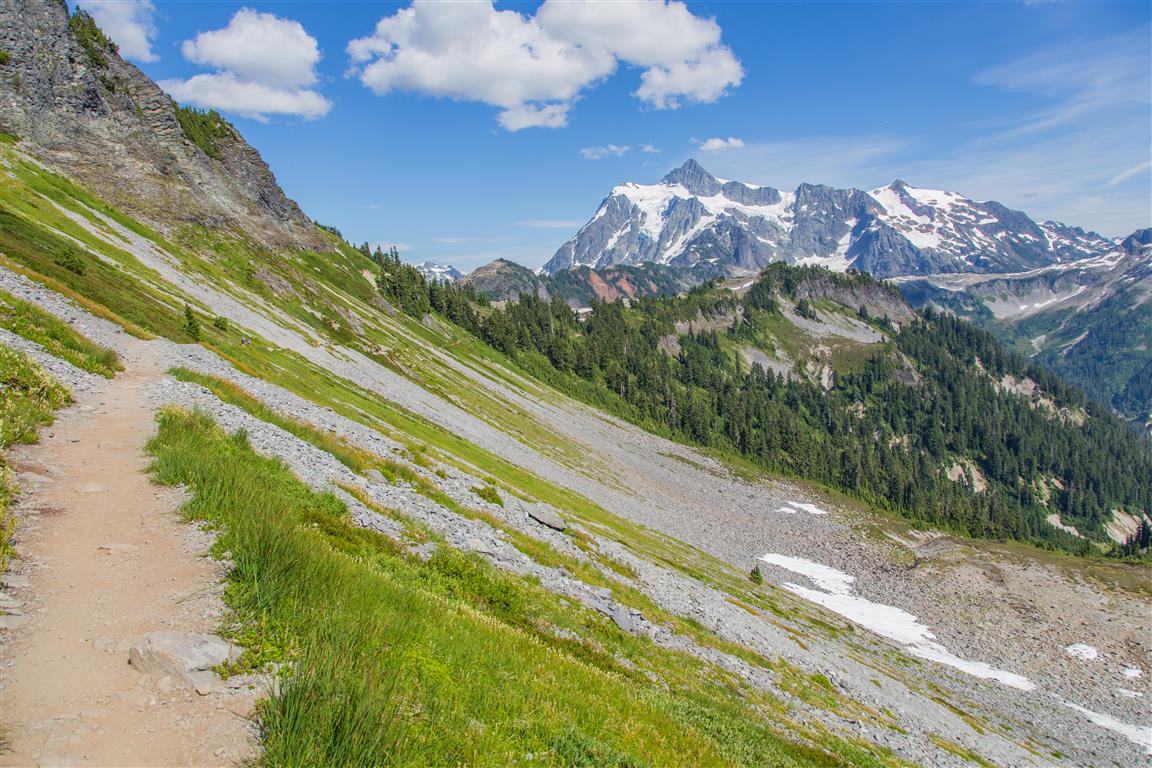
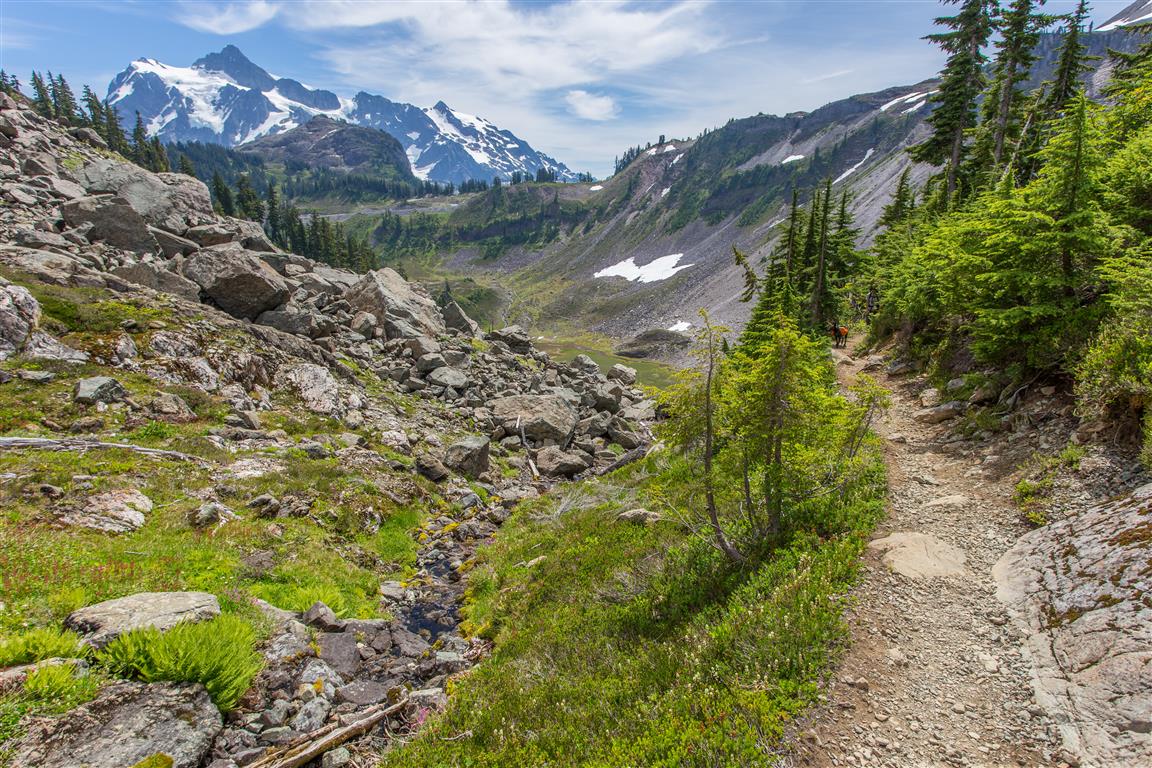
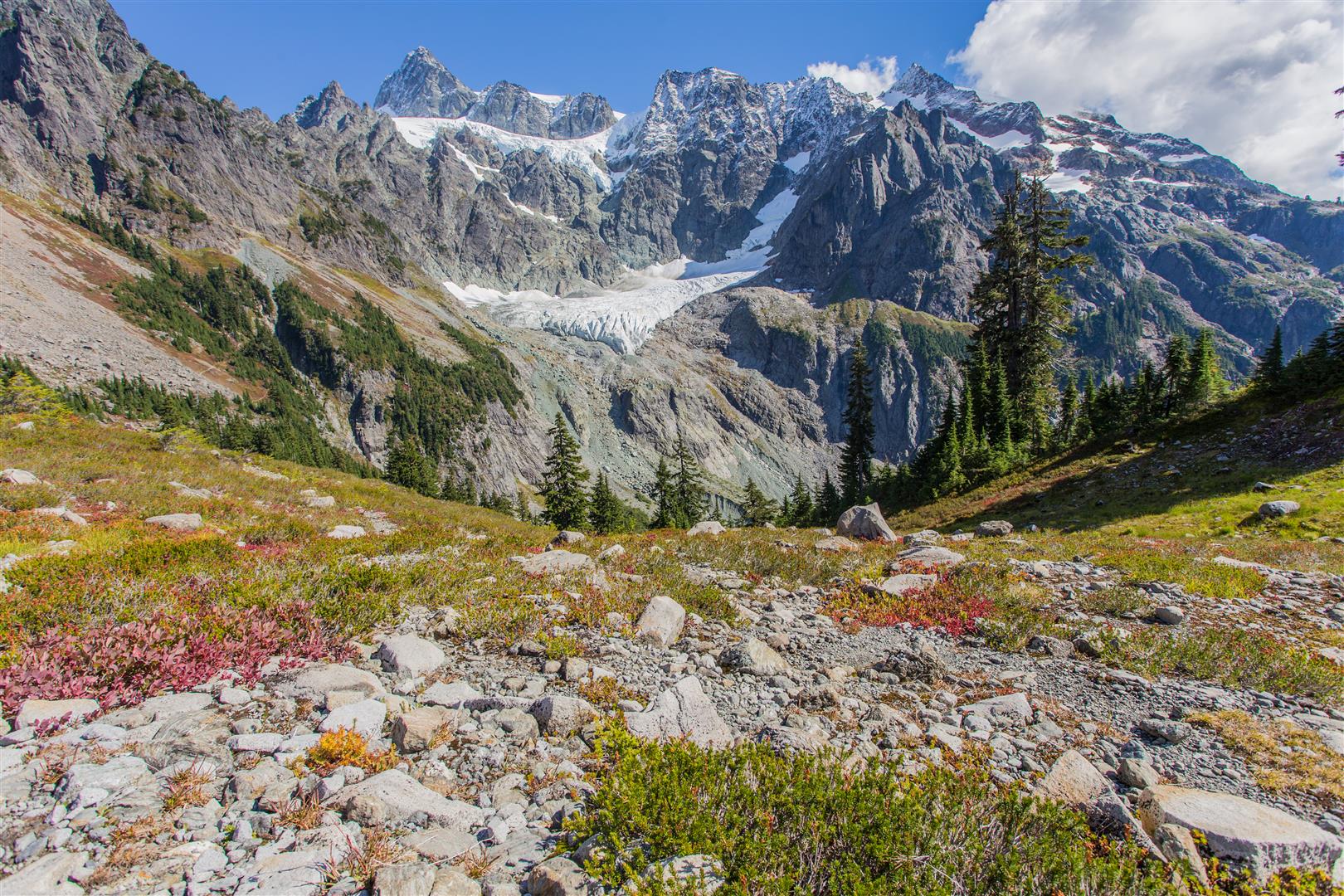
I love the Mt. Baker area, and today I ventured onto the Lake Ann trail, which heads close to Mt. Shuksan. Along the way, you pass forests, alpine meadows, streams, and views of Mt. Baker and Mt. Shuksan. We even saw pikas and marmots today. The trail to Lake Ann is well established and easy to follow. The lake is beautiful, and so are the views of Baker and Shuksan. I recommend, after reaching the lake, taking the trail that leads to the Lower Curtis Glacier. For the most part the trail is in good shape — there are some scrambling sections. There came a point at which I stopped, but two others in my group scrambled down to the glacier and actually touched it! I was enjoying the scenery and chasing a marmot (not really). The trail that leads to the glacier crosses into North Cascades National Park.

Interesting Facts

  • Mt. Shuksan, visible for much of this hike, is often called the most photographed mountain in Washington, thanks to its classic reflection shot from nearby Picture Lake at the end of the Mt. Baker Highway
  • The Lower Curtis Glacier, the one visible from the end of this trail, has been monitored by glaciologists for decades. It advanced between 1950 and 1986, but has been retreating since, having pulled back about 184 m from its 1986 position and roughly 600 m from where it sat in 1908
  • Lake Ann sits at the base of Mt. Shuksan’s Fisher Chimneys route, a popular climbing approach, which is why you’ll often see mountaineers with full glacier gear passing through on their way to the summit

Permits & Border Crossing

NOTE: You will need a Northwest Forest Pass (one per car), which can be purchased in person at the Glacier Public Service Center at 10091 Mt. Baker Highway, Glacier, WA (link to map).

Or you can buy an ePass in advance online at the Discover Your Northwest website.

Border crossing tips: bring your passport, Nexus, or enhanced ID. No fruit, no vegetables, no meat (this isn’t a complete list). Trail mix is okay.

A great resource for current conditions for this hike is the WTA website. Check it out!

The parking lot/trailhead are just 1.5 km (1 mile) before Artist Point (link below).

Trail Stats

The stats below are to the end of the trail at Curtis Glacier.

  • Distance: 18 km (linear return)
  • Time: 7 hours
  • Low point: 1,196 m
  • High point: 1,620 m
  • Elevation gain: 424 m
  • Cumulative elevation gain: 1,060 m
  • Trailhead: 48° 50′ 59.5″ N, 121° 41′ 11″ W (Google Map)

The Route

The actual GPS track from this hike, drawn on the map below. Green marks the start/end point.

Photos
Mt. Shuksan
Mt. Shuksan
Marmot
Marmot
Lower Curtis Glacier detail
Lake Ann
Lake Ann
Lake Ann
Lake Ann
Lower Curtis Glacier, photo by Laura Forbes
Lower Curtis Glacier — photo by Laura Forbes
Lake Ann and Mt. Baker
Lower Curtis Glacier
Blueberries and Mt. Baker
Hiking through meadow
Mountain valley
Mountain valley
Pika
Pika
Stream
Stream
Trail
Trail
Trail
Trail
Trail and Mt. Baker
Trail and Mt. Baker
Crossing boulder field
Crossing small boulder field
Trail to Lower Curtis Glacier

Link to all Lake Ann / Curtis Glacier photos on Flickr

Conditions on this trail can change over time — trailheads move, access rules shift, and businesses close. This post reflects what I found when I did the hike.

Before You Hike

Before heading out on your hike, make sure you are well prepared. This means having the TEN ESSENTIALS. It is also important to leave a trip plan (route details and estimated return time) with someone you trust.

Bring your smartphone, fully charged, and put it in airplane mode while hiking. I always bring backup battery packs for extra peace of mind. It is highly recommended that you bring a GPS device. I use my smartphone with a GPS app (Backcountry Navigator). The GPS will work in airplane mode. Learn how to use it before your hike.

For anyone new to hiking, there is a rule that hikers follow called “Leave No Trace” or LNT. The concept is generally to pack out what you pack in and respect nature, so all future visitors can enjoy what you have enjoyed. To learn more about LNT, please check out this blog by a certified LNT Trainer.
Pender Hill

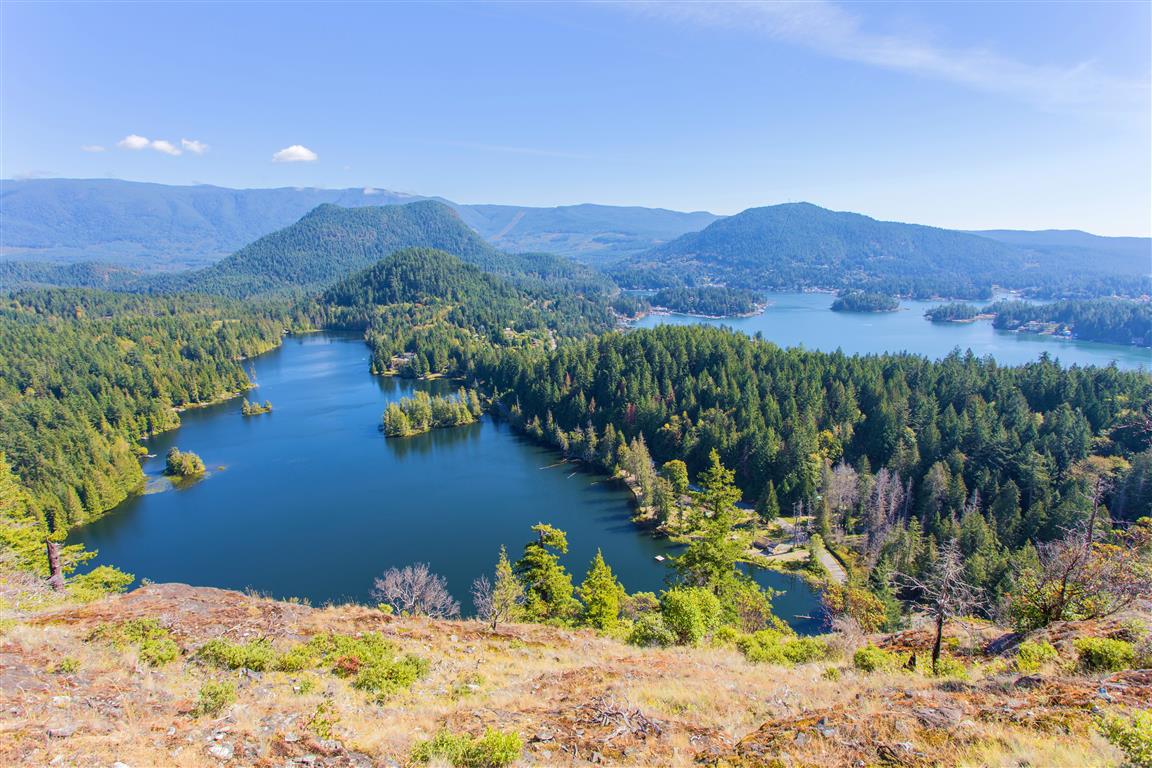
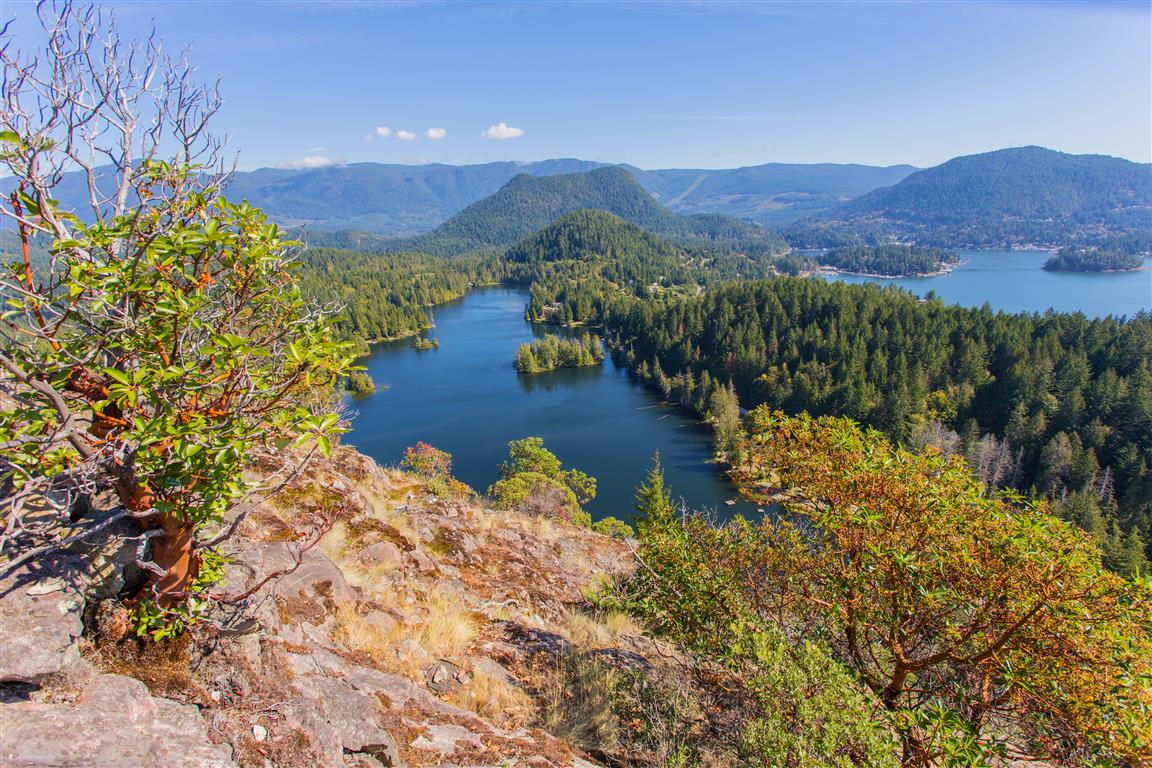
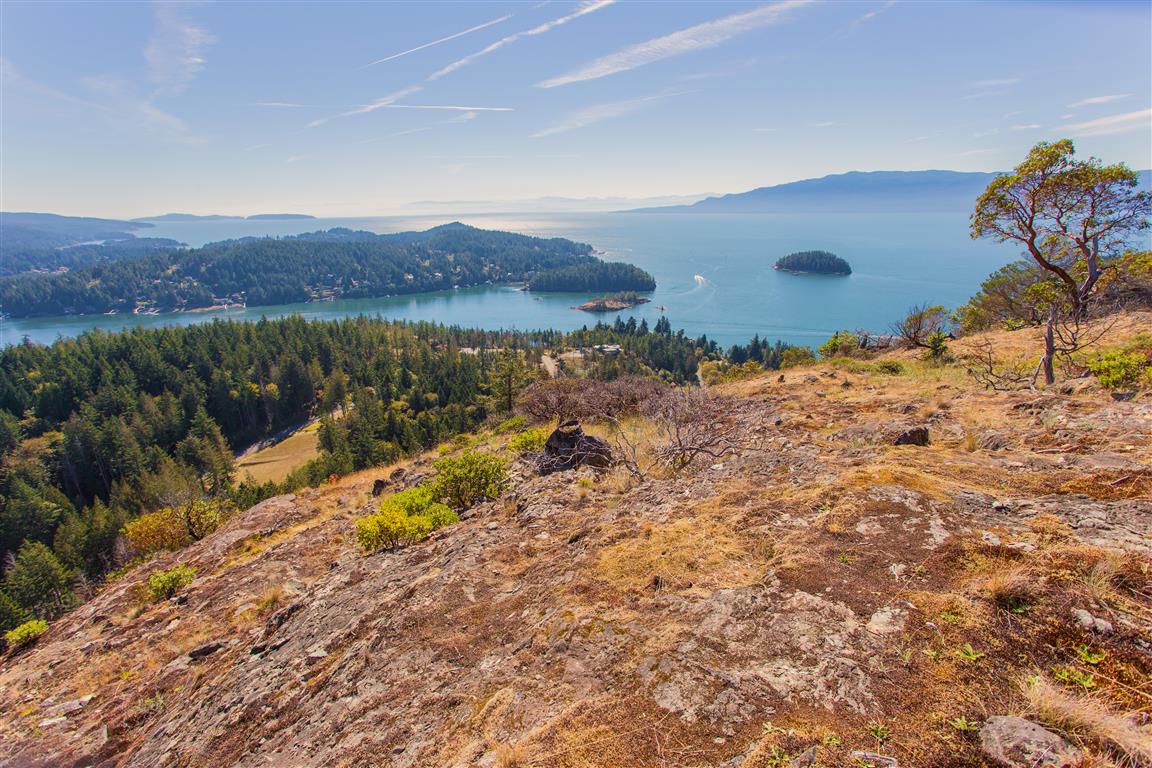
Pender Hill is on the Sunshine Coast of BC. The trail is maintained by the Sunshine Coast Regional District. This hike is fairly short compared to many in this blog, but you still get fantastic views, and it is well worth it. If you want more of a workout for your day, combine this hike and Mt. Daniel together. The Mt. Daniel trailhead is only 6 km from the Pender Hill trailhead.

To get to Pender Hill from Vancouver, you need to take the 1-hour BC Ferry trip from Horseshoe Bay in West Vancouver to Langdale. From Langdale, there is a 73 km trip to the trailhead on Coastview Drive.

Interesting Facts

  • Pender Hill, along with Pender Harbour and the Pender Islands further south, is named after Daniel Pender, a Royal Navy hydrographer who surveyed the BC coast between 1857 and 1870
  • Nearby Mt. Daniel is also named for Daniel Pender. The Sechelt First Nation name for the mountain is Shélkém
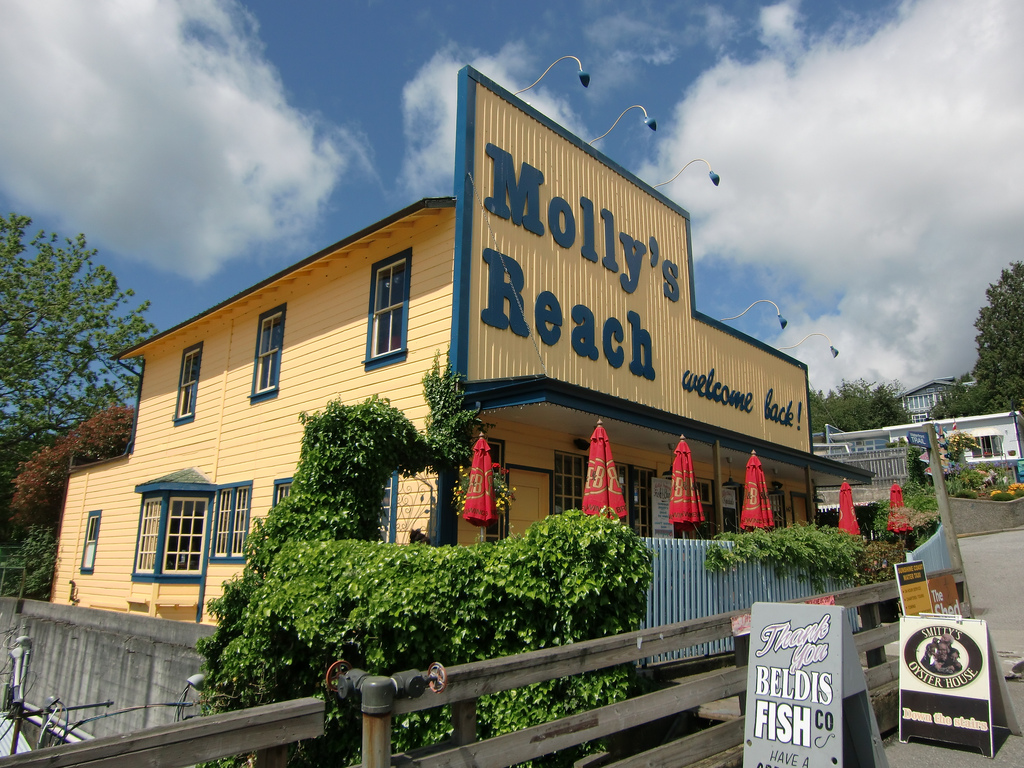
  • Molly’s Reach, the restaurant in Gibsons mentioned below, was the fictional diner featured in The Beachcombers, a CBC drama filmed in Gibsons that ran from 1972 to 1990, making it one of the longest-running series in Canadian television history

Trail Stats

  • Distance: 2 km (linear return)
  • Time: 1 to 2 hours
  • Low point: 57 m
  • High point: 235 m
  • Elevation gain: 178 m
  • Trailhead: 49° 38′ 32.8″ N, 124° 03′ 42″ W (Google Map)

The Route

The actual GPS track from this hike, drawn on the map below. Green marks the start/end point. Use the layer control in the top right to switch to a satellite view.

Photos

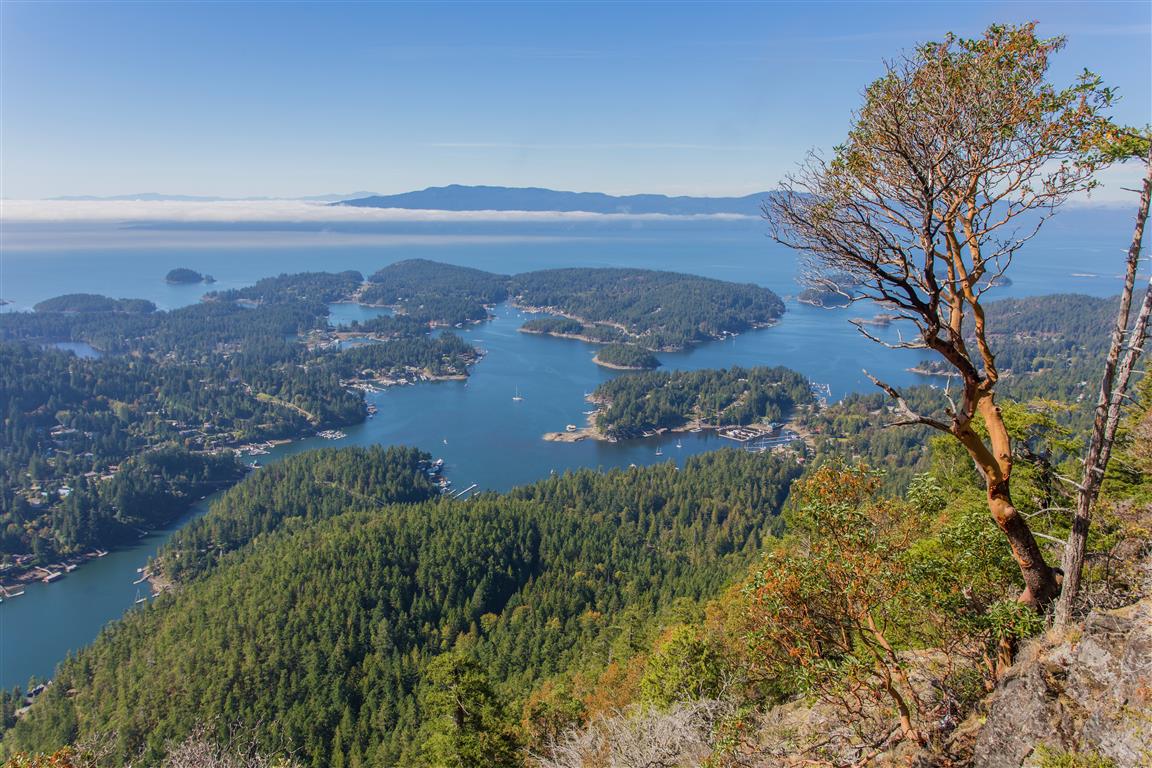
View from Pender Hill
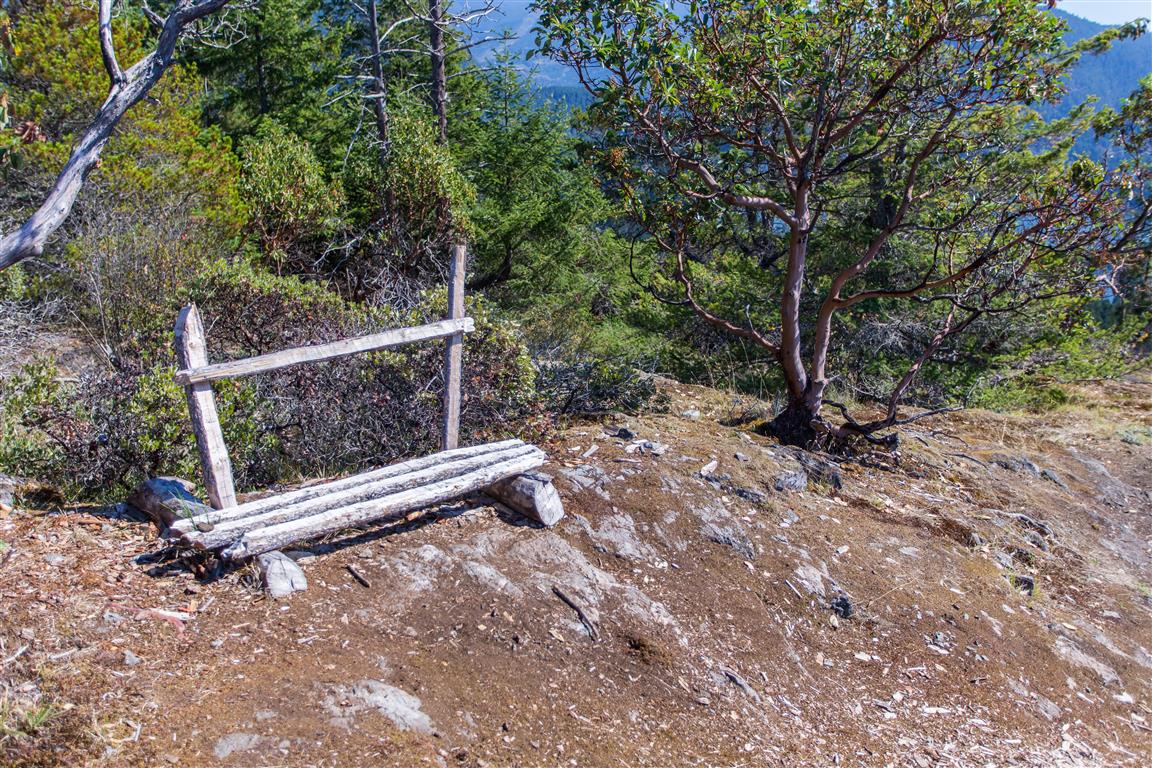
Bench at the top
Bench at the top
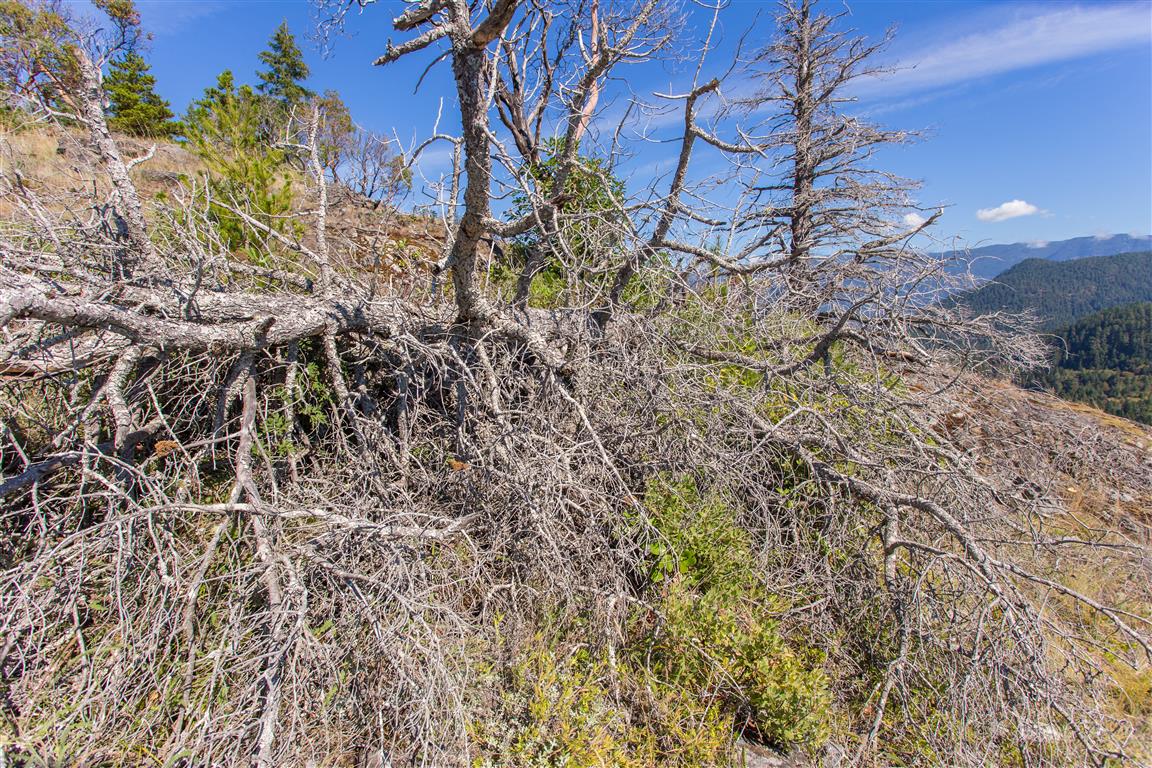
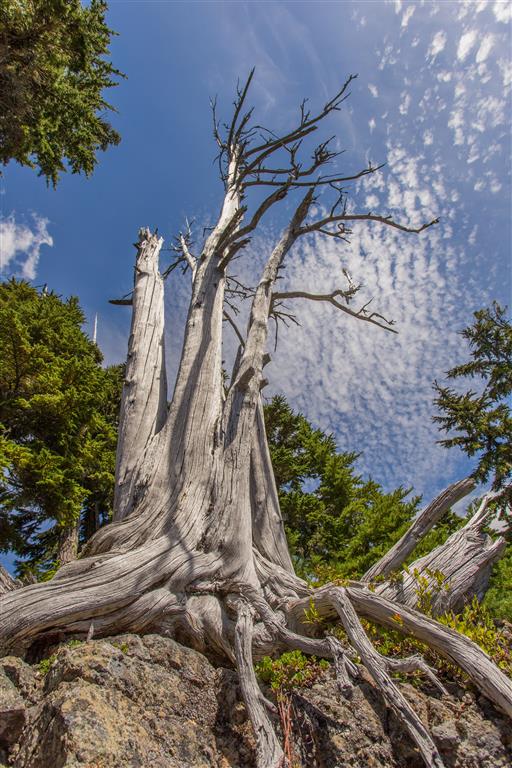
Dead tree
Dead tree
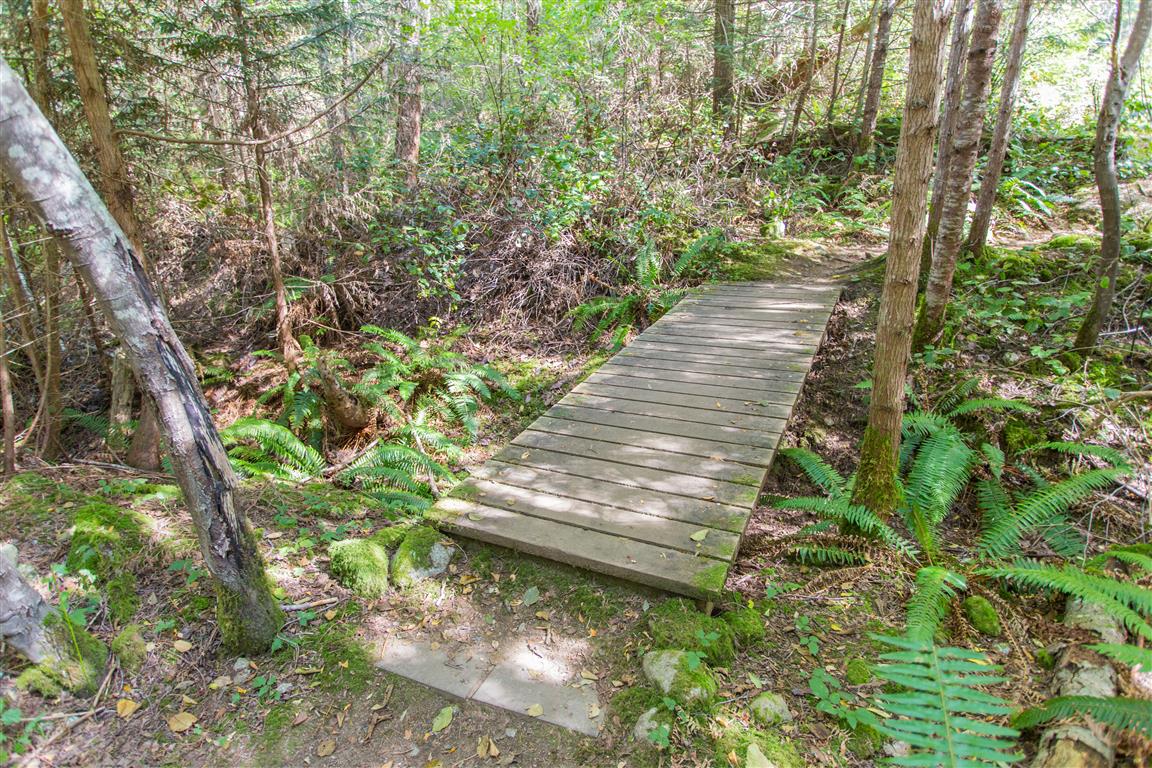
Little bridge
Little bridge
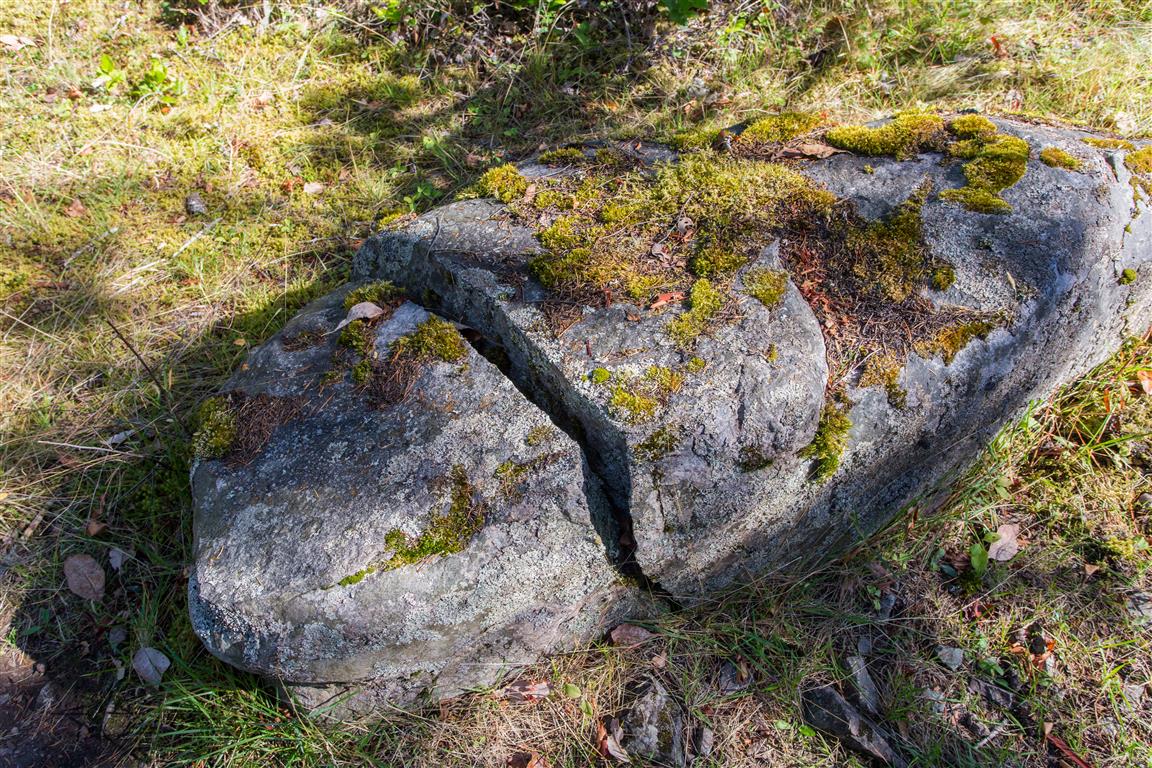
Broken rock
Broken rock
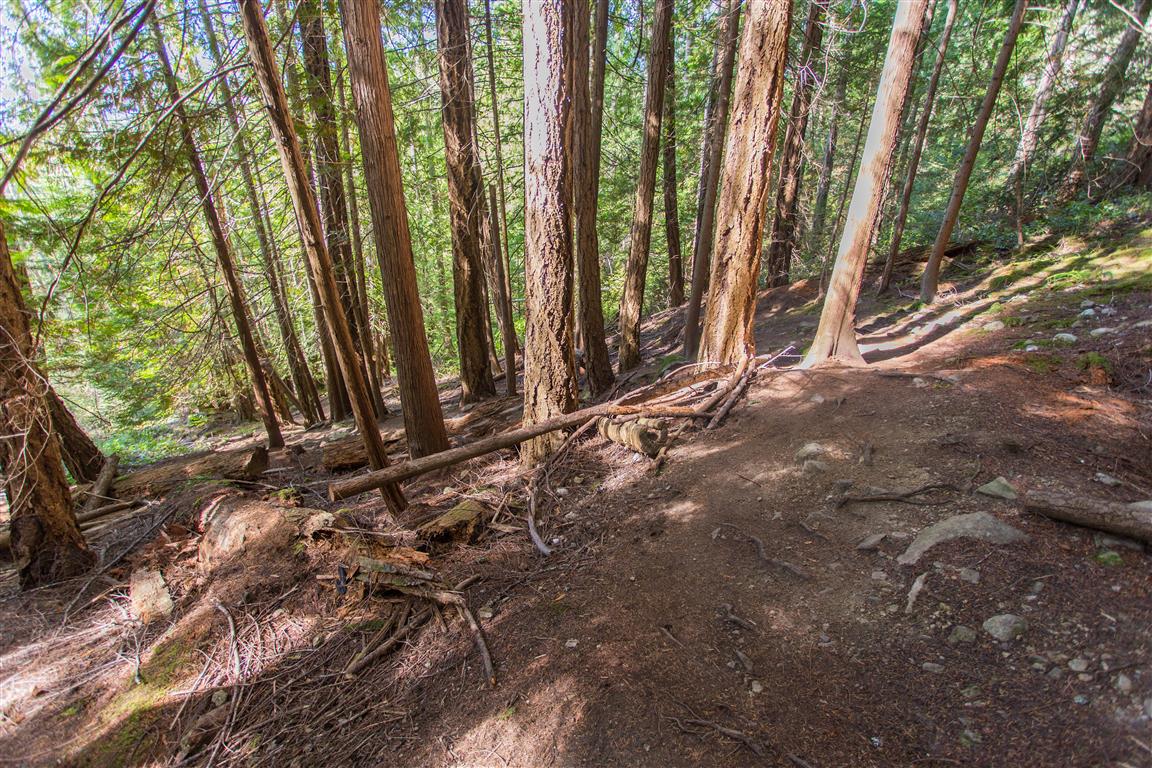
Trail
Trail
Trail
Trail
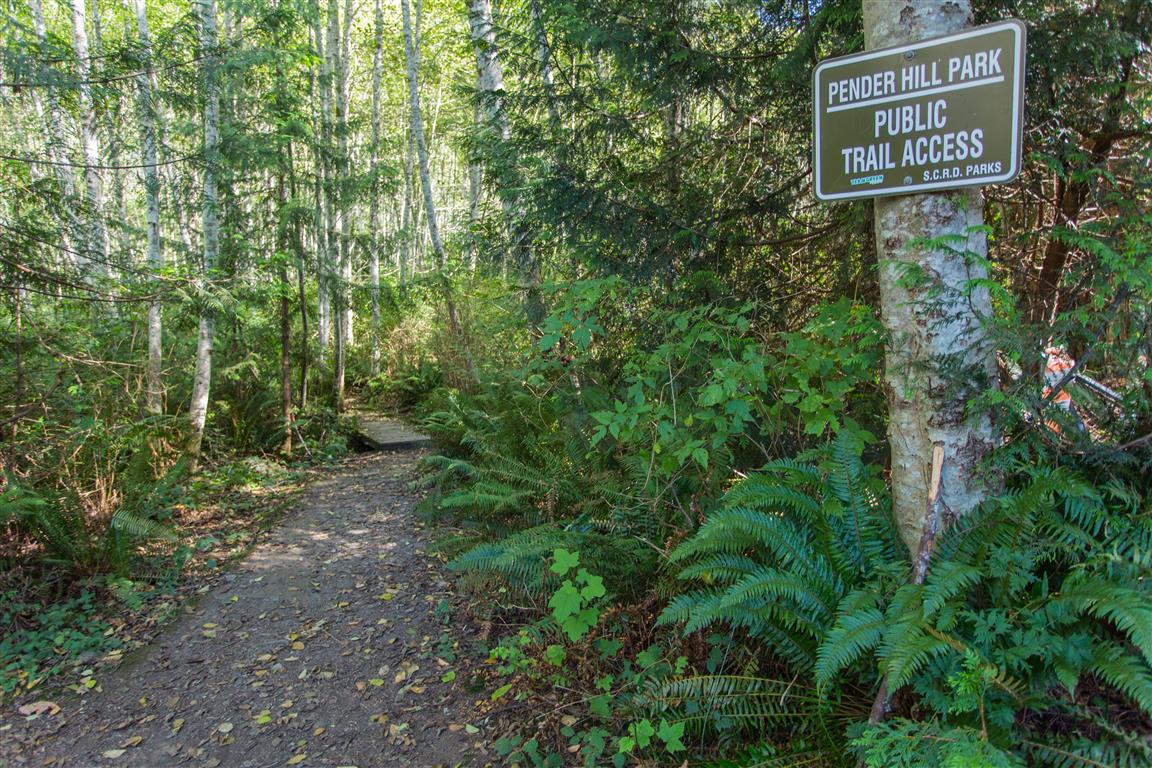
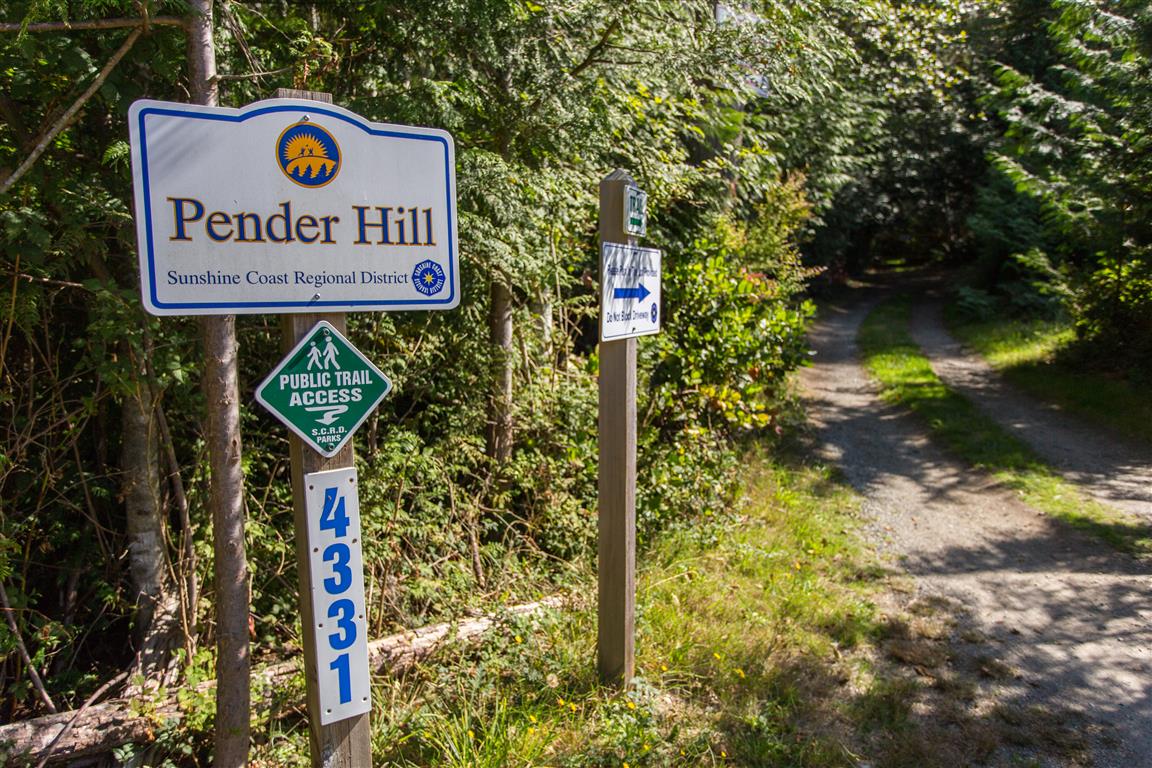
Trailhead sign
Trailhead sign

While You’re in the Area

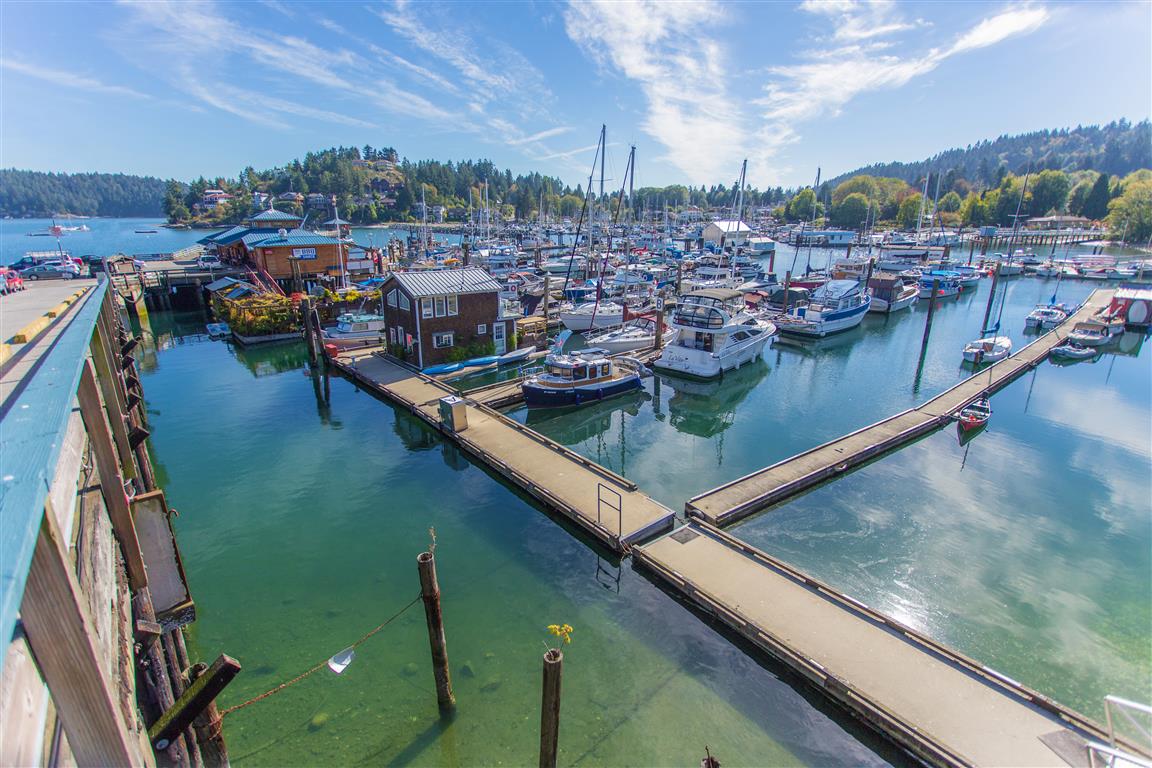
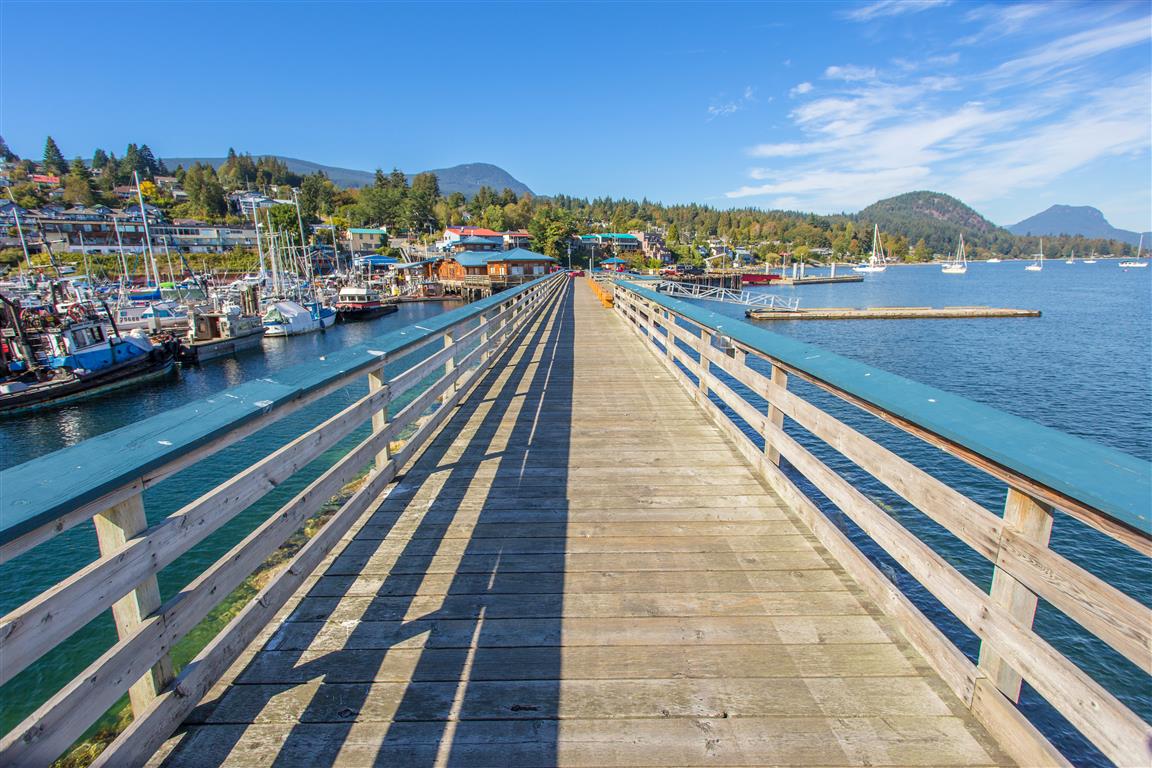
If you have time, stop in Gibsons. It’s a quaint little town, and worth a stop at Molly’s Reach (of Beachcombers fame) for fish and chips!

Gibsons Harbour
Gibsons Harbour
Gibsons Wharf
Gibsons Wharf
Molly's Reach, Gibsons
Molly’s Reach, Gibsons
Conditions on this trail can change over time — trailheads move, access rules shift, and businesses close. This post reflects what I found when I did the hike.

Before You Hike

Before heading out on your hike, make sure you are well prepared. This means having the TEN ESSENTIALS. It is also important to leave a trip plan (route details and estimated return time) with someone you trust.

Bring your smartphone, fully charged, and put it in airplane mode while hiking. I always bring backup battery packs for extra peace of mind. It is highly recommended that you bring a GPS device. I use my smartphone with a GPS app (Backcountry Navigator). The GPS will work in airplane mode. Learn how to use it before your hike.

For anyone new to hiking, there is a rule that hikers follow called “Leave No Trace” or LNT. The concept is generally to pack out what you pack in and respect nature, so all future visitors can enjoy what you have enjoyed. To learn more about LNT, please check out this blog by a certified LNT Trainer.
Mt. Daniel

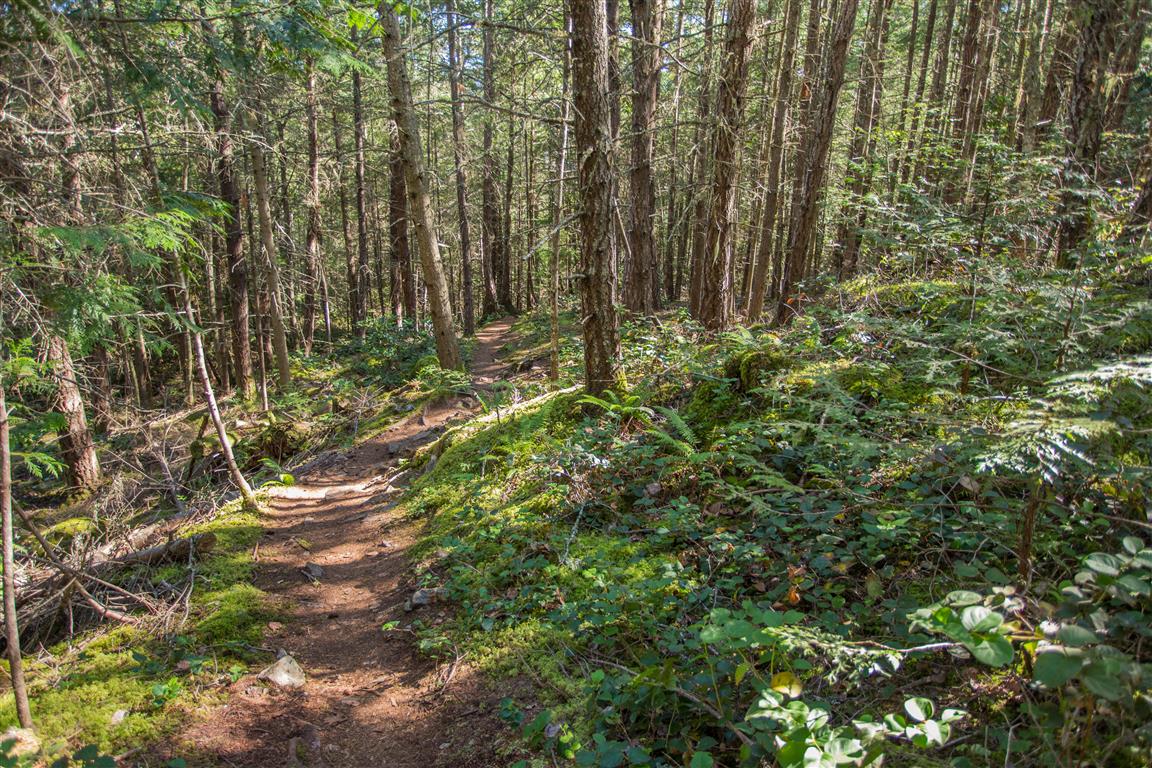
Mt. Daniel is on the beautiful Sunshine Coast. After the 400 m elevation gain hike to the summit, you are treated with stunning views of Pender Harbour and the surrounding hills and mountains. The hike traverses through a forest canopy all the way to the top, so it’s great on a hot day.

After this hike, I highly suggest you do another nearby hike, at Pender Hill. The Pender Hill trailhead is only 6 km from the Mt. Daniel trailhead.

To get to Mt. Daniel from Vancouver, you need to take the 1-hour BC Ferry trip from Horseshoe Bay in West Vancouver to Langdale. From Langdale, there is a 67 km trip to the trailhead on Garden Bay Road.

Interesting Facts

  • Like Pender Hill, Mt. Daniel is named after Daniel Pender, the Royal Navy hydrographer who surveyed this coast in the 1800s. Its Sechelt First Nation name is Shélkém
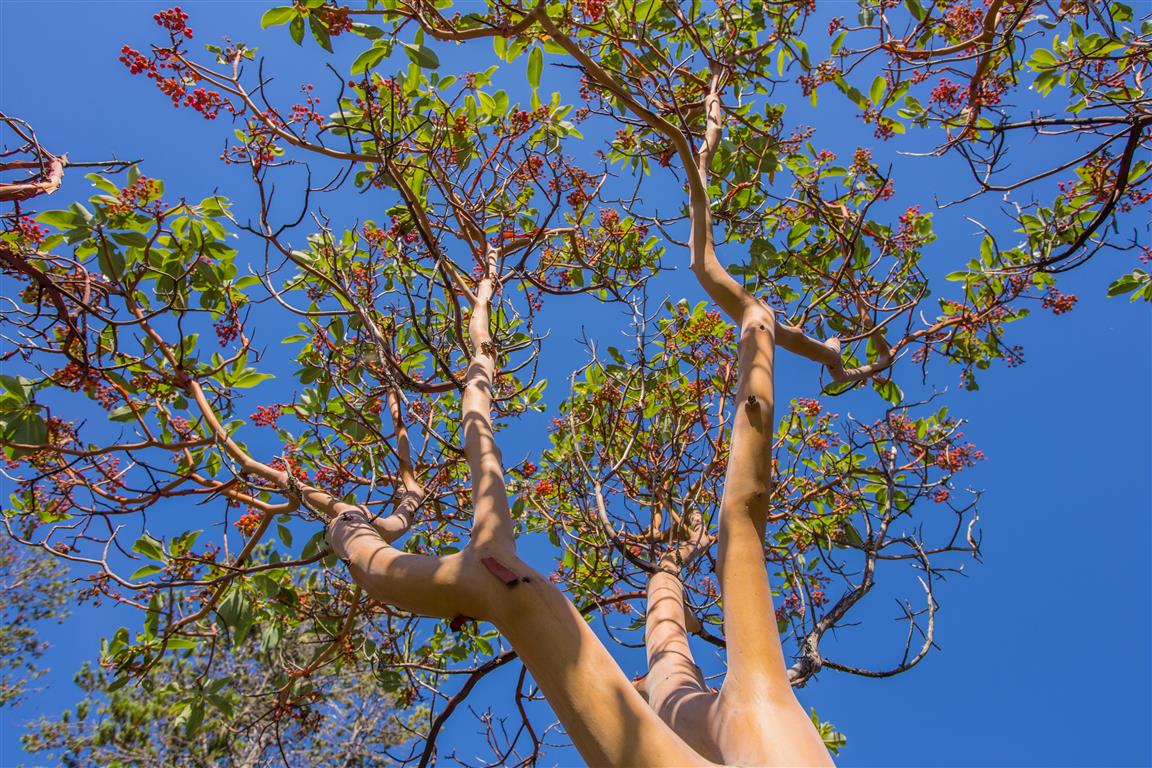
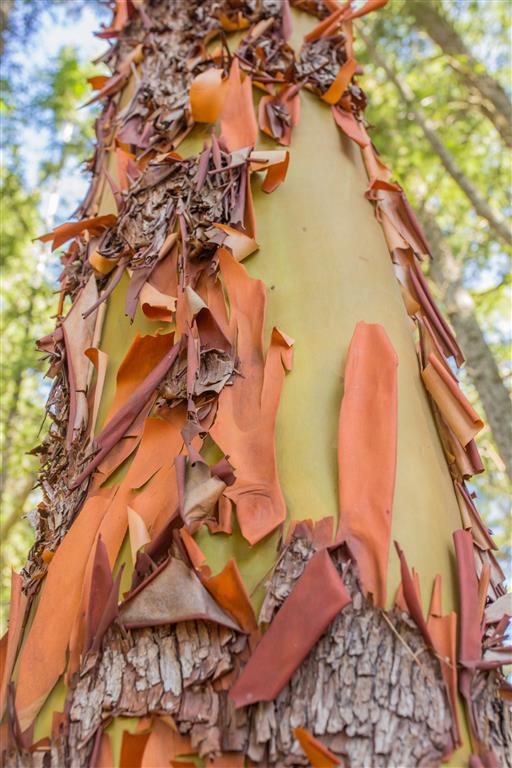
  • The arbutus trees you’ll see along this trail are Canada’s only native broadleaf evergreen tree, found almost exclusively near the coast of southern BC and on Vancouver Island. Their bark peels away every year in papery red-brown flakes, revealing fresh green bark underneath that can actually photosynthesize on its own
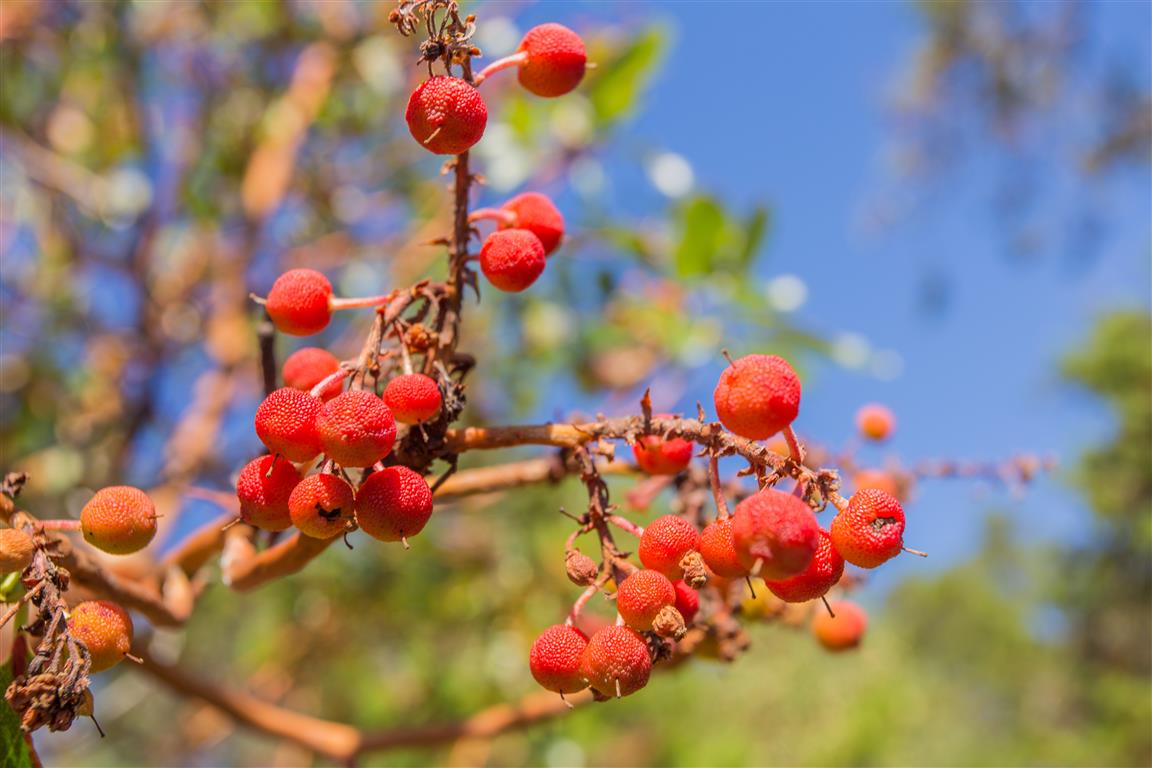
  • Arbutus wood is typically twisted and gnarled, so it’s rarely used for lumber, but its berries are an important food source for birds, and its flowers attract bees and hummingbirds

Trail Stats

  • Distance: 4.8 km (linear return)
  • Time: 2 to 4 hours
  • Low point: 77 m
  • High point: 435 m
  • Elevation gain: 358 m
  • Trailhead: 49° 38′ 51.6″ N, 124° 00′ 15.7″ W (Google Map)

The Route

The actual GPS track from this hike, drawn on the map below. Green marks the start/end point. Use the layer control in the top right to switch to a satellite view.

Photos

View from Mt. Daniel
Arbutus tree
Arbutus tree
Arbutus tree bark
Arbutus tree bark
Arbutus tree berries
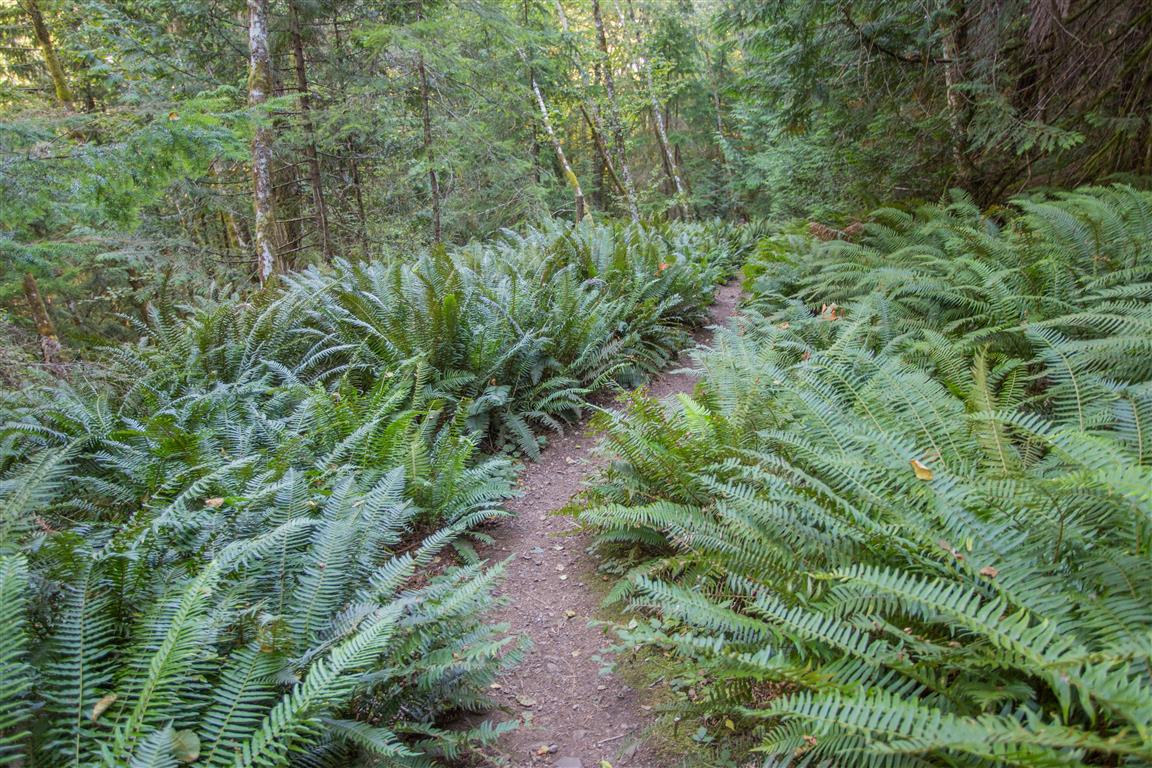
Ferns
Ferns
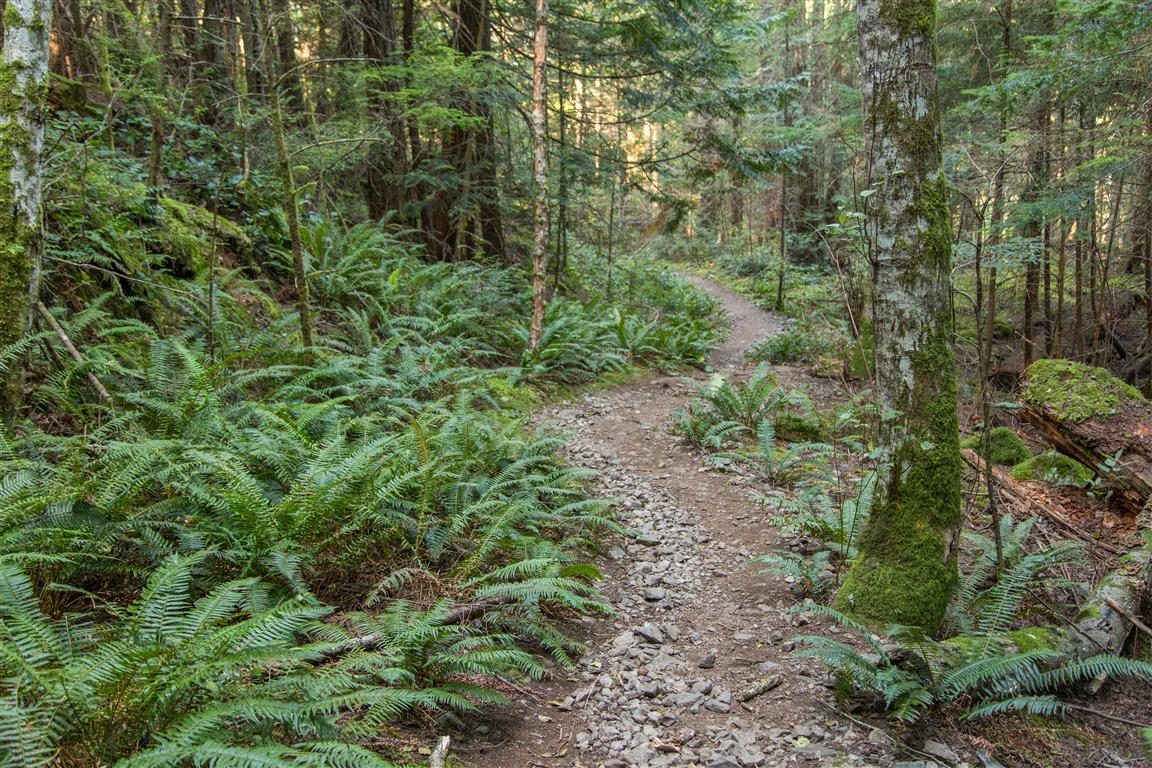
Trail
Trail
Trail
Trail
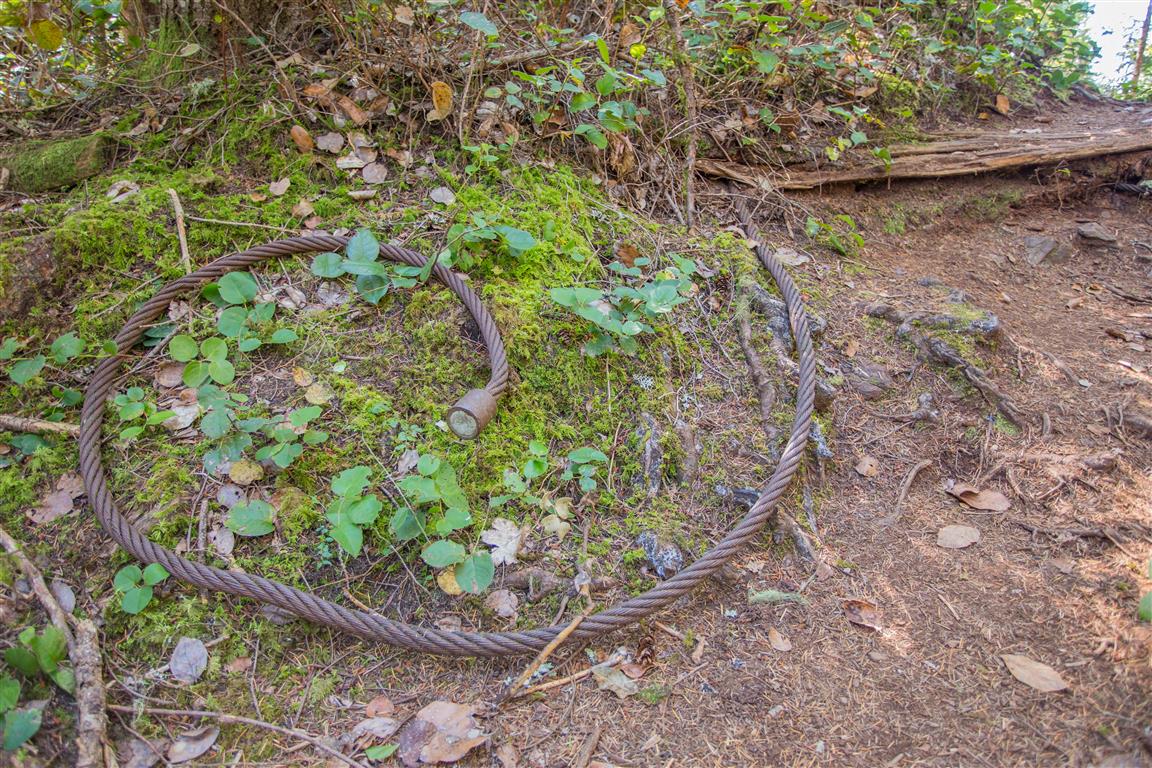
Logging relic
Logging relic
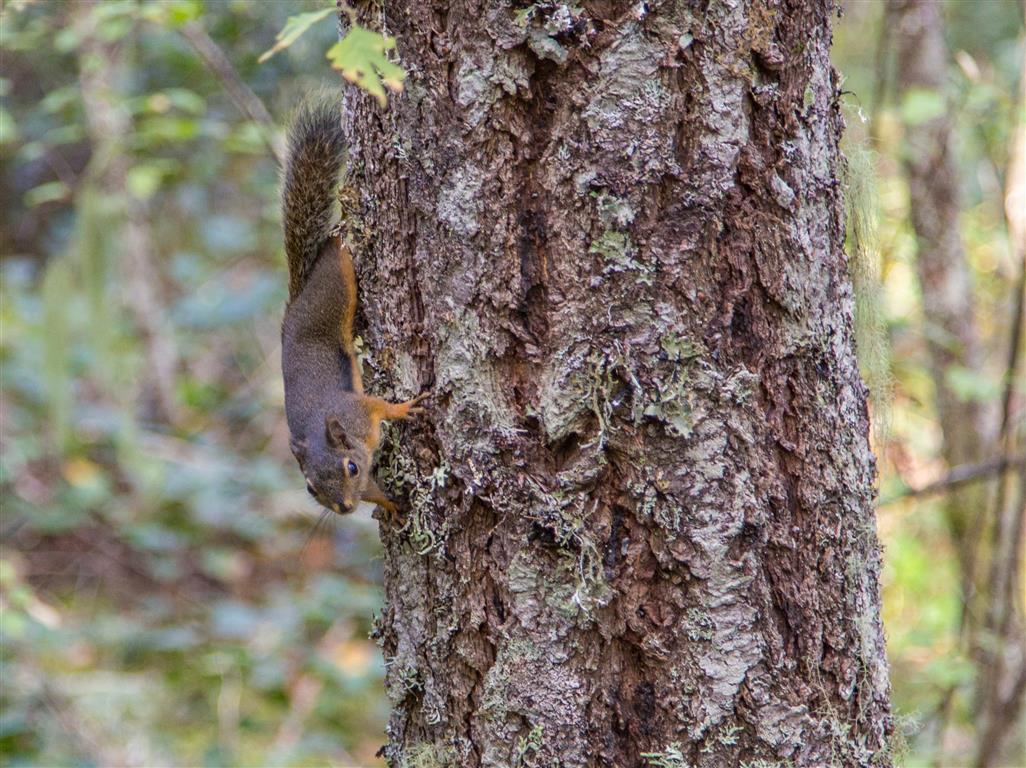
Visitor
Visitor
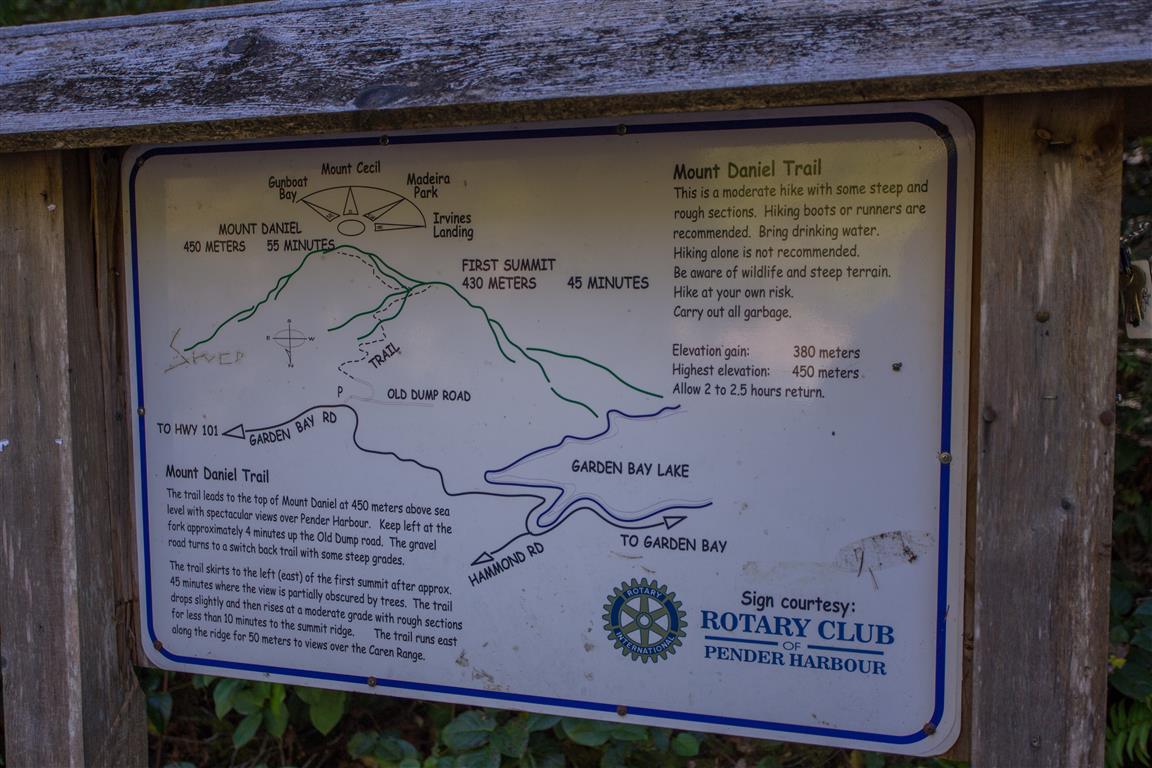
Sign at trailhead
Sign at trailhead

While You’re in the Area

If you have time, stop in Gibsons. It’s a quaint little town, and worth a stop at Molly’s Reach (of Beachcombers fame) for fish and chips!

Gibsons Harbour
Gibsons Harbour
Gibsons Wharf
Gibsons Wharf
Molly's Reach, Gibsons
Molly’s Reach, Gibsons
Conditions on this trail can change over time — trailheads move, access rules shift, and businesses close. This post reflects what I found when I did the hike.

Before You Hike

Before heading out on your hike, make sure you are well prepared. This means having the TEN ESSENTIALS. It is also important to leave a trip plan (route details and estimated return time) with someone you trust.

Bring your smartphone, fully charged, and put it in airplane mode while hiking. I always bring backup battery packs for extra peace of mind. It is highly recommended that you bring a GPS device. I use my smartphone with a GPS app (Backcountry Navigator). The GPS will work in airplane mode. Learn how to use it before your hike.

For anyone new to hiking, there is a rule that hikers follow called “Leave No Trace” or LNT. The concept is generally to pack out what you pack in and respect nature, so all future visitors can enjoy what you have enjoyed. To learn more about LNT, please check out this blog by a certified LNT Trainer.
Mount Nutt

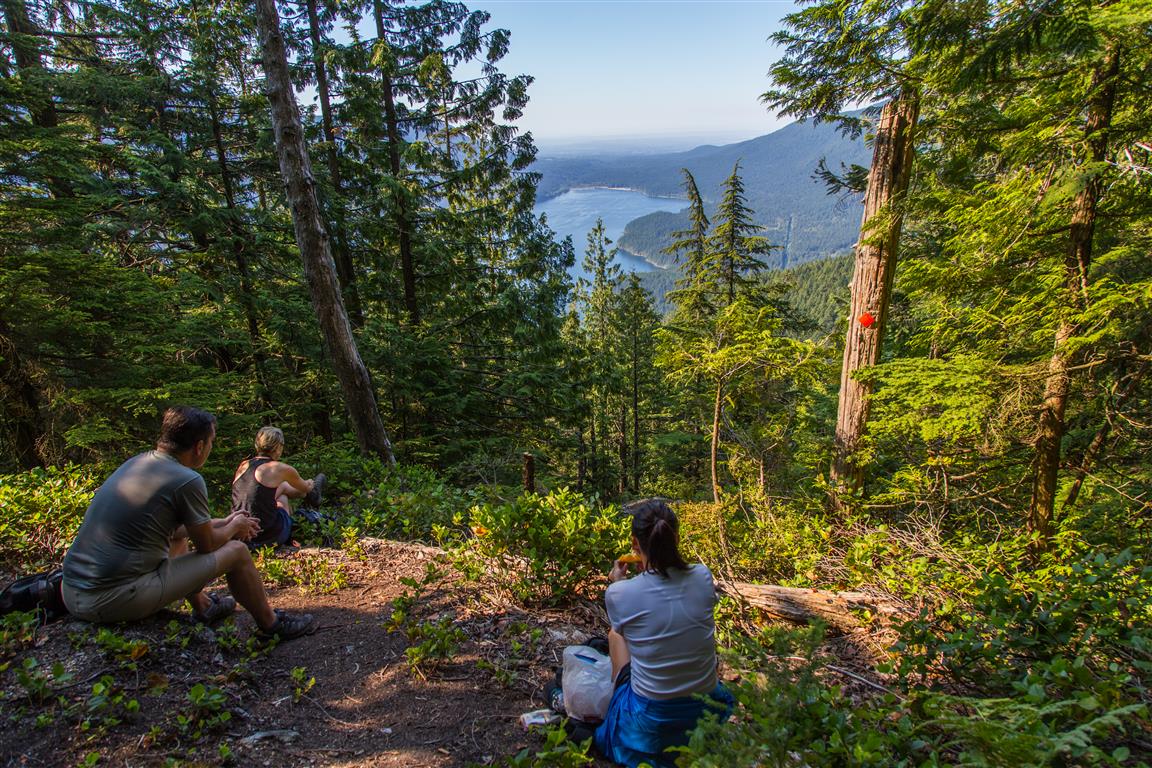
Mount Nutt is in Golden Ears Provincial Park, and the trail was made between 2011 and 2013 by Alan Lizee and the Ridge Meadows Outdoor Club. The first 1.6 km from the parking lot is a very gentle slope on a gravel path (East Canyon Trail), which is a good warm-up. At the 1.6 km mark, you take a right turn into the forest, and the vertical gain really starts — suddenly you find yourself heading up fast — well, not that fast! The trail is very well marked (can be slippery when wet). For a while, the climb follows a small creek, which drains a small lake further up.

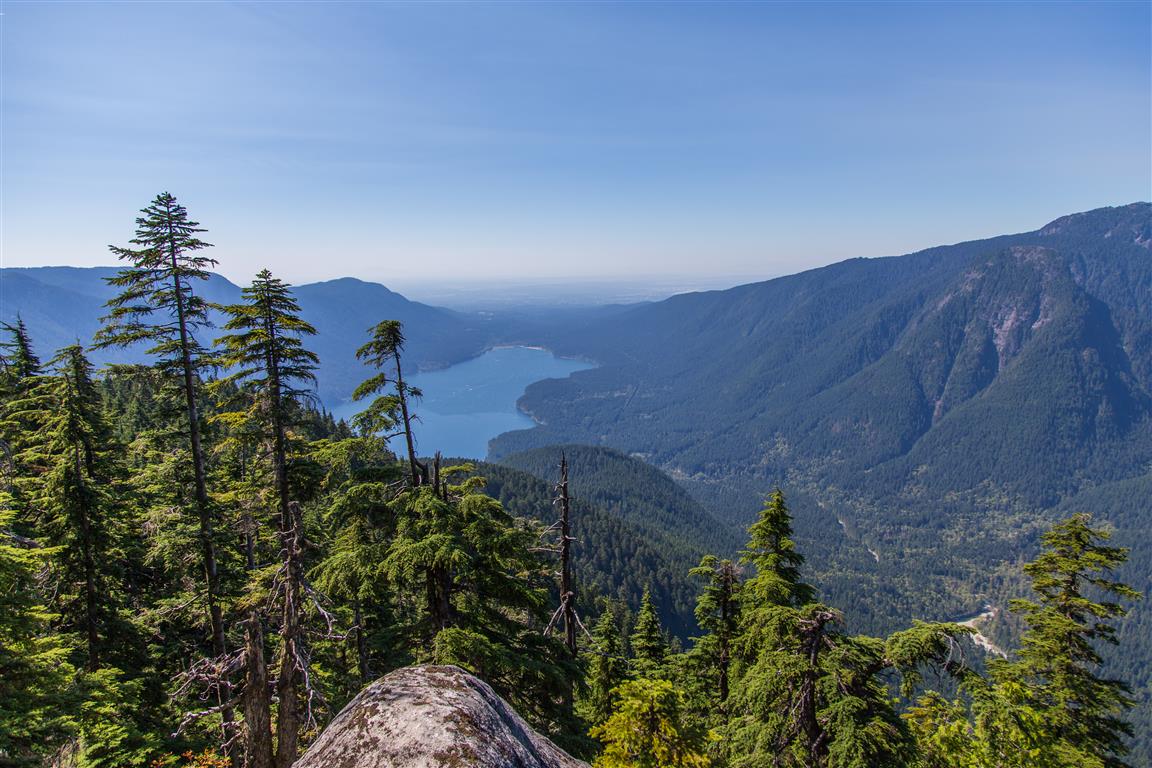
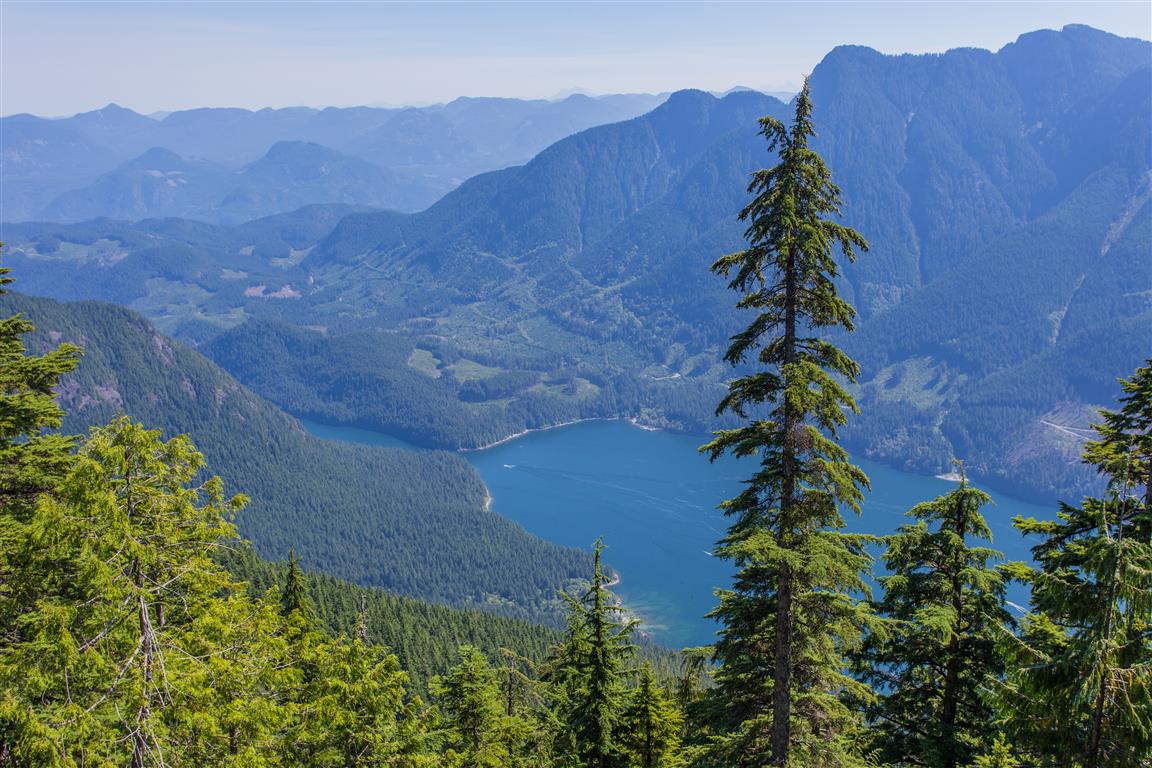
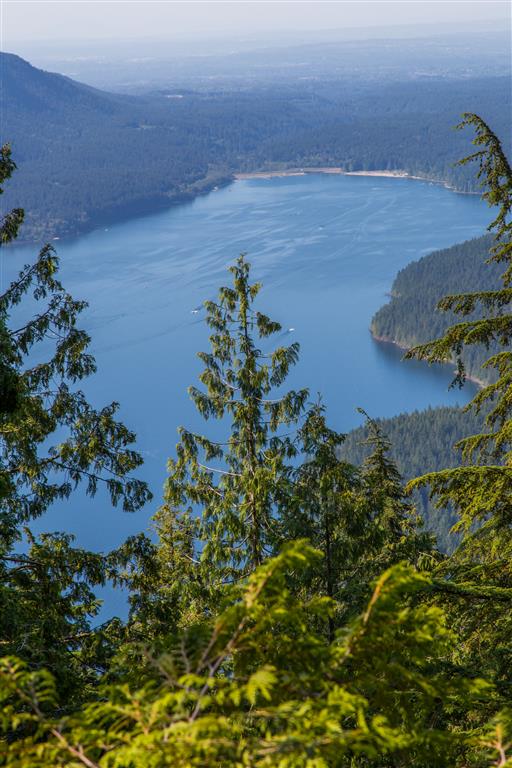
The lake is nice, and the area around it gives you a little reprieve from the gruelling climb. Soon after leaving the lake area, the climb continues. Eventually, we reached a viewpoint (680 m), which offered a pretty good view of Alouette Lake.

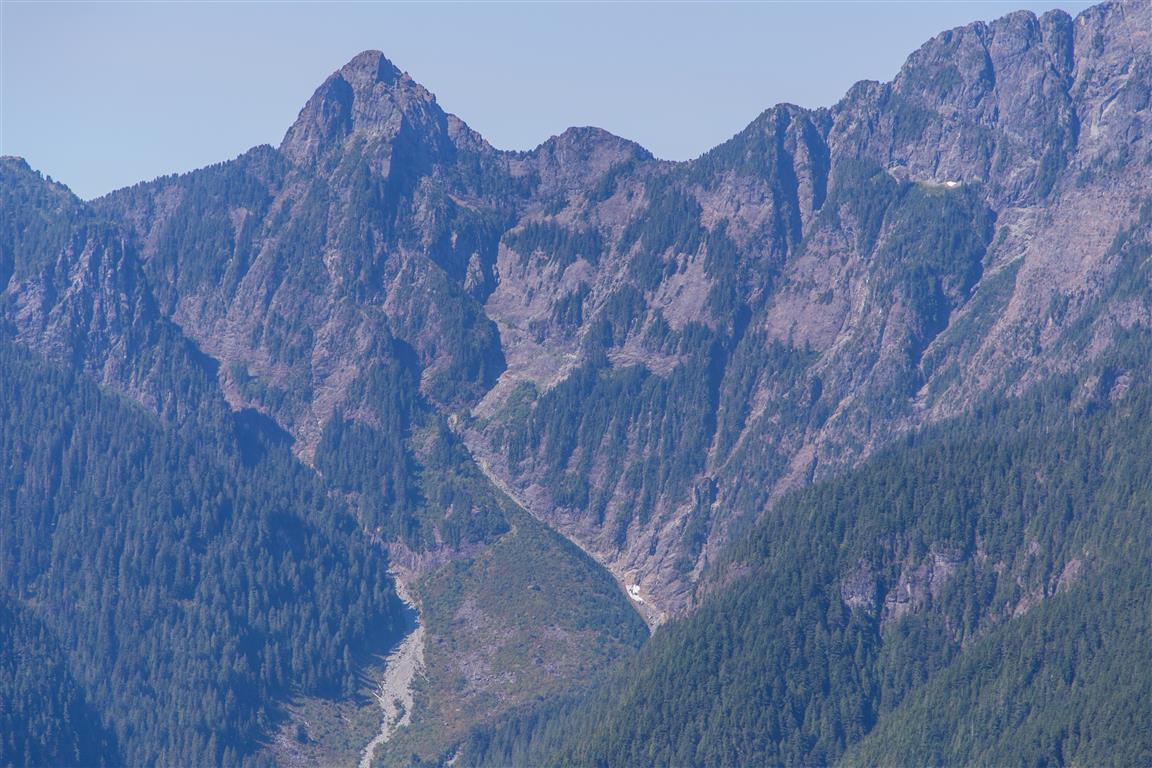
Continuing along the ridge, you are treated to about 4 more viewpoints overlooking Golden Ears, Evans Valley, Edge Peak, and Alouette Lake, among others. The trail ends before the true summit. We couldn’t find a trail to the summit, but some people have done it.

Interesting Facts

  • Golden Ears Provincial Park was established in 1927, originally as part of Garibaldi Provincial Park. The park takes its name from the twin peaks of Golden Ears, which were originally called “Golden Eyries,” likely a reference to golden eagles once seen nesting near the summit
  • This trail climbs through two biogeoclimatic zones. Up to around 900 to 1,000 m, you’re in the Coastal Western Hemlock (CWH) zone, dominated by western hemlock, western red cedar, and Douglas fir. Above that, near the trail’s high point of 1,150 m, you cross into the Mountain Hemlock (MH) zone, a subalpine zone where mountain hemlock and amabilis fir take over

Trail Stats

  • Distance: 10.7 km (return)
  • Low point: 160 m
  • High point: 1,150 m
  • Elevation gain: 990 m
  • Trailhead/parking: 49° 20′ 4″ N, 122° 27′ 24.5″ W (Google Map)

The Route

The actual GPS track from this hike, drawn on the map below. Green marks the start/end point. Use the layer control in the top right to switch to a satellite view.

Photos

Golden Ears
Golden Ears
End of trail view
End of trail view
Viewpoint
Viewpoint
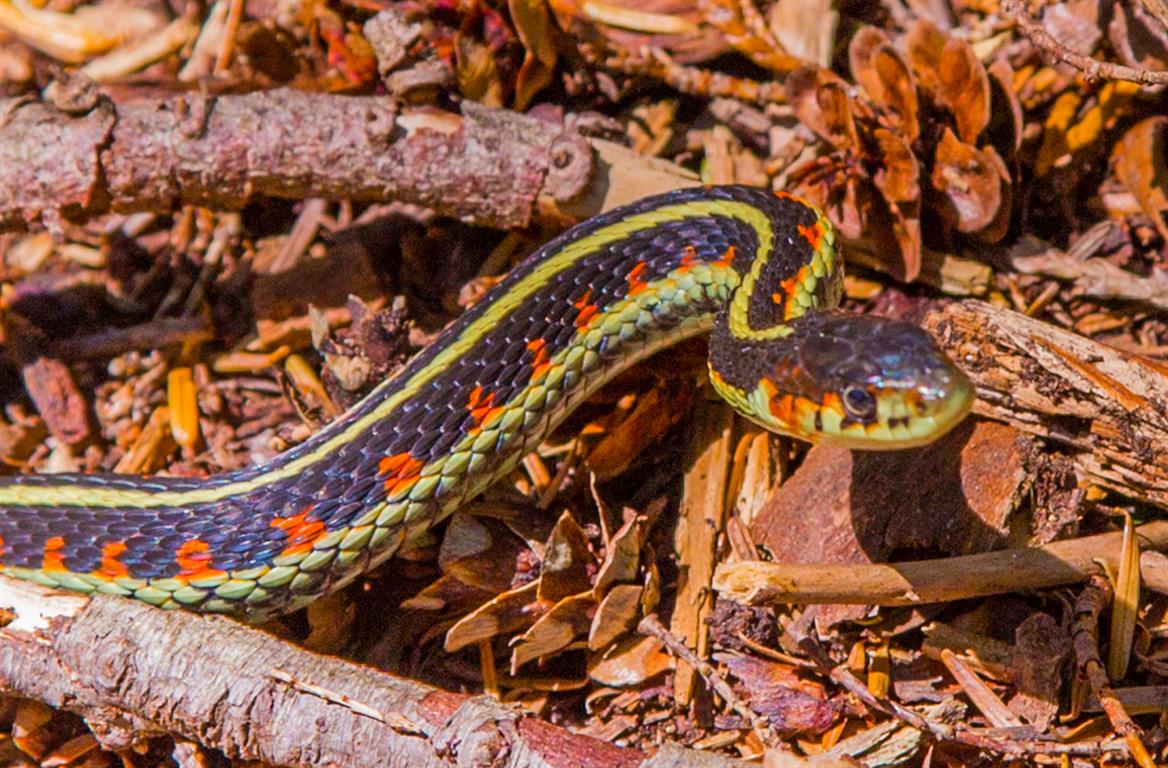
Garter snake
Garter snake
Alouette Lake
Alouette Lake
East end of Alouette Lake
Edge Peak and Evans Valley
First viewpoint
First viewpoint
Forest canopy
Forest canopy
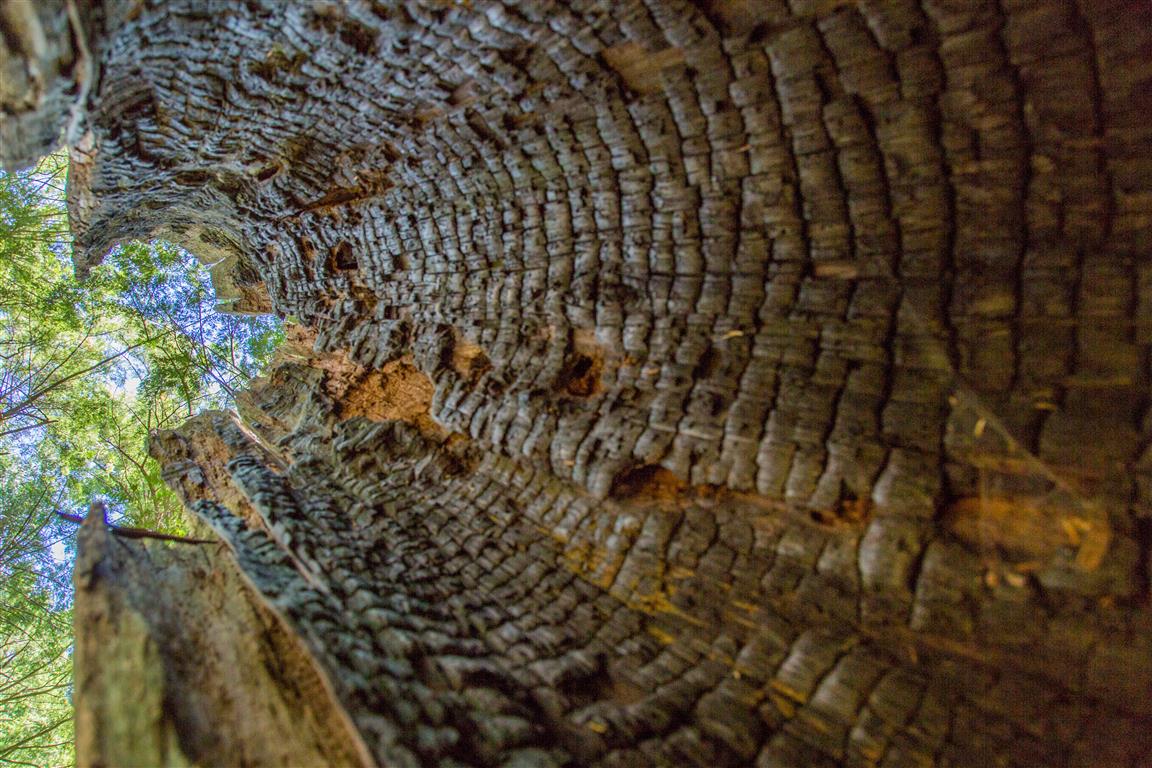
Inside of a burnt tree
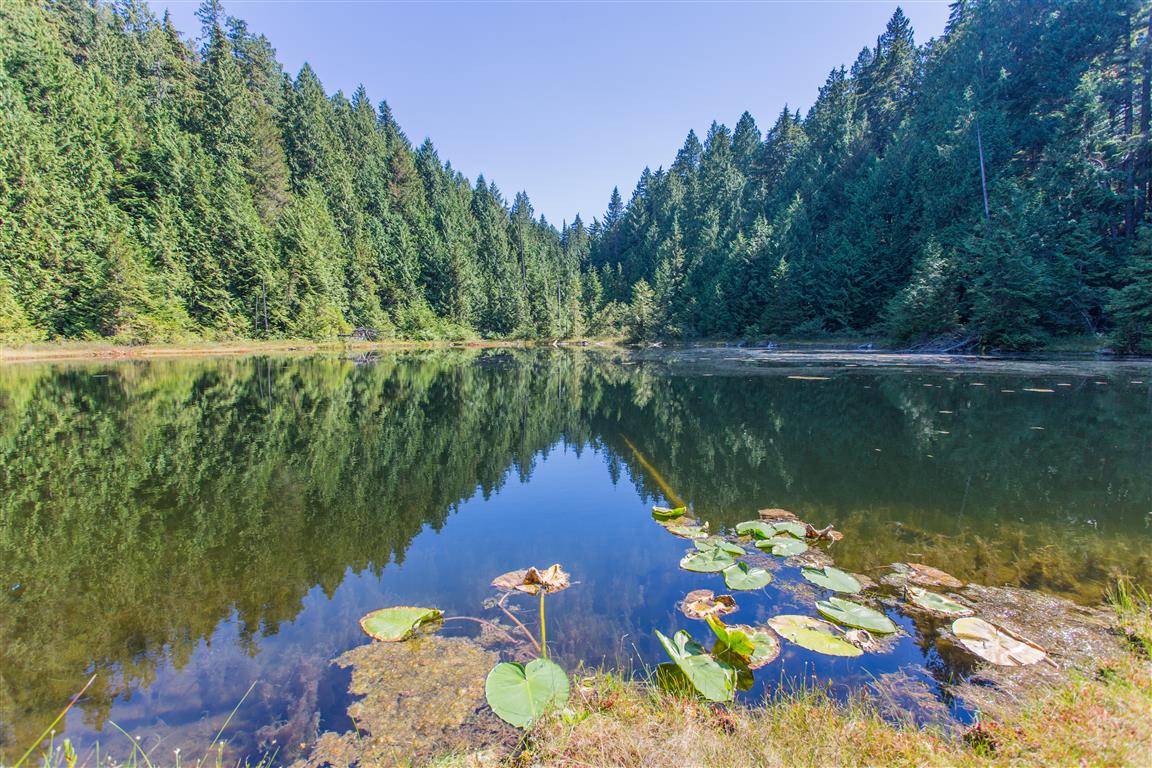
Lake
Lake
View of Alouette Lake at first viewpoint
Conditions on this trail can change over time — trailheads move, access rules shift, and businesses close. This post reflects what I found when I did the hike.

Before You Hike

Before heading out on your hike, make sure you are well prepared. This means having the TEN ESSENTIALS. It is also important to leave a trip plan (route details and estimated return time) with someone you trust.

Bring your smartphone, fully charged, and put it in airplane mode while hiking. I always bring backup battery packs for extra peace of mind. It is highly recommended that you bring a GPS device. I use my smartphone with a GPS app (Backcountry Navigator). The GPS will work in airplane mode. Learn how to use it before your hike.

For anyone new to hiking, there is a rule that hikers follow called “Leave No Trace” or LNT. The concept is generally to pack out what you pack in and respect nature, so all future visitors can enjoy what you have enjoyed. To learn more about LNT, please check out this blog by a certified LNT Trainer.
Chain Lakes Loop

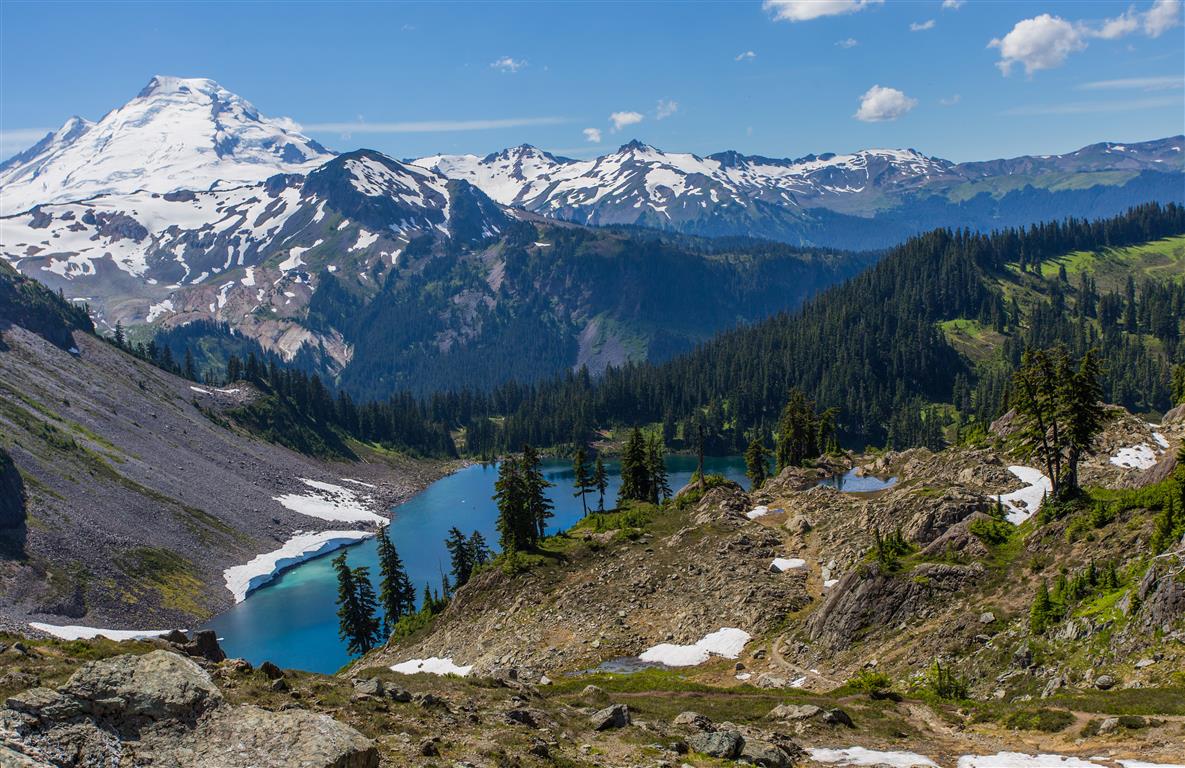
Ok, I really can’t get enough of the Mt. Baker area. Second time back in a couple of weeks. It was another sunny day today.
There are a few variations of this hike. We started at Artist Point, descended to Heather Meadows via the Wild Goose Trail and looped around Northern Bagley Lake, before starting our ascent up through Herman Saddle. 95% of the hike was bug-free (only some around Chain Lakes). Only very minor snow (almost not even worth mentioning). This hike is amazing, as are most Mt. Baker area hikes — the views are non-stop! This was a sunny Saturday, and there were many people on the trail, but not so much that it deterred from our enjoyment. There was only some snow on the shore of Iceberg Lake — some of which apparently recently broke off and made icebergs (info from a camper at the lake). I definitely recommend this hike, and I will go back for sure!

Getting There

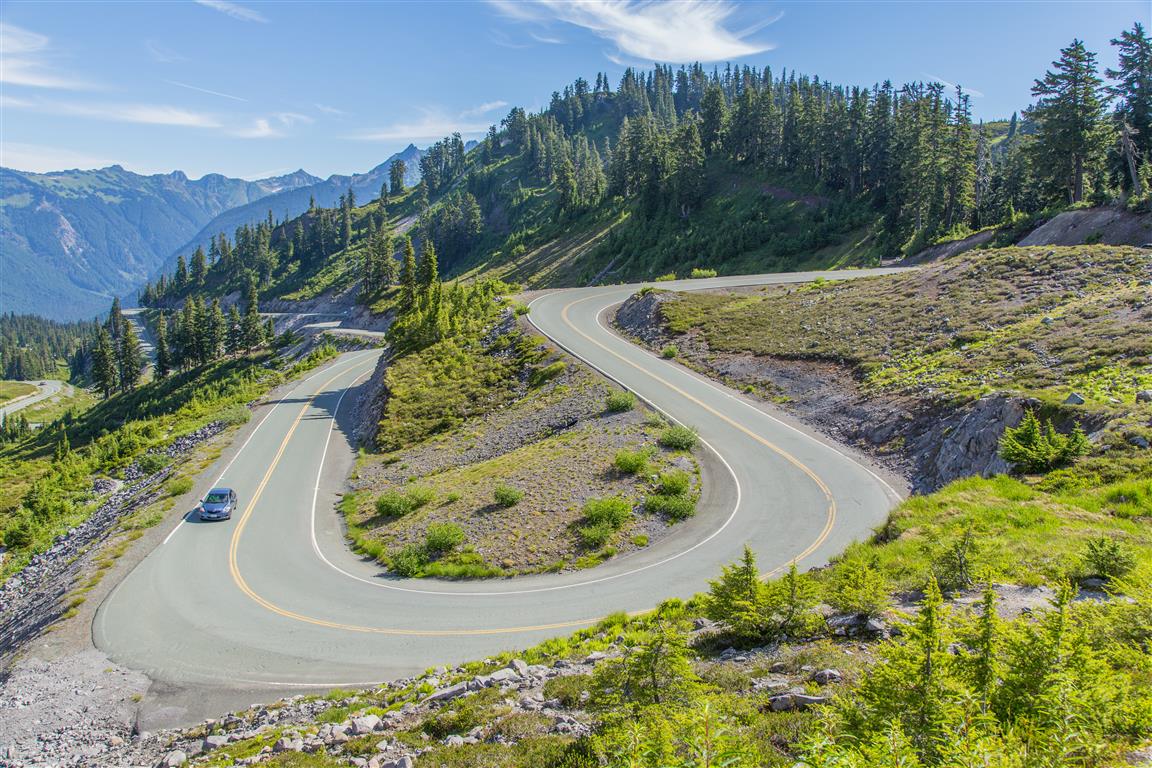
So, for this hike, you drive to Artist Point, which is paved the entire way. Yeah! No potholed forestry road! The location of Artist Point is here.

The trailhead for the Wild Goose Trail is just behind the washrooms.

Permits & Border Crossing

You will need a Northwest Forest Pass (one per car), which can be purchased in person at the Glacier Public Service Center at 10091 Mt. Baker Highway, Glacier, WA (link to map).

Or you can buy an ePass in advance online at the Discover Your Northwest website.

Border crossing tips: bring your passport, Nexus, or enhanced ID. No fruit, no vegetables, no meat (this isn’t a complete list). Trail mix is okay.

A great resource for current conditions for this hike is the WTA website. Check it out!

Interesting Facts

  • This entire hike sits within the subalpine zone of the North Cascades, generally defined as the band between about 1,200 and 2,100 m elevation, which lines up closely with this trail’s range of 1,259 to 1,654 m
  • Some of the mountain hemlock trees in the Heather Meadows area are estimated to be around 900 years old, remarkably old for trees growing in such a harsh, high-elevation environment
  • The US Forest Service has run restoration projects in the Heather Meadows and Artist Point area to repair meadow damage caused by foot traffic, including installing low barriers to keep hikers from cutting across sensitive vegetation

Trail Stats

Today’s stats:

  • Distance: 10.7 km
  • Time: 6 hours
  • Low point: 1,259 m
  • High point: 1,654 m
  • Elevation gain: 395 m
  • Cumulative elevation gain: 725 m

The Route

The actual GPS track from this hike, drawn on the map below. Green marks the start/end point. Use the layer control in the top right to switch to a satellite view.

Photos

Mt. Shuksan from Herman Saddle
Switchbacks up to Herman Saddle
Wild Goose Trail to Bagley Lakes
Dead tree
Dead tree
Hayes Lake
Hayes Lake
Mt. Baker and Iceberg Lake
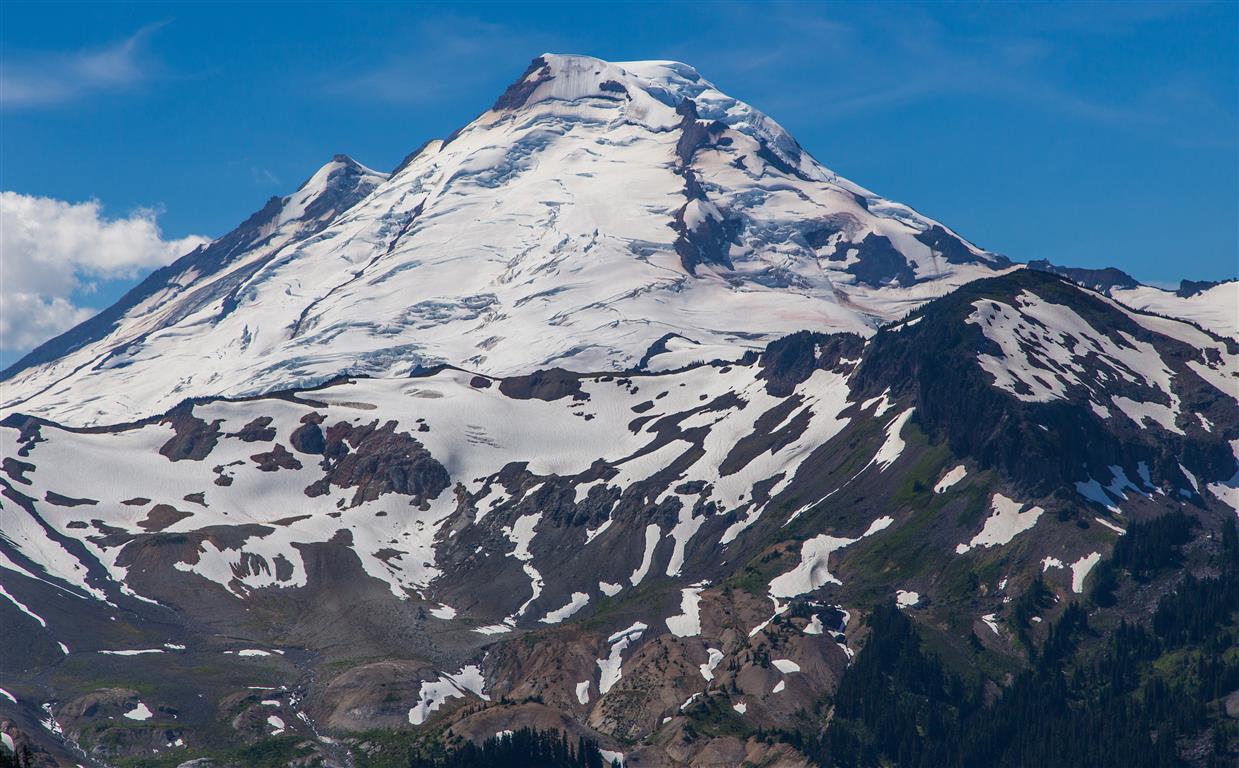
Mt. Baker
Mt. Baker
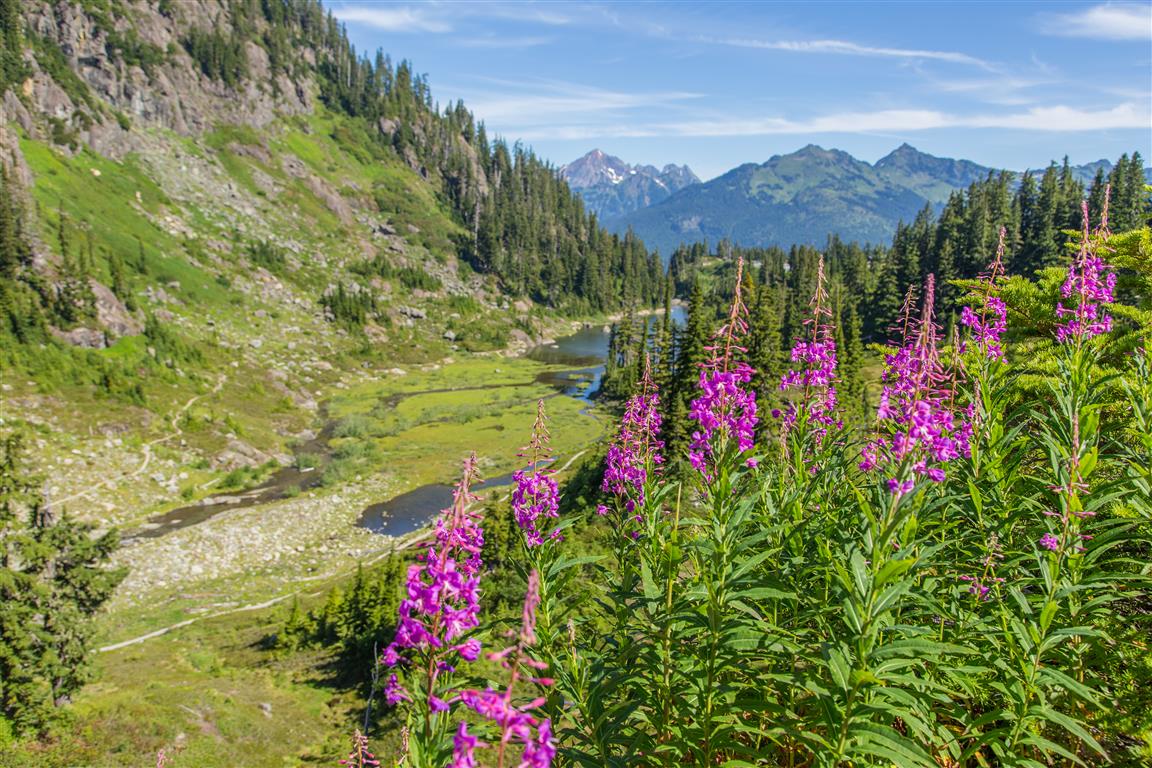
Northern Bagley Lake through wildflowers
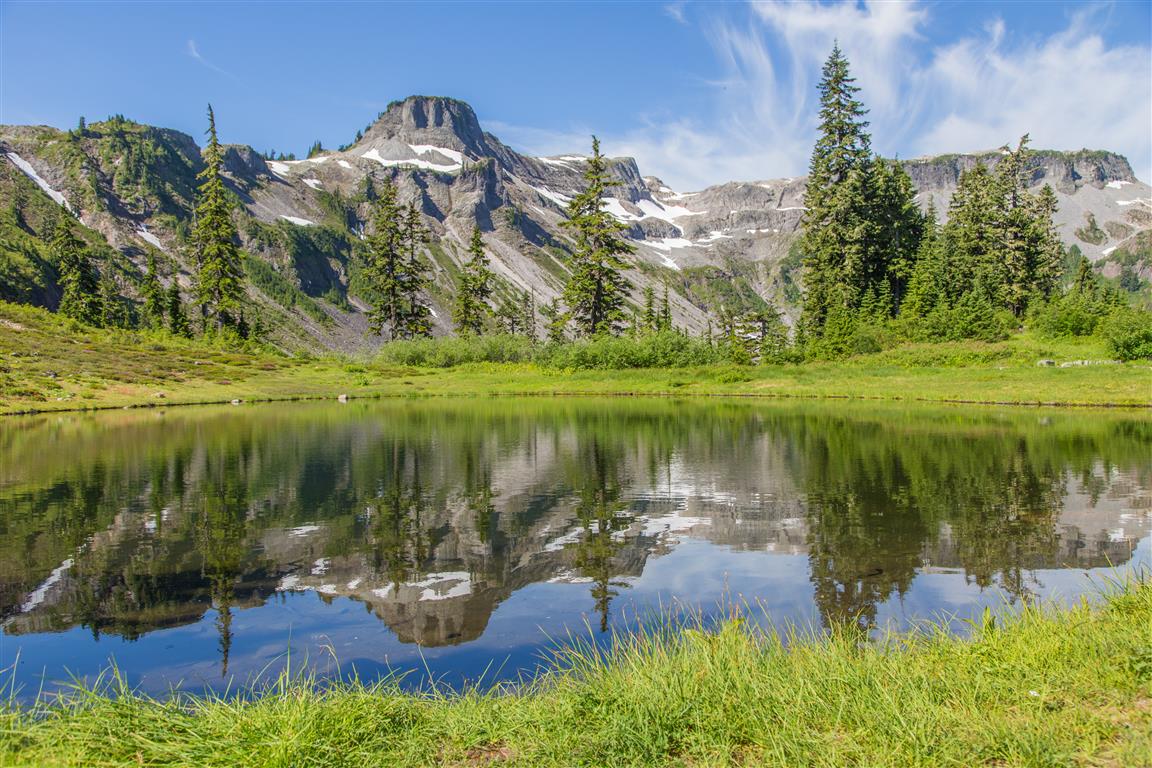
Reflection in lake
Reflection in lake
Mt. Shuksan
Mt. Shuksan
Stream between Bagley Lakes
Trail back to Artist Point
Trail up to Herman Saddle
Winding road
Winding road
Conditions on this trail can change over time — trailheads move, access rules shift, and businesses close. This post reflects what I found when I did the hike.

Before You Hike

Before heading out on your hike, make sure you are well prepared. This means having the TEN ESSENTIALS. It is also important to leave a trip plan (route details and estimated return time) with someone you trust.

Bring your smartphone, fully charged, and put it in airplane mode while hiking. I always bring backup battery packs for extra peace of mind. It is highly recommended that you bring a GPS device. I use my smartphone with a GPS app (Backcountry Navigator). The GPS will work in airplane mode. Learn how to use it before your hike.

For anyone new to hiking, there is a rule that hikers follow called “Leave No Trace” or LNT. The concept is generally to pack out what you pack in and respect nature, so all future visitors can enjoy what you have enjoyed. To learn more about LNT, please check out this blog by a certified LNT Trainer.