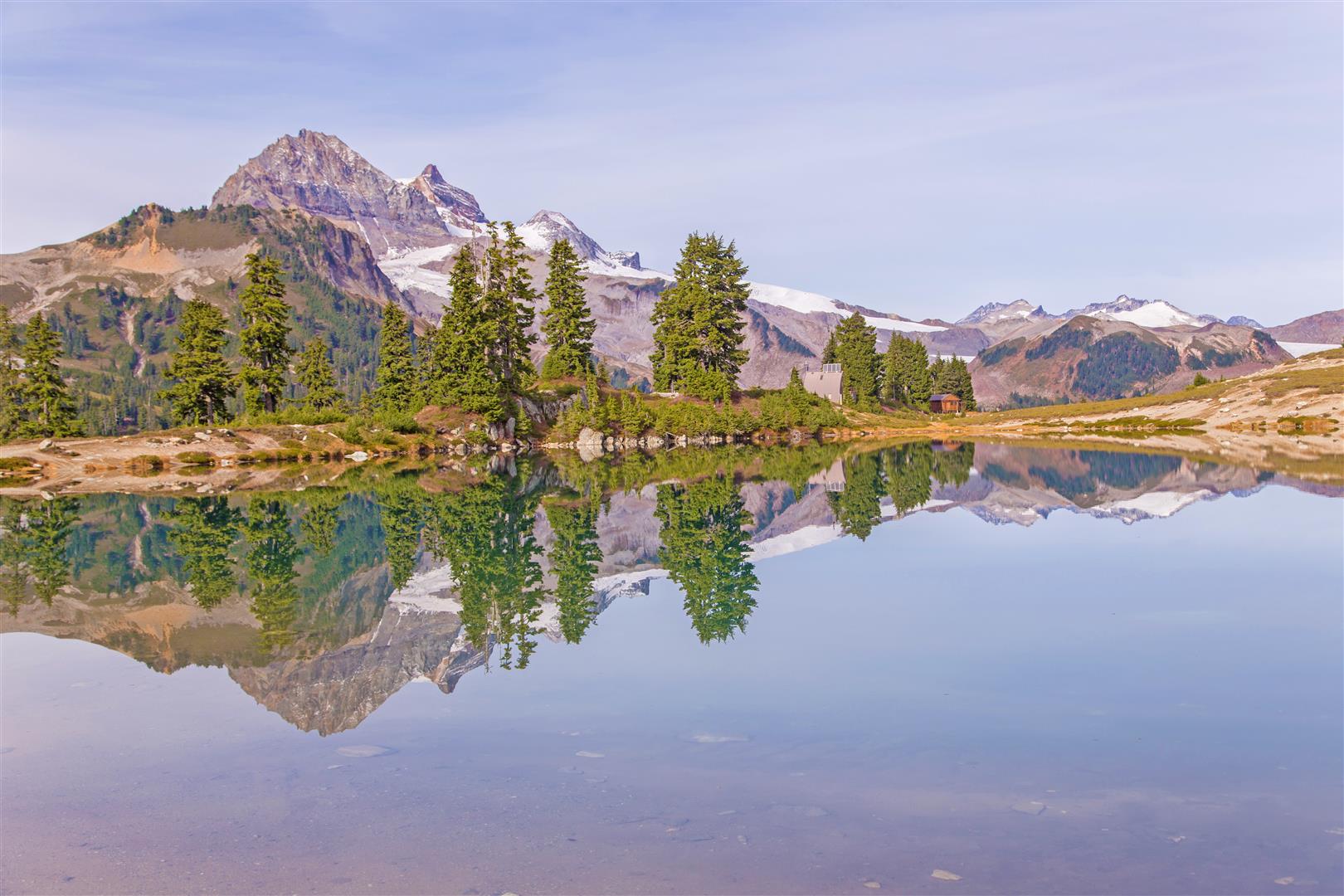
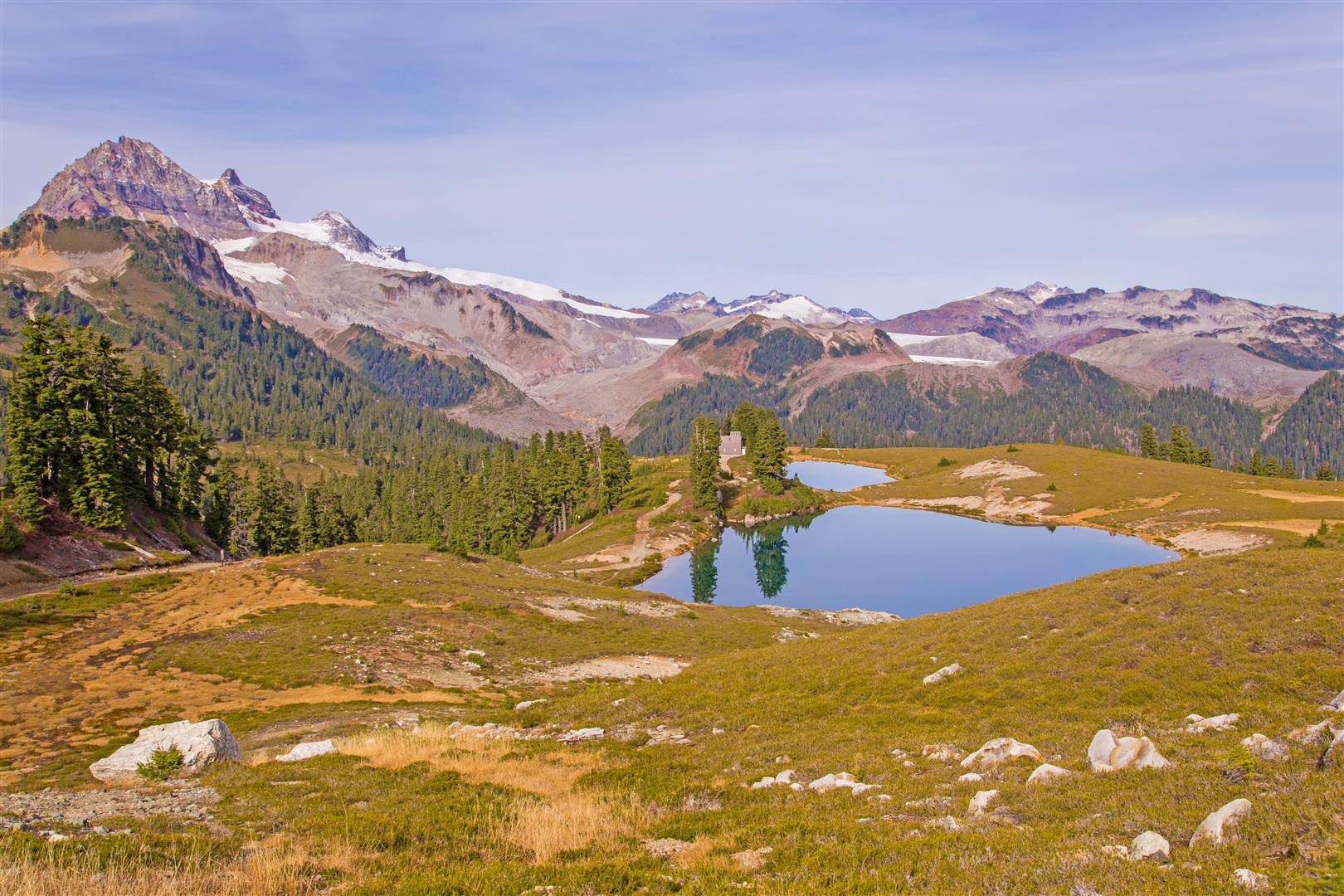
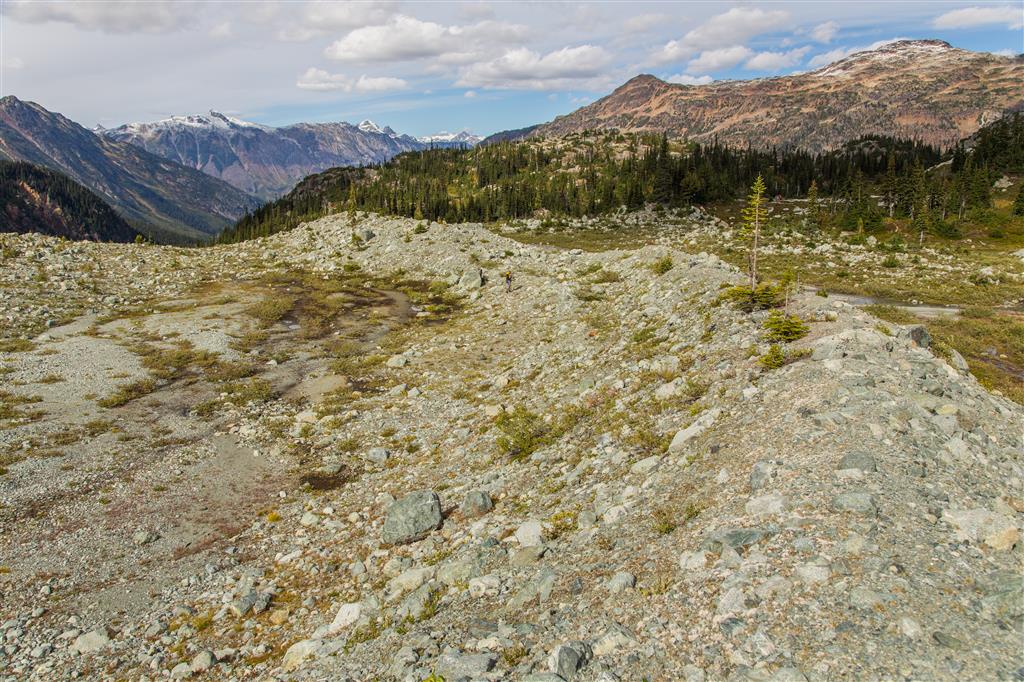
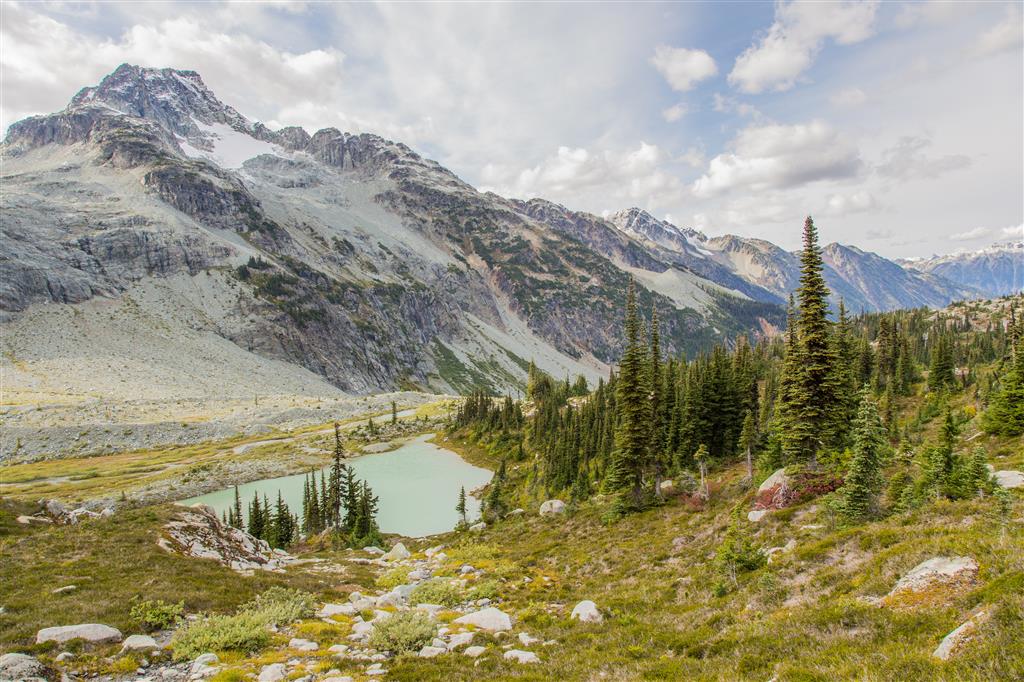
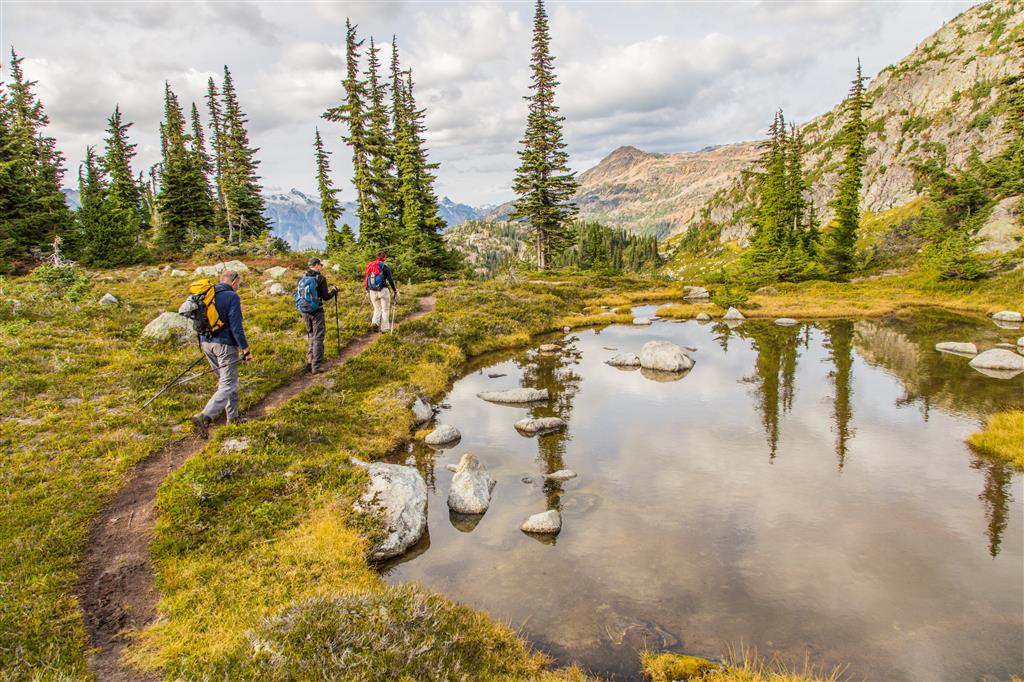
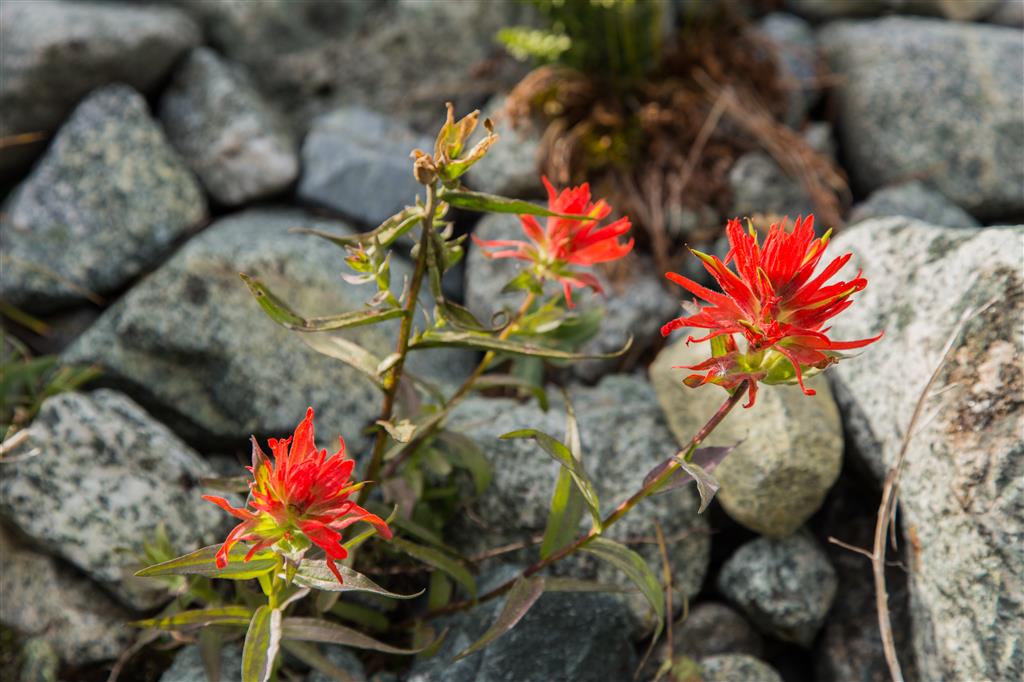
Today was a gorgeous early autumn day for a hike. Elfin Lakes is in Garibaldi Provincial Park, just north of Squamish, and is one of those hikes where the scenery seems to get better the farther you go.
✅ Elfin Lakes Access Status: Open The 2026 summer day-use vehicle pass requirement ended on 12 October 2026. Overnight camping reservations remain mandatory. Check BC Parks advisories for current trail conditions and any restrictions beyond Elfin Lakes.
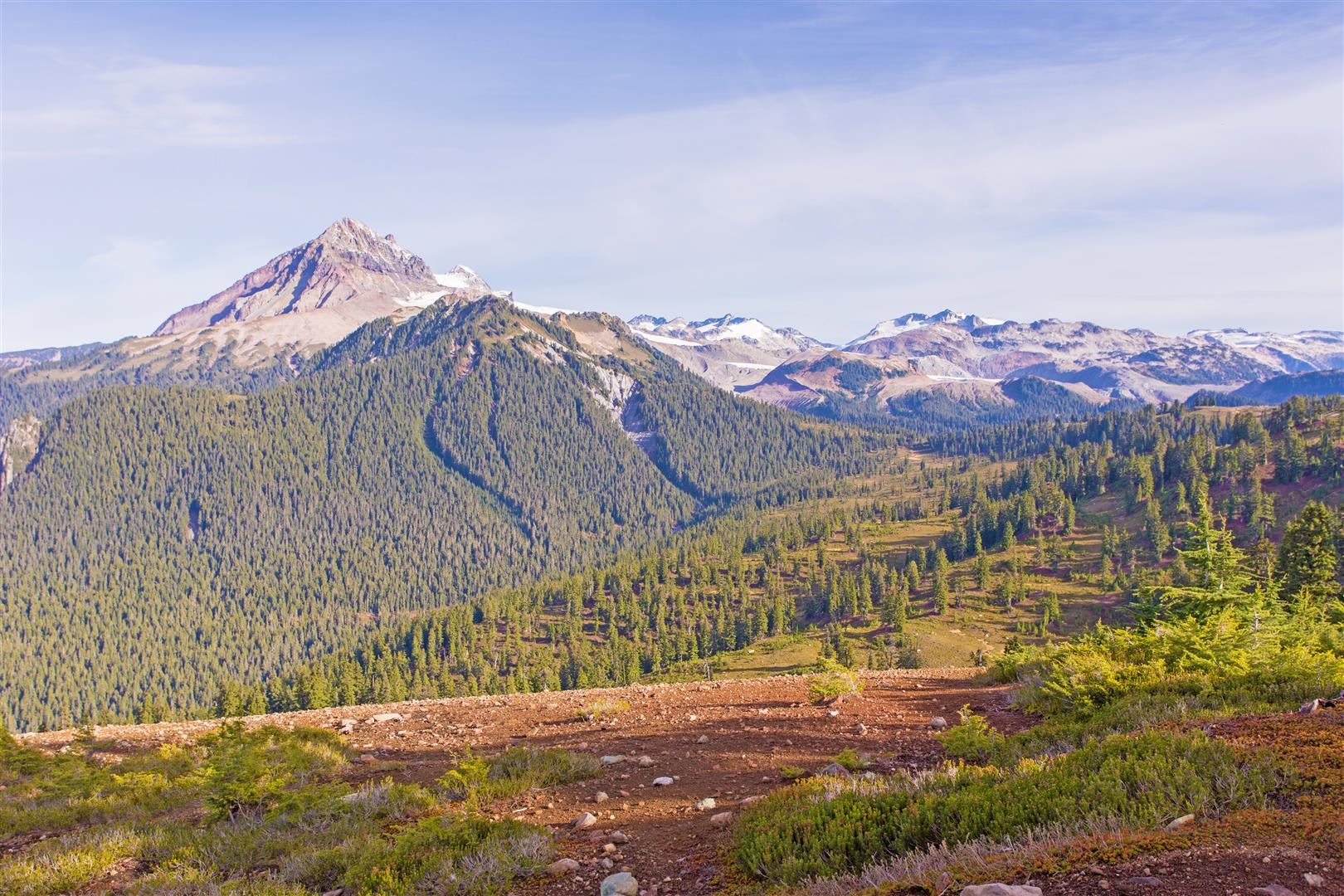
When we did the hike, the first several kilometres followed a broad old road and climbed steadily towards Red Heather Meadows. There was a short section where the trail became rougher and muddier before returning to a wide, well-established trail. As we gained elevation, the forest began to open up and the mountain views became spectacular, including Mount Garibaldi and the surrounding peaks.
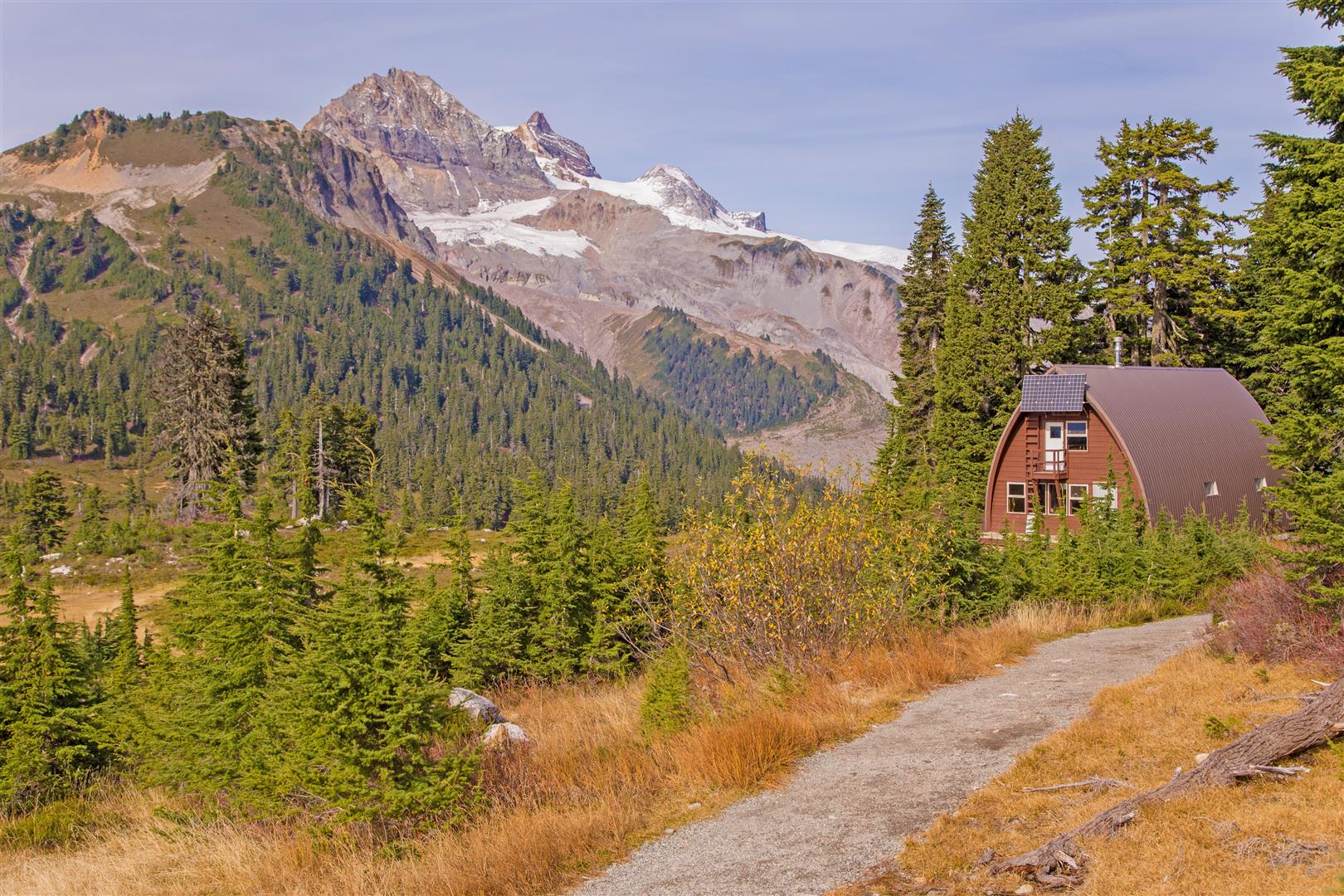
We reached Elfin Lakes in about 2 hours 20 minutes. At the time of our hike, the area had an overnight shelter, ranger facilities, a small day-use building, tent pads, picnic tables, and the two lakes. One of the lakes was used for swimming, while the other served as a water source.
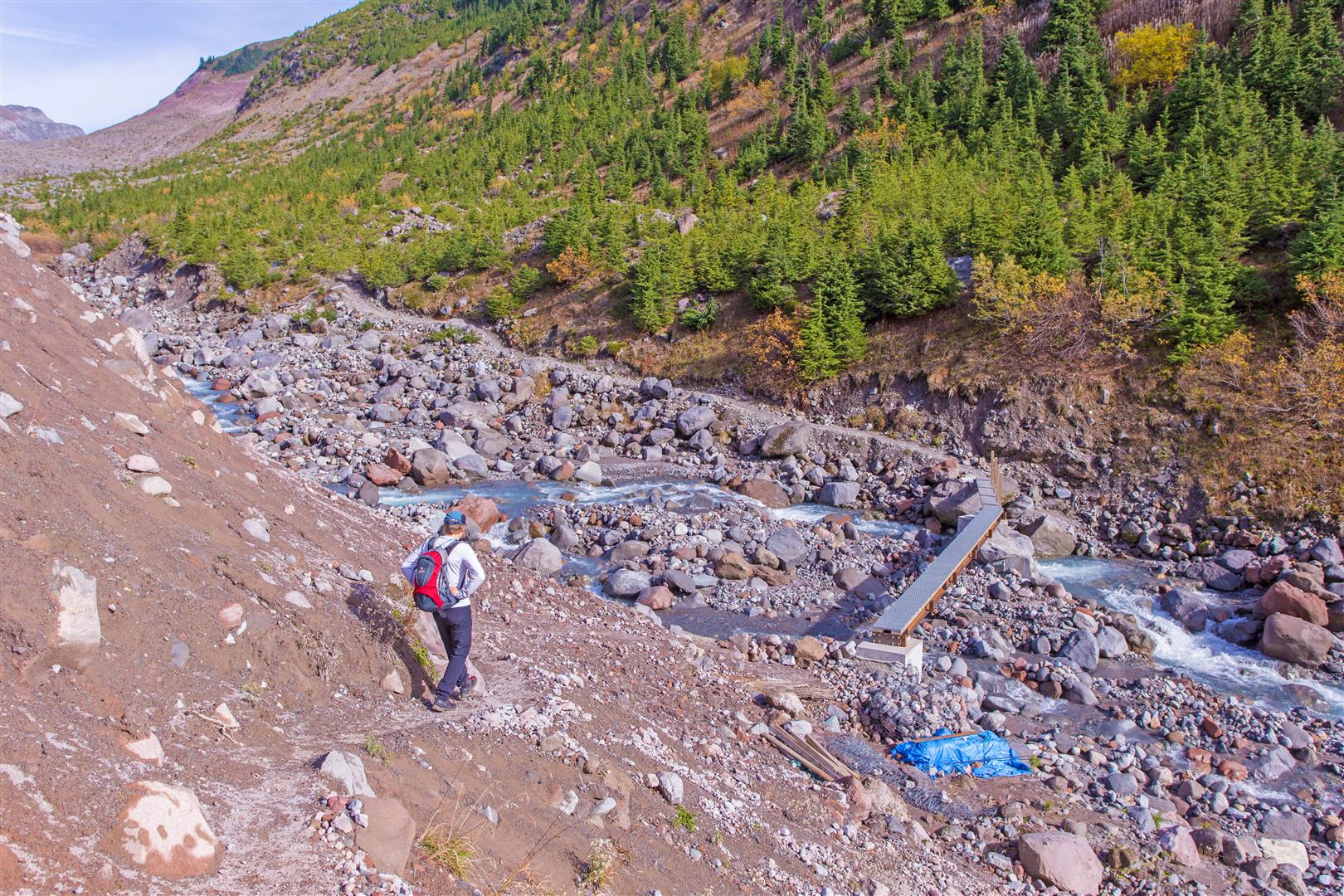
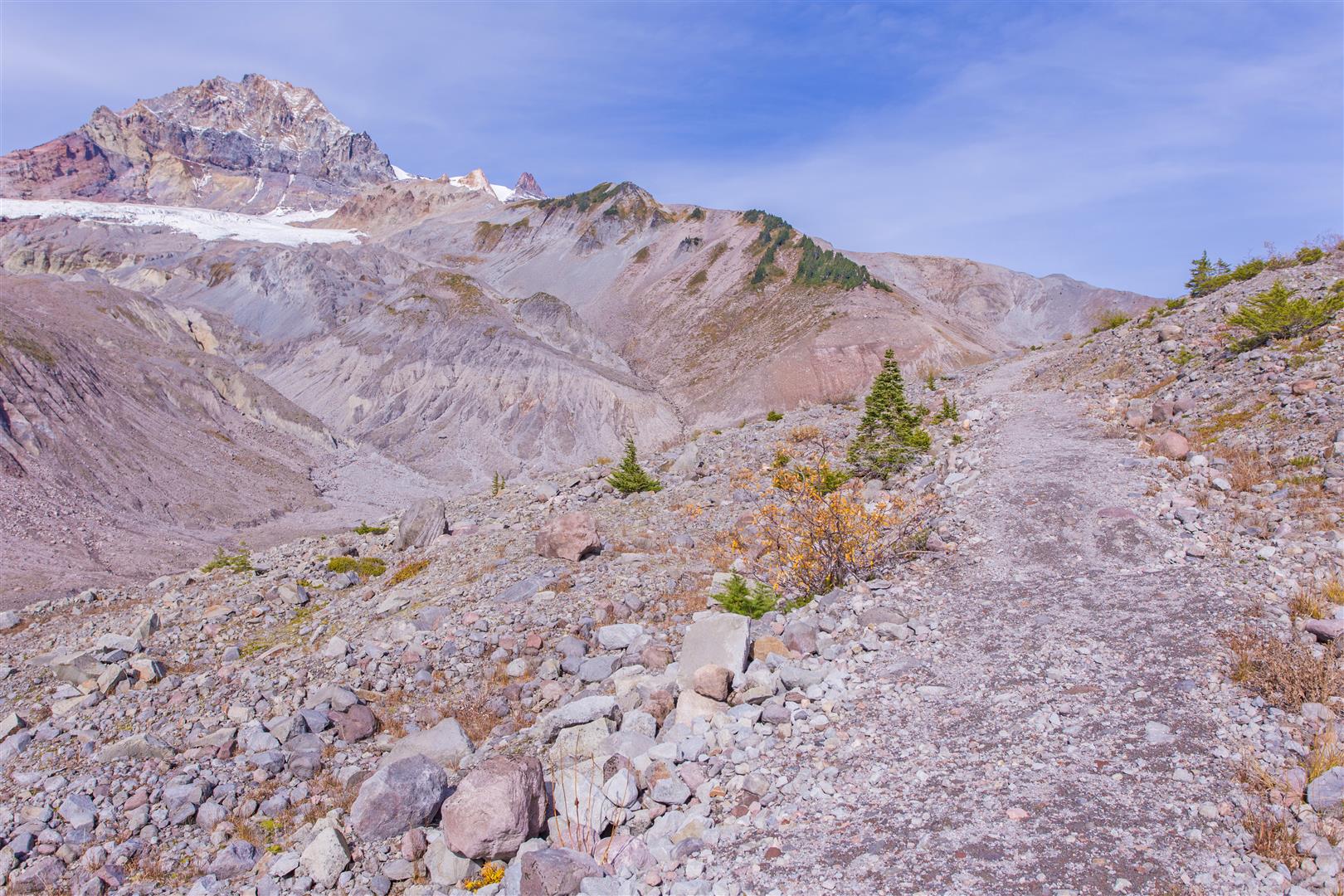
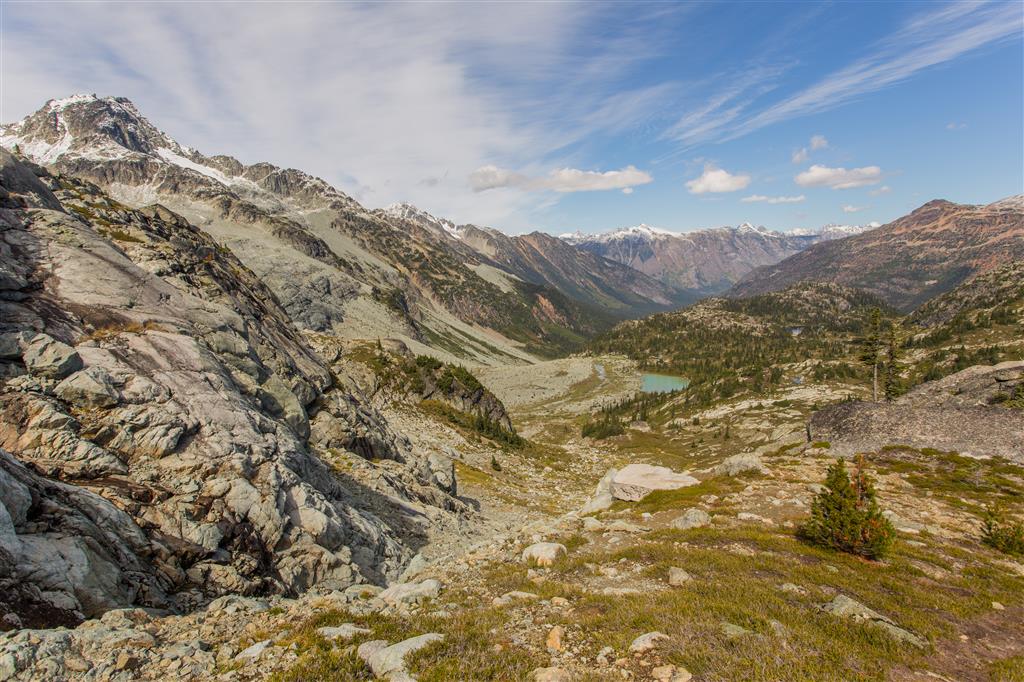
We had not made any plans to explore beyond Elfin Lakes, but once we arrived we decided to continue towards Opal Cone, approximately 6.5 km farther along the trail. After crossing the bridge over Ring Creek, the landscape changed dramatically. Much of the route was across a rugged, rocky valley with very little shade, and it was quite warm with the sun beating down.
We eventually had to turn around about 1.5 km and 300 m of elevation short of Opal Cone because of the early autumn sunset. So close! It would have to wait for another trip.
Interesting Facts
Elfin Lakes is in the Diamond Head area of Garibaldi Provincial Park. The surrounding landscape includes Mount Garibaldi, Atwell Peak, Opal Cone, the Garibaldi Neve, Columnar Peak, and the Mamquam Icefield.
This hike is primarily within the Mountain Hemlock (MH) biogeoclimatic zone, the subalpine forest zone found along coastal British Columbia. Mountain hemlock, amabilis fir, and yellow cedar are common, while the higher and more exposed areas have open parkland, heather, and subalpine meadows.
Opal Cone is an extinct volcanic cone with a visible crater at the top. It is part of the volcanic landscape surrounding Mount Garibaldi.
Mount Garibaldi rises to 2,678 m and is a potentially active volcano. It is part of the Garibaldi Volcanic Belt, the northern extension of the Cascade volcanic system that also includes Mount Baker and Mount St. Helens.
Elfin Lakes were once referred to as Crystal Lakes. The name Elfin Lakes was officially adopted in 1978, although the name had been used locally decades earlier.
Trail Stats
Elfin Lakes
Distance: 22 km (return)
Time: 5 hours
Low point: 979 m
High point: 1,592 m
Elevation gain: 613 m
Cumulative elevation gain: 750 m
Trailhead: 49° 45′ 0.6″ N, 123° 03′ 12.64″ W (Google Map)
Our Extended Hike Towards Opal Cone
Distance: 29.4 km (return)
Time: 8 hours
Low point: 979 m
High point: 1,592 m
Elevation gain: 613 m
Cumulative elevation gain: 1,500 m
The Route
The GPS track below is from the hike to Elfin Lakes and back. It does not include our additional exploration towards Opal Cone. Green marks the start/end point. Use the layer control in the top right to switch to a satellite view.
Photos
Elfin Lakes
Elfin Lakes
Elfin Lakes shelter
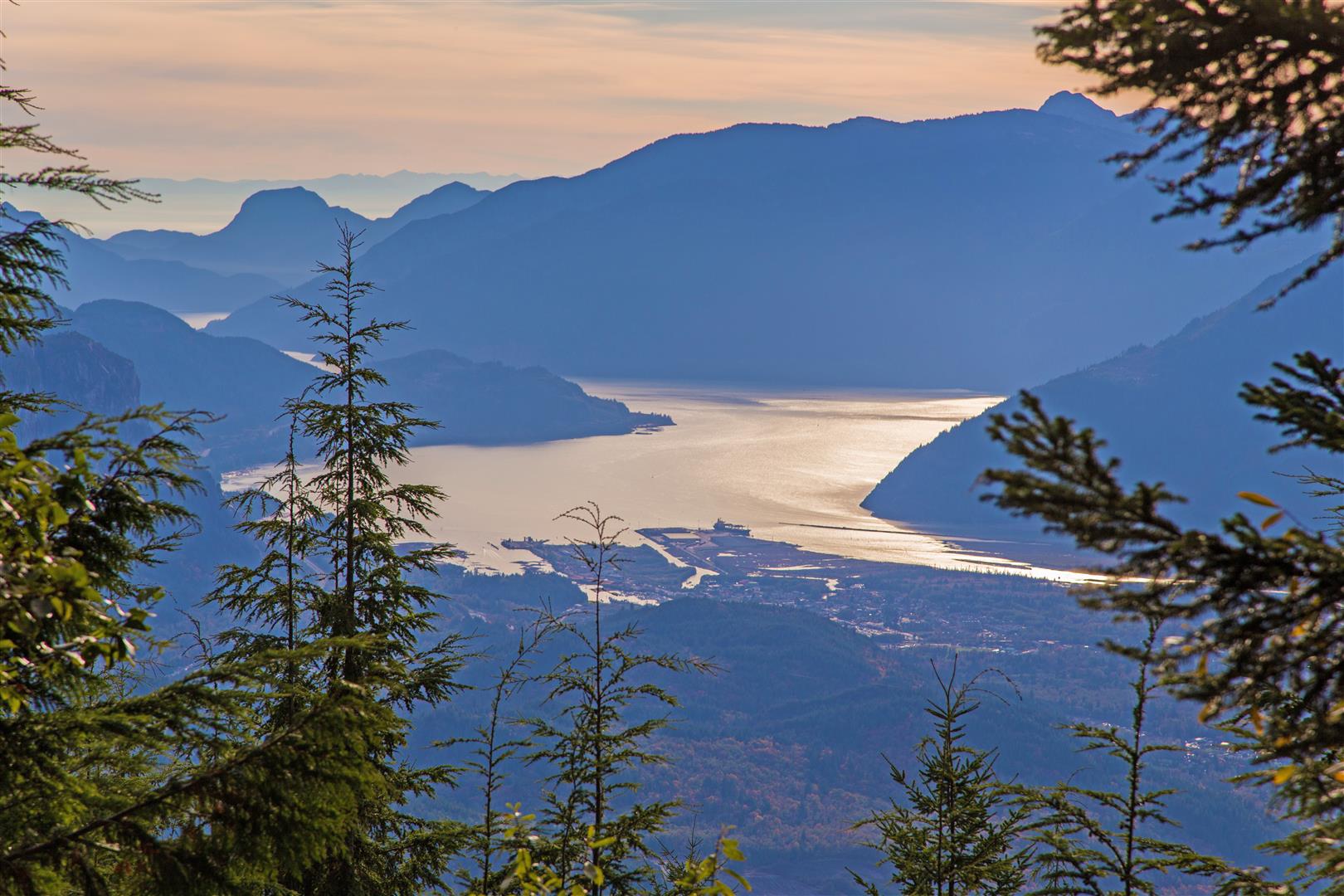
View from near the high point on the trail
Bridge over Ring Creek
Trail towards Opal Cone
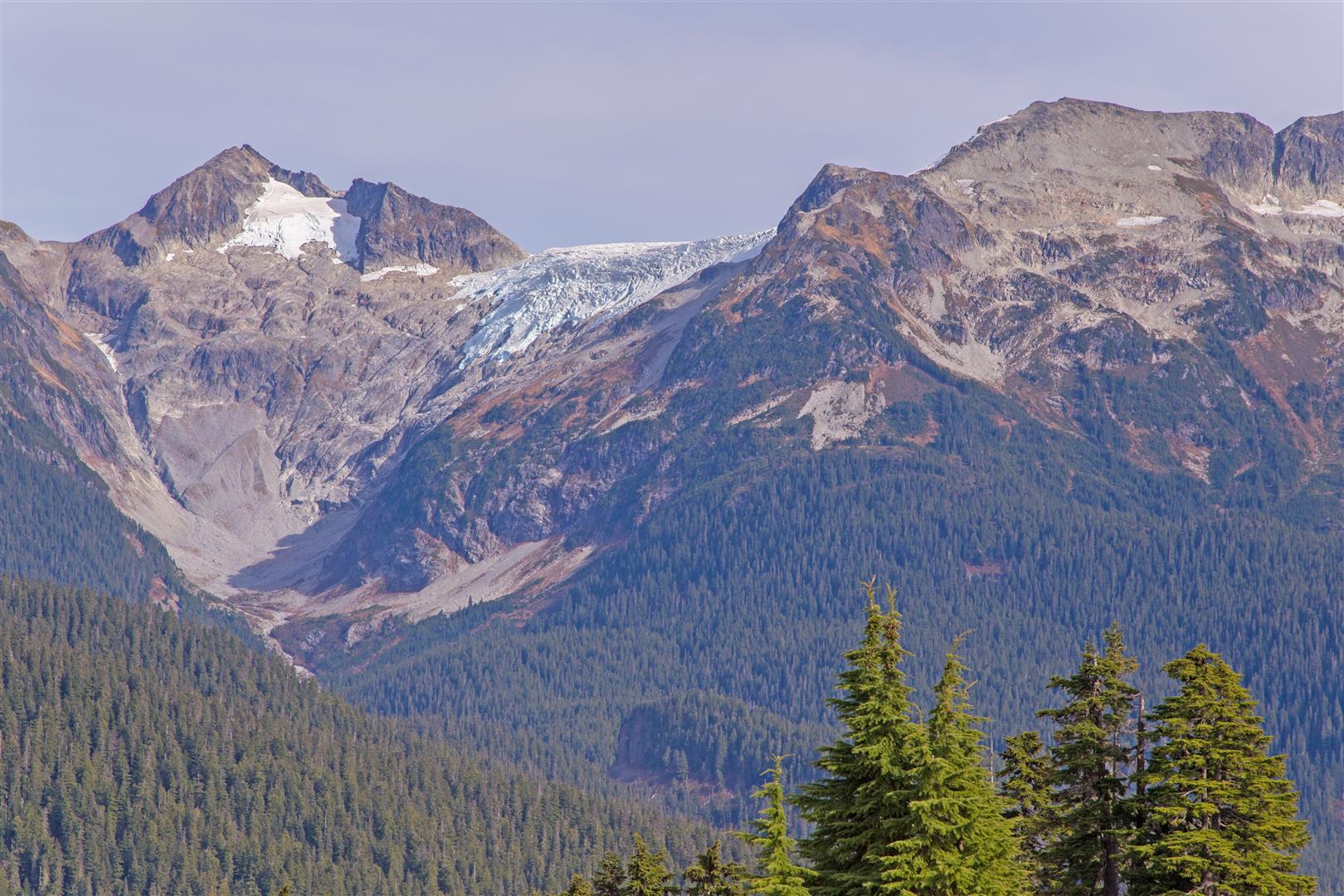
Small glacier in the distance
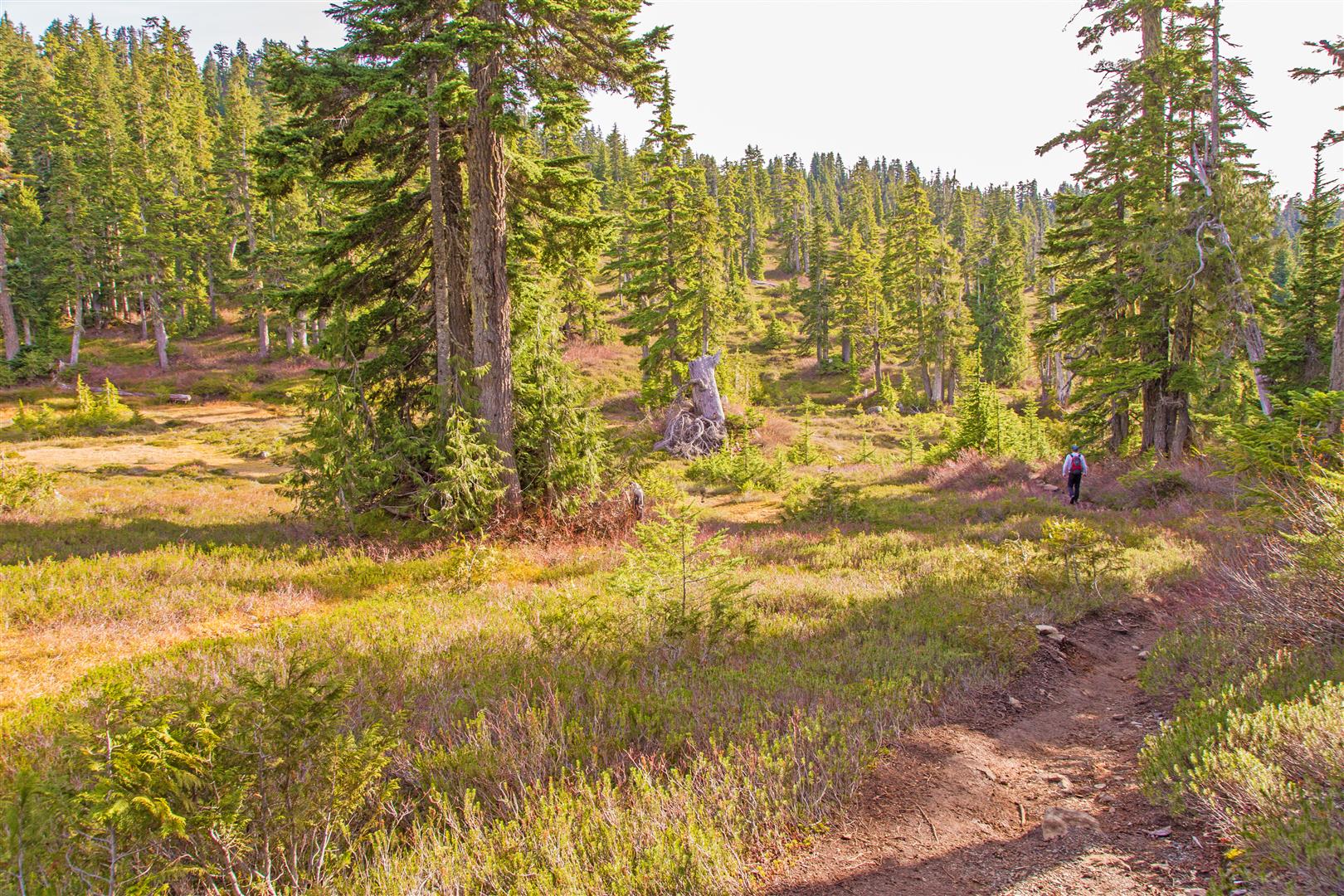
Trail near Elfin Lakes
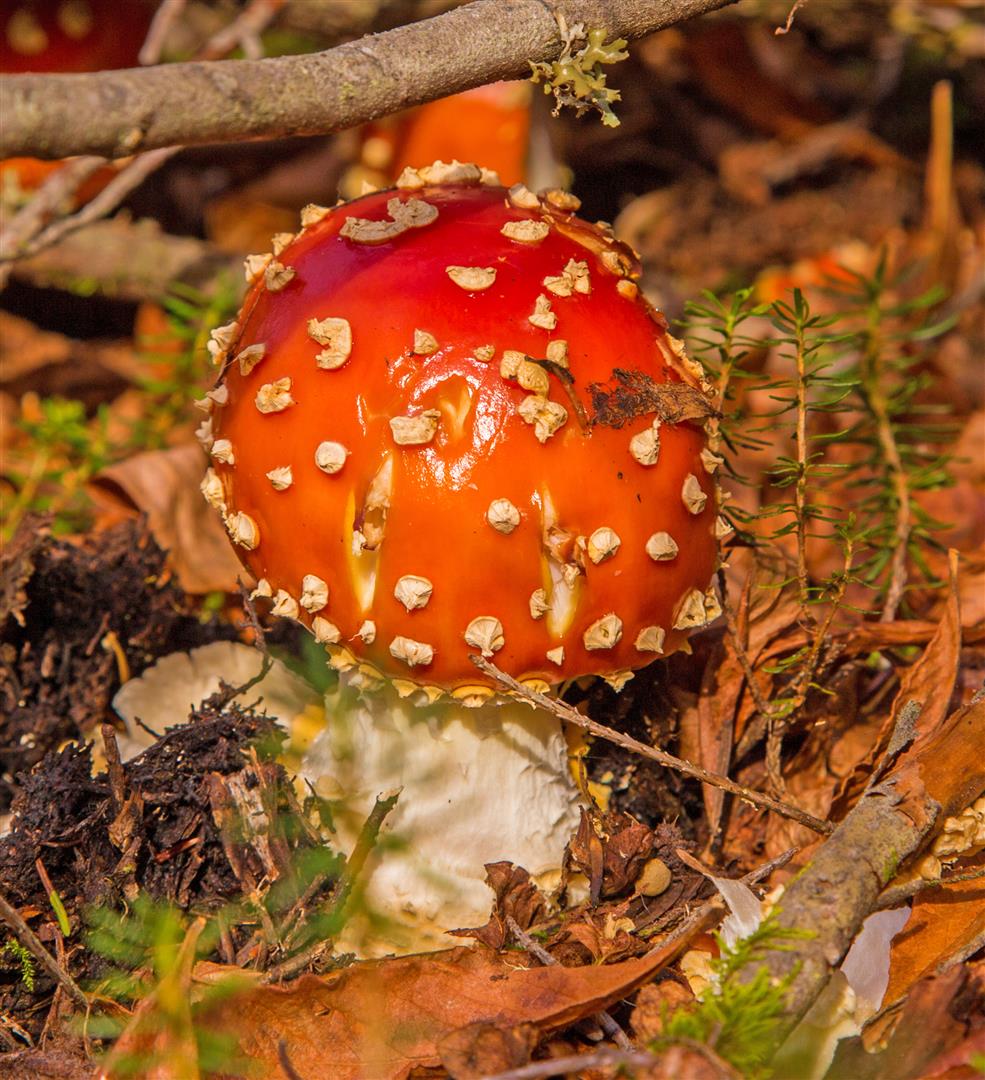
Amanita mushroom
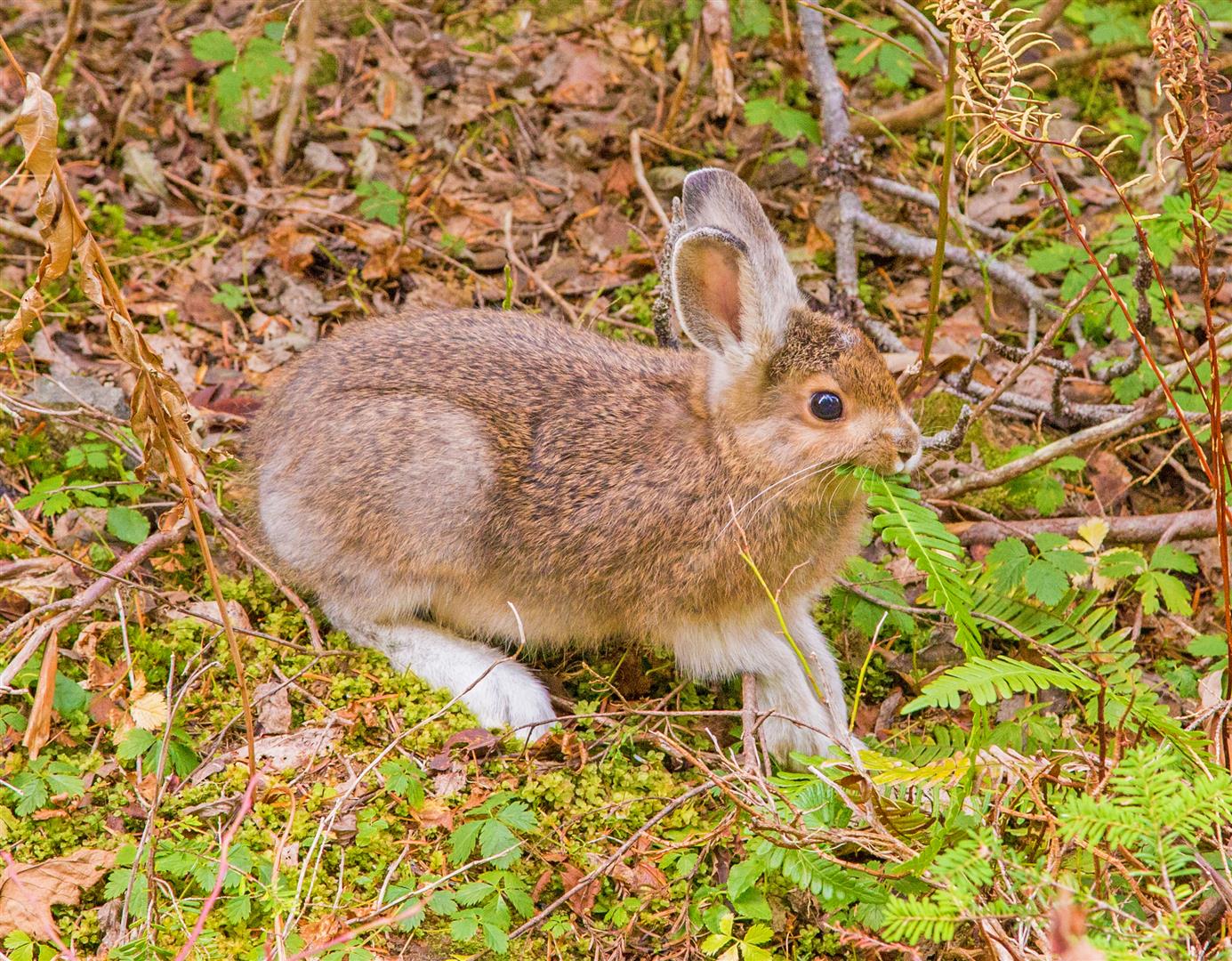
A rabbit we saw along the trail
View along the lower part of the trail
The route description and trail conditions in this post reflect what I encountered when I completed the hike. Trail conditions, access, signage, and routes can change over time. Before heading out, check current conditions and do your own research.
Before You Hike
Before heading out on your hike, make sure you are well prepared. This means having the TEN ESSENTIALS. It is also important to leave a trip plan (route details and estimated return time) with someone you trust.
Bring your smartphone, fully charged, and put it in airplane mode while hiking. I always bring backup battery packs for extra peace of mind. It is highly recommended that you bring a GPS device. I use my smartphone with a GPS app (Backcountry Navigator). The GPS will work in airplane mode. Learn how to use it before your hike.
For anyone new to hiking, there is a rule that hikers follow called “Leave No Trace” or LNT. The concept is generally to pack out what you pack in and respect nature, so all future visitors can enjoy what you have enjoyed. To learn more about LNT, please check out this blog by a certified LNT Trainer.
Semaphore Lakes is a beautiful subalpine hiking and camping area north of Pemberton, surrounded by lakes, streams, waterfalls, alpine meadows, and dramatic mountain scenery. The area has excellent views toward Face Mountain and Locomotive Mountain, with glacial features visible high above the valley.
✅ Semaphore Lakes Access Status: Open Hurley River Road is currently open for the 2026 driving season. The road is rough in places and conditions can include potholes, washboard, mud, roadwork, and seasonal snow.
The hike to the lakes themselves is relatively short for an alpine destination because much of the elevation is gained while driving up the Hurley River Forest Service Road. On my trip, however, we continued beyond the main camping area and spent several hours exploring the valley toward Locomotive Mountain, making this a considerably longer day than the standard Semaphore Lakes hike.
Remote backcountry access
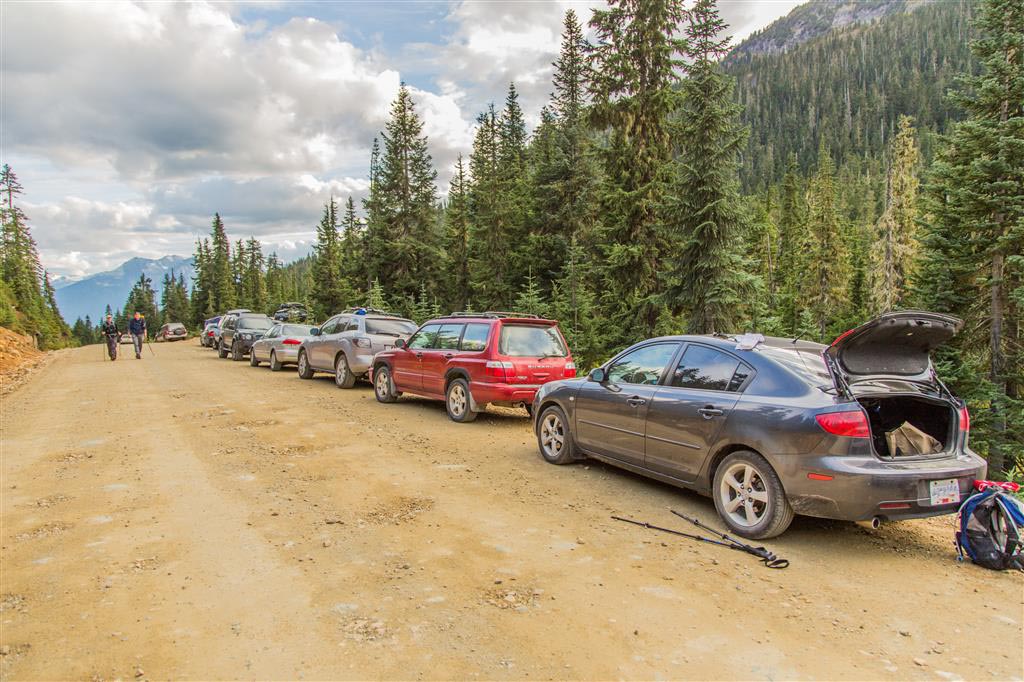
Semaphore Lakes is reached by Forest Service Roads, and conditions can vary considerably due to grading, potholes, washboard, loose rock, mud, snow, washouts, and industrial traffic. I reached the trailhead in a 2WD Mazda 3 when I completed this hike, but that should not be treated as current vehicle-access advice. Check current road conditions before leaving Pemberton and drive according to the conditions you encounter.
Getting There
The drive north from Pemberton eventually reaches the Hurley River Forest Service Road. The final portion of the drive is on gravel and can be rough. When I completed the hike, the last approximately 17 km included plenty of bumps, potholes, and loose rocks.
The Hurley is a mountain road rather than a normal paved highway, and conditions can change quickly. Snow closes the road to regular vehicle traffic during winter, and even during the hiking season it is worth checking conditions immediately before travelling.
Semaphore Lakes consists of three small alpine lakes in a broad subalpine basin north of Pemberton.
The relatively short hike into the basin is possible because the Hurley River Forest Service Road gains much of the elevation before you even reach the trailhead.
Locomotive Mountain towers above the valley and can be reached by a much more demanding off-trail scramble. The route shown on this page does not include the summit route.
Waterfalls and streams descend from the surrounding mountains, including water originating from the Train Glacier area.
The standard hike to the lakes is substantially shorter than the GPS route shown on this page. My recording includes several kilometres of additional exploration beyond the lakes.
Semaphore Lakes lies at subalpine elevations in the Mountain Hemlock biogeoclimatic zone. In southern coastal British Columbia, this zone generally occurs between about 900 m and 1,800 m elevation and is characterized by long, snowy winters and short, cool summers.
Trail Stats
These statistics are based on my GPS recording and include additional exploring beyond the main Semaphore Lakes camping area.
Distance: approximately 8.8 km
Recorded elapsed time: approximately 7 hours 34 minutes
Low point: approximately 1,322 m
High point: approximately 1,820 m
Elevation gain: approximately 500 m
Cumulative elevation gain: approximately 785 m
Route: Out and back with additional valley exploration
For comparison, the regular hike to Semaphore Lakes without the additional exploring is roughly 6.8 km return with considerably less elevation gain. Most hikers visiting only the lakes will therefore not cover the full distance, elevation, or time shown above.
The Route
The interactive map below shows my actual GPS track from the hike, including our additional exploration through the valley toward Locomotive Mountain. It does not show a summit route to Locomotive Mountain. Use the layer control in the upper-right corner to switch between the regular map and satellite imagery.
The Hike to Semaphore Lakes
The trail climbs steadily through the forest before emerging into the subalpine. When I completed the hike, it took about one hour to reach the beginning of the main camping area, roughly 3 km from the trailhead.
The trail was very muddy during my visit, probably because of recent rain. Conditions can vary considerably depending on recent weather, snowmelt, and the time of year.
The Alpine Valley
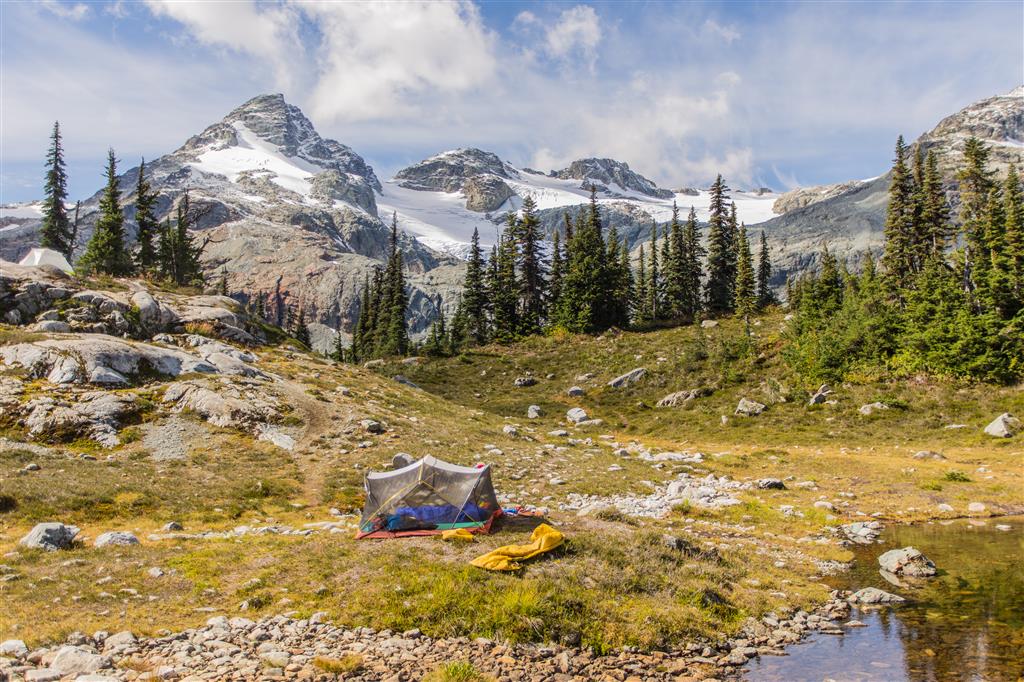
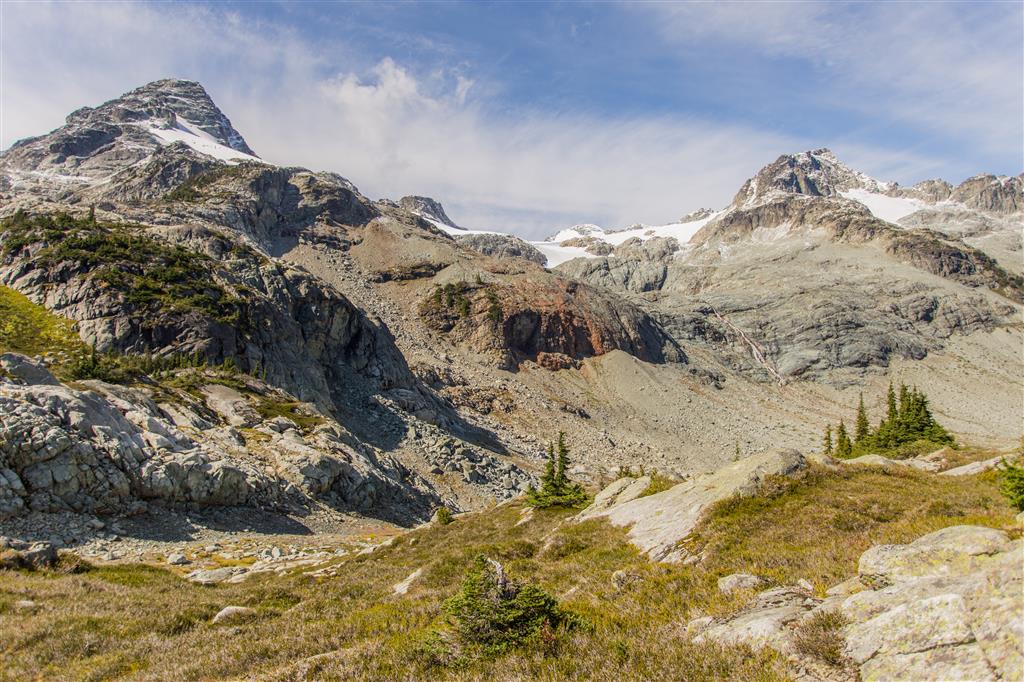
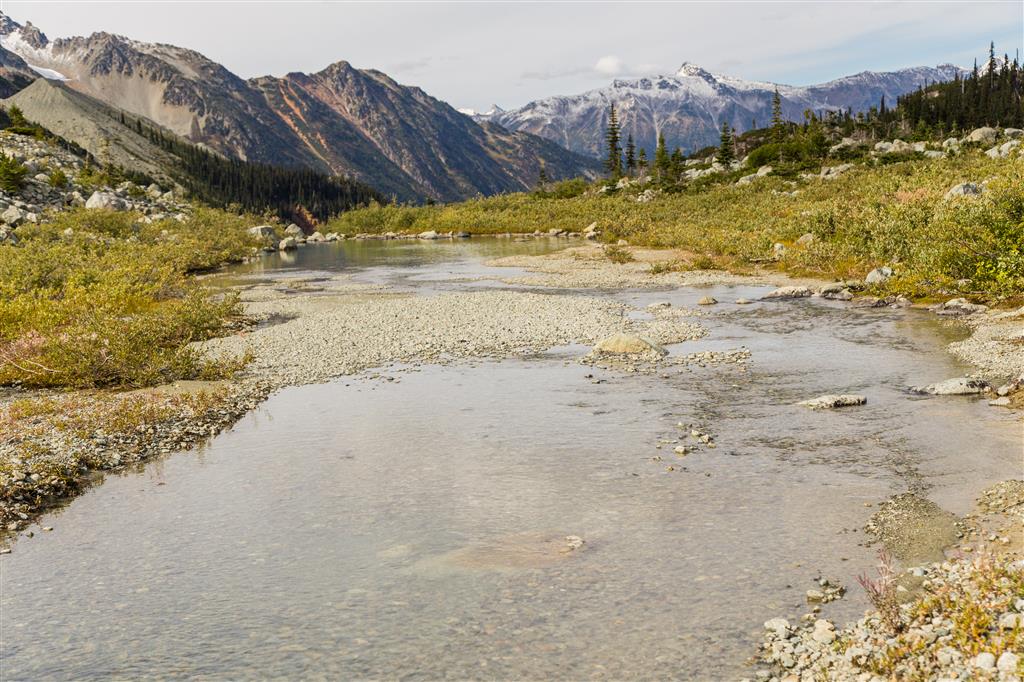
Once above the forest, the scenery opens dramatically. The broad subalpine valley is surrounded by mountains, streams, waterfalls, exposed rock, and the small lakes that give the area its name.
The alpine valley around Semaphore Lakes.
Camping at Semaphore Lakes
Semaphore Lakes is popular for backcountry camping because the hike into the basin is relatively short and there are numerous established-looking camping areas around the lakes.
Facilities are minimal, so campers should be prepared for a true backcountry experience. Pack out everything you bring in, keep food secure, and avoid creating new tent sites or damaging the fragile subalpine vegetation.
Camping in the Semaphore Lakes area.
Streams, Glaciers, and Mountain Scenery
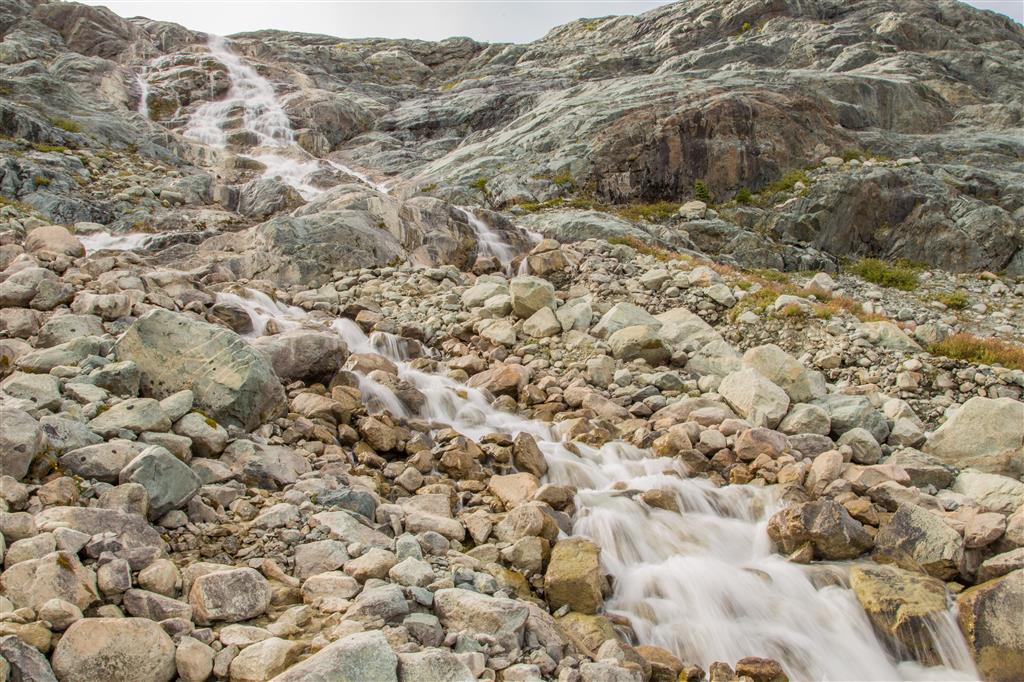
One of the highlights of the area is the amount of water flowing through the landscape. Small glacial and snowmelt-fed streams cross the valley, while waterfalls descend from the surrounding mountains.
A cold mountain stream in the valley.
Locomotive Mountain and Face Mountain.
Exploring Toward Locomotive Mountain
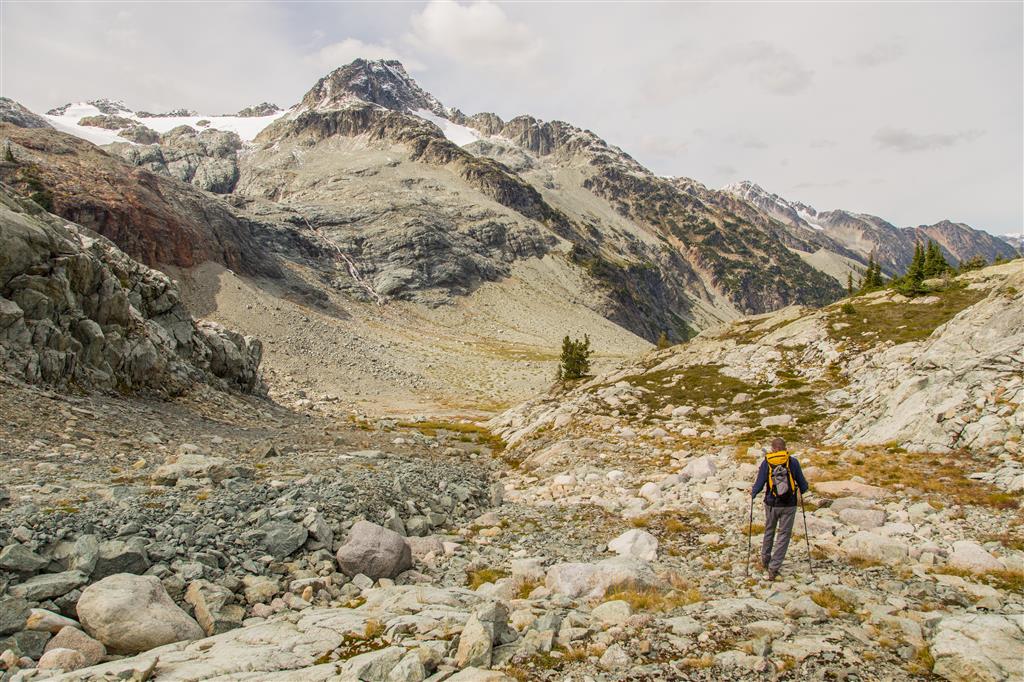
After reaching the lakes, our group continued farther into the valley toward Locomotive Mountain. Two members of the group continued toward the summit, while the rest of us explored the valley and moraine below.
The GPS map on this page shows the valley-exploration route, not the summit route. Beyond the established Semaphore Lakes trail, navigation becomes less obvious and the terrain becomes rougher.
Heading farther into the alpine valley.
Traversing the moraine.
A view across the valley and one of the lakes.
More Photos
Our group in the Semaphore Lakes area.
Late-season paintbrush in the subalpine.
One of the small streams crossing the valley.
Back at the trailhead after a long day.
The Ten Essentials
Semaphore Lakes may have a relatively short approach to the lakes, but it is still a remote backcountry hike reached by a long Forest Service Road. If something goes wrong, help may be a considerable distance away.
For a hike like this, carry the Ten Essentials: navigation, headlamp, sun protection, first-aid supplies, knife or repair tools, fire-starting equipment where legally and safely appropriate, emergency shelter, extra food, extra water, and extra clothing.
Also leave a trip plan with someone you trust, including your destination, route, vehicle location, and expected return time. Carry a fully charged phone and backup power, but do not rely on cellular coverage. Download an offline map or GPS route before leaving Pemberton.
Leave No Trace
The Semaphore Lakes basin is a fragile subalpine environment. Stay on established routes where practical, camp on durable surfaces or previously used tent sites, pack out all garbage, avoid damaging vegetation, and do not leave food or other items behind.
Dispose of waste properly, minimize your impact around streams and lakes, and leave natural features as you find them. These practices help protect the area for both wildlife and future visitors.
Before You Go
Semaphore Lakes is a remote mountain destination. Weather can change quickly, snow may linger well into the hiking season, and the Forest Service Road approach can be considerably more difficult than the hike itself.
Check the road, weather, wildfire, and trail conditions before leaving home, start with enough daylight, and carry everything you would need if your day takes longer than expected.
The route description, photographs, and GPS track on this page reflect conditions when I completed the hike. Forest Service Road conditions, trail conditions, snow levels, camping practices, and access can change over time.
Joffre Lakes is one of British Columbia’s most spectacular mountain hikes, with three glacier-fed turquoise lakes, waterfalls, old-growth forest, rugged peaks, and close views of Matier Glacier. The park is located east of Pemberton along the Duffey Lake Road.
✅ Joffre Lakes Access Status: Open Joffre Lakes Park is currently open. Day-use trail passes are required during the 2026 peak season, and scheduled temporary closures may occur. Check current BC Parks information before travelling.
Lower Joffre Lake is only about a five-minute walk from the parking area, making it accessible even if you do not plan to complete the full hike. The trail to Middle and Upper Joffre lakes is considerably more demanding, climbing steadily through forest and increasingly rugged subalpine terrain.
When I completed this hike in August 2015, our group continued beyond Upper Joffre Lake and explored part of the lateral moraine before returning. My GPS track therefore extends beyond the normal hiking route.
Important: access has changed considerably since my hike.
BC Parks now manages Joffre Lakes with seasonal day-use passes, designated parking, camping reservations, and periodic temporary closures. For 2026, free day-use trail passes are required from May 11 through October 25 when the park is open. Check current BC Parks information before making the drive, as requirements and closure dates can change from year to year.
Do not follow my GPS track beyond Upper Joffre Lake as a recommended hiking route.
My 2015 route includes additional exploration toward the moraine above the lake. BC Parks now strongly discourages scrambling farther uphill from Upper Joffre Lake because of unstable terrain, rockfall, and icefall from the surrounding slopes and glacier. The normal day hike ends at Upper Joffre Lake.
Trail Stats
These statistics are based on my uploaded GPS recording and include the additional exploring we did beyond Upper Joffre Lake.
Distance: approximately 10.2 km return
Recorded elapsed time: approximately 5 hours 55 minutes, including breaks and exploring
The normal hiking route to Upper Joffre Lake is shorter than my GPS track. BC Parks describes the campground at Upper Joffre Lake as approximately 4.5 km from the parking lot, with about 400 m of elevation gain from the parking area to Upper Joffre Lake.
Parking and Day-Use Passes
Parking is available in designated lots beside Highway 99 at the trailhead. Parking along the edge of the highway is not permitted. The park is extremely popular, particularly during summer weekends.
BC Parks operates a seasonal day-use pass system for Joffre Lakes. For the 2026 season, free passes are required from May 11 through October 25 when the park is open. Passes become available online beginning at 7:00 a.m. Pacific time two days before your visit. Requirements can change, so check the current BC Parks information before leaving home.
There are pit toilets at the parking area and additional toilets along the trail. Toilet paper may not be supplied, so bring your own. There is no treated drinking water in the park.
Interesting Facts
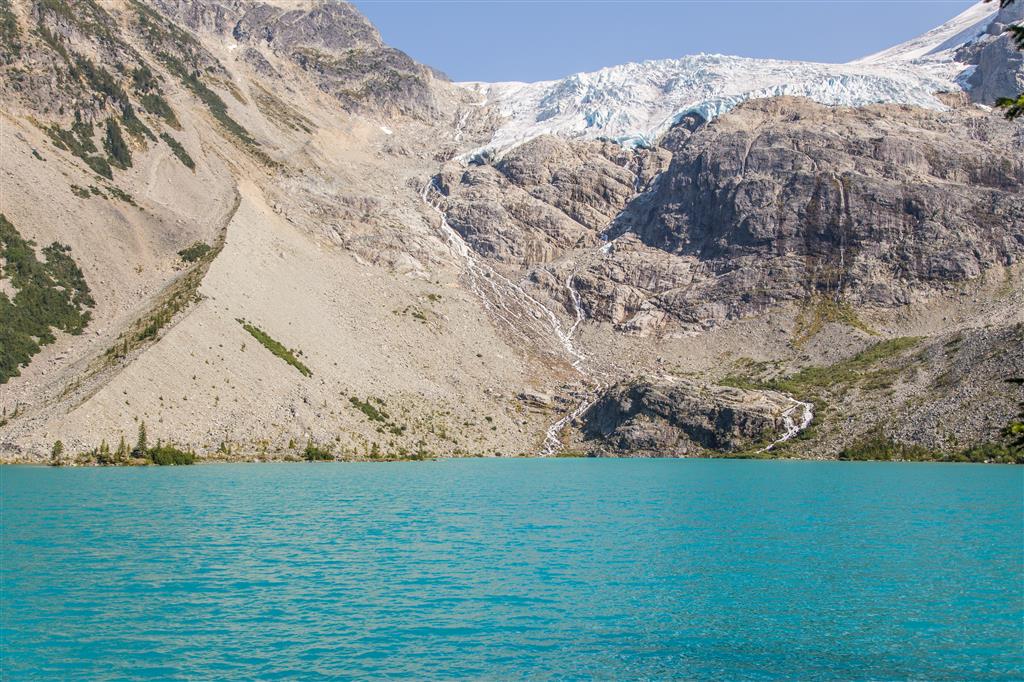
Why are the lakes turquoise? The striking blue-green colour comes from extremely fine particles of ground rock known as rock flour or glacial silt. Glaciers grind the underlying rock into fine powder, which is carried into the lakes by meltwater. The suspended particles scatter sunlight and produce the vivid turquoise colour.
Three lakes: The hiking trail passes Lower, Middle, and Upper Joffre lakes. Lower Lake is only a short walk from the parking area, while Middle and Upper lakes require a sustained climb.
Matier Glacier: Upper Joffre Lake sits directly below the glaciated mountain basin, with dramatic views toward Matier Glacier and the surrounding peaks.
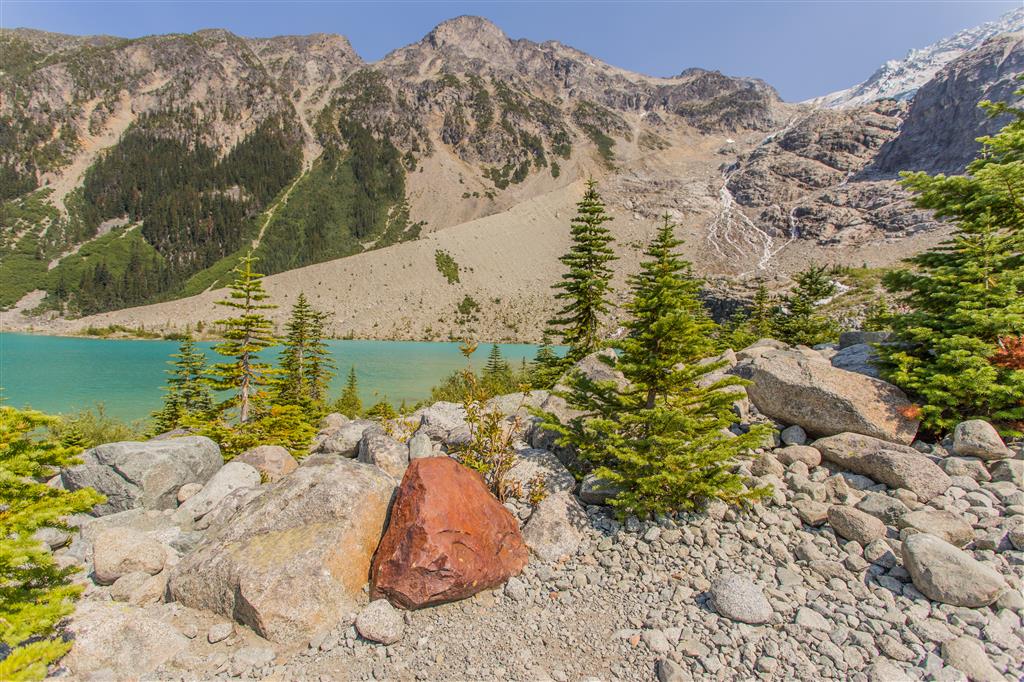
Glacial landscape: The valley has been extensively shaped by glaciers. Moraines, talus slopes, glacially transported boulders, rushing meltwater streams, and steep U-shaped terrain are visible throughout the hike.
Biogeoclimatic zones: Joffre Lakes Park contains several of British Columbia’s biogeoclimatic zones. The park includes Coastal Western Hemlock and Mountain Hemlock forests, while higher and more easterly terrain also extends into Engelmann Spruce–Subalpine Fir and Interior Mountain-heather Alpine ecosystems. The hiking trail shows the transition from moist forest into increasingly open subalpine terrain.
Old-growth forest: Portions of the park protect old-growth forest, including trees more than 250 years old.
Wildlife: Black bears, grizzly bears, mountain goats, deer, and pikas occur in the park. Keep food secure and observe wildlife from a distance.
No pets: Dogs and other domestic animals are not permitted anywhere in Joffre Lakes Park.
Extremely cold water: Despite their inviting colour, the lakes are glacier-fed and remain extremely cold. BC Parks does not recommend swimming.
The Route
The interactive map below shows my actual GPS recording from the hike. It includes the additional exploration we did beyond Upper Joffre Lake in 2015. The normal hiking route should end at Upper Joffre Lake rather than following the entire upper portion of my recorded track.
Use the layer control in the upper-right corner of the map to switch between the regular map and satellite imagery.
Lower Joffre Lake
Lower Joffre Lake is reached by an easy walk of only about five minutes from the parking area. This makes it possible to experience one of the park’s turquoise lakes without completing the full hike.
From Lower Lake, the character of the hike changes considerably. The trail begins climbing through forest toward Middle Joffre Lake, with steeper sections, roots, rocks, and constructed steps along the way.
Middle Joffre Lake
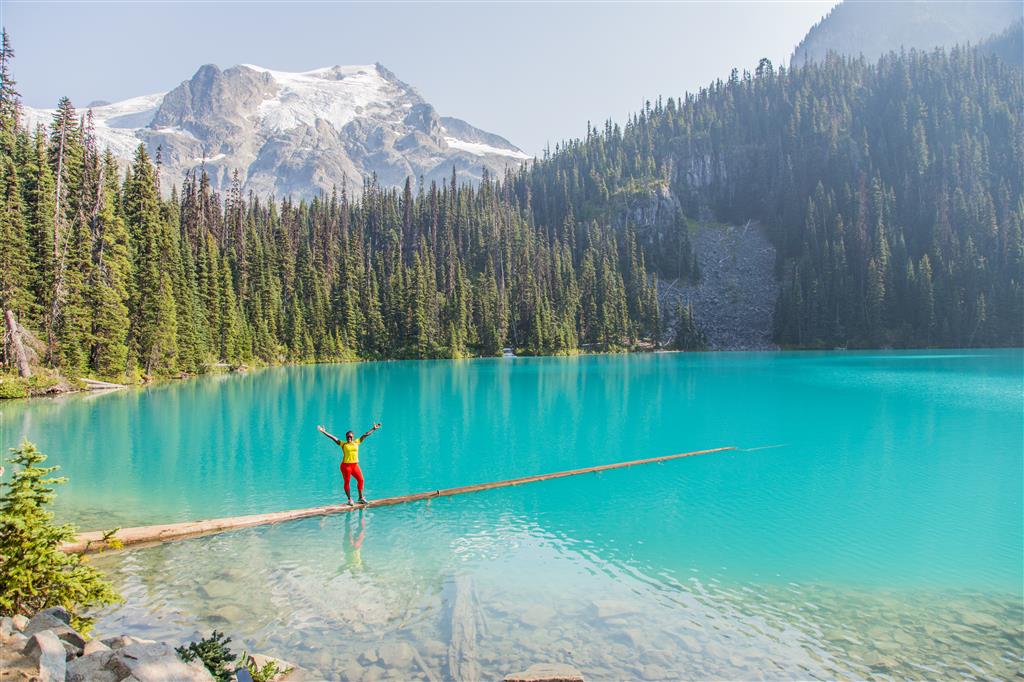
Middle Joffre Lake is one of the highlights of the route. The turquoise water, subalpine forest, surrounding peaks, and glacier views make this a popular place to stop before continuing toward Upper Lake.
Middle Joffre Lake during my hike.
Waterfalls and Meltwater
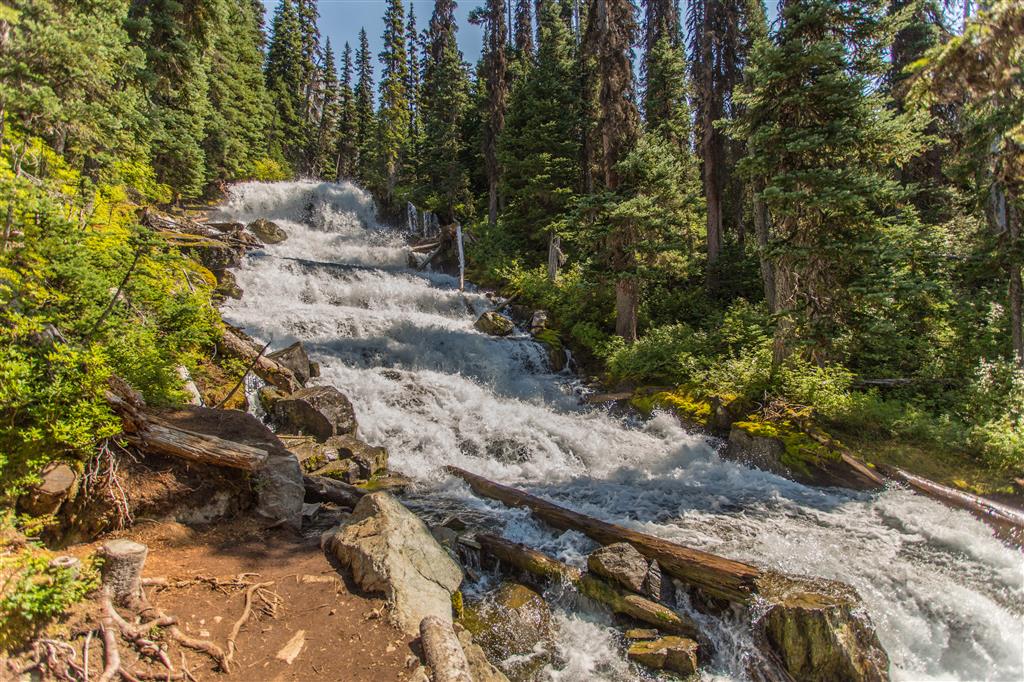
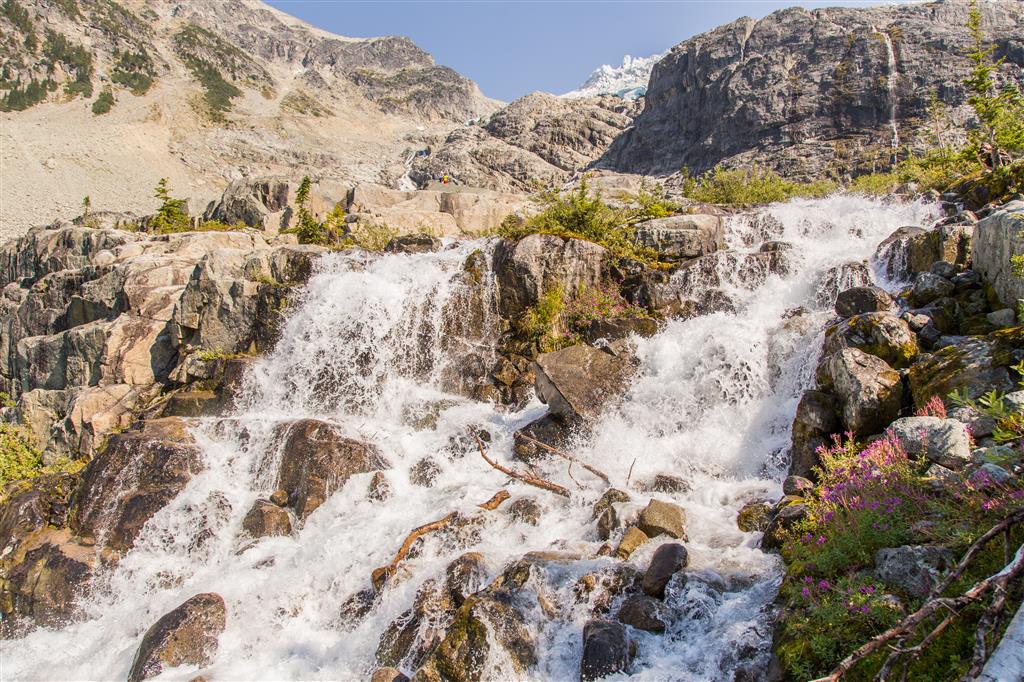
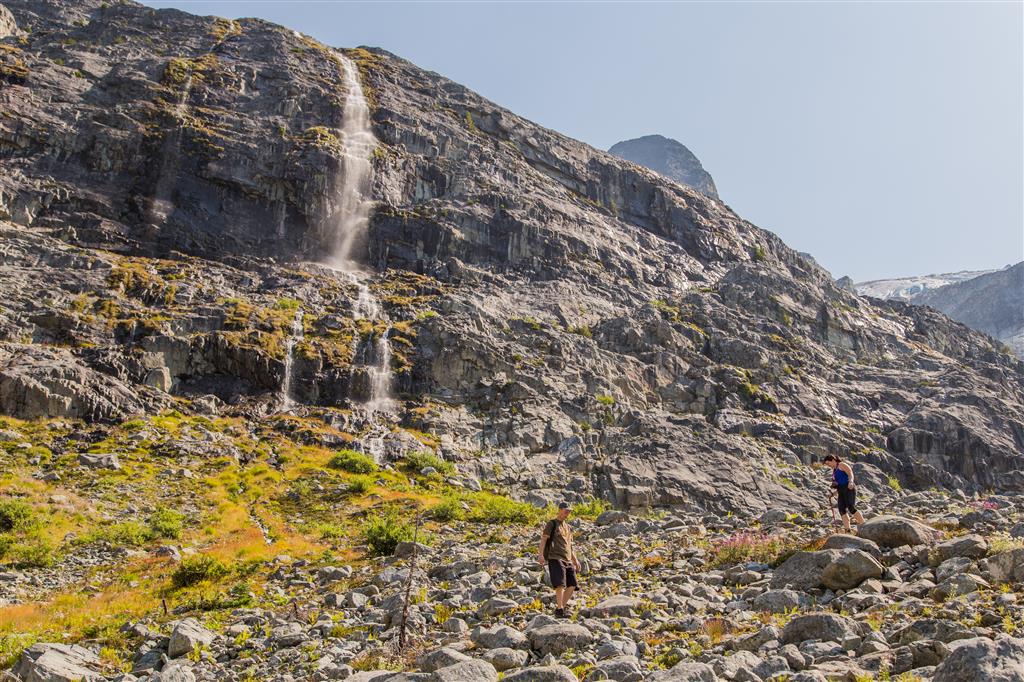
The trail passes several streams and waterfalls carrying snowmelt and glacial meltwater down through the valley. Flow varies considerably with temperature, recent weather, and the time of year.
One of the waterfalls along the trail.
Strong meltwater flow during my August visit.
Upper Joffre Lake
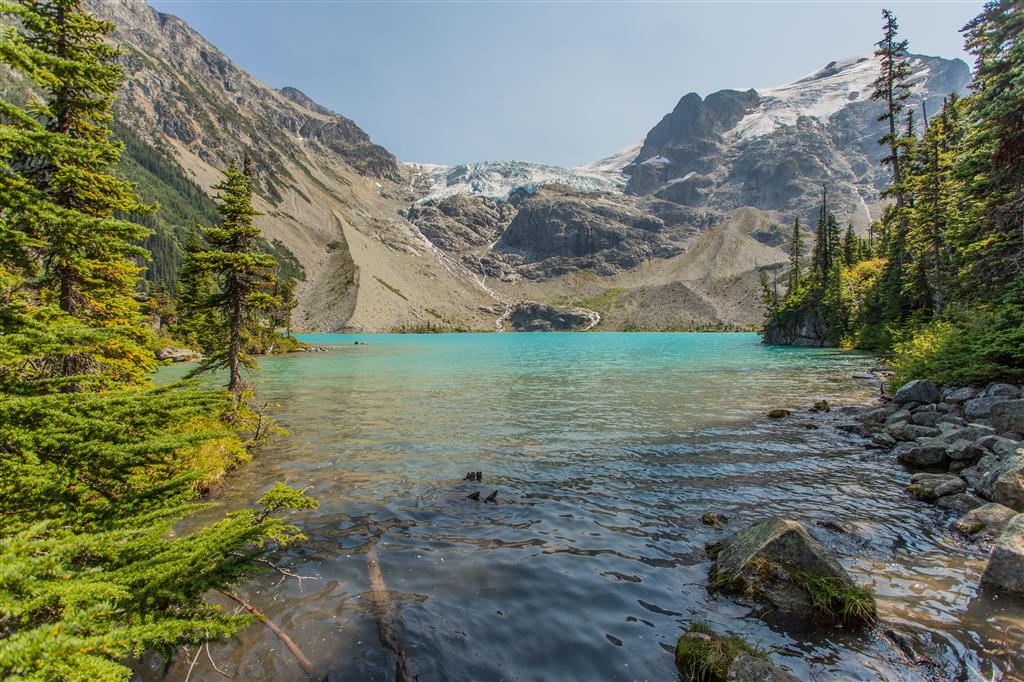
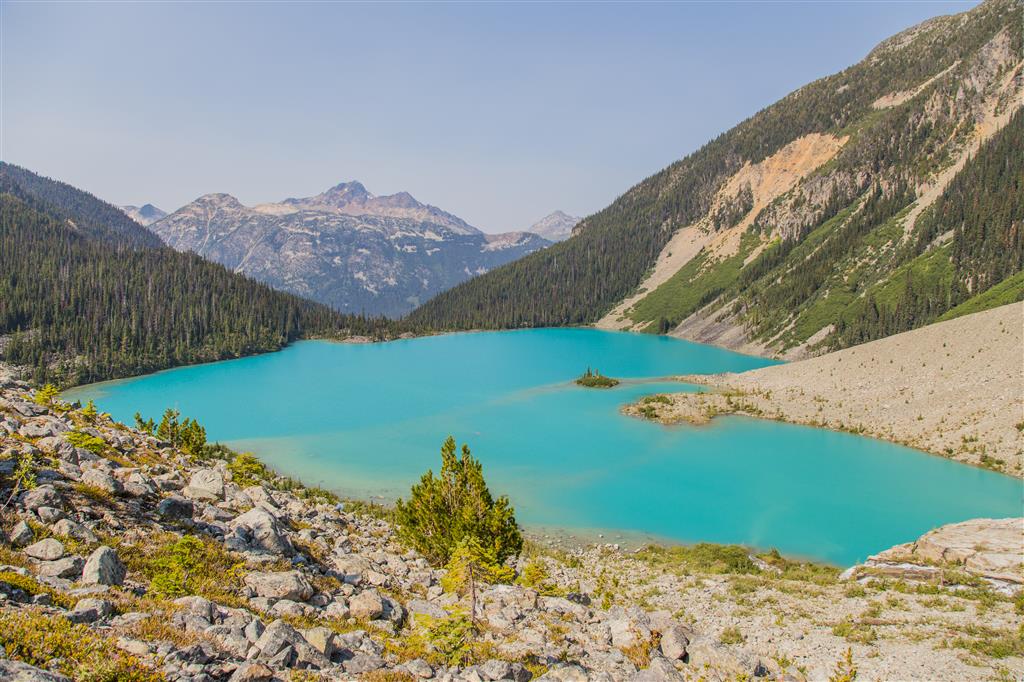
Upper Joffre Lake is the largest and most dramatic of the three lakes. The trail reaches the lake beneath steep mountain slopes and Matier Glacier, with turquoise water filling the glacial basin below.
This is the appropriate turnaround point for the normal day hike. Rockfall and icefall can occur in the upper basin, and BC Parks strongly discourages scrambling farther uphill toward the glacier.
Upper Joffre Lake.
The striking turquoise water of Upper Joffre Lake.
Mountain scenery around Upper Joffre Lake.
Another view across Upper Joffre Lake.
Matier Glacier
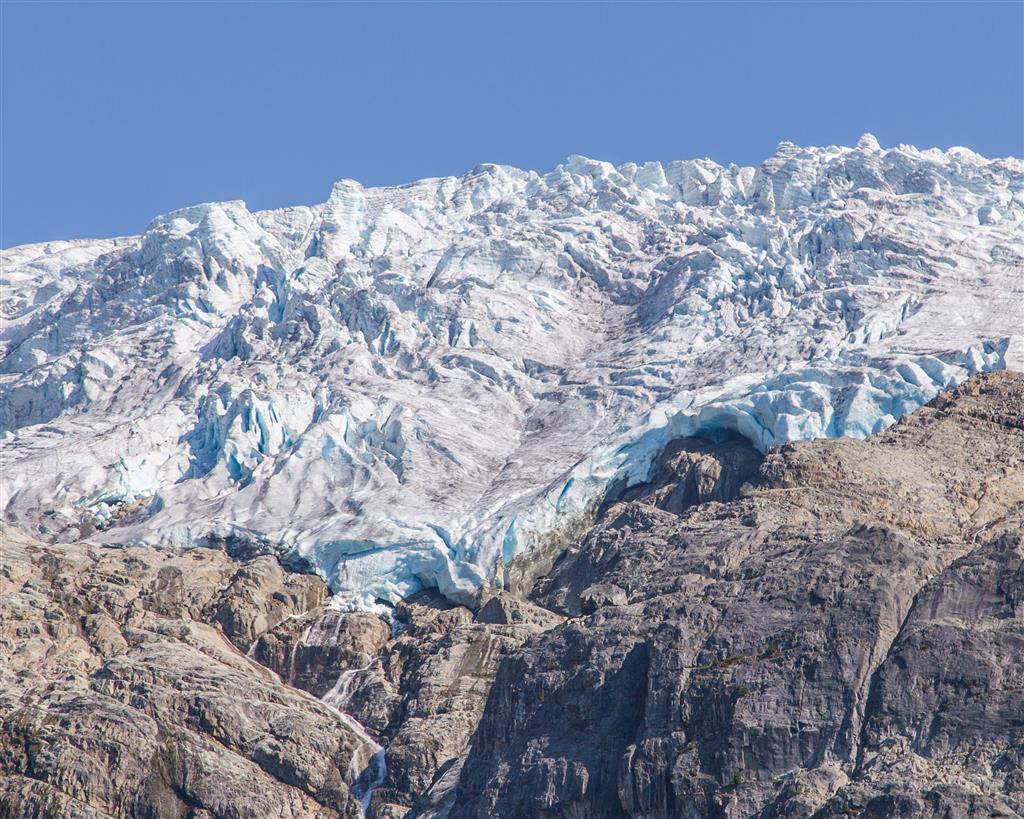
The glacier above Upper Joffre Lake dominates the upper basin. Even from the hiking trail, you can see heavily fractured ice, snow, exposed rock, and meltwater descending toward the lake.
Glaciers and the steep slopes around them are dynamic environments. Falling ice and rock can occur without warning, particularly during warm weather.
A closer view of the glacier above Upper Joffre Lake.
A waterfall descending from the upper glacial basin.
Camping at Upper Joffre Lake
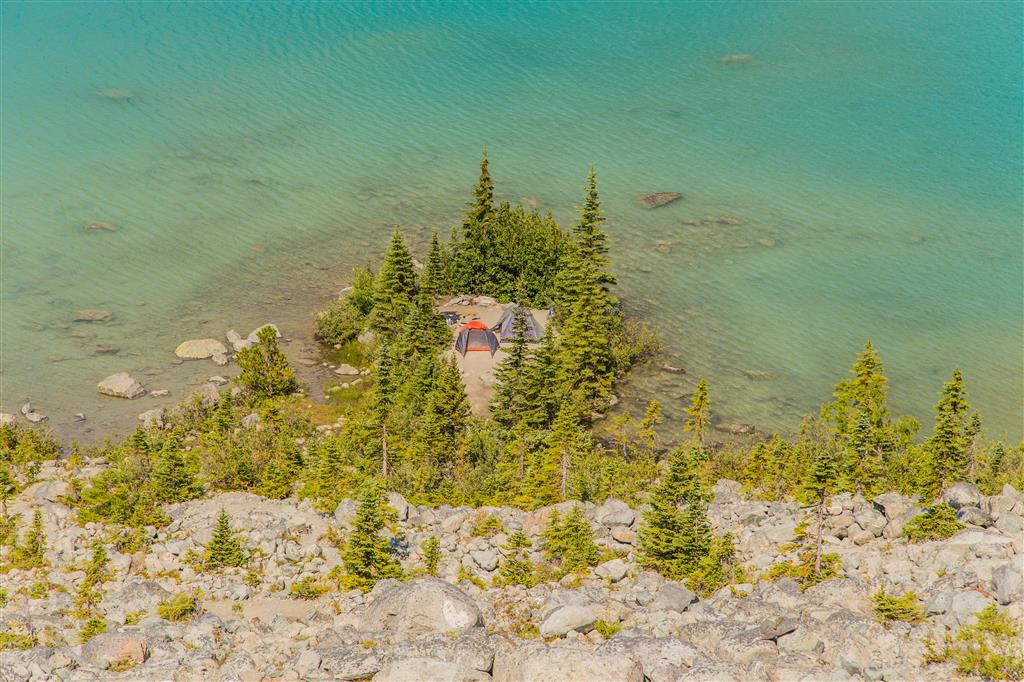
Backcountry camping is permitted only at the Upper Joffre Lake Campground and only on designated tent pads. Reservations are required during the operating season. The campground has 26 tent pads, toilets, and bear-proof food storage.
Campfires are permanently prohibited throughout Joffre Lakes Park. Campers must use a portable stove for cooking and pack out all garbage.
Camping near Upper Joffre Lake during my 2015 visit. Current camping is restricted to designated tent pads at the campground.
Wildflowers
During the summer, wildflowers appear in open areas and along the subalpine slopes. The growing season is short at these elevations, so flowering times vary considerably with snowmelt and weather.
Wildflowers on the slope during my August hike.
What to Bring
The hike to Upper Joffre Lake is not an extreme backcountry expedition, but it is long and steep enough to require proper preparation. The park is remote, there is no cell service, and BC Parks advises that emergency services are not available within the park.
For the full hike to Upper Lake, I recommend carrying the Ten Essentials, including navigation, a headlamp, sun protection, first-aid supplies, extra clothing, emergency shelter, extra food, and sufficient water. There is no treated drinking water in the park, so bring your own or carry an appropriate method of water treatment.
Carry a fully charged phone and backup power, but do not rely on cellular reception. Download an offline map before your trip and leave your route and expected return time with someone you trust.
Leave No Trace
Joffre Lakes receives heavy visitor use and contains fragile forest and subalpine ecosystems, so Leave No Trace practices are especially important here. Stay on designated trails, use established viewpoints and camping areas, and avoid shortcuts that damage vegetation and cause erosion.
Pack out everything you bring in, do not pick wildflowers or other plants, keep wildlife at a distance, and never leave food behind. Camping is permitted only in designated sites, and campfires are not allowed anywhere in the park.
Before You Go
Check current BC Parks information immediately before your trip. Day-use pass requirements, temporary closures, camping reservations, parking conditions, snow, trail conditions, and access can change.
Winter and shoulder-season conditions are very different from a summer hike. Snow can remain well into spring, and avalanche hazard exists during much of the fall, winter, and spring. This page describes my summer hiking experience.
The route description, photographs, GPS track, and trail conditions on this page reflect conditions when I completed the hike. Park access, reservations, closures, parking rules, snow conditions, and trail conditions may have changed since then. Confirm current conditions before heading out.
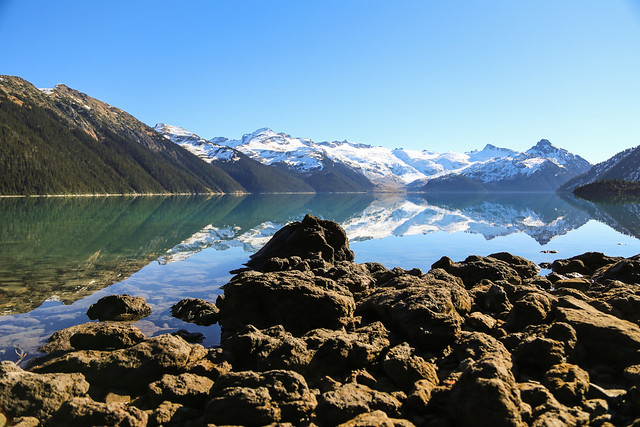
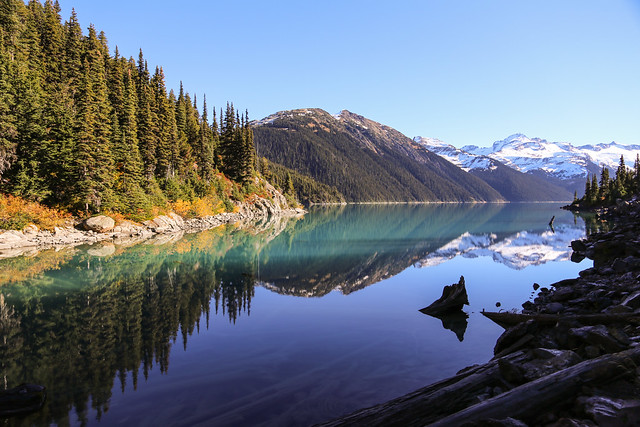
Garibaldi Lake is a very popular hike and for good reason. The hike is great and the scenery is amazing. It’s a gradual uphill climb all the way, with really no intense steep sections. The trail is well defined and easy to find. Dogs are not allowed on this trail.
Distance: 18 km (return)
Low point: 583 m
High point: 1505 m
Elevation gain: 922 m
Trailhead: 49° 57’ 28.1” by 123° 7’ 13.1” (Google Map)
Here is the route…
Here is Garibaldi Lake…
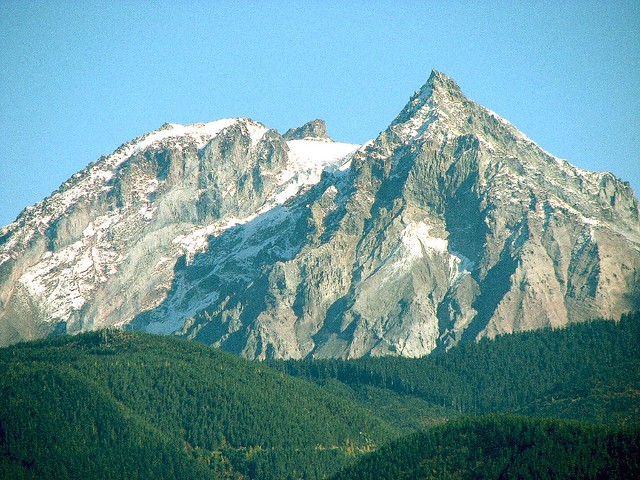
Mount Garibaldi…
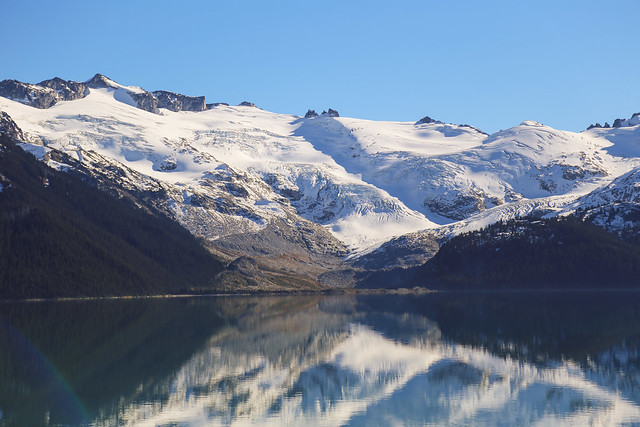
Sphinx Glacier at Garibaldi Lake…
Lesser Garibaldi Lake…
Another Garibaldi Lake…
Rock Slide on Garibaldi Lake…
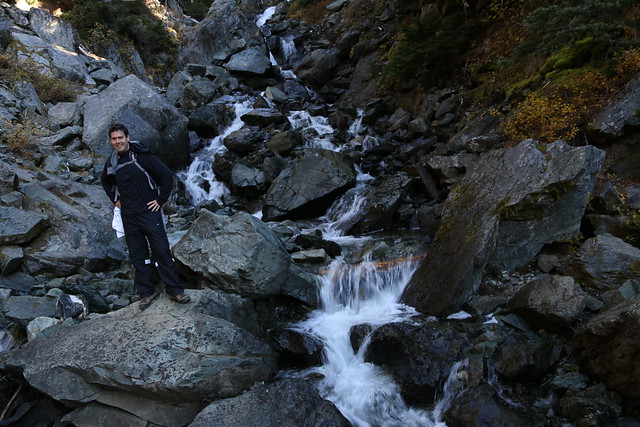
Me by a waterfall…
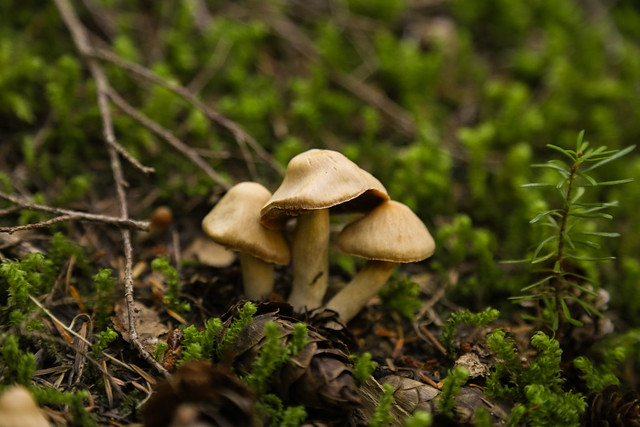
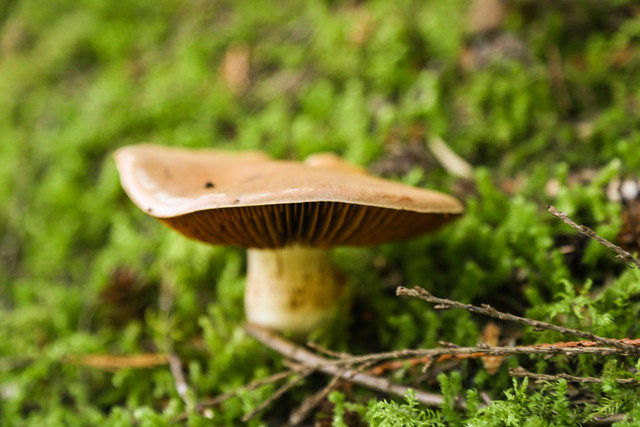
Some mushrooms I found on the way down…
★★★★★★★★★★★
Before heading out on your hike, make sure you are well prepared. This means, having the TEN ESSENTIALS. It is also important to leave a trip plan (route details and estimated return time) with someone you trust.
Bring your smartphone, fully charged and put it in airplane mode while hiking. I always bring back-up battery packs for extra piece of mind. It is highly recommended that you bring a GPS device; I use my smartphone with a GPS app (Backcountry Navigator). The GPS will work in airplane mode. Learn how to use it before your hike.
For anyone new to hiking, there is a rule to which hikers follow; it is called “Leave No Trace” or LNT. The concept is generally to pack out what you pack in and respect nature, so all future visitors can enjoy what you have enjoyed.
To learn more about LNT, please check out this BLOG by a certified LNT Trainer.
The Stawamus Chief, commonly known simply as the Chief, is one of the most popular hikes near Squamish, BC. Rising dramatically above Howe Sound, this enormous granite mountain has three summits, each offering spectacular views of Squamish, the surrounding mountains, and the water far below. I hiked to the Third Peak, following a steep forest trail that reminded me of the Grouse Grind in places. It’s a strenuous climb, but the views from the top are well worth the effort.
Stawamus Chief Trail Stats
🥾 Distance: 4.6 km return (my original recorded route)
⏱️ Estimated time: Allow approximately 3 to 5 hours for a hike to Third Peak, depending on pace and stops
⛰️ Original low point: 64 m
🏔️ Original high point: 686 m
📈 Original elevation difference: 622 m
💪 Difficulty: Challenging, with steep stairs, rocky terrain, and exposed viewpoints
🔄 Route type: Out and back to Third Peak
🌲 Park: Stawamus Chief Provincial Park, Squamish, BC
These statistics reflect my original hike. My uploaded GPX file measures approximately 4.25 km but does not contain elevation readings. BC Parks lists the Third Peak trail as 1.8 km with approximately 630 m of elevation gain. Distances can vary depending on the starting point, summit exploration, and GPS recording methods.
Stawamus Chief GPS Route Map
The interactive map below shows my original recorded route towards the Third Peak of the Stawamus Chief. You can zoom in, move around the map, and switch between Map and Satellite views.
This map preserves my historical GPS recording, including the return route. The recorded start and finish points differ slightly, and the track does not contain elevation data. Follow current trail signs rather than relying exclusively on a historical GPS route.
Getting to the Stawamus Chief
The Stawamus Chief is located immediately south of Squamish, beside the Sea to Sky Highway. Its enormous granite cliffs are impossible to miss when approaching the town from Vancouver.
The main hiking trail starts near the Stawamus Chief Provincial Park campground and day-use parking area. You can also reach the trail system from nearby Shannon Falls Provincial Park using connecting paths.
The Sea to Sky Gondola is located nearby, but it is a separate attraction with its own trails and parking area. You don’t need to purchase a gondola ticket to hike the Chief.
Parking Information
BC Parks provides day-use parking at the Stawamus Chief. Parking can fill quickly during sunny weekends, particularly during the summer. Obey posted signs and park only in designated spaces, as BC Parks enforces parking restrictions and may tow illegally parked vehicles.
The nearby Sea to Sky Gondola introduced paid parking in March 2025. As of October 2026, its posted rates are $8 for a half-day and $10 plus applicable taxes for a full day. These charges apply to the gondola parking area, not necessarily to the provincial park’s own parking facilities.
The Stawamus Chief Trail starts out steep, and I found that parts of the climb reminded me of the Grouse Grind. There are plenty of stairs, rocks, and roots, so you gain elevation quickly.
Despite the relatively short distance, this is a demanding hike. The trail climbs through coastal forest, following a rough and sometimes uneven route towards the three summits.
One of the nice things about the Chief is that there are several destinations to choose from. You can hike to First Peak, Second Peak, or Third Peak, and some hikers combine two or all three in a longer outing.
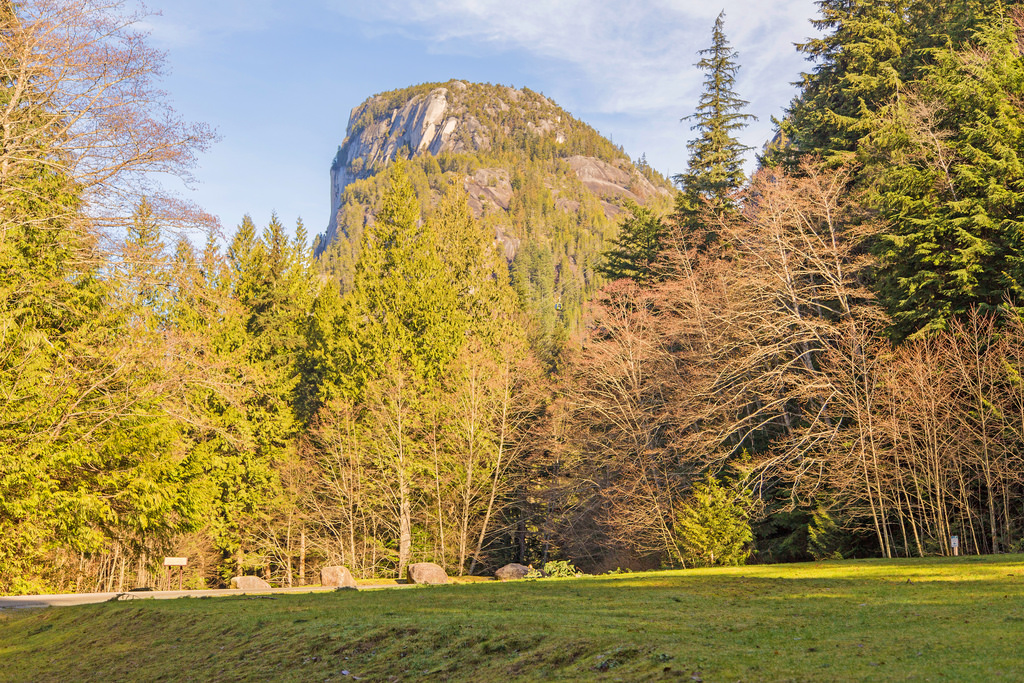
Here’s a photograph I took of the Chief from Shannon Falls Provincial Park.
The Stawamus Chief rising above the surrounding forest, photographed from Shannon Falls Provincial Park.
Choosing Between the Three Peaks
As you climb higher, the trail eventually branches towards the different summits. The three peaks have their own viewpoints and provide somewhat different perspectives of Howe Sound and the Squamish Valley.
BC Parks lists the following approximate one-way trail distances and elevation gains:
Summit
Trail distance
Elevation gain
First Peak
1.5 km
540 m
Second Peak
1.7 km
590 m
Third Peak
1.8 km
630 m
These are BC Parks’ published trail distances to each summit. Visiting multiple peaks adds further distance and climbing, especially when descending and climbing between viewpoints.
Some of the upper trail sections include steep rock, scrambling, and assisted sections with fixed chains or ladders. The exposed granite can be particularly slippery when wet, so this isn’t a hike I’d recommend in poor weather.
The Third Peak
I continued towards Third Peak, which is the summit shown in my original photographs.
After the steep forest climb, the terrain opens onto the exposed granite near the top. This is where the scenery becomes truly spectacular.
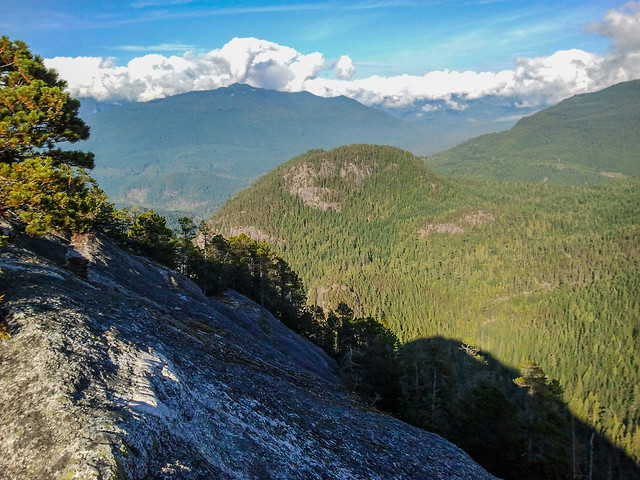
From the summit, there are outstanding views over Howe Sound, the town of Squamish, and the surrounding Coast Mountains.
Here is one of my photographs from Third Peak.
The view from the Third Peak of the Stawamus Chief.
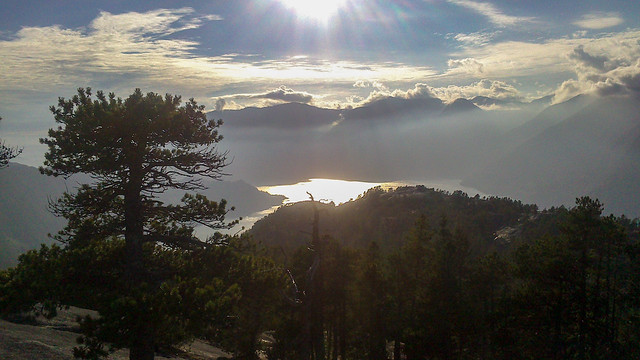
And here’s another view from my hike.
More spectacular scenery from the Chief.
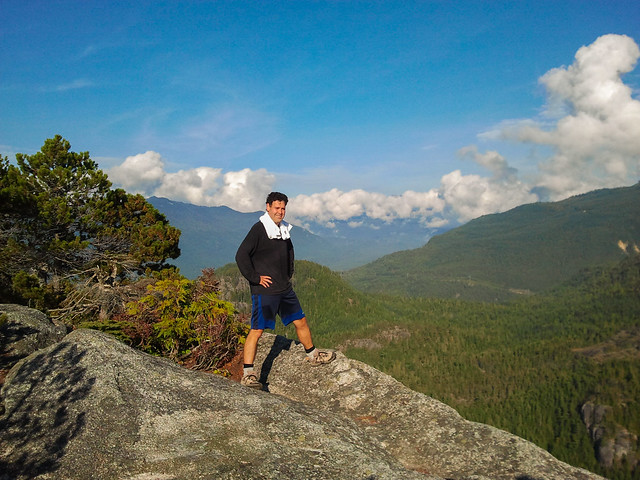
And finally, here I am at the top!
Me at the Third Peak of the Stawamus Chief.
One important thing to remember is that the summit areas have serious drop-offs. There are exposed rock faces and cliffs, so take care when exploring viewpoints or taking photographs. Stay well back from edges, particularly when conditions are wet or windy.
The Return Hike
After enjoying the summit, I returned by the same general route.
The descent can be harder on your knees than you might expect. There are plenty of steep stairs and rocky sections, and fatigue can make it easier to slip or lose your footing.
Take your time, especially where the trail is steep or exposed.
Interesting Facts About the Stawamus Chief
One of the world’s great granite landmarks: The Stawamus Chief is among the largest granite monoliths in the world. Its imposing cliffs rise approximately 700 m above the surrounding landscape.
Three summits: First, Second, and Third Peaks offer separate viewpoints. Many hikers visit only one, while others combine several in a longer hike.
A world-famous rock-climbing destination: The Chief attracts climbers from around the world. Its steep granite faces contain many established climbing routes, including some exceptionally challenging multi-pitch climbs.
Granite shaped by glaciers: The Chief consists largely of granitic rock formed deep underground and later exposed through erosion. Glaciers helped shape the surrounding valleys and smooth some of the rock surfaces visible today.
Peregrine falcons nest on the cliffs: The sheer rock faces provide nesting habitat for peregrine falcons. BC Parks may temporarily close particular climbing routes during the nesting season to protect the birds.
Howe Sound is a fjord: The deep coastal inlet below the Chief was shaped by glaciers. The combination of mountains, ocean, and steep forested slopes creates the spectacular views from the summits.
Biogeoclimatic Zone: The Chief is primarily within the Coastal Western Hemlock biogeoclimatic zone. The lower forest includes western hemlock, Douglas-fir, western redcedar, mosses, and ferns, while exposed rock and shallow soils support different vegetation near the summits.
Shannon Falls is nearby: At approximately 335 m high, Shannon Falls is one of British Columbia’s tallest waterfalls. It’s worth visiting before or after the hike if you have the time.
Best Time to Hike the Stawamus Chief
The best time for most hikers is during the warmer, generally drier months, typically from late spring through early autumn, depending on weather and trail conditions.
Summer offers longer daylight hours and usually better footing, but the trail can become very crowded on sunny weekends.
Spring and autumn can be quieter, although rain makes the granite, wooden steps, roots, and rocks slippery.
Winter hiking is considerably more challenging. Snow, ice, freezing temperatures, and falling ice or rock can create serious hazards. BC Parks specifically advises caution with slippery stairs and trail surfaces during winter conditions.
I would avoid the exposed summit areas during heavy rain, thunderstorms, or icy conditions.
Hiking Preparation and the Ten Essentials
Although the Third Peak hike is relatively short, it involves a substantial climb and some steep, exposed terrain. Wear sturdy footwear with good traction, dress for changing mountain weather, and bring sufficient food, water, a charged phone, and extra clothing. Carry navigation equipment, a headlamp, a first-aid kit, emergency shelter, and the other Ten Essentials. See North Shore Rescue’s Ten Essentials for more information.
Leave a trip plan with someone you trust, including your intended route and expected return time. GPS navigation and downloaded offline maps can be useful, but don’t rely on electronic devices alone.
Most importantly, allow plenty of time for the descent. Reaching the summit is only half the hike!
Leave No Trace
The Chief is an extremely popular hiking and climbing destination, so protecting its natural environment is particularly important.
Stay on designated trails: Avoid shortcuts, especially on steep slopes where erosion can develop quickly.
Pack out all garbage: Leave no food scraps, wrappers, or other waste behind.
Respect wildlife: Never feed animals, and obey posted wildlife-protection closures, particularly around nesting birds.
Protect vegetation: Avoid trampling sensitive plants growing in thin soils and cracks in the granite.
Respect other hikers and climbers: Share narrow sections, stay clear of active climbing areas, and avoid dislodging rocks.
Keep dogs under control: Follow BC Parks’ posted pet rules and clean up after your dog.
Final Thoughts
The Stawamus Chief is one of those hikes where you get a tremendous reward for a relatively short distance. The climb is steep, and there are some challenging sections, but the spectacular scenery makes the effort worthwhile.
I particularly enjoyed the Third Peak, with its views of Howe Sound and the surrounding mountains.
Whether you visit one summit or attempt all three, the Chief is a memorable hike and one of the most recognizable natural landmarks in the Squamish area.
Trail Conditions and Disclaimer
This article describes my original hike and includes photographs and GPS data recorded at that time. Trail conditions, access arrangements, route markings, and parking information may have changed. Steep terrain, exposed cliffs, slippery rock, and seasonal snow or ice can create serious hazards. Before heading out, check the latest information from BC Parks and follow all posted signs and restrictions.