The Gulf Islands of British Columbia are a wonderful place to explore, and I’m glad I had the opportunity to visit Galiano Island.
One of the highlights of my visit was hiking Mount Galiano. The elevation gain is relatively modest, but the views from the summit make the climb well worthwhile. Looking out over the surrounding islands, waterways, and passing BC Ferries was a memorable experience.
🥾 Current Trail Access
The main public hiking route to Mount Galiano begins at the designated parking area on Active Pass Drive.
Some older trails approaching the mountain from the north cross private property and are no longer open to the public. Visitors should use the established public entrance rather than relying on older hiking routes or GPS tracks.
For current trail information, see the Galiano Club’s Mount Galiano page.
Trail Stats
The following approximate figures describe the established public hiking route from Active Pass Drive, rather than the different route I followed during my original visit.
Published route estimates from SGI Outside. Actual distances, elevation gain, and hiking times depend on the route and individual conditions.
Getting There and Parking
Mount Galiano is located on Galiano Island in British Columbia’s Southern Gulf Islands. Visitors travelling from the mainland can reach the island by BC Ferries, with service connecting Tsawwassen and Sturdies Bay.
From the Sturdies Bay ferry terminal, follow the island roads toward Active Pass Drive, where the public Mount Galiano trail begins.
The designated gravel parking area is located just off Active Pass Drive, beside the trailhead. It accommodates approximately 12 vehicles, so parking may be limited during busy periods.
The Get Driving Directions button near the beginning of this article leads to the public parking area.
Parking and access reminders
Overnight parking is not permitted at the Mount Galiano parking area. Respect posted signs, avoid blocking neighbouring driveways, and do not park on private property.
Check the Galiano Club’s visitor information before heading out.
Interesting Facts
- Highest point on Galiano Island: Mount Galiano reaches approximately 314 m above sea level, making it the highest point on the island.
- Protected area: The Mount Galiano Nature Protection Area encompasses approximately 84 hectares. The land was purchased through community fundraising in 1991, and the Galiano Club became its steward the following year.
- Public hiking trail: The current main public trail was officially opened in 1993 and is named in honour of Spanish explorer Dionisio Alcalá Galiano.
- Biogeoclimatic zone: Galiano Island lies within the Coastal Douglas-fir (CDFmm) biogeoclimatic zone, one of British Columbia’s most restricted and ecologically significant forest zones. Its relatively mild, dry climate supports Douglas-fir, arbutus, western redcedar, and other coastal species.
- Forest ecology: Much of Mount Galiano is covered by second-growth forest, including Douglas-fir, western redcedar, bigleaf maple, and red alder.
- Summit vegetation: Rocky outcrops near the summit provide a different growing environment from the surrounding forest. Garry oak trees have also been planted in the summit area as part of local conservation efforts.
- Historic aircraft wreckage: Remains of a small airplane can be found near the established trail. The Galiano Club acknowledges the wreckage but does not identify a confirmed explanation for its presence.
- Active Pass: The narrow waterway between Galiano and Mayne islands is an important BC Ferries route. From the summit, hikers may see ferries passing through the surrounding waterways.
The Hike to Mount Galiano
The public trail begins at the Active Pass Drive parking area and climbs through forest toward the summit. According to the Galiano Club, the hike to the top takes approximately one hour, although individual hiking times vary.
Much of the trail passes beneath a mixed forest canopy before reaching the more open summit area.
There are roots, rocks, and uneven sections along the route, so suitable footwear is worthwhile, particularly when descending after rain.
Near the top, the forest opens to expansive views over the Southern Gulf Islands and surrounding waterways.
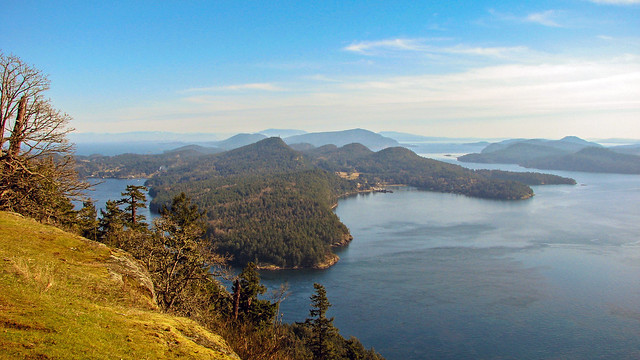
My Original Mount Galiano Hike
When I hiked Mount Galiano in February 2009, I followed a different route from the one now recommended to visitors. I started near Georgeson Bay Road and followed a combination of trails uphill, returning by a slightly different route.
At the end of my hike, I emerged onto Georgeson Bay Road approximately 425 m from where I had parked, so I had an additional walk along the road to reach my car.
My original hike measured approximately 6.8 km, with an elevation gain of about 240 m. These figures describe my historical route, not the current public trail from Active Pass Drive.
Because some former approaches now cross private property and are closed to the public, I no longer recommend following my original route. The photographs below remain a record of what I experienced during that visit.
Galiano Island from the Ferry
One of the pleasures of visiting the Gulf Islands is the journey itself. I photographed Mount Galiano from a BC Ferry, providing a different perspective on the mountain and its surrounding coastline.
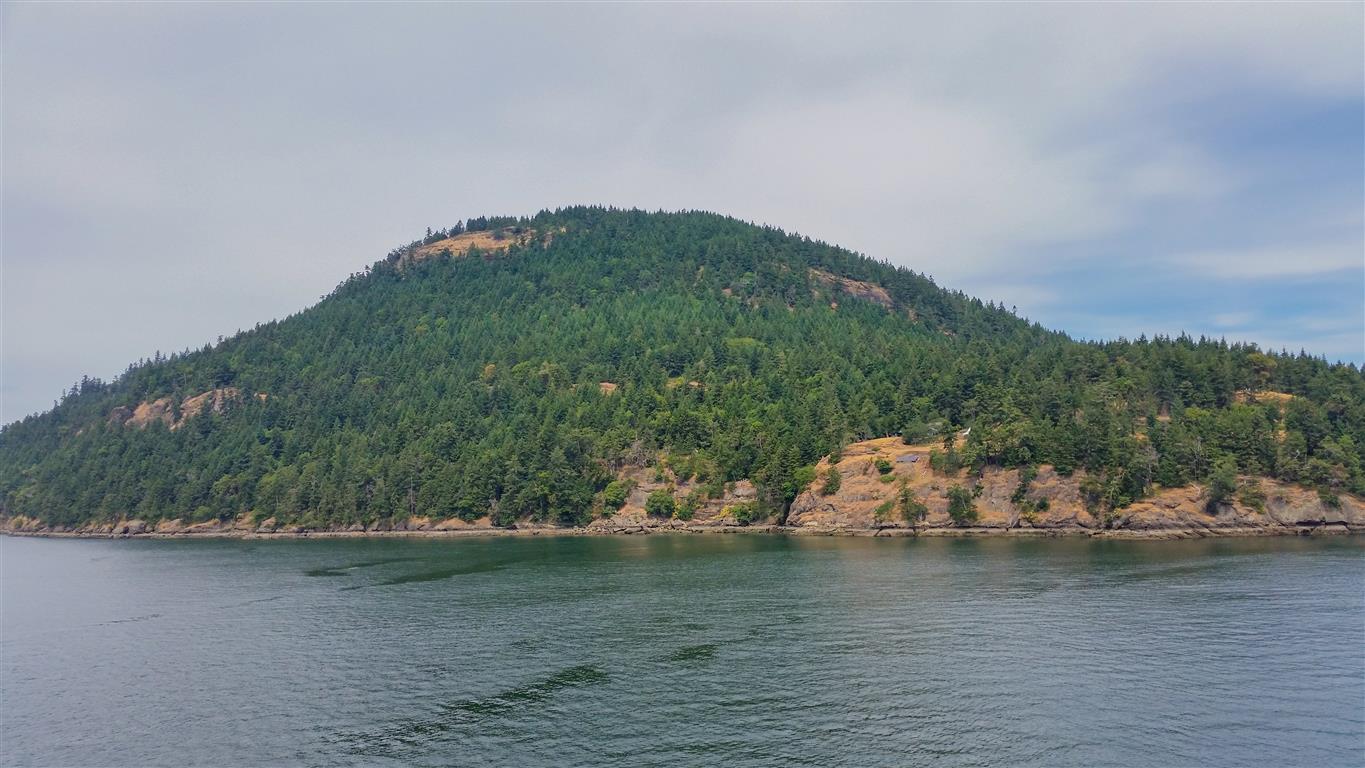
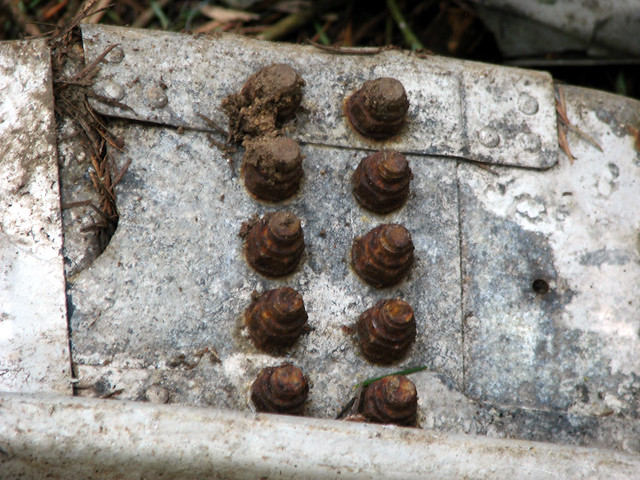
Aircraft Wreckage
One of the most unusual things I encountered during my hike was the remains of an old airplane.
I photographed sections of the wreckage, including some of the smaller metal components. It was certainly not something I expected to find during a forest hike.
The Galiano Club also mentions the aircraft wreckage in its description of the mountain. However, I haven’t been able to establish the aircraft’s identity or the circumstances of the crash.

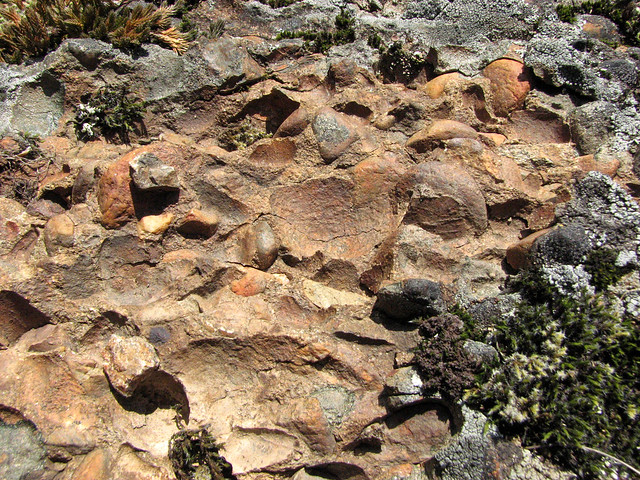
Conglomerate Rock and Forest Scenery
I also came across an interesting example of conglomerate rock. Conglomerate is a sedimentary rock containing rounded pebbles or larger fragments held together by finer material.
The rock caught my attention because of its distinctive texture and the mixture of rounded stones embedded within it.
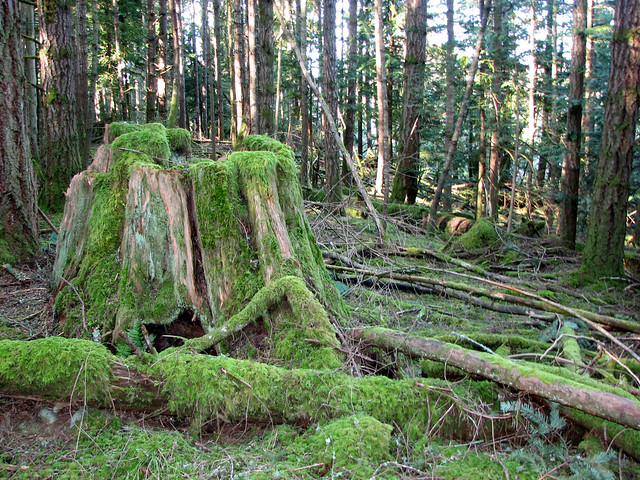
The forest itself was another enjoyable part of the hike. Although Mount Galiano is relatively low in elevation, the wooded slopes and surrounding island landscape provide a distinctly coastal hiking experience.
Watching the Ferries from Above
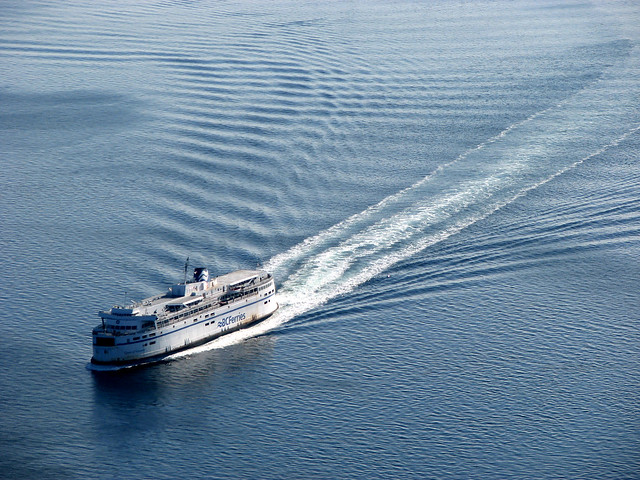
One of my favourite parts of reaching the top was looking out over the water and watching a BC Ferry passing through the area.
I photographed the Queen of Vancouver during my visit. Watching a large ferry moving between the islands from a mountain viewpoint was an interesting change from the usual mountain scenery.
Exploring the Galiano Island Coastline
After descending Mount Galiano, I spent some time exploring the island’s coastline. Galiano has an interesting mixture of rocky shores, forested slopes, and sheltered waterways, and there was plenty more to see beyond the hike itself.
I took additional photographs during that visit, which are available in my Galiano Island Flickr photo archive.
Before You Go
Mount Galiano is a relatively short hike, but visitors should still prepare for changing weather, uneven terrain, and potentially slippery roots or rocks.
Wear appropriate hiking footwear, carry water, and bring the Ten Essentials, including navigation, a headlamp, first-aid supplies, extra food, suitable clothing, and emergency equipment.
Download an offline trail map before heading out, and let someone know your plans and expected return time.
Leave No Trace
Mount Galiano protects sensitive coastal forest and summit ecosystems. Stay on the established public trail, avoid trampling vegetation, leave the aircraft wreckage undisturbed, and pack out everything you bring in.
Camping and open fires are prohibited within the Mount Galiano Nature Protection Area. Please respect neighbouring private property and posted access restrictions.
About this hiking account: My photographs and personal observations reflect my February 2009 visit. My original route differed from today’s established public trail. Visitors should use the Active Pass Drive entrance and check current information from the Galiano Club before travelling.
Further Information
For current access and information about Mount Galiano’s history, ecology, and management, these local sources are particularly useful: